The mighty monosynth generates throbbing bass lines, scorching leads, and mind-bending sound effects. Sure, it’s limited to one voice at a time, but oh, what that one voice can do! Monosynths are a staple in every electronic musician’s rig, and many monosynths (including several on this list) have attained legendary status. Monosynths are a perfect place to start if you’re new to synthesis. By focusing on just a single voice, you can dive deep into the endless sound-shaping possibilities synths afford, from envelopes and filters to LFOs, ring mods, and more! Plus, since you’re only playing one note at a time, you don’t have to be a world-class keyboard player to wrangle a host of gnarly synth sounds from your mono. Let’s explore some of the coolest monosynths that are available from Sweetwater now!
Note: At Sweetwater, we know there's no such thing as "best" when it comes to music gear. Every player and artist has unique tastes, which is what makes selecting gear so fun! The items on this list feature some of our favorite products from top manufacturers to help you start your buying journey! Explore these recommendations and dive into Sweetwater's massive collection of gear on our online store. For personalized picks and expert advice, please contact our knowledgeable Sweetwater Sales Engineers at (800) 222-4700!
- Dreadbox Typhon Desktop Monophonic Analog Synthesizer
- Make Noise Strega Semi-modular Instrument and Signal Processor
- Novation Bass Station II Analog Synthesizer – Swifty Edition
- Erica Synths Bassline DB-01 Desktop Bassline Synthesizer
- Pittsburgh Modular Taiga Keyboard
- Sequential Pro 3 SE Special Edition Multi-filter Monosynth
- Buchla Easel Command Desktop Synthesizer
- Moog Messenger Monophonic Analog Synthesizer
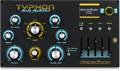
Dreadbox Typhon Desktop Monophonic Analog Synthesizer
Decked out in ’80s-style livery, the Dreadbox Typhon is a portable monosynth module with an ultra-fat analog tone! Built around two VCOs and outfitted with a 4-pole resonant filter, two envelope generators, and analog VCAs, the Typhon nails old-school synth sounds. But it ups the ante with many modern sound design features, including an expansive effects section, custom designed by Sinevibes, to saturate, bit crush, and add otherworldly ambience to any patch. Additionally, Typhon comes equipped with a 32-note step sequencer and onboard storage for up to 254 custom presets!
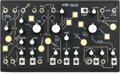
Make Noise Strega Semi-modular Instrument and Signal Processor
If your synth tastes run toward more esoteric and experimental sounds, then Make Noise has the monosynth for you! Designed in collaboration with Alessandro Cortini (Nine Inch Nails), the Make Noise Strega semi-modular instrument and signal processor chucks out the rule book. It provides an inspiring new way to approach sound design, including many patch points, touch bridges, and gateways to encourage physical interaction. Strega takes its name from the Italian word for “witch,” and given its intriguing sound and alchemical take on synthesis, it’s a fitting name indeed! Cast a sonic spell with the Strega semi-modular synth from Make Noise!
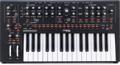
Novation Bass Station II Analog Synthesizer – Swifty Edition
Like The Godfather Part II and The Empire Strikes Back, , the Novation Bass Station II Swifty Edition is the rare sequel that vastly improves on the original, and this iteration was born from a collaboration between Novation and celebrated British graphic designer Ian “Swifty” Swift.This compact monophonic synth may be one of the most value-packed electronic instruments ever made. It features an assemblage of classic subtractive synth components, a walloping tone that — no surprise — excels at floor-rattling bass lines, and nearly an endless number of ways to create and mutate sounds. Moreover, a recent firmware update created in collaboration with Aphex Twin allows you to assign a different patch to each key, transforming the Bass Station II into a powerful drum module, chord organ, and sound effects platform.
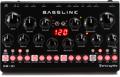
Erica Synths Bassline DB-01 Desktop Bassline Synthesizer
The Erica Synths Bassline DB-01 desktop synthesizer is the visionary Latvian company’s take on a legendary acidbox — the Roland TB-303. It performs all the sequenced acid squelch you’d expect of an instrument with its heritage. It expands the capabilities of previous emulations of the 303 with a bucket brigade–based detune, pattern randomizer, dedicated modulation track, noise generator, and built-in scales with options for microtonal tunings. On top of that, it seamlessly integrates into any setup, whether you’re using a DAW or rocking a DAWless rig.
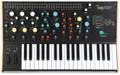
Pittsburgh Modular Taiga Keyboard
Technically, the Pittsburgh Modular Taiga analog synthesizer is a paraphonic instrument, not monophonic, meaning that its three oscillators can generate two simultaneous notes while sharing a monophonic filter and dynamics signal path. Nonetheless, the galvanizing suite of onboard sound-design capabilities results in an uncompromising sonic behemoth. Outfitted with two LFOs, explosive 6-stage wavefolding/waveshaping, arpeggiation, customizable pitch-wheel curvature, step sequencing, and a powerful preamp, the Taiga keyboard spares no effort to ensure every nuance of your play style is covered by its gamut of rich analog harmonics. Its built-in “Echos” effect is an all-analog bucket brigade delay, giving you immensely malleable spatialization tools, while the combination of a 64-point patchbay and built-in MIDI-to-CV conversion ensures seamless integration in nearly any arrangement — a facet of the instrument that goes even further with the inclusion of a 24HP powered Eurorack modular expansion bay.
Sequential Pro 3 SE Special Edition Multi-filter Monosynth
Hitting the market in the early 1980s, the Sequential Pro One was a foundational monosynth that still sits high atop the pantheon of golden-age synthesizers. 40 years later, the Sequential Pro 3 SE Special Edition continues the legacy, stepping out as the most powerful monophonic synth in the Sequential family tree. With three oscillators, three classic analog filters, and a bevy of modulation sources, the Sequential Pro 3 is a stunning example of how far a company can push the limits of monosynths. With its WYSIWYG interface, advanced sequencer, sophisticated arpeggiator, and aggressive pro sound, the Pro 3 is a synth nerd’s dream modern mono.
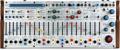
Buchla Easel Command Desktop Synthesizer
A desktop version of Don Buchla’s celebrated 208C module, the Buchla Easel Command is a one-stop shop for West Coast–style synthesis. Eschewing the conventions embraced by most synth makers, Buchla pioneered experimental sound design. The Easel Command reflects his bold sound design style, which incorporates additive and subtractive synthesis and provides countless ways to manipulate the synth’s many parameters. Like the Make Noise Strega, the Easel Command is for adventurous synthesists driven to create never-before-heard sounds. Sure, it can produce tried-and-true monosynth tones, but its full potential is only revealed once you follow it down the rabbit holes of sonic exploration.
A Note on Buchla & CV Signals
Despite its appearance, the Buchla Easel Command isn’t a Eurorack-format instrument. Unlike Eurorack modules, the Easel Command utilizes a 1.2V/octave CV architecture instead of the Eurorack 1V/octave model; consequently, the Easel Command is not compatible with Eurorack or other non-Buchla modules. Interoperation between Buchla and non-Buchla modules risks serious damage to your gear.
If you’re interested in Eurorack-friendly options for exploring the world of Buchla, then we recommend the Tiptop Audio 200t series of Eurorack modules — an official, ongoing collaboration between Buchla and Tiptop Audio.
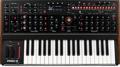
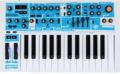
Moog Messenger Monophonic Analog Synthesizer
With the Moog Messenger, monophonic synth sonics are powered by a trio of true-analog oscillators (two VCOs, one sub) that deliver a deluge of dynamism that punches far above the instrument’s single-voice bandwidth. For seasoned synthesists, the Messenger may be a spiritual successor to the company’s 1981 monosynth, the Moog Rogue. The Messenger is a modern-day mono menace that blends time-tested analog aesthetics with a serious sonic-contouring suite. Wavefolding, FM, envelope generation, white noise, arpeggiation, PWM, step sequencing, USB MIDI, and more are ready for contemporary tone-shaping duties. Its 32-note keybed is both velocity sensitive and aftertouch enabled, joining flexible pitch/mod wheels, customizable key tracking, dual LFOs, filter/amp envelopes, and a novel, multimode take on Moog’s legendary ladder filter in the form of the Res Bass switch. Add the bevy of audio, CV, clock, gate, sustain, expression, and 5-pin MIDI connections, and the Moog Messenger is ready to bring your sound to the masses — powerful, distinct, and refusing to bend to the will of expectations.
Monosynth Frequently Asked Questions
What Makes a Monosynth Different from a Polysynth?
The key difference between a monosynth and a polysynth is how many notes they can play at once. A monosynth (monophonic synthesizer) is designed to play one note at a time, which makes it ideal for bass lines, leads, and expressive solo performances. A polysynth (polyphonic synthesizer), on the other hand, can play multiple notes simultaneously, making it better suited for chords and layered textures. While polysynths offer harmonic complexity, many producers gravitate toward monosynths for their raw sound, intuitive control, and focused tone-shaping capabilities.
Are Analog Monosynths Better Than Digital Ones?
That depends on your sonic goals. Analog monosynths are prized for their warm, organic character and hands-on control, often delivering the kind of imperfections and tonal depth that digital gear replicates but doesn’t quite match. Digital monosynths, however, offer greater versatility, patch memory, and compact form factors — sometimes at a lower price point. If you’re after a classic, rich tone, then go analog. If you’re looking for modern flexibility and precision, then digital may serve you better.
Is a Monosynth Good for Beginners?
Yes, monosynths are a fantastic starting point for beginners. Their single-voice architecture makes sound design more approachable by removing the complexity of multi-voice layering. With fewer parameters to manage, new users can more easily learn how oscillators, filters, envelopes, and LFOs interact. Many entry-level monosynths are also affordably priced, making them accessible without compromising on sound quality or learning potential.
What Should I Look for in a Good Monosynth?
When choosing a monosynth, consider the type of synthesis (analog vs. digital), oscillator configuration, filter quality, modulation options, build quality, and ease of use. Beginners may prioritize simplicity and a strong preset selection while more experienced users may want deep modulation routing, CV/Gate connectivity, or a built-in sequencer. Also, think about your primary use — whether it’s bass lines, leads, or live performance — as this will help narrow down your ideal features.
How Many Voices Does a Monosynth Have?
By definition, a monosynth has just one voice, meaning it can play one note at a time. If you press two keys simultaneously, then only one will sound. While this might sound limiting, it’s exactly what gives monosynths their focused, powerful character. They’re optimized for expressive solos, punchy bass, and intricate modulation, making them staples in electronic, experimental, and ambient music.
Why Choose a Monosynth over a Polysynth?
Choosing a monosynth over a polysynth comes down to purpose and sound-design philosophy. Monosynths offer a streamlined interface and often have more modulation flexibility, allowing for richer, more expressive timbres. They’re particularly strong for leads, bass, arpeggios, and effects — sounds that benefit from their raw, undivided attention. Many producers use monosynths alongside polysynths to fill specific roles in a mix with clarity and punch.
Meet Your Mono at Sweetwater!
Time for your first or next monosynth? In addition to the products on this list, Sweetwater has a vast selection of synthesizers to explore. If you’d like personalized recommendations, then please reach out to your knowledgeable Sweetwater Sales Engineer at (800) 222-4700 and find your perfect monosynth today!