

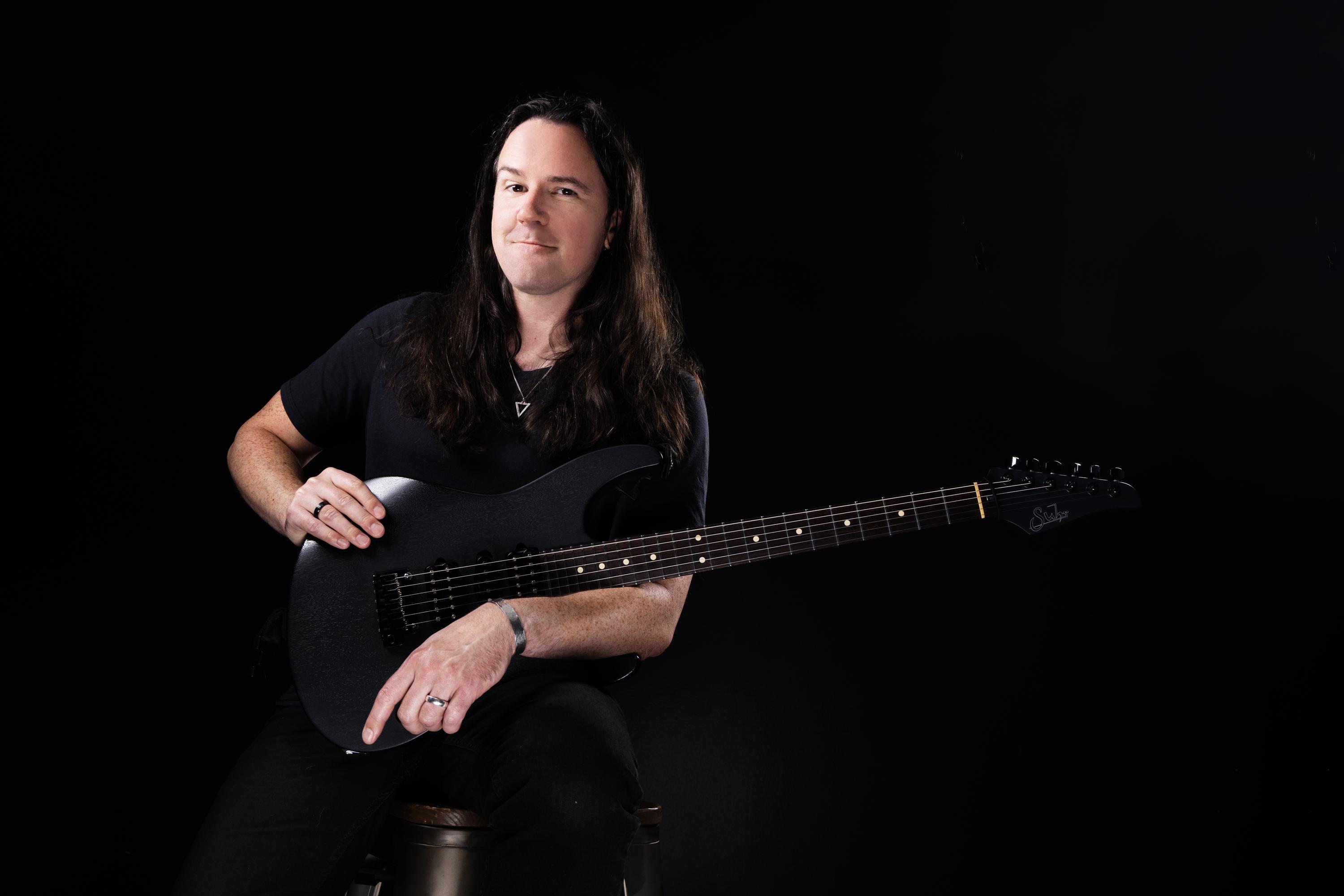
When I sat down with “Uncle Ben” Eller to chat about what piece(s) of gear had changed the way he made music, his “magic bullet” as I call it, he had several that immediately came to mind. Finding those pieces of gear as well as discovering musical inspiration were shaped by his rural childhood, as influences that were readily accessible to others were remote for him. Ben shared how gear transformed and inspired his musical journey. Then he shared an amazing story about his musical heroes and a light-bulb moment, as he called it, “the one day that changed my life” musically.
On Discovering the Les Paul
Fuston: Ben, have you had any moments when you discovered a piece of gear that changed everything for you, like an “Aha” moment?
Eller: Sure, I’ve had those experiences with gear, some that are more physical breakthroughs on the instrument, but I’ve also had more philosophical breakthroughs on the instrument. Here’s an example of one that was a game changer for me on the gear side of things.
I’ve always been a double-cutaway, Superstrat, hot-rodded shredder kind of guitar player. Years ago, I was playing a studio session for this rock record, and I had brought along one of my favorite thin-string, flat-fretboard shredder guitars that I was really comfortable playing. So, I tracked all these rhythm guitars for the entire session, and I was like, “Okay, we’re done. That sounds good.”
It was the kind of thing where we had a little bit of time on the clock at the end of the day, and I was like, “Is there anything you want to just layer on or add to the session?” It was one of those days where I was just feeling a little frisky, and I saw this ugly, beat-up, lived-in studio Les Paul that was hanging up in the corner, just a big, 12-pound monster.
So, I thought, let’s just see what the Les Paul sounds like on this. Because I’ve never really been much of a Les Paul guy.
Do you remember what kind of strings it had on it?
Yeah. Ancient and heavy. (Laughs.) Rusty 12s. (Laughs again.) It was that kind of scenario. I’d never owned a Les Paul. I was just never much of a Gibson guy. It was always like, ah, they’re heavy, the fret access isn’t as good as my Superstrats, not as ergonomic, whatever.
Then, I swear to you, man, with 20 minutes on the clock for the day, I was like, let’s just hear what this sounds like. I plugged it right up into the same rig I was using. Same exact thing. And instantly, it was like, “Oh, this is why people have these.”
Wait, had you never played one before?
Not in a session. It was the kind of thing where somebody would put one in my hands, and I’d be like, yeah, this is cool, whatever. It’s not really me. But I’d never tracked with one. And the big difference for me was hearing just the direct A/B from my tremolo-equipped Superstrat guitar to the 12-pound Les Paul through the same rig. I would say to compare those two things, but there was no comparison. It was a massive, massive change. I retracked all the guitars I had just recorded.
No way.
Yeah. The entire session. It was like, “Look, this is so much better.”
Then after that, that’s when I started getting into Les Pauls, and now I have four of ’em that I got from Sweetwater. So, that was a big light-bulb moment for me.
On Unveiling the Magic of the Dual Rec
From the gear side of things, I’ll say another gear revelation for me was coming around to loving Mesa/Boogie Dual Recs, the dual rectifier amps. For the majority of my life, I had maintained I would rather not play guitar than play a guitar plugged straight into a Dual or Triple Rec. I hated ’em. I hated those amps so bad.
Really?
Big, buzzy, scooped, mushy. It’s like they weren’t super-fast and responsive under your fingers. I just thought they were the worst-feeling amps ever. And I’d hear all these dudes getting incredible tones out of them. So, it really got in my head, where I’m like, is it a me thing? I sound bad when I play through these amps, but all these other players that I love sound great. Jeff Loomis with Nevermore through a Dual Rec sounds incredible; I sound like I’m playing a rubber chainsaw when I play it. What’s the difference? It kind of got in my head, honestly.
I bet.
And then I remember the first time I plugged in a BOSS SD-1, the trustiest overdrive pedal ever. I plugged in an SD-1 in front of a Rec with the drive down, just classic boost that you do with a high-gain amp — drive down, level up, tone at noon. And it was like a light bulb lit up: that’s why people love these amps. There it is. That’s how people are getting these to sound tight and aggressive and brutal. It’s not 100% just the player. Of course, to a degree it is the player, your hands and the way you attack and stuff. But, for me, just running a boost in front of a Rec was finally one of those moments where it clicked, and I was like, “Oh my god, this is one of my favorite amps on earth,” and now I’m addicted to the Rec sound.
Oh, that’s amazing.
Yeah, so just the boost-pedal trick. It was a real game changer for me.

On the Day That Changed His Entire Life
Part of the reason I love doing these interviews is that most musicians have those moments, where you’re just walking along the path, and — suddenly — it’s like the angels come down and something happens. And you go, there it is. I understand you have a story like that.
Yeah, I remember there was one specific day that changed my entire course as a guitar player, and honestly, it changed the course of my entire life if we’re being real. Yeah. If you’re really scoping out, it changed my entire life. I can pin it down to one day. And it was a day that I had been playing guitar for maybe a year or so, so I was already taking it seriously. I was playing a lot, especially because, in those days, I was homeschooled and had 12 hours a day to play, so that’s all I was doing.
Wait, how old were you at this time?
Like 16.
Oh, okay. So, old enough to get in trouble.
Yeah. If I had schoolmates, maybe I would have, but I’d gotten into Joe Satriani, and that was like my guy. I loved Satch’s stuff, still do. But I’d heard about this Steve Vai guy, and I’d heard about how weird and crazy and freaked out his records were and how that was kind of the weird side of guitar. And I was always intrigued by the weird side of anything.
So, you had heard his name?
Yeah.
But not the records.
I’d seen him in the guitar magazines. I was like, who’s this hunky guy with the guitar with the handle in it? Seven strings sometimes. I was just intrigued. But this was pre-Spotify. This was pre-Apple Music. This was pre-anything. In those days, you had to go find the CD.
In a record store.
Exactly. And I grew up in the Morristown, Tennessee, area — a rural area in east Tennessee.
Okay.
The only way anybody will know about that area is if they know that the original Evil Dead was filmed there. That’s the claim to fame. That’s it. I grew up like 10 minutes from there.
I had friends at Carson-Newman (University), and I lived in Nashville for decades. So, I’ve been there.
Okay. Then you understand, in that era and that area especially, how hard it was just to find CDs. I couldn’t order it on Amazon or whatever. There was a Camelot Records in the mall, and that was it.
And Camelot wasn’t stocking Steve Vai CDs. Let’s be real. It was Backstreet Boys in that era. I could have
found every Korn record for a great deal at that time. (Laughs.) But this one particular day, I went to a used CD store that was up in Morristown, and I got two albums. I was overjoyed to even find them, much less have the money in my pocket to buy them. I was broke as a joke at the time.
One of them was Extreme II: Pornograffitti, with Nuno’s phenomenal playing all over it, and the other one was Steve Vai’s Passion and Warfare. Now, Passion and Warfare was one of those legendary records that I’d only heard tell of. I’d heard that it was this crazy, mystical guitar experience and just this weird, abstract piece of guitardom that a lot of people found inaccessible and too strange. So, I was really excited about it, and I got the records. And then that very same day, there was a Murphy’s drugstore in Jefferson City, which is a little, tiny college town. And the owner of that pharmacy, their kid lived in Nashville, but he grew up in that area and remembered what a hassle it was anytime he needed to find guitar strings, because that meant a trip to Knoxville, which is 40 minutes away, or a trip to maybe Morristown or Johnson City, which are 40 minutes away. Jefferson City is kind of a guitar-store desert. There’s just nothing there. So, because the son of the pharmacy owners remembered growing up that way, he always had a little corner of this drugstore where you could get guitar strings. You could get guitar picks. Just this little corner . . .
It’s a little guitar island in the drugstore?
Yeah, and you’d have to flag down a pill counter from behind the counter and be like, “I need some strings.” And they’d come out and get you stuff or whatever. It’s really cool.
That’s funny.
But they had boxes and boxes of old guitar magazines. At the time, we’re talking 2001-ish.
What magazines?
Like all the Guitar Player magazines from the ’80s.
I was reading those back then. And collecting them.
Yeah, probably a bunch of the issues that you know. Dude, back then, guitar magazines were full of just super-insightful stuff.
They were great. They had the charts and tabs and all kinds of stuff.
And flexi discs in there.
Those were the days.
Yeah, man. So, that same day I got these records that were about to change my life, especially Passion and Warfare, I go down to this drugstore to get some strings or whatever and start prowling through the guitar magazines, and they have all the Guitar Player magazines from that era. And Steve — I think it was in 1990 — Steve Vai won Guitar Player of the Year. It’s got the cover photo of him and the mystical shaman outfit from the “[For the] Love of God” video and the burnt Universe he’s holding. He’s got his head down. That is that issue. I got that one. And the one that is a purple cover where he’s wearing a black suit and he’s got the white Universe with the pyramid inlays, looking really styling. And it just so happened that both of those magazines had enormous interviews and write-ups about Passion and Warfare and Pornograffitti. And especially the Vai ones really intrigued me because one of the issues had a track-by-track breakdown of Steve Vai talking about every song on the album, what it meant, what he was trying to express, and the deeper spiritual, philosophical meaning behind this track and this track and this track.
So, that was the stars aligning.
Yes, it truly was.
Here’s everything you need just dropped right in your lap.
Yeah. I mean, the same day, I got the album and the instruction manual from the man himself on how to listen to the album. It couldn’t have been more perfect.
Wow. That’s amazing.
And I mean, I sat up in bed with my Discman and my headphones on and read Steve Vai’s explanation of what every song was supposed to be like and what he was trying to express, and I listened to these songs. And to me, that was such a mind-blowing moment for me to think you can encode that kind of meaning into instrumental music. I’d always loved instrumental music. I grew up listening to a lot of classical music and then getting into Joe Satriani. I loved all that stuff, but to me it was just nice music. It was like, oh, this is cool. Riffs, great solos. I wasn’t thinking, “But what does it mean?” Because it’s instrumental music.
Tosin Abasi from Animals as Leaders — great, great, great guy. He had an interview a couple of years ago where he was talking about the cool thing about instrumental music is that, because the lyrics aren’t telling you how to feel about the song, it invites you, the listener, to interpret: what does it mean to me?
You have to come up with it.
Yeah, exactly. If it’s a sad song about a breakup, the song is telling you how to feel about it. It’s sad. If it’s a happy song about whatever, it’s telling you to be happy about it. Instrumental music kind of makes you work a little harder for it and search for the meaning. What does it mean to you?
Yeah. You have to find the meaning.
Right.
And no two people are going to find the same meaning.
That’s the cool thing about instrumental music to me.
It’s not like you’re reading a novel, and at the end of the story, okay, here’s the moral. It’s like, what does it mean to you?
Exactly. Which is challenging for a listener in a lot of ways. It’s asking you to participate, and you create the meaning. But then to hear Steve’s explanations of, to him, the meaning he was putting into the songs, and then listening for those things, and hearing it, it was like, I didn’t know you could encode that much meaning through mashing ropes and playing the strings and bending them and stuff. I never really thought of it that way, where it’s like, you can say that in instrumental music. And that was a game changer that day. Getting that album and getting the reading material to accompany it truly was a stars-aligning moment. And for me, it was like, I want to do this. This is what I want to do. That’s a game changer.
So, it just opened the door.
Yes.
Okay. My path is set.
Yes, exactly. Wow. Yeah. Changed my life, man. Passion and Warfare is my life-changing album.
That’s very cool. Awesome. And you were 16?
I think I was 16, maybe 17 at that point. Yeah. I started playing guitar when I was about 16, and I think this was about a year in, so I probably would’ve been about 17.
What Will Your Aha Moment Be?
If you’ve just started playing an instrument or producing music, then you may never know when or how inspiration will strike. Whatever instrument, pedal, or guitar amp it is, Sweetwater has all the gear you need. Give your Sweetwater Sales Engineer a call at (800) 222-4700 and let them help you figure out your next step along your musical journey. We have a whole warehouse full of inspiration waiting for you.
Ben Eller Links:
https://www.youtube.com/@BenEller
https://www.instagram.com/benellerguitars/?hl=en
https://www.facebook.com/unclebeneller
https://www.patreon.com/BenEllerGuitars