

The title of Shingo Nakamura’s latest record, Solace, bears a weight of poetic magnitude. This fifth LP, released under the Silk arm of Monstercat Records, elevates Nakamura’s work to an echelon of international recognition. On it, Shingo weaves a nuanced tapestry of moods and grooves into a work that is fluid yet diverse, teeming with features that bolster Nakamura’s distinctive foundational sound without overriding the sonic identity he’s crafted across the album’s 14 tracks.
As Japan’s leading producer of melodic house, Solace crystallizes Shingo Nakamura’s ascension to global acclaim, earning his stripes along the way via sold-out live performances across the US and beyond; DJing to thousands at hallmark European festivals that include ADE and Tomorrowland; and earning the support of dance-music legends such as Above & Beyond, Armin van Buuren, and BT — the last of whom appears on Solace, collaborating with Nakamura to conjure the infectiously ethereal “Lifeforce.” I was fortunate to have the opportunity to speak to Shingo Nakamura about this life-changing record, discussing everything from gear, inspirations, and recording outside of Japan to the differences among global club cultures, the evolution of dance music, and the seemingly insurmountable hurdles to breaking the international sound barrier. This is Shingo Nakamura on life, music, failure, success, and heart. This is Solace.
- On the Precipice of Defeat: Beginnings, Glow & Resolve
- A Global Odyssey: International Horizons & Breaking Sonic Barriers
- If You Build It: Double-edged Swords of Discovery & Transcending Borders
- “Once More, with Feeling”: Emotional Excavation in the Club
- In Search of Solace: Connection, Compassion & Club Culture Differences
- The Sounds of Solace: Dream Collaborations, Worldwide Studios & What’s Next
- Listen to Shingo Nakamura & Friends!
On the Precipice of Defeat: Beginnings, Glow & Resolve
In America, it’s 8PM on a Tuesday night, and my call with Shingo Nakamura begins. Calling from Japan, it’s 9AM on Wednesday for him. Just before we began, Shingo emailed me with a specific request. Though I’d sent him our questions in advance, he insisted that — despite his English being “not perfect” (and who could blame him?) — he’d like to “try to do the interview without the text first.”
It would’ve been completely understandable to type out his answers over an email, forgoing the urgency of a real-time discussion, yet I immediately admired his desire to engage with me anyway. It’s indicative of a type of tenacity that borders on contradicting the positivity and kindness he exudes with grins of gratitude that almost never leave his face. As much as I respected this in the moment, it wasn’t until we examined the differences of our respective nations’ dance-music cultures that I fully understood this choice. But we’ll get to that later.
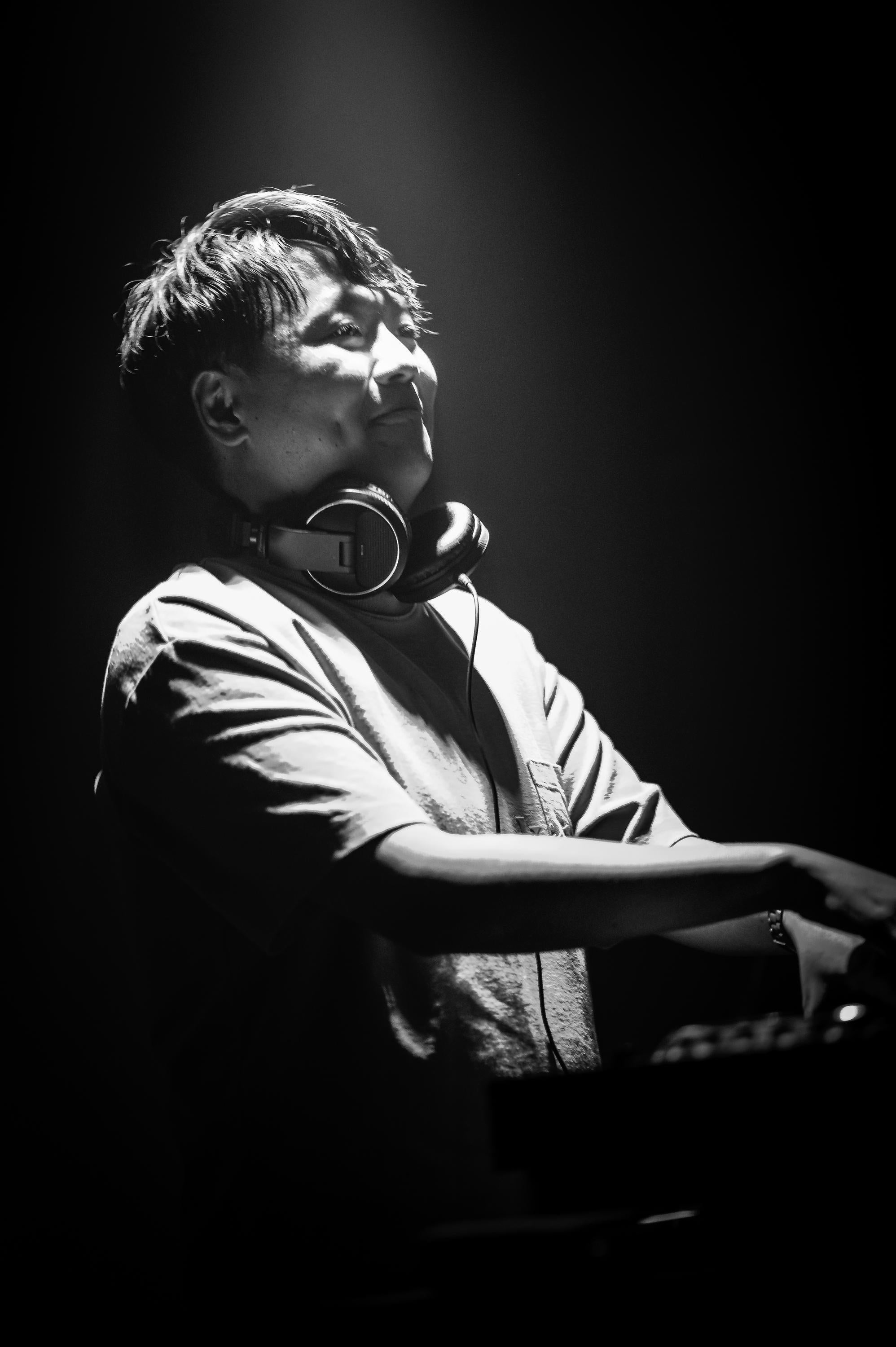
To grasp Shingo Nakamura’s rise and the significance of Solace, we need to go back to 2021, when he released his fourth full-length album, Glow. Despite the limitations of the pandemic, its subsequent isolation period, and its specific impact on dance music, Glow marked the beginning of a sharp upturn in his trajectory that Solace could carry to stratospheric heights. This window gave Shingo ample time to reflect on his craft and what life as a career artist could really be. After all, who could predict what waited on the other side of an all-but-shut-down world?
Ironically, Glow couldn’t have been released at a better time. Its uplifting compositions, multifaceted layers of production, evocative atmosphere, and richly inspiring movements are deployed across infectious rhythms and hypnotic grooves that conjure an ambient nostalgia that maintains a pervasive positivity. It couldn’t have contrasted more starkly with the global mood. Moreover, Shingo and his electronic-music-producing compatriots were uniquely positioned to maintain, enrich, and expand the connective tissue of the dance-music community as so many found themselves with an abundance of time and curiosity to broaden their musical horizons.
Over the next few years, Shingo Nakamura began to dominate the digital domain — his “Best of Shingo Nakamura” series of YouTube videos hitting a combined 15 million views — while coverage from Billboard and Forbes reinforced the growing audience reached by his increasing presence on SiriusXM’s Chill station. Dance-music legends Armin van Buuren and Above & Beyond regularly featured entries from Shingo’s discography on their respective SiriusXM shows, A State of Trance and Group Therapy. Shingo’s lifelong dedication was approaching a critical state, placing him on the precipice of a life-altering decision: should he quit his office job and take a leap of faith to become a full-time musician?
A Global Odyssey: International Horizons & Breaking Sonic Barriers
The inevitability of Shingo Nakamura’s breakout is evidenced by the momentum of the past three years, but so too was the outcome of his fateful decision. Shingo quit his office job and began to aggressively expand his sonic presence, booking more and more shows in Japan, while beginning work on Solace as early as 2022 (even if he didn’t know it yet).
Thanks to the growing support from artists around the globe, Shingo’s commitment to a full-time music career almost immediately paid dividends for both his artistry and his visibility to new audiences. The momentum of this resolve would catapult Shingo to become a force of melodic house music, and his Solace track “Come Closer” was the second-most played song throughout all of 2023 on SiriusXM Chill.
Shingo’s growth is a monumental feat, but he understood that setting his sights so high meant contending with the frustrating reality in contemporary music that the immovable baseline importance of quality work can’t solely carry one to international — or even domestic — success. Moreover, the post-pandemic era of live music, travel, borderless digital discovery, and increasing precarity of common social spaces would collectively multiply the difficulty since Shingo is a Japanese artist whose native musical scene is worlds away from the Western soundscape. How does one challenge such a behemoth?
If You Build It: Double-edged Swords of Discovery & Transcending Borders
Following what Nakamura describes as “a short rest” in the wake of releasing Glow, the complexities of limitless modern digital posed a challenge. With so many new eyes (and ears) on his work, Shingo faced the daunting task of unpacking his sound and transmuting it into something that was both internationally accessible and true to his roots. Understanding those roots gave way to insights that revealed how our unconscious connections to the world around us could fuel a deeply ingrained, idiosyncratic approach to creativity.
To unearth these answers, Shingo explains that he first turned to his fans for feedback, the newer among them describing his music as “sounding Japanese” or “feeling Asian.” As Shingo relates this, it’s apparent from his demeanor that, though he didn’t take offense, this description puzzled him. After all, so many of the house and trance greats that inspired him had long cemented their careers by defining and iterating on the once-nascent stylings of these spaces — very few of them, if any, of Japanese origin. Most of these artists are European or American. Where was the disconnect?
“Once More, with Feeling”: Emotional Excavation in the Club
Answering this mystery of musical genealogy led Shingo to two unexpected sources: video games and anime. Coincidentally, my chance encounter with an academic essay by Thai scholar Thaphad Sungwijit, in which she analyzed the oft-praised composition “One Summer’s Day” by Japanese pianist and composer Joe Hisaishi, resonated with Shingo’s dilemma. The piece captivated audiences of Studio Ghibli’s 2001 animated masterpiece, Spirited Away, with its subtle yet striking interweaving of loneliness, melancholy, nostalgia, and defiant optimism. A journey unto itself, “One Summer’s Day” encapsulates the scope of emotional excavation that the music of Japanese video games, anime, and films seems to uniquely elicit.
Sungwijit’s nearly twenty-page essay observes that Hisaishi’s penchant for quartal and quintal progressions; callbacks to previous passages via extended, rearranged, or blocked chord structures; differentiated composition between upper and lower structures; and seamless fluctuation between pentatonic minor scales and the Lydian mode all form a distinct relationship with his use of the fourth interval and four-note pentatonic groupings that can make it difficult to discern major and minor scales.
Hisaishi’s works before and after Spirited Away, as well as solo performance and compositional work outside Studio Ghibli, are hardly a singular container of Japanese musical norms. Yet, the works of Hisaishi and his contemporaries pull from a shared musical subconscious that defines the sonic profile of the scores that elevate our experiences with Japanese media, not unlike the ways we identify decidedly “American-sounding” works in video games, films, and TV shows produced in the US.

It’s at this juncture that Shingo realizes the disparity: what’s considered to be culturally typical for Japanese media is, to Western ears, anything but. Growing up in Japan, the musical works of anime and video games invariably shaped Shingo’s ideas about what music can stir in one’s soul. He reveals that the Final Fantasy and Dragon Quest series of games were longtime favorites that have since been usurped by a love of The Legend of Zelda. So, what was it about these games, the animated works of Studio Ghibli, and beyond that so profoundly impacted Shingo’s approach to dance music? Well, as he puts it, “It’s emotional.”
In Search of Solace: Connection, Compassion & Club Culture Differences
As simple as that may sound, the affective capacity of music is what undergirds most of Shingo’s musical disposition. He states that it’s “the emotional depth of video game music” that inspires him. Ultimately, Shingo Nakamura treats his music as a gateway to connect with the people, places, emotions, and experiences around us. Solace needed to build upon these themes, on Shingo’s longing to “blend the emotional elements of Japanese video game [scores] with club music.” If music could hold such power to immerse us in the imaginative worlds of anime and video game fiction, then why couldn’t music do the same for bridging the hearts of friends and strangers at his shows?
Reflecting on Glow’s popularity, Nakamura found that his intention to evoke uplifting emotions during such pervasive global uncertainty cemented a universal camaraderie among new and longtime listeners. Work that began as disconnected singles eventually informed what would become Solace after he recognized the common thread that bound them together. Shingo articulates this as wanting “listeners to feel a sense of relief, relaxation, and chill. To feel like the album: solace.”
This became its own challenge. Shingo’s increased presence on the international stage revealed how differently Japanese club culture operates compared to club culture in America. Shingo explains that there’s a significantly thinner line between audience and performer in Japan. People can be starstruck, sure, but it’s normal for DJs to hang out with fans, creating an interlaced community of artists and clubgoers that is far less concerned with hierarchy than is typical for American musicians.
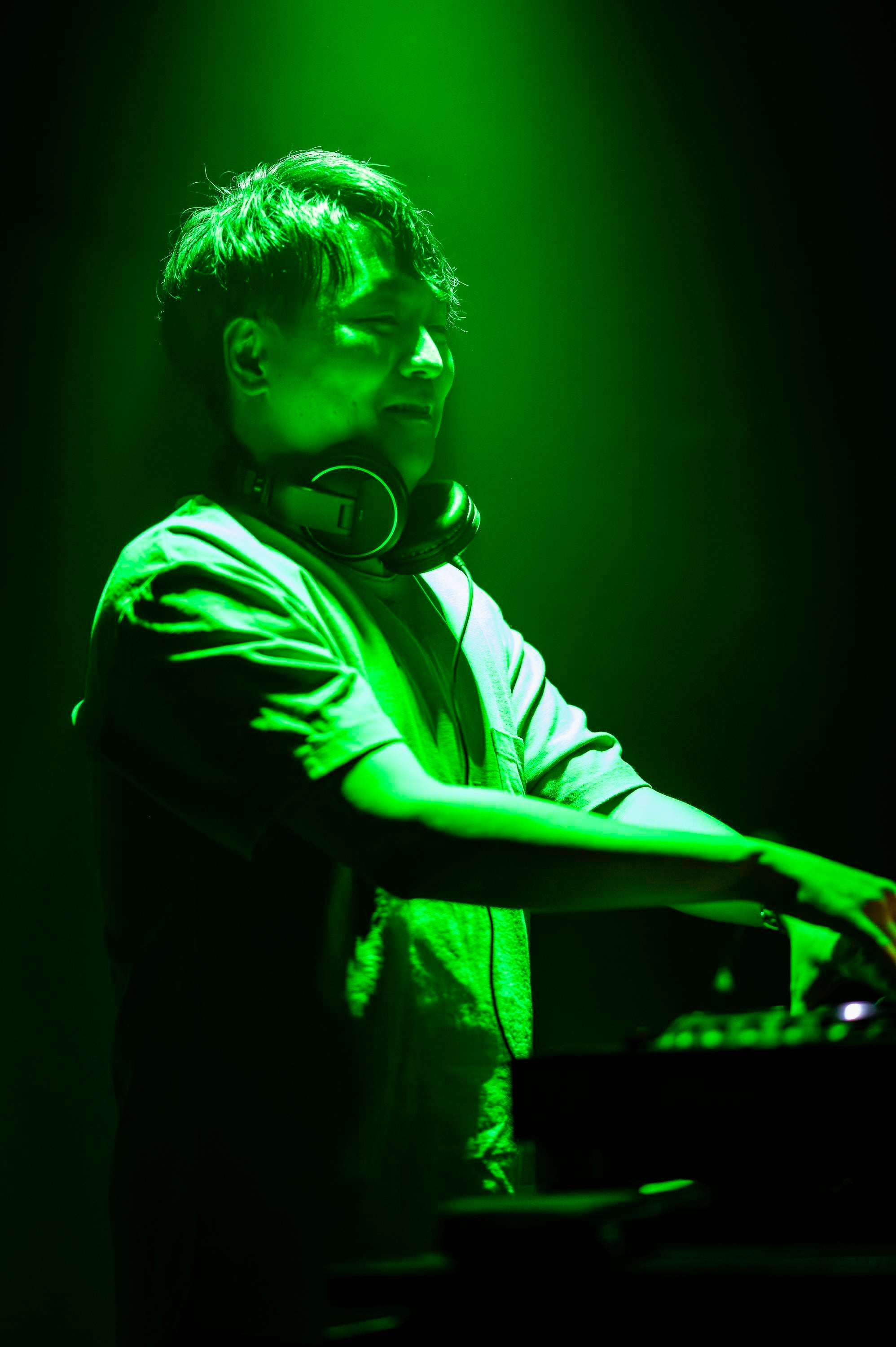
Shingo elaborates that the threshold of commitment is much higher in Japan compared to international audiences, describing Japanese fans as “knowing the songs very well” and “being very excited by the mixes of his original songs.” The word “casual” repeatedly emerges in describing American clubs. Dancing, drinking, conversing — it’s all casual. Shingo doesn’t tell me this to lament the American side, but it’s something he struggles to square with the Japanese treatment of the club as a rarefied space of the utmost cool. The club, compared to the rest of Japanese nightlife, is special.
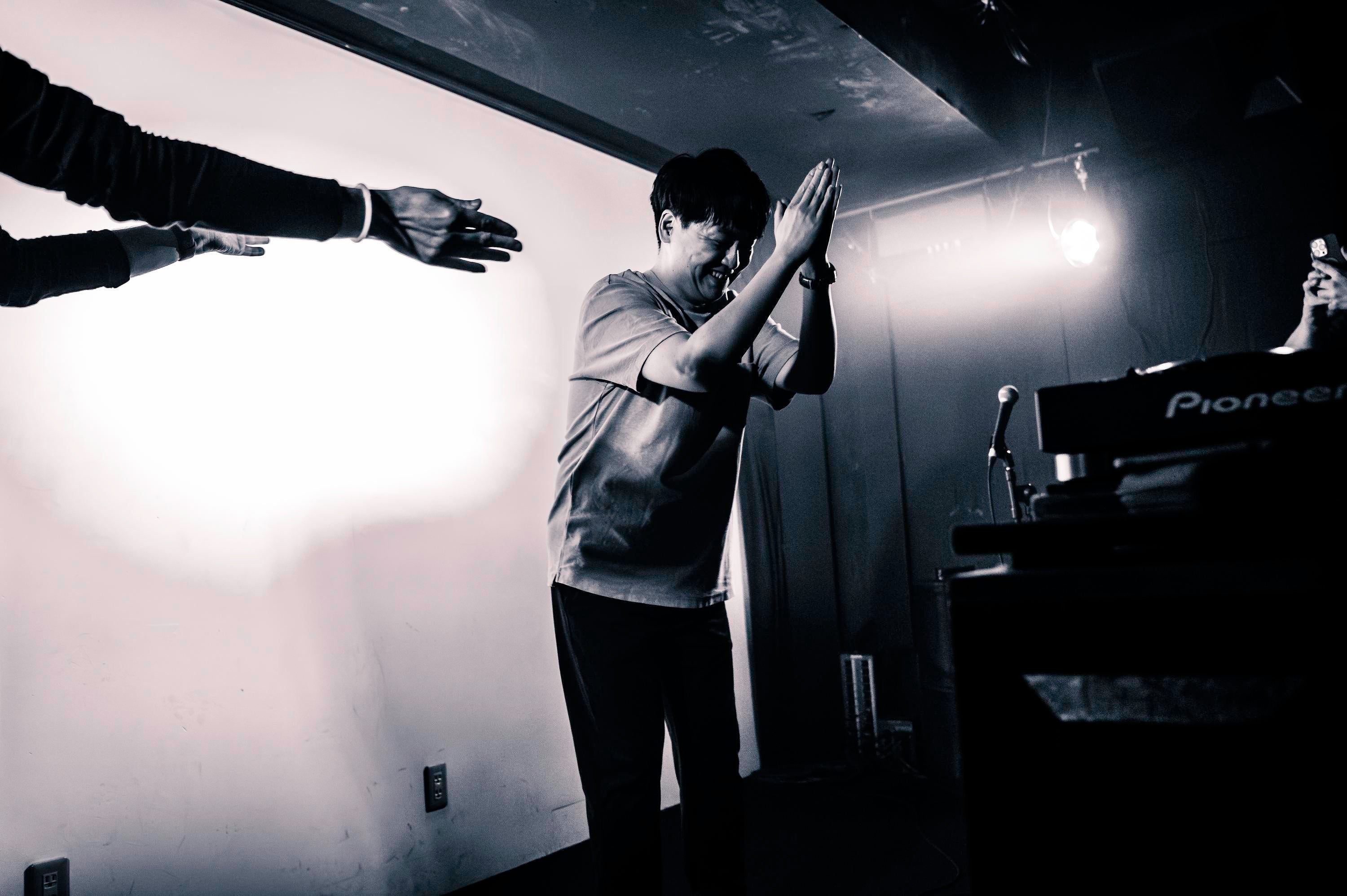
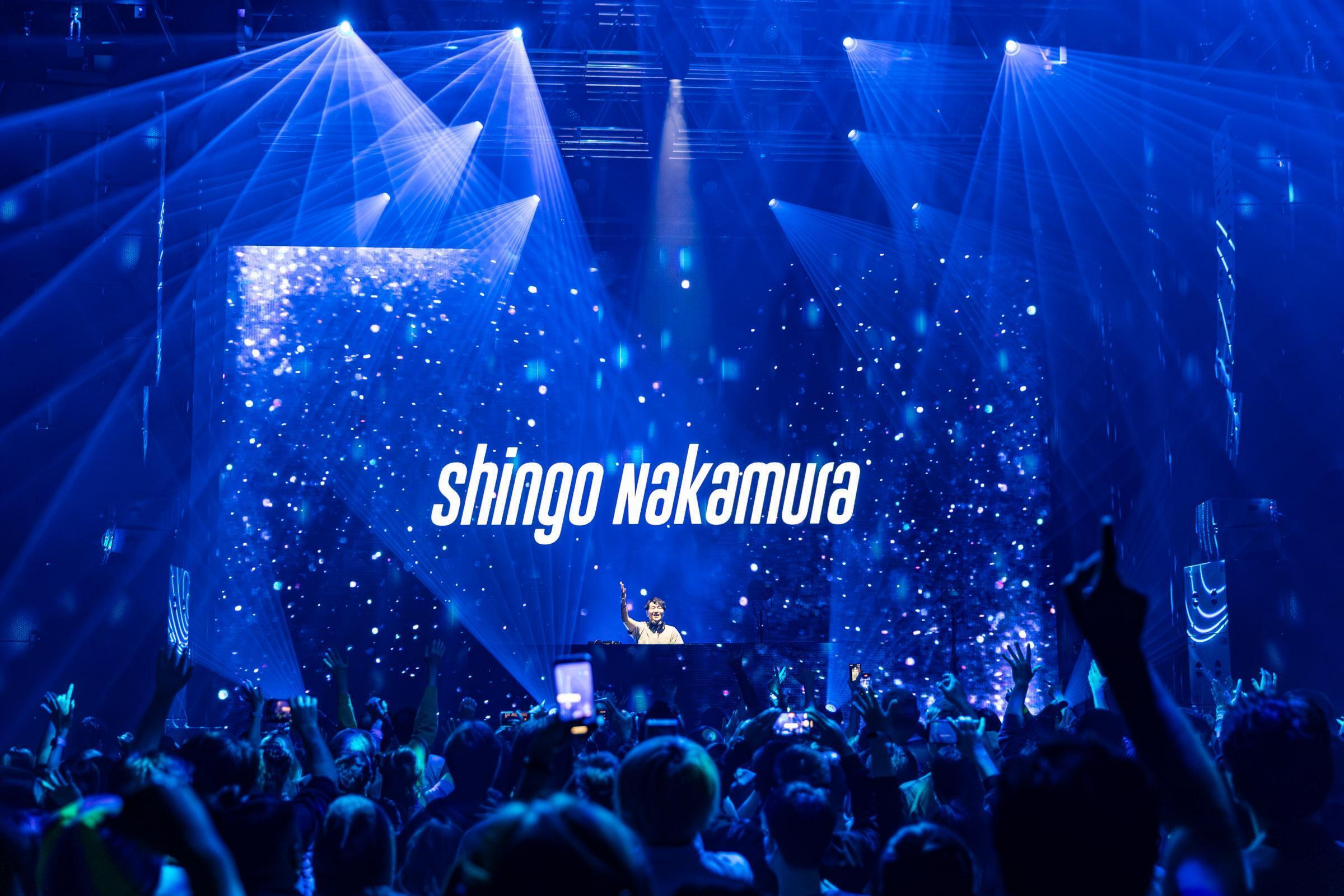
Nakamura’s DJ sets reflect this cultural configuration, owning that his responsibility as the night’s entertainment is to make the audience feel special. Everything — from the clothes he wears and the tracks he curates to buying champagne for the crowd and partying together — services this goal. He may be the star of the show, but his role exists on an even plane with the rest of the night’s attendees, and Shingo’s respect for this collective experience reinforces his hope that the uplifting dimensions of his music find value beyond the club, too.
The Sounds of Solace: Dream Collaborations, Worldwide Studios & What’s Next
As Solace reaches the world today, its release begs the question of whether Shingo Nakamura could settle these complex, intersecting questions of cultural relativity, sonic identity, international barriers, and emotional expression. Shingo’s artistic growth is clear through his discography, but with Solace being his fifth LP, the evolutionary leap from album four to album five dwarfs the sum development of everything that precedes it.
This record gave Shingo the opportunity for a career first: recording outside of Japan, visiting studios in Los Angeles, Seattle, and Washington DC. Fortunately, Shingo’s laptop-driven workflow made a seamless transition for plug-and-play production. For software, Shingo refined his virtual repertoire to three crucial plug-ins: Spectrasonics Omnisphere, Native Instruments Noire, and u-he Diva. From these, Shingo’s palette of Diva’s analog-style hues and Noire’s detailed emulations of acoustic instruments is bolstered by the multidimensional pads, textures, and effects of Omnisphere, amplifying the immersive fluidity of his menagerie of melodies. As for hardware, Behringer’s Model D monophonic analog synth module has become a mainstay of Shingo’s sonic tool kit. “So good,” he says, beaming as he displays the instrument to the camera.
Leaving his native Japan to spend time writing and collaborating expanded Shingo’s perspective on the international electronic landscape. Monstercat Records’ Los Angeles-based studio was frequently visited by other artists on the label, which aided in unraveling the dilemmas accompanying Shingo’s growing global reach. One such artist to find themselves among this expanding viewership would be none other than Grammy Award-winning artist and trance-music pioneer BT, whose eye Shingo would catch when he streamed live from the back of a boat in Tokyo Bay. One of Shingo’s Best of Shingo Nakamura videos, this entry in the series has garnered more than 700,000 views at the time of writing.
Asking artists about their dream collaborators can illuminate multitudes of nuanced details regarding their inspirations and ambitions that would otherwise demand a large amount of conversational real estate. Shingo Nakamura is the first artist I’ve interviewed who could say he had, in fact, participated in one, thanks to Shingo and BT’s “Lifeforce.” In BT’s Washington DC-based studio, the pair augmented Shingo’s software suite with BT’s impressive collection of synths, including classic Prophet and Jupiter models to which Shingo attributes “the powerful sounds of anthemic synths on the drop.”
With our discussion reaching its end, I tell Shingo how difficult it is to find Japanese electronic music, how literally foreign it feels to jump into a rhizomatic web of scenes and styles that don’t manifest an obvious starting point, without guidance. As it turns out, Shingo sees this issue as something he is responsible for helping rectify, outlining how much of the dilemma boils down to practicality.
Not only are there sociolinguistic and cultural hurdles that make discovery difficult for a non-Japanese audience, but Japanese artists face social and economic barriers to expanding their presence. Flights aren’t cheap, and when burgeoning artists are expected to do so much of the legwork today that would’ve fallen under the all-but-gone “Artist Development” departments of record labels, the cost of traveling to and performing in other countries — monetary or otherwise — is difficult to justify.
So, Shingo Nakamura — in quintessential Japanese club fashion — decided to be an emissary of Japan’s diverse electronic works. Bringing this music to a global stage, he hopes to break down the multifaceted barriers separating Japanese artists from listeners abroad. This is a type of “paying it forward” for Shingo, who cites the adventurous sonic explorers of the Japanese youth as a major source of inspiration for their spirit, refusing to be chained to historical norms. Maintaining that support, he insists, is crucial.
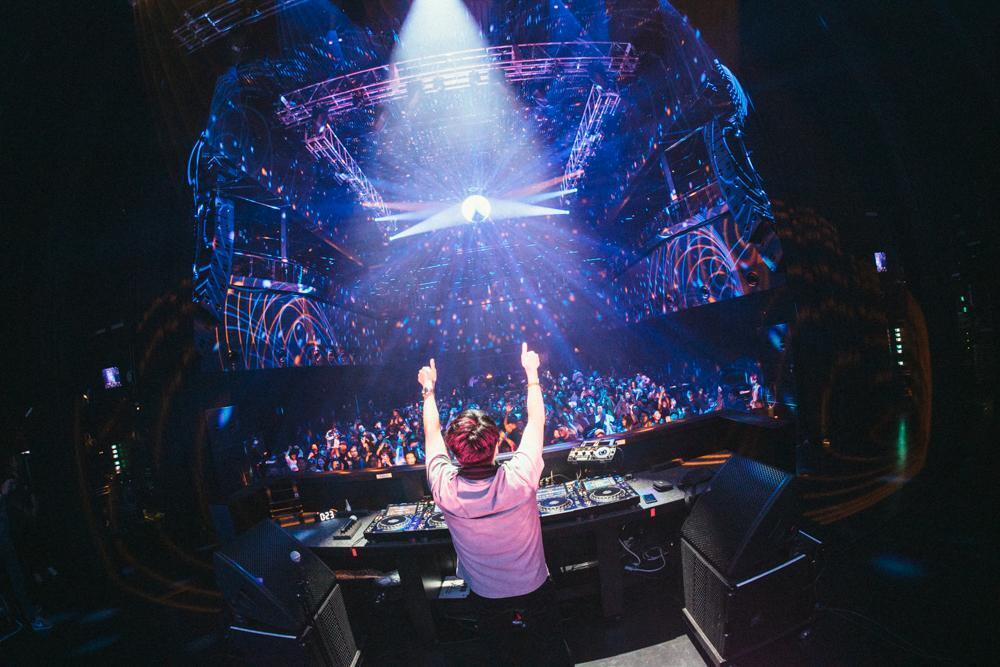
Though music is often viewed as a universal language, Shingo’s journey uncovers the practical limitations and cerebral nuances of breaking the international sound barrier. Solace is a masterclass in traversing a seemingly paradoxical terrain that pushes as far inward as it does outward to extend Shingo — his work, himself, and a rich tapestry of Japanese sonic innovators — to a worldwide audience. On Shingo’s mission to give listeners an uplifting reprieve from the stressors of the world, Solace, with its myriad complexities of foundational influences, poses a daring question: If music’s emotional power can connect us in shared immersion of the most fantastical and imaginative worlds of fiction, then isn’t heart the most human fiction we share?
Listen to Shingo Nakamura & Friends!
We’ve compiled a diverse playlist of artists and friends that inspire Shingo Nakamura, including works from Japanese artists that were hand-selected by Shingo. Stream “Shingo Nakamura & Friends” on the go!