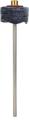
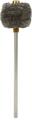
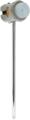
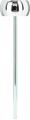
The impact of your bass drum says a lot about your tone and the music you’re playing, too. And whether you’re a seasoned pro or a percussive novice, we’re willing to bet that when it comes to bass drum beaters, there’s some lingering confusion about the relevance of their seemingly infinite shape and surface materials. Well, you’re in luck! Sweetwater looks at the history of the bass drum beater and a wide range of the most common (and uncommon) beaters and discusses what makes each option unique and useful for your kit.
A Bit of Background
Since kick pedals and their accompanying beaters have been around for so long, it’s easy to forget they’re an evolved form of the traditional concert mallet. And as long as there have been bass drums, there have been beaters to go with! However, when strictly concerning their usage with a drum kit, the earliest bass drum beaters harken back to primitive designs by companies like Ludwig, Leedy, and Sonor in the early 1900s. From this period and through much of the big band era, it was common to see larger, round, fleece-headed beaters in use on most kick pedals.
Gradually, wooden and felt beaters began to gain popularity after this time, as did varying beater shapes, leading to an eventual and arguably endless domino effect of beater material experimentation. Presently, it’s common to find a handful of shapes and more than a dozen different beater materials in use by professionals worldwide, each chasing a slightly more (or less) refined tone and response. And with new and more intense musical genres emerging left and right since the mid- to late 20th century, this explosion of available beater types was far from unforeseen.
Common Designs
Spherical
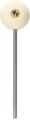
As the original bass drum beater shape, the spherical beater most accurately represents the appearance of a traditional concert mallet. Most were, and still are, reinforced with a hard core material, but the ball-like shape of these beaters means that the point of impact on the bass drumhead is concentrated in a small area. Only a minimal point of contact is made by its spherical curvature, resulting in a rounder sonic response, consequentially attracting more flexible head materials like fleece and felt to compensate for its shape.
Curved
Curved beaters, sometimes shaped like cylinders, provide a similar roundness to their spherical counterparts but instead offer a surface that only curves from side to side. By taking this approach, curved beaters cover slightly more surface area (depending on the degree of the curve) and are an excellent choice for extracting a vintage sound while leaving a greater impact. Oftentimes, curved beaters will only have the side of contact presenting the curvature, while the rest of the head behind it comes reinforced in a differing shape for a stronger attack.
Cone
Using a conical shape can make it much easier for bass drum beaters to achieve better punch. By adding greater moving force and a more concentrated area of impact, these flat-surfaced beaters use momentum to their advantage when striking, implementing an effect (and a look!) similar to an actual hammer or mallet. Cone beaters come in various head and surface materials, but we routinely see them with wood / hard plastic heads and striking surfaces of all sorts, from leather to metal.
Cube
Bass drum beaters with cube-like designs and flat square or rectangular striking surfaces are the ultimate in terms of presence retention. By providing a flat surface for impact, the contact area with the drumhead is maximized, affording drummers a super-solid attack. With that said, square striking surfaces of softer materials like foam maximize the tonal effect of the beater’s head construction. So, depending on the application, it isn’t only about volume.
Reversible
Reversible and multifaced bass drum beaters provide players with various tonal options and impact intensities. While there’s no set-in-stone protocol for reversible beaters, it’s common to see a combination of hard and soft surfaces. Some beaters even have three and four sides, while others come equipped with a larger set of swappable surfaces. This versatility is extraordinarily convenient when transitioning back and forth between softer and heavier songs and set lists — plus, they’re real cost-savers!
Brush
One last beater design worth investigating is the upright brush! Yes, you read that right. Most drummers are familiar with the concept of brushes for jazz and acoustic purposes but may not know that the same technique can be applied to the bass drum. With an upright brush instead of a softer spherical beater, it’s much easier to reel in that low-volume bass impact, which would otherwise ordinarily cause quite a distraction in quieter settings like clubs and coffeehouses.
Surface Materials
Fleece
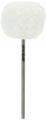
As mentioned earlier, fleece beaters were a very early design and popular choice among big band drummers. These are the largest of all the beaters, their fluffball construction of fleece generating a warm, soft attack yet delivering full bass tone that perfectly complements the oversized bass drum dimensions of earlier drum kits — a dream for mixing well with and cutting through brass sections! And while its big band volume can be impressive, jazz drummers also favor the warmer tone of fleece.
Flannel
Like fleece, a flannel beater supplies a soft and warm tonality, though it differs slightly in responsiveness. Because of its tamed construction, a flannel beater will give drummers a very even response with a heightened degree of focus. With greater focus comes a greater range of playability, making flannel a fantastic choice for jazz, orchestral, and rock music, no matter how hard or soft you like to play.
Felt
Felt beaters take the tonal concept of flannel and push it even further. This approach offers a softer striking surface but is reinforced with a harder core to intensify the impact. Felt is arguably one of the most common beater materials for its near-perfect blend of authority and tonal character. It is frequently the material of choice for the softer side of reversible beaters. This impressive, genre-fluid option is ideal for a wide variety of applications.
Plastic
By contrast, plastic surfaces are often applied as the harder side of reversible beaters. You’ll notice a more defined attack with a plastic beater on your kick pedal. The sound of plastic beaters bridges the tonal gap between the darkness of wood and the brightness of metal, delivering a neutral midrange effect that has made it one of the most popular hard surface choices. Plastic is an excellent solution for metal, hard rock, and similarly heavy genres.
Wood
Wood beaters are exceptional for articulate rhythmizing, darker tone, and powerful contact. Some very early kick pedal designs featured this type of construction, and by the ’70s and ’80s, wood beaters were starting to catch on. Today, many metal musicians apply wood beaters to their double kick pedals to extract quick and commanding bass beats for complex, heavy breakdowns with incredible projection.
Rubber
If rebound is crucial to your playing style, then you should consider a rubber beater! Rubber recoils effortlessly after striking the drumhead, prioritizing speedy playability for drummers who like to implement double kicks, triplets, and the like into their playing. Plus, a rubber beater has an extremely fat attack with solid impact! Jazz, prog, funk, rock, and even heavier genres can all benefit from rubber beaters.
Metal
Metal bass drum beaters are a more modern concept and are engineered for incredibly high-impact playing. And while they deliver undeniable punch and presence with each strike, you’ll notice that these beaters exude much more treble in their attack. While some drummers prefer their bass drum attacks to be muddy and buried, players craving that harsh and cutting tone (especially in live settings) will want to look into metal beaters.
Foam
Ranging from thick and dense to particularly porous, foam beaters bring a softer and spongier energy to the sound of your bass drum. As a result, foam beaters allow for excellent natural muffling and volume control, making for phenomenal studio and practice kit usage, despite thriving just as well in intimate performance settings. Additionally, a foam beater makes the perfect companion for cajon-based kick drumming! Try one out for your next acoustic session.
Canvas
While relatively uncommon, we’ve seen drummers get more experimental with sounds as time goes on — such as when they use the canvas beater! The consistency of canvas provides a warmer tonal palate with a soft and sensitive touch at low dynamics. Still, it can easily turn in jack-of-all-trades punchiness to accommodate a myriad of genres simultaneously. Its innovative sonic architecture continues to catch the ears of many percussionists here at Sweetwater.
Leather
Leather beaters demonstrate an old-school-sounding punch with a genuinely organic tone while adding depth to any musical venture, save for heavy genres like metal. There are a few different approaches to constructing a leather beater, which can, of course, affect how they sound. Some beaters provide a flat surface for striking, which fattens up the tone. Other leather beaters feature stacks of leather discs, taking the form of a curved beater and allowing you to notice an increase in depth!
Yarn-wrapped
Implementing a yarn-wrapped beater into your kick pedal system will give you a thumpy, lightweight, and balanced bass drum sound. Perfect for country, folk, and even orchestral applications, yarn beaters are typically cored with wood or similar hard material. They are a charming way to achieve the bass frequencies you need without the overtly harsh contact you don’t. They respond similarly to fleece in that they’re both wool-based, but yarn wraps offer a tighter rebound and tonal focus that’s reminiscent of marimba mallets.
Nylon/Wire Brush
Last but not least is a category that’s a treat for our jazz and fusion friends: nylon and wire brush beaters! When you go the brush route, a wire-based beater applies that completely traditional, metallic, and whisk-like brush tonality. Nylon, on the other hand, tends to mellow out the attack while still delivering enough striking weight to make the most out of your bass drum’s tone. And, just like foam beaters, nylon beaters can make a surprisingly nice contribution to your cajon-based kick drum rig!
Shop Bass Drum Beaters at Sweetwater Today!
Well, are you convinced? Or are you still on the fence about the tonal debate? We know — that’s a lot of options to consider for just one element of your kit. The most crucial factor to remember is that it has to sound right for YOU! Whether you’re into the sound of old-school fleece, the unmatched rebound of rubber, or the jazzy accents of upright wires, there’s an excellent option for you right here at Sweetwater. Be sure to call your Sweetwater Sales Engineer at (800) 222-4700 for more information on tracking down the perfect bass drum beater!