Universal Audio has been building professional-grade consoles, preamps, compressors, and other studio gear for more than 60 years. Whether you’re discussing their prized vintage studio gear, their unequaled analog-modeled plug-ins, or their state-of-the-art audio interfaces, guitar effects, or microphones, the Universal Audio name commands instant respect. In this article, we’ll dive into the storied history of the company, from its beginnings in the late 1950s to its rebirth in the late 1990s to its modern-day position as an industry leader.
- The Beginning: Universal Audio & Studio Electronics
- The Birth of United Recording Electronics Industries (UREI)
- UA Returns
- UA Leads the Digital Revolution
- Audio Interfaces Befitting a Greek God
- UA’s OX & State-of-the-art UAFX Guitar Pedals
- Easy-to-use Volt USB Audio Interfaces
- UAD Goes Native
- UA Enters the Microphone Market
The Beginning: Universal Audio & Studio Electronics
Although he had been toiling in his Chicago recording studio since the 1940s, Universal Audio founder Bill Putnam Sr. officially formed the company in 1958. The purpose of Universal Audio was to manufacture Putnam’s tube-based studio hardware processors — most notably the 610 preamplifier, the 175B compressor, and his custom-built recording consoles.
Putnam also founded a Los Angeles–based recording studio called United Recording Corporation during this time, which was rebranded as Studio Electronics in 1961 with the intention of using it to test out complete studio systems built around Universal Audio hardware. Universal Audio was absorbed into Studio Electronics in 1965; however, the company’s individual hardware units continued to bear the Universal Audio logo until the mid-1970s.
The Birth of United Recording Electronics Industries (UREI)
In 1967, Studio Electronics acquired the Teletronix company, which gave them manufacturing rights to the LA-2A leveling amplifier and its predecessors, the LA-1 and the LA-2. Invented by James F. Lawrence Jr. in the early 1960s, the LA-2A was a studio legend even in the earliest days of its existence.
After the acquisition of Teletronix, Studio Electronics became United Recording Electronics Industries (UREI). In the late 1960s, UREI acquired National Intertel and, with it, the technology behind the venerable 1176 peak limiter as well as the 1108 FET preamp. UREI produced a number of notable units, including the LA-3A electro-optical leveling amplifier, the LA-4 electro-optical compressor/limiter, and 500 Series graphic equalizers.
UREI was sold to Harman in 1983, at which time it became a subsidiary of JBL Professional until slowly fading from existence.
UA Returns
In 1999, Bill Putnam Sr.’s sons, Bill Putnam Jr. and James Putnam, reacquired Universal Audio. In the process, the brothers also regained the company’s numerous acquisitions and offshoots, including Teletronix and UREI, enabling them to reissue all the company’s hardware classics, such as the Universal Audio Teletronix LA-2A classic leveling amplifier, the Universal Audio 1176LN classic limiting amplifier, and the 610 preamp. Best of all, these spot-on reissues were meticulously re-created from notes left by Bill Putnam Sr., making them the most authentic modern iterations of these classic hardware units available.
Besides circuit-by-circuit reissues, the company also built vintage-style channel strips using original UA designs, such as the Universal Audio LA-610 Mk II tube channel strip and the Universal Audio 6176 tube channel strip, and cutting-edge, modern-retro offerings, such as the Universal Audio 4-710d 4-channel microphone preamp and compressor and the UA dual gain stage 710 Twin-Finity microphone preamp.
UA Leads the Digital Revolution
When Bill Putnam Jr. and James Putnam re-established Universal Audio, they didn’t just reissue decades-old gear — they also propelled their father’s revered analog designs into the 21st century with UA’s DSP-accelerated UAD Powered Plug-in platform.
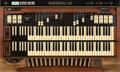
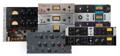
Boasting software emulations of legendary gear from Fairchild, AKG, Lexicon, Neve, Manley, API, Studer, and many more, UAD’s selection of Plug-ins is far-reaching. And thanks to the company’s intimate knowledge of classic circuit designs, Universal Audio’s UAD plug-ins are among the most accurate you’ll find anywhere.
Audio Interfaces Befitting a Greek God
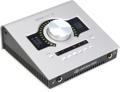
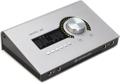
In 2012, Universal Audio introduced its line of Apollo audio interfaces. Not only were Apollos class-leading interfaces in their own right, but they also contained onboard DSP, enabling them to run UAD Powered Plug-ins and to monitor and record through those plug-ins in real time. Later Apollo models took analog emulation to a whole new level with the incorporation of UA’s Unison preamps. These preamps allow you to track through spot-on models of time-tested hardware preamps made even more authentic by electronically matching the impedance and gain structures of the original hardware units.
At Winter NAMM 2020, Universal Audio announced its LUNA software, a full-fledged DAW with airtight Apollo and UAD plug-in integration. LUNA comes free with any Apollo Thunderbolt interface, with extensions, such as a complete Universal Audio LUNA API Vision console emulation plug-in bundle, available for purchase separately.
UA’s OX & State-of-the-art UAFX Guitar Pedals
During a surprise announcement at Summer NAMM 2017, UA unveiled the Universal Audio OX reactive amp attenuator with speaker modeling. The OX remains one of the most effective cab-sim solutions out there. It not only provides guitarists with a reactive load box for tube amps, but it also includes dynamic speaker modeling with access to dozens of mic and guitar cabinet models. You also get loads of effects, adjustable room ambience, software control, and analog and digital outputs for recording.
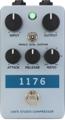
UA entered even further into the guitar world with the introduction of its UAFX guitar pedals. Built upon powerful dual-processor engines and UA’s vaunted analog modeling technology, UAFX pedals deliver true-to-life emulations of classic reverbs, delays, modulation, compressors, and even full-blown amplifiers.
Easy-to-use Volt USB Audio Interfaces
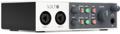
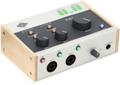
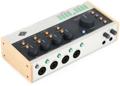
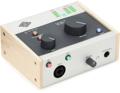
In 2021, Universal Audio conquered the entry-level audio interface market with its value-laden Volt audio interfaces. Rather than building on its existing DSP-fueled interfaces, UA jam-packed its Volt series with analog circuitry harkening back to the company’s earliest designs, such as 610-inspired mic preamps, with some models even including built-in ’76-style FET compressors. The Volt series proves that entry-level interfaces don’t need to compromise on quality to meet a price point.
UAD Goes Native
Universal Audio’s UAD plug-ins were originally designed to run on the company’s SHARC-based DSP processors. Therefore, to take advantage of UAD’s superior analog modeling, users needed a UAD-2 PCIe card, a UAD-2 Satellite accelerator, or one of the company’s Apollo audio interfaces. That all changed in 2023 with the unveiling of the native UAD format, which allows users to run selected plug-ins on their macOS or Windows system without any UA hardware.
UA Enters the Microphone Market
Another big change came for Universal Audio in 2023 when they formally welcomed David Bock and Chris Townsend into the company. Bock is one of the industry’s leading mic designers, and he brought three of his tried-and-true designs with him when he joined the UA family. Townsend is the mind behind the most comprehensive microphone modeling technology on the planet, and his offerings are the perfect complement to UA’s unparalleled Unison mic preamp emulations.
Sweetwater: Your Source for All Things UA!
At more than 60 years and counting, Universal Audio remains one of the oldest — and most prestigious — companies in the pro audio industry. And its continued boundary-pushing innovation ensures it’ll be around for at least another six decades, if not longer.
Want to add a dose of Universal Audio magic to your studio? If so, then give your Sweetwater Sales Engineer a call at (800) 222-4700 today!