

Do guitar pickups really make a difference in your tone? Of course, they do. But do you know how much difference they make? Have you ever swapped them into the same guitar and compared? I never had — and the idea intrigued me.
It was suggested that we try out guitar pickups and do it in a scientific, controlled way (which is what I’m known for). It was an exciting prospect, not only to me but to every other guitar player at Sweetwater, too. Everyone that heard about it said, “Oh, that’ll be amazing!” They couldn’t wait. So, after two and a half months of planning, gathering pickups, and recording, the wait is over. Here we go.
- Let’s Compare Pickups — LOTS of Pickups!
- Let’s Listen
- Whew! Exactly How Did We Do That?
- The Player’s Perspective by Don Carr
- How We Set Up the Guitar
- Pickup Considerations
- The Gibson Custombucker Pickup
- The “Plus One” – Seymour Duncan’s Zephyr Silver
- Parting Details from Luthier Doug Mantock
- Audio Clips Grouped by Sound
Let’s Compare Pickups — LOTS of Pickups!
The goal was to go into the studio, listen to a bunch of pickups side by side, and record them so you could hear them, too. We started with a minimal list of about a dozen pickups, but how do you draw the line? Then people heard what we were doing.
“Oh, you gotta include the Super Distortion. Don’t forget the Dimebucker. Oh, and Pearly Gates . . . and you can’t leave out the Seth Lover!”
It went that way for weeks as we talked to guitar players about what pickups we should include. Guitar players have opinions? Imagine that!
The first question we addressed was “How do we actually do this?” Let’s start with a list of pickups that Sweetwater carries — that narrowed it down to just 800 pickups (well, actually more than that — don’t even think I’m exaggerating)! Clearly, we’d have to narrow the guidelines or we’d be in the studio until Christmas! Here are some of the options we discussed and what we decided — knowing full well that others would have different opinions about what to include. (I know somebody’s favorite didn’t make the list.)
- Single-coil or humbucker? Though we started off discussing Strat pickups, we decided to audition humbuckers — this time!
- Bridge or neck pickup? We decided to audition just bridge pickups this time around.
- What guitar? After tossing around lots of options (we have a few guitars at Sweetwater), we landed on an Epiphone Les Paul Standard ’60s Bourbon Burst, a very nice, affordable Sweetwater Exclusive guitar. We pulled one that had been through Sweetwater’s 55-point Inspection, and it played flawlessly right out of the box. This is the guitar we used for all the bridge pickups you’ll hear.
- Passive or active pickups? For this session, we decided to stick with passive humbuckers. We considered doing some of each, but that would add a huge variable from a listening and playing perspective.
- What guitar sounds? We talked about two styles — clean and dirty — but decided that we really needed more samples to truly highlight the differences. We chose to record four options: Ultra Clean, Low Gain, Mid Gain, and Heavy. More details on the signal chain and amps later.
- What pickups? This is where it got really interesting (read: difficult). We initially picked a dozen, ranging from best sellers to classics plus some others we had always wanted to hear, and then we kept finding pickups that needed to be on the list. The list kept growing as we kept adding pickups, including one you’ve never been able to buy before (honest). More on that later.
Finally, we went into the studio with 16 pickups (“Oh, can we add one more?”), and we ultimately added another very rare (read: expensive) pickup to the list. So, it’s 16 + 1.
Here are the pickups you’ll hear.
- A – Seymour Duncan SH-4 JB Model Bridge Humbucker Pickup
- B – Gibson ’57 Classic Bridge 2-conductor Pickup
- C – DiMarzio DP100 Super Distortion Bridge Humbucker Pickup
- D – EVH Frankenstein Bridge Humbucker Pickup
- E – Mojo Tone ’59 Clone Humbucker 2-piece Pickup Set
- F – Seymour Duncan SH-13 Dimebucker Bridge Humbucker Pickup
- G – DiMarzio PAF 36th Anniversary Bridge Humbucker Pickup
- H – Seymour Duncan SH-8b Invader Bridge Humbucker Pickup
- I – DiMarzio X2N Bridge Humbucker Pickup
- J – PRS 57/08 Bridge Humbucker Pickup
- K – EVH Wolfgang Bridge Humbucker Pickup
- L – Seymour Duncan SH-PG1b Pearly Gates Bridge Humbucker Pickup
- M – Gibson 500T Super Ceramic Bridge 4-conductor Pickup
- N – PRS m (Metal) Bridge High-output Humbucker Pickup
- O – Seymour Duncan SH-55b Seth Lover Bridge Pickup
- P – Gibson Custombucker Pickup
- Q – Seymour Duncan Zephyr Silver Humbucker Pickup Set

I bet you’re as eager as we were to hear these pickups, so let’s get to it. After you listen to the sound clips, we’ll discuss all the details of the recording session plus hear Don Carr’s reactions since he was the lucky one who got to try them all out.
Let’s Listen
Here are all the pickups one at a time. If you want to hear the pickups grouped by sound (Ultra Clean, Low Gain, etc.) for quick comparison, click here.
Seymour Duncan SH-4 JB Model Bridge Humbucker Pickup
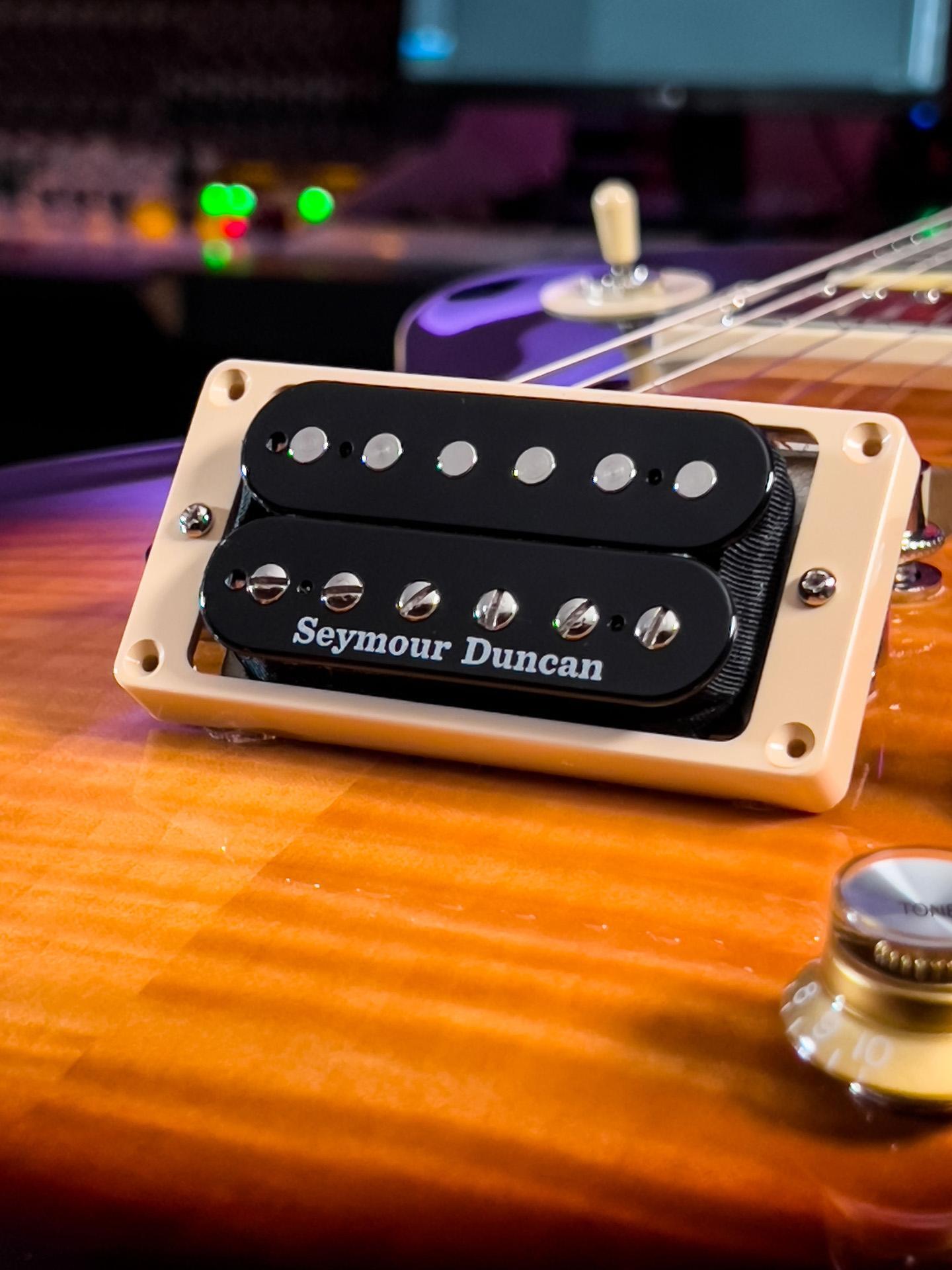
Gibson ’57 Classic Bridge 2-conductor Pickup

DiMarzio DP100 Super Distortion Bridge Humbucker Pickup

EVH Frankenstein Bridge Humbucker Pickup
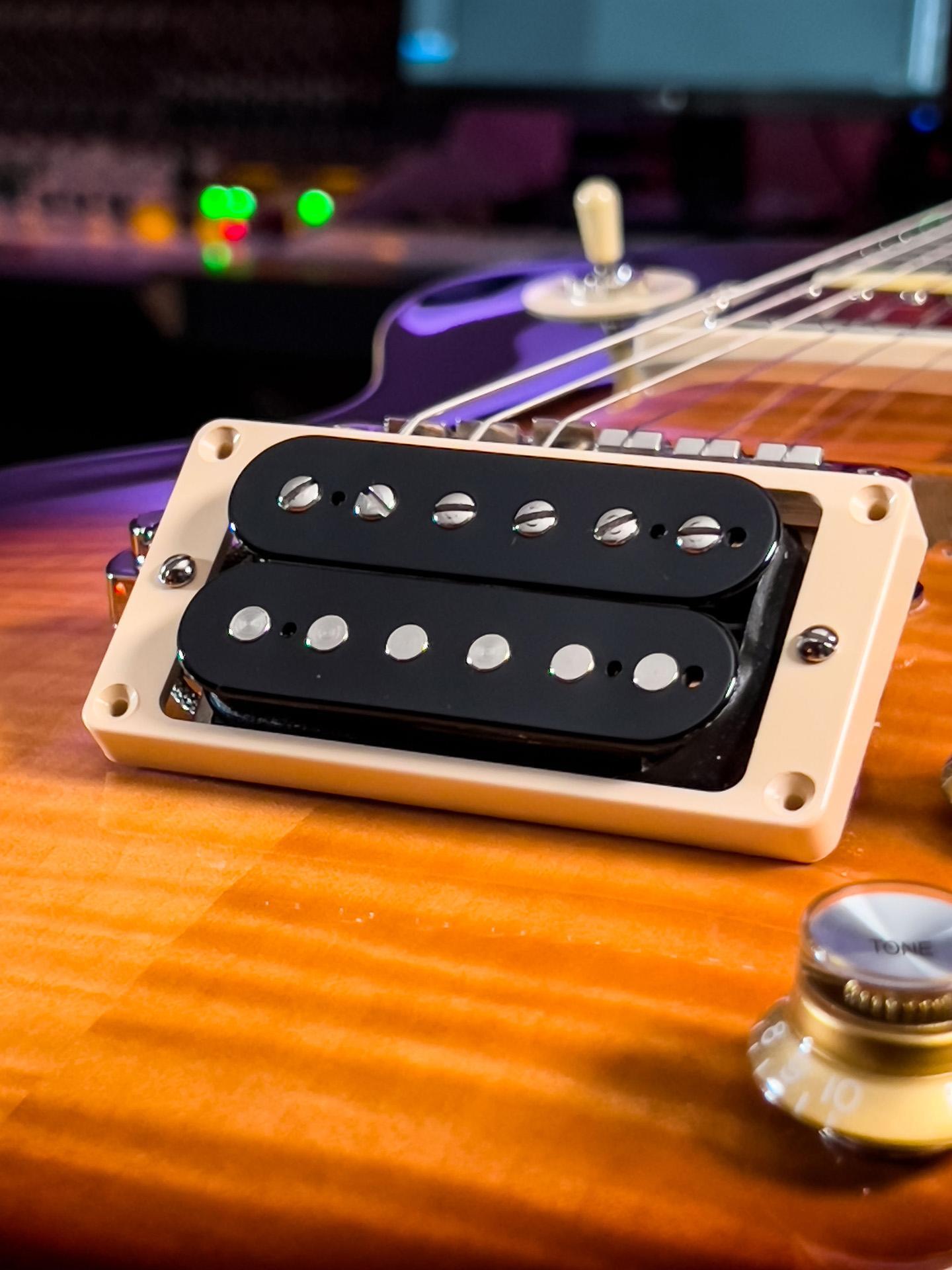
Mojo Tone ’59 Clone Humbucker 2-piece Pickup Set

Seymour Duncan SH-13 Dimebucker Bridge Humbucker Pickup
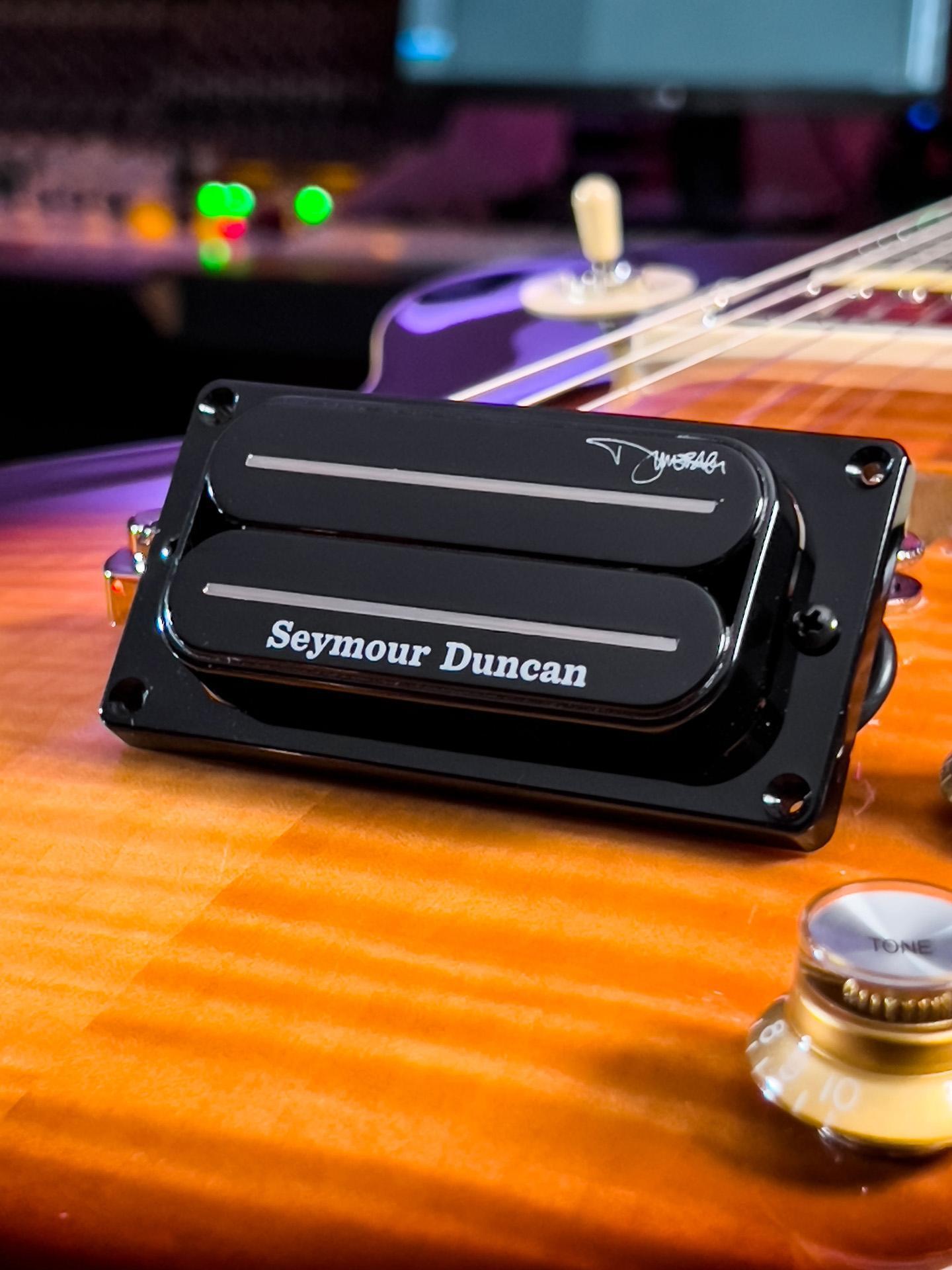
DiMarzio PAF 36th Anniversary Bridge Humbucker Pickup

Seymour Duncan SH-8b Invader Bridge Humbucker Pickup

DiMarzio X2N Bridge Humbucker Pickup
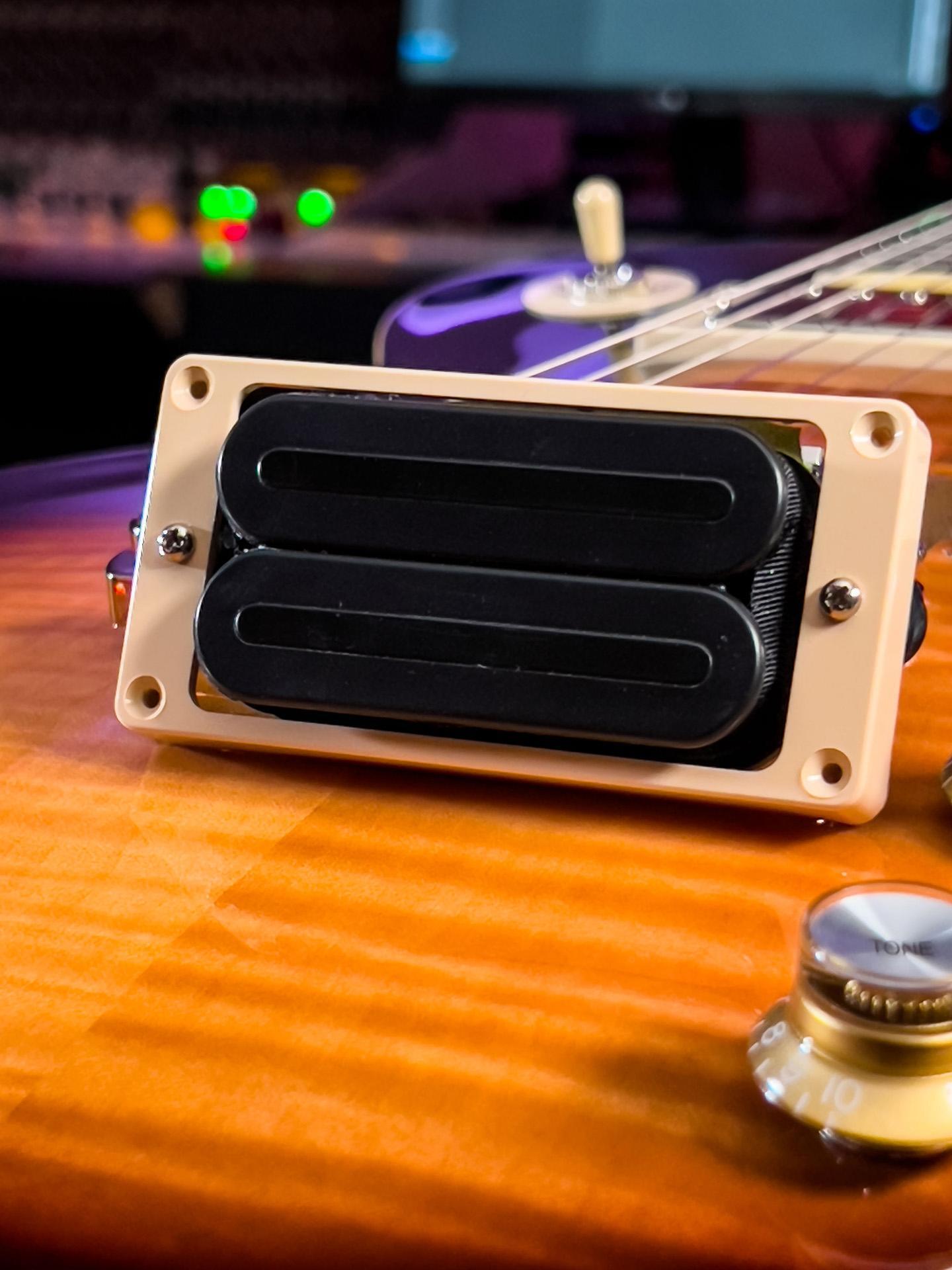
PRS 57/08 Bridge Humbucker Pickup

EVH Wolfgang Bridge Humbucker Pickup
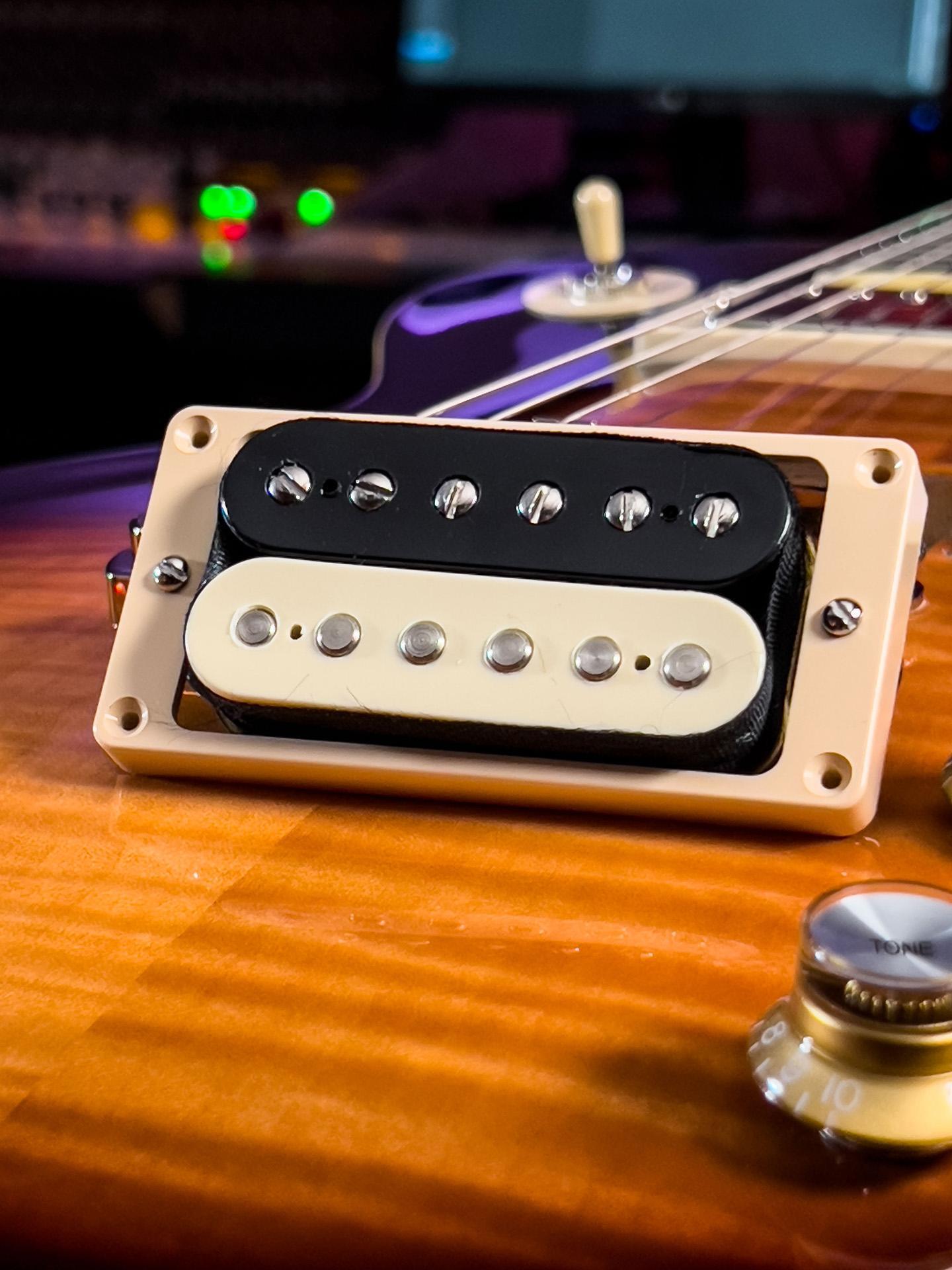
Seymour Duncan SH-PG1b Pearly Gates Bridge Humbucker Pickup
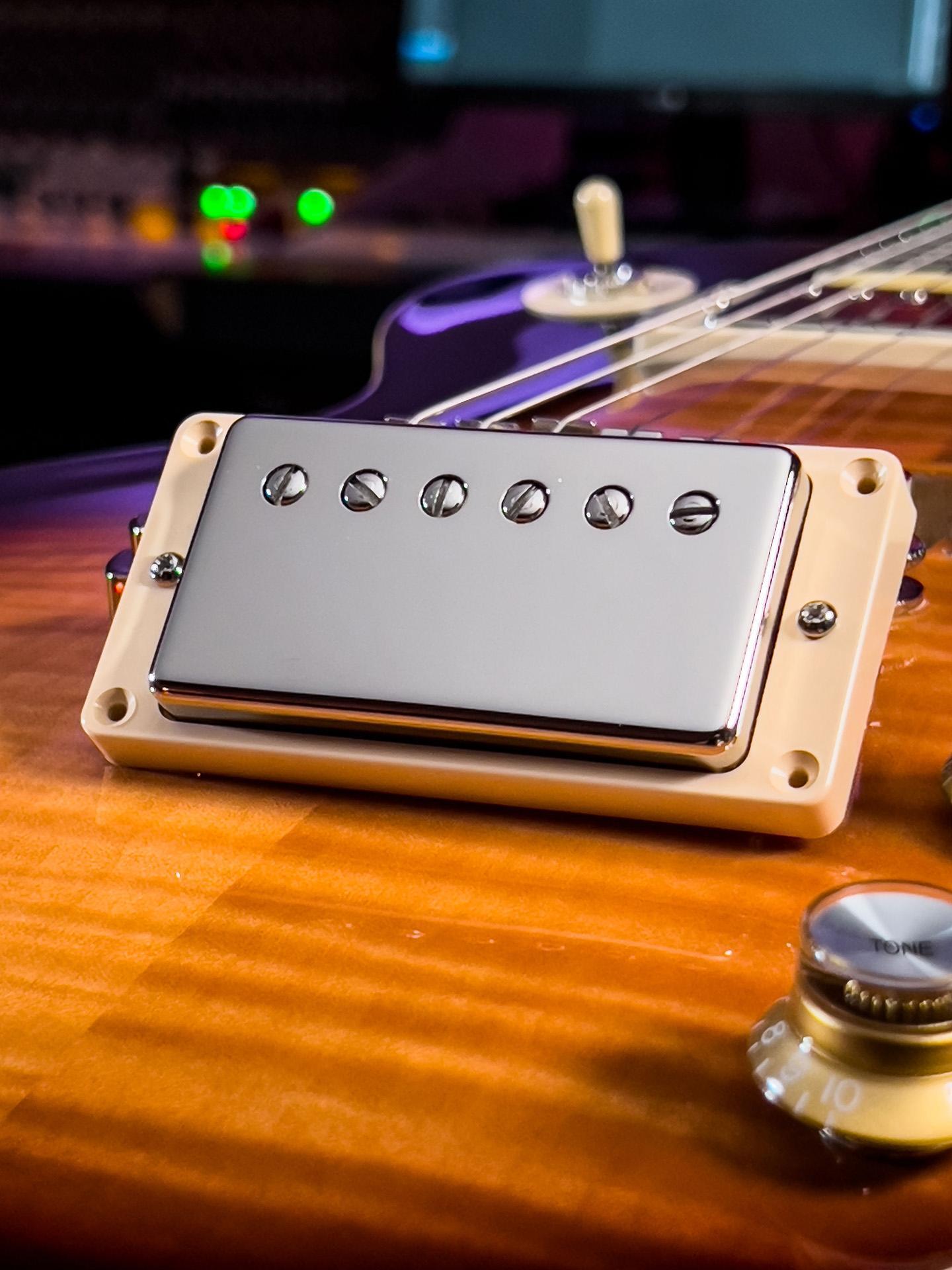
Gibson 500T Super Ceramic Bridge 4-conductor Pickup
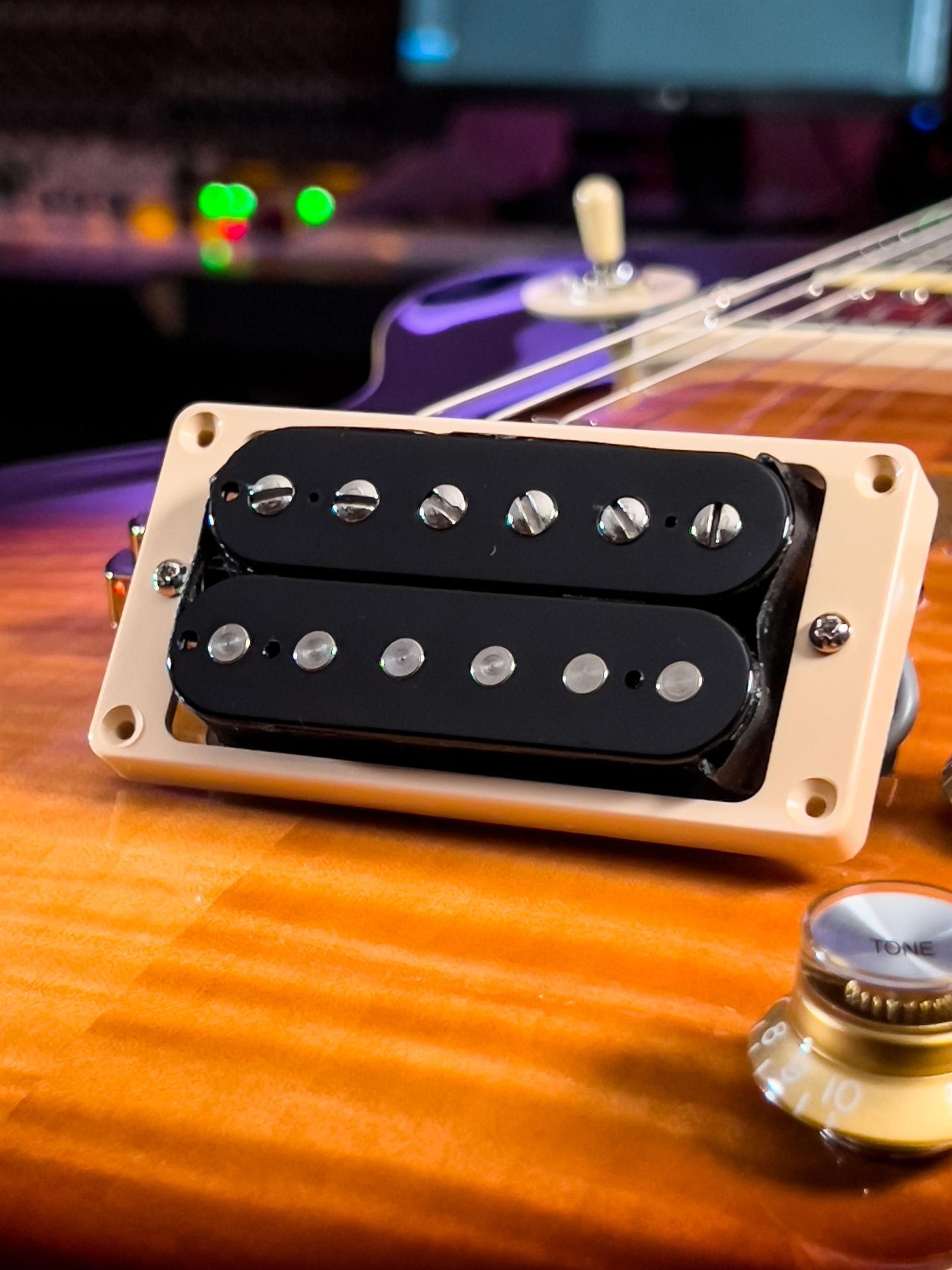
PRS m (Metal) Bridge High-output Humbucker Pickup

Seymour Duncan SH-55b Seth Lover Bridge Pickup
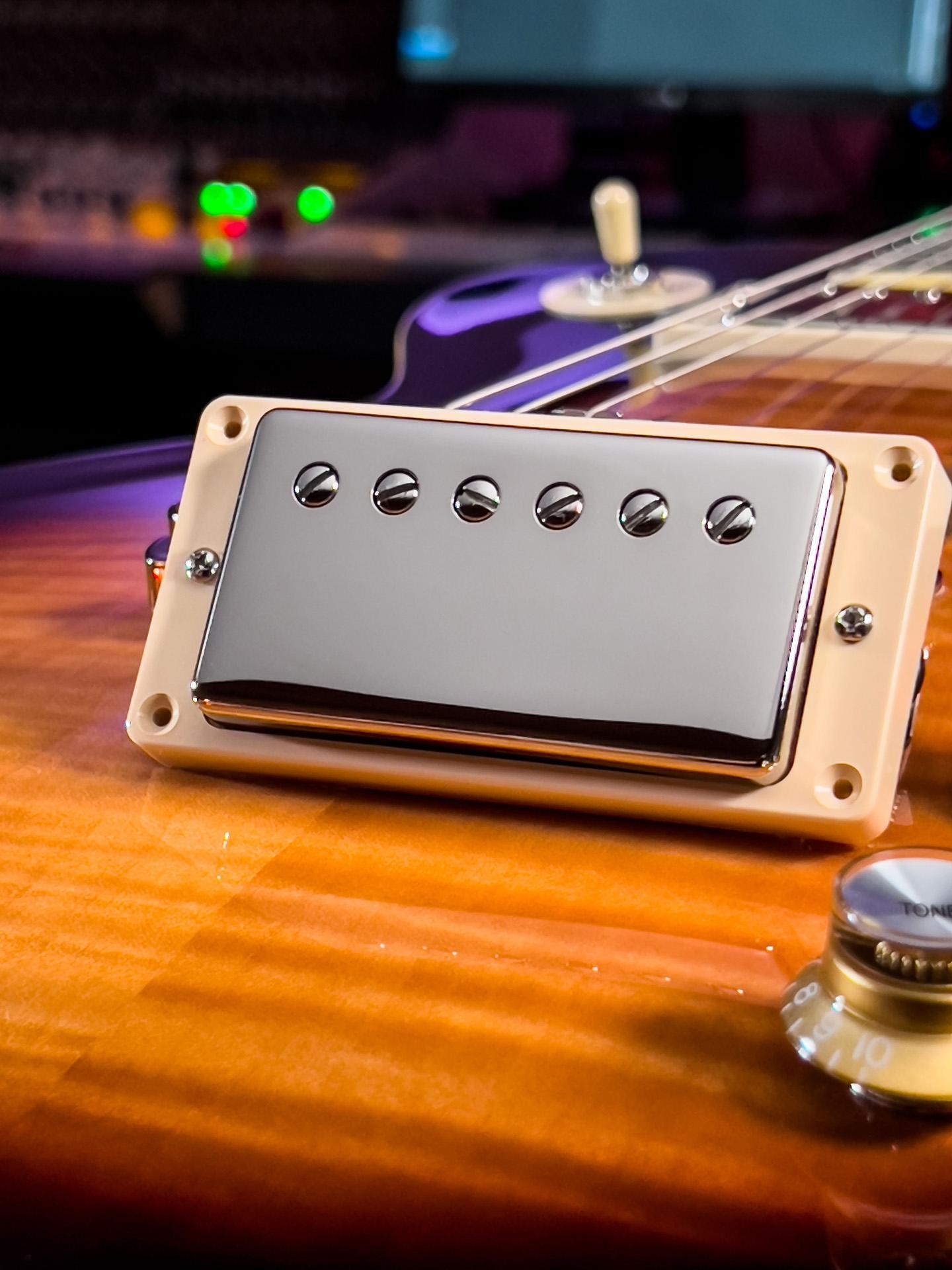
Gibson Custombucker Pickup

Seymour Duncan Zephyr Silver Humbucker Pickup Set
Whew! Exactly How Did We Do That?

We’ll start with the recording setup and circle back to how we prepped the guitar. We went into the studio on August 16 (remember that date) for two full days of recording with Don Carr. Shawn Dealey, Sweetwater Studios head engineer, decided to use four different cabinets. Four, you say? Yeah, but not at the same time, just one for each of four different sounds. We cherry-picked the amp/cab combination that would match each sound. (Ah, the benefits of working at Sweetwater Studios!) We plugged directly into one amp at a time using a 20-foot Vertex Effects ICSS-20 input cable and each cabinet was miked with a Shure 545SD cardioid dynamic mic, running into a Grace Design m801mk2 preamp to an Avid MTRX interface recording at 24-bit/96kHz into Avid Pro Tools. NOTE: All these were recorded with no EQ and no gain adjustments at the amp or in post. Any changes in level you hear are due to the output level of the pickups.

For the Ultra Clean sound, we picked the Diezel VH4 100-watt 4-channel tube head with a Marshall 1960AV 280-watt 4 x 12-inch angled extension cabinet.
For the Low Gain sound, we used the classic Fender ’64 Custom Deluxe Reverb 20-watt 1 x 12-inch tube combo amp.
For the Mid Gain sound, we chose a PRS HDRX 100 100-watt tube head into the Marshall 1960BHW 120-watt 4 x 12-inch handwired straight extension cabinet.
For the Heavy sound, we opted for the Soldano SLO-100 Super Lead Overdrive 100-watt tube head with a matching Soldano 412 cabinet. It was cranking out stadium volume — over 120dB in the room. It was so loud that Don had to stand as far away as the cable would allow to keep it from squealing!

The Player’s Perspective
By Don Carr
As the person who actually got to play with all these different pickups, I had two distinct experiences:
- The sound of the finished audio
- The feel of how each different pickup responded to the same riff through the same amps
The audio clips clearly speak for themselves . . . the differences are not subtle! Playing through each pickup felt different, as well. The differences in output level, EQ curve, and dynamic response, and the general liveliness were instantly apparent when playing them. So, it was important to keep the sounds the same to show the contrasting response from each pickup.
When I initially plugged in to the first amp with each new pickup, getting the strings to settle back into solid tuning and evaluating the response, it was fairly evident how each pickup would perform in all four sounds. Some pickups excelled in certain settings and were just OK in others, and some did well in all four sounds. However, as with any comparison of this scope, there were plenty of surprises.
Some of the pickups drove the amps so hard that they were almost hard to control. Some were the opposite, and I felt like I had to almost dig the notes out of the guitar. Some were more flattering to the sounds I had dialed in, and some a little less.
Any surprises? You bet! One pickup’s magnets were so strong, I could feel it pulling on the strings even at the proper height setting. It also pulled the screwdriver out of Doug’s hand when he got too close to the magnets! One pickup was squealing in the high-gain setting so much that I had to go behind the amp into the iso booth and close the door! A classic pickup that I used years ago surprised me with how well it performed overall. Some things are around for a long time — because they work. And there was one pickup that is discussed glowingly, and it certainly lived up to its reputation.
How We Set Up the Guitar
Did I say we? More like they! Major kudos to Wade Owen, Guitar Workshop manager, and luthier Doug Mantock from Sweetwater’s Guitar Workshop for planning, coordinating, and executing this huge undertaking. My contribution was taking a big box full of pickups and the Epiphone Les Paul to the Guitar Workshop and chatting about the best way to swap 16 (well, 17) pickups in a timely fashion. I watched Doug remove the stock bridge pickup and examine the body cavity to make sure all the pickups would fit since modifications are sometimes required. That’s when having experts like Doug is ideal. Did you know that, in addition to a full setup, Sweetwater’s Guitar Workshop can install different pickups on your new guitar purchase before it’s even delivered to you? That’s cool. We took advantage of that expertise. All modifications were made at the Guitar Workshop prior to going into the studio.

Doug put Gibson bridge pickup mounting rings on each pickup (if it didn’t come with a ring) and also added quick disconnects soldered to the wire leads to speed things up in the changeovers. Here’s how we displayed all the pickups in the control room so everything stayed organized. (Those chrome-covered pickups all look surprisingly similar!)
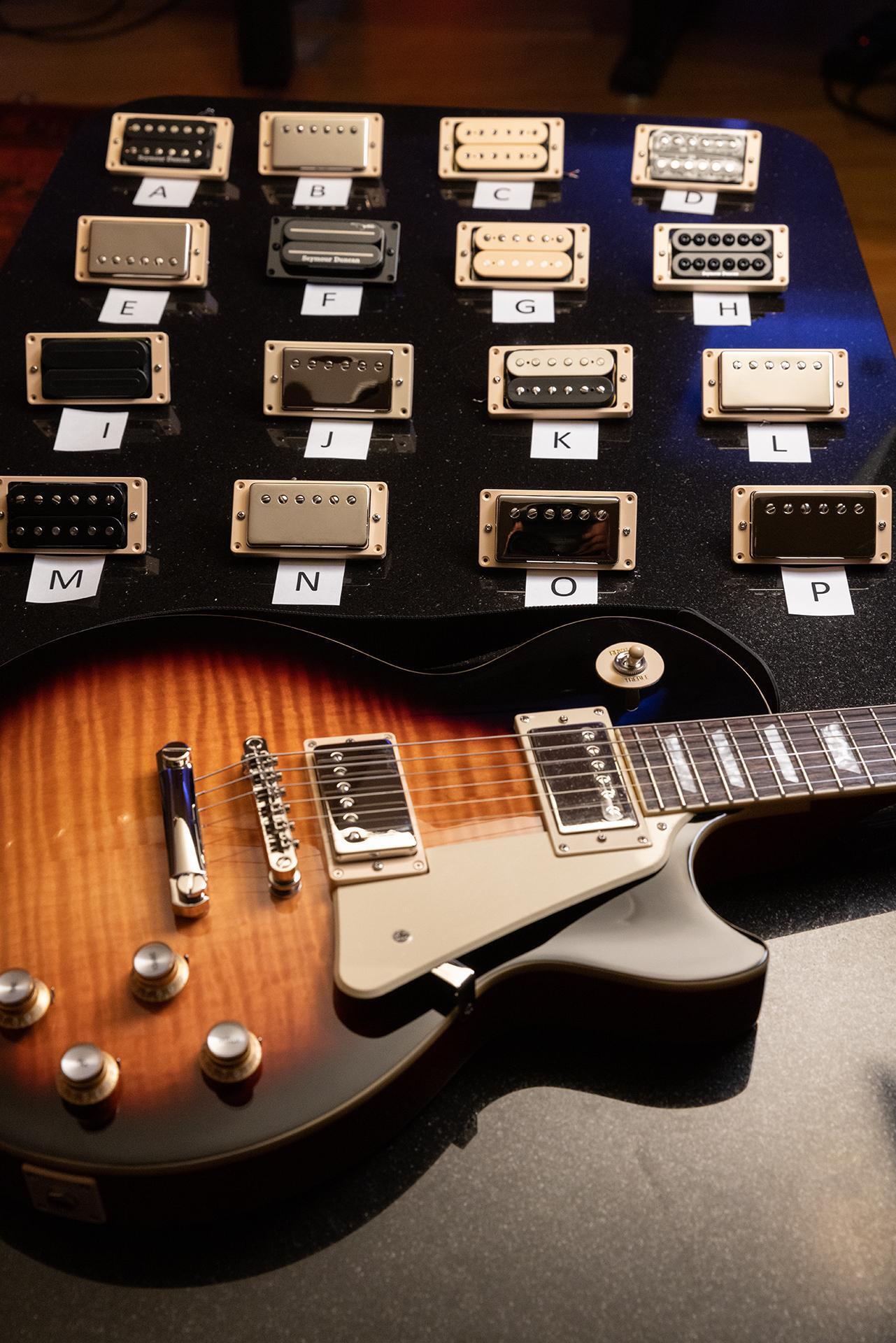
Here’s Doug’s setup as he swapped the pickups. Seventeen times!

Here’s a time lapse of Doug doing one of the pickup swaps in Sweetwater Studio A. He was fast, but, in real time, it took him a little bit longer.
Pickup Considerations
When we first started discussing this project, I asked the pickup experts here at Sweetwater about what variables we’d encounter when trying out this many pickups. The answers shocked me. Here’s a list of variables to consider when choosing a pickup.
- Dimensions
- Magnet type (ceramic/alnico)
- Legs
- Wire type (42/43, coated/uncoated)
- Lead wire type
- Covered/uncovered
- Potted/unpotted
- Slug vs. screw
- Spacer material
- Baseplate material
Wow. Maybe you knew all that, but I never did. Instead of diving into detail about these (that’s a whole different article), if you want to chat about pickup brands and options, then give your Sweetwater Sales Engineer a call at (800) 222-4700.
The Gibson Custombucker Pickup

Way back in June, when we started on this project, we had no idea that the stars would align in such a way that we would get to debut a historic pickup that has never been available for aftermarket purchase. We were weeks into the planning process when we found out that the Gibson Custombucker pickup (pictured above), previously only available in Gibson Custom Shop Historic models, was coming to market. Gibson graciously agreed to let us introduce it to the market and let you hear it here in this article. It features classic Gibson “Patent Applied For” vintage-humbucker construction using Alnico III magnets. I can’t tell you how excited we were to get our hands on this pickup. We had previously discussed pulling a Custombucker out of one of the studio’s Custom Shop Les Pauls to include it. We didn’t have to. Now you can buy this highly desirable and never-before-available pickup for your own Les Paul. (Available Oct. 11, 2022.)
The “Plus One” – Seymour Duncan’s Zephyr Silver
We were literally setting up mics on our first recording day in the studio when Shawn Dealey said, “You don’t have a Zephyr? You gotta have a Zephyr!” How many times in the previous weeks had I heard “just one more”?
“Another pickup?” I shuddered. “Like we need a 17th pickup in this comparison.”
Then he showed me the Sweetwater Zephyr page with all the details about what makes the Zephyr unlike any other pickup. I was sold.
“Okay. Check and see if we have any in stock.” Not today.
“Can we get one?” Someone put in a call to Seymour Duncan.
“What’s the word?” It takes five weeks to get them. Ugh.
“Let me place a call,” I heard Wade say. Most days it’s good to be Sweetwater. We have a few connections.
On the other end of the line: “When do you need them? Oh, TOMORROW? Wow . . .” We explained our huge project and how interested all of us (and you) guitar players were.
“Well . . . let me call you back.” Ah, the suspense.
A few minutes later, we got a call from our contact at Seymour Duncan.
“Where do you want them delivered?” Oh, yeah! Way to come through for us!
As it turned out, master pickup builder “the legendary MJ” at Seymour Duncan dropped what she was doing and wound these for us that day. You’ll see her initials in the photo below along with the date they were made: 8-16-22.
The next day, 8-17-22, FedEx brought us a package, and everyone gathered around as we pulled the bubble-wrapped case from the cardboard shipping box. The gleaming walnut box with silver inscribed plaque heightened our eagerness for what we were about to behold.

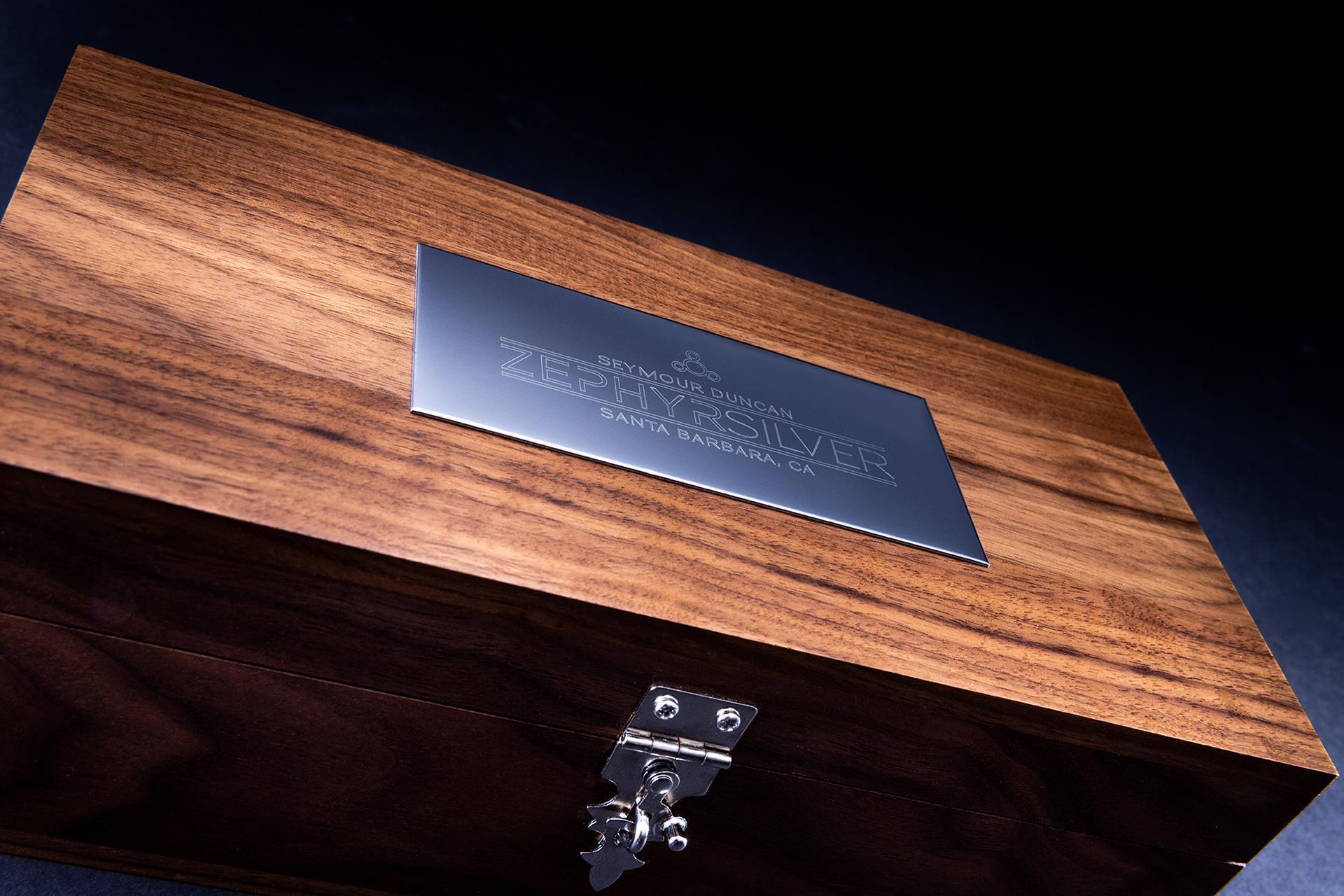
We all gathered around as Doug flipped the latch. We didn’t want to miss the trumpet fanfare or the sound of the angel choir as he opened the case. We were not disappointed.
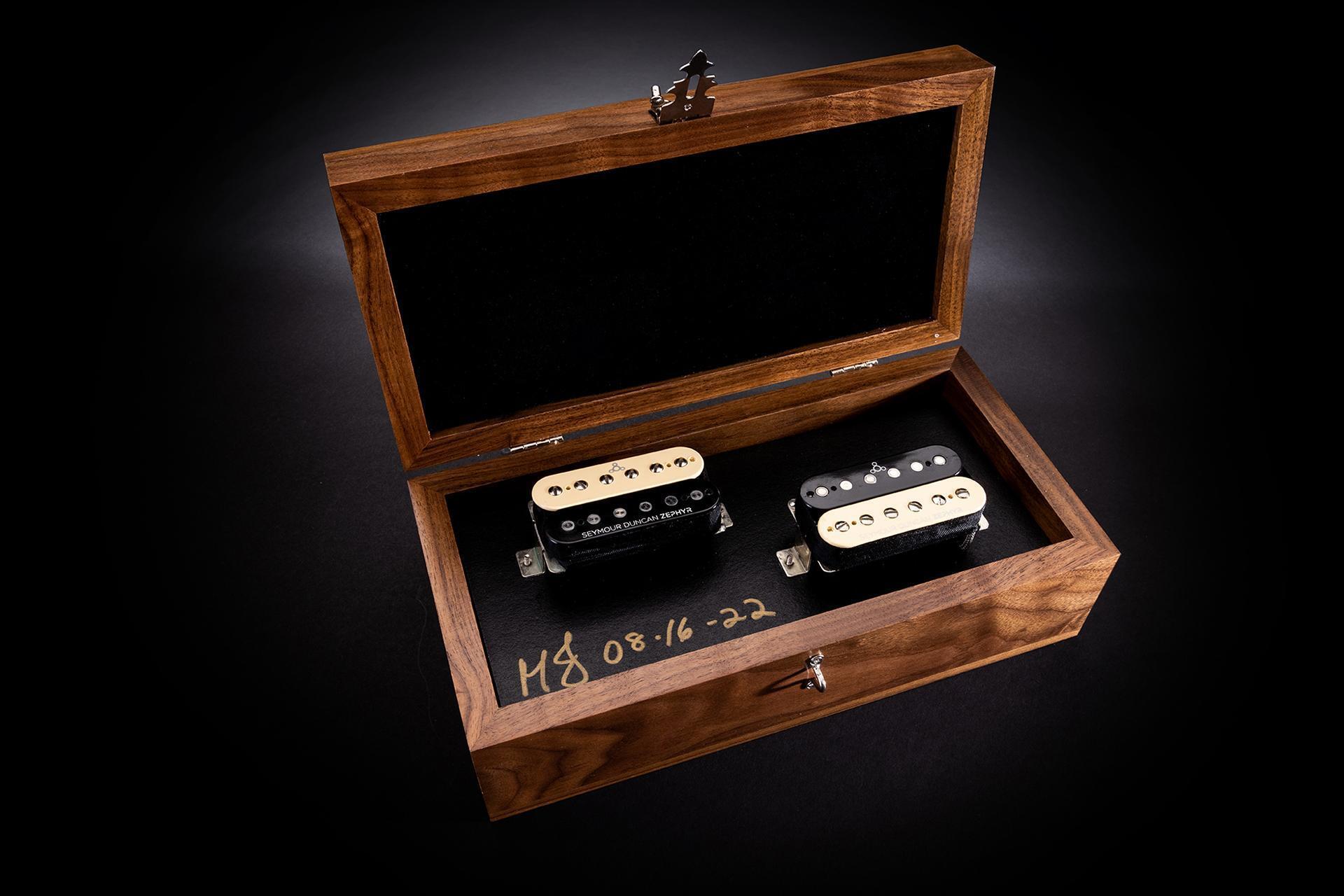
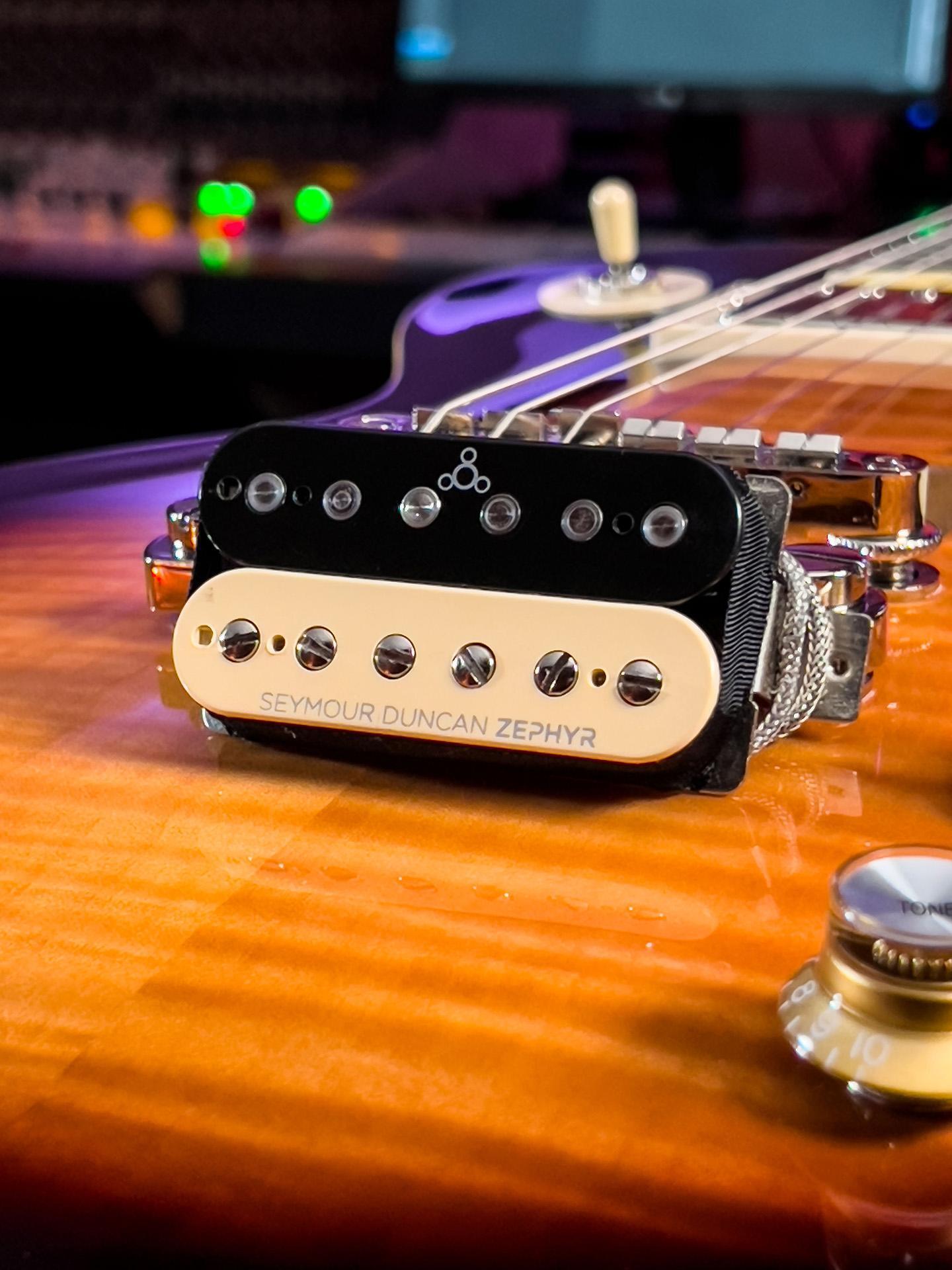
You’re probably wondering, “Apart from the walnut case, what makes these Zephyr Silver pickups so special?” There’s the unprecedented sonic detail and dynamics — courtesy of over a mile of solid-silver magnet wire in each pickup — glass-filled nylon bobbins, and cryogenic treatment for starters. Clearly, Seymour Duncan spared no expense in making these the Holy Grail of pickups: “the most sensitive and expressive pickups we’ve ever created.” While they come at a premium price, listen for yourself and see if your guitar and your tone are worthy of that investment. Let your ears decide.
If you would like to see MJ actually winding a pickup, like she did on a recent trip to Sweetwater, then click here.
Parting Details from Luthier Doug Mantock
This is for the sticklers for details because we figured you’d ask. You’re just like us.
- All the pickups were mounted in Gibson bridge pickup mounting rings set to 6/64 bass and 4/64 treble. Note: The X2N was a little farther away to maintain intonation.
- The neck pickup was also set to 6/64 and 4/64.
- The guitar was set with .005 inches of relief and the action set to 4/64 bass and 3/64 treble in standard tuning.
- All aspects of the guitar were left completely stock except the bridge pickup(s) and terminal block in the control cavity.
- The guitar was strung with D’Addario NYXL1046 NYXL nickel-wound electric guitar strings .010–.046 regular light, and the strings were changed once (after 10 pickup changes) during the two days.
- Everything was kept clean with D’Addario instrument care kit.
- The MusicNomad tool kit and the D’Addario peg winder helped make all the swift pickup swaps.
Credits
I’d like to thank Don Carr, Shawn Dealey, Jason Peets, Wade Owen, and Doug Mantock for their help in achieving these recordings. I also want to recognize the valuable input from Matt Duncan, Pat Hannon, Mat Smith, Dylan Jones, Keith Coy, Thom Grant, Jay Piccirillo, and all the other geniuses in Sweetwater’s Merchandising department for their input and direction. Thanks to Matt Summy at Seymour Duncan for coming through with the Zephyr pickups, to Matt Owen and Chad Jenkins for the amazing photography.
Audio Clips Grouped by Sound
Here are all the pickups grouped by sound styles so you can hear them side by side.
Ultra Clean
Low Gain
Mid Gain
Heavy
Conclusion
If you’ve ever considered putting new pickups in your electric guitar, then Sweetwater needs to be your next call. Ring us up at (800) 222-4700 and talk pickups with your Sweetwater Sales Engineer. We’ve got a few options for you to consider.
*NOTE: This shootout was recorded and originally published in September of 2022.
Related Articles for Guitar Players