The digital revolution has enabled home recordists to achieve studio-quality mixes with only a modest financial investment. After all, DAWs and plug-ins are cheap compared to a professional-level analog console and vintage outboard gear. That said, the real pros — the folks with the Grammys — have always worked in high-profile studios built around gargantuan Neve, SSL, and API mixing desks. The tides are changing, however. According to celebrated engineers Andrew Scheps (Ziggy Marley, Adele, Red Hot Chili Peppers), Tchad Blake (Sheryl Crow, Suzanne Vega, the Black Keys), Michael Brauer (John Mayer, Coldplay, Calle 13), Dave Pensado (Mary J. Blige, Christina Aguilera, Black Eyed Peas), and Phil Tan (Mariah Carey, Ludacris, Rihanna), mixing on a computer — a.k.a. “in the box” — is the way to go. In this article, we’ll explore why these top-tier engineers have ditched their consoles and have made the switch to a DAW-based workflow.
Squeaky-clean, All-digital Signal Path
So, why would a world-class mix engineer with high-dollar analog gear at their disposal choose to mix in the box? Simply put, there are many advantages to this approach. For starters, since an in-the-box rig is largely devoid of cables and outboard gear, you don’t have to worry about electrical interference, dying tubes, or faulty transformers — your signal path will be as clean as clean can get. What’s more, you don’t have to stress over the sonic degradation caused by repeated AD/DA conversions.
Andrew Scheps agrees. “The D/A conversion is the worst part of any digital chain by far,” he explains. “So, now I don’t go through any — I feel like I’m sonically gaining something.” Andrew also recalls how power fluctuations used to have a profound — and unwelcome — effect on his mixes. “They would do something with the grid in Los Angeles,” he recalls. “Every once in a while, the power would dip, and so, of course, everything just sounds worse because all the voltage rails were struggling and pulling more current out of the wall.”
Plug-ins Deliver the Analog-style Goods
But what about the sonic mojo you get from analog gear? According to Tchad Blake, an engineer who’s long been famous for crafting mixes with ample analog character, today’s plug-ins have all the mojo he needs. “I’m 99.8% in the box now,” he states. “I’m really happy with a lot of the plug-ins these days,” he continues. “I’ve sold a lot of vintage stuff, like I had some Neve modules — I had LA-3As, I had a rack of API EQs and pres — I had a fair amount of stuff, and I got rid of all.”
But do plug-ins sound as good as real-deal hardware? According to Tchad, this is a nonissue. “I don’t think they’re ever gonna sound the same,” he advises. “But I don’t care.” Indeed, Tchad routinely deploys Avid’s SansAmp PSA-1 plug-in in lieu of his old-school stompbox. Given that SansAmp-generated dirt is one of Tchad’s trademark sonic textures, this really says a lot about the quality of the plug-in.
Andrew Scheps agrees that in-the-box mixes can sound comparable to all-analog mixes. “There’s a little bit of a myth about all-analog things being better than all-digital things,” he says. “Well, that’s not a little myth; that’s a gigantic myth — and it is completely a myth.” According to Andrew, clients couldn’t tell the difference between his console mixes and his in-the-box mixes. “I wouldn’t be mixing in the box if it weren’t that, for me at this moment, my mixes sound better,” he states. “When I started to send mixes that were done in the box to clients and all I got back were normal mix notes, I knew that this would work.”
Michael Brauer also sings the praises of plug-ins. “In the last five years, it’s been a lot easier to choose a plug-in than to consider hardware,” he advises. “Plug-ins have gotten to the point now where they really can emulate the tone and attitude that you get from a piece of hardware gear; so, more and more now, it’s just easier to pick a plug-in than to use hardware.”
Dave Pensado has gone as far as to say he prefers plug-ins to some hardware units, such as the Eventide H910 Harmonizer. “A lot of the old first-generation or second-generation digital equipment had stability problems,” he explains. “The Harmonizer plug-in is better because it’s stable.” He also notes that many plug-ins offer comparable sound to their hardware counterparts. “When you don’t know which is which, you’ll probably pick the plug-in 70% of the time,” he states.
Phil Tan initially had trouble achieving his signature sound when he jumped in the box but eventually nailed it. “Almost every mix I did in the first 10 years of my career was done on SSLs with the bus compressor on the mix bus,” he advises. “When I switched to digital, I initially had problems finding plug-ins that gave me what I was used to hearing in the analog world,” he continues. “I was on the verge of purchasing the rack version of the SSL bus compressor when a friend suggested I check out UAD plug-ins,” he recalls. “I never did buy the rack version.”
The Joys of Total Recall
If you mix on an analog console (at least one without reliable automation), then you need to write down each and every knob and fader position if you want to continue the session at a later time. The same holds true for outboard compressors, EQs, and other processors. Nowadays, thanks to the digital revolution, you can save all your settings with zero complications.
According to Andrew Scheps, total recall is invaluable. “I couldn’t afford to be mixing one song at a time,” he exclaims. “It was killing me. I was turning down projects,” Andrew continues, “You try to explain to people, ‘Okay, we’re mixing this song, and when it’s done, it’s done,’ and then they call you back two weeks later because they want the hi-hat louder — I had to mix in the original session with a hi-hat track and make sure it’s in phase and push it up a little; that’s not mixing, that’s like forensic audio, and that’s not fun.”
Michael Brauer is on the same page with regard to recallability. “For anyone that’s on analog, you can’t recall a song a week later when you’re mixing another project,” he advises. “That’s what I did for years, and I’d have to put aside two or three days at the end of every record for recalls — and it was really inefficient. That’s why most people now mix in the box,” he concludes, “because they can pull that song up, hit a button, and boom, they make that change.”
Phil Tan also finds the repeatability of in-the-box mixing essential to the fast-paced world of modern mixing. “I do about 200 mixes a year and take, on average, one and a half days per mix,” he explains. “Very few artists and producers now attend the mix session,” he continues. “I have little or no control over when people get back to me, so it would be very costly for me to have to wait for that or to set the whole mix up again on a mixing desk at a later stage.”
Phil also appreciates that recallability leads to portability. “There would also be times where we would be in Atlanta working, work on it some more in New York, do a recall in Virginia Beach, and then go to L.A. to finish,” he explains. “So, for us to be able to get back to where we left off, it would have been impossible if we worked the conventional analog way, through a console.”
Who Uses What?
Here is a selection of plug-ins recommended by the engineers mentioned in this article. This isn’t an exhaustive list. Rather, it compiles a sampling of the plug-ins that each engineer has talked about or demonstrated or is on record as having used on a mix.
Michael Brauer
- PSP Audioware 2445 EMT
- PSP Audioware FETpressor
- PSP Audioware PSP preQursor2
- iZotope Ozone
- iZotope RX
- Waves Abbey Road Collection
- Waves Brauer Motion
- Waves Chris Lord-Alge Signature Series
- Waves Kramer PIE Compressor
- Waves Manny Marroquin Signature Series
- Waves Tony Maserati Signature Series
- Waves Vitamin Sonic Enhancer
Phil Tan
- Slate Digital VMR
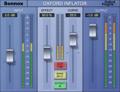
- Sonnox Oxford Inflator
- Universal Audio UAD SSL 4000 Series Console Bundle
- Waves C4
- Waves Chris Lord-Alge Signature Series
- Waves CLA Classic Compressors
- Waves Doubler
- Waves H-Delay
- Waves S1 Stereo Imager
- Waves L2 Ultramaximizer
- Waves Linear Phase EQ
- Waves Renaissance Maxx Bundle
- Waves SSL 4000 Collection
Got questions about mixing in the box? Want to fortify your plug-in arsenal? Give your Sweetwater Sales Engineer a call at (800) 222-4700. We’ll be happy to help!