

The Nashville Number System is a quick and easy way to write chord charts to songs in a way that others (well, others who are familiar with the system) can easily read. One of the main benefits is that it works regardless of the key of the song, and it clearly shows the song’s structure.
The Number System was originally developed by a Nashville vocal group called the Jordanaires; at the time, the Jordanaires were regularly working three or four sessions per day, recording three or four songs per session. They weren’t being given sheet music — only lyrics — and wouldn’t have time to work out and then memorize their harmony parts for 12–15 songs per day, so they came up with the idea of using numbers based on the key of the song (think of the “Do-Re-Mi” song from The Sound of Music) with “1” being the tonic note of the key with the melody written above the words. The session musicians took that idea and modified it into what we now know as the Nashville Number System. Over the years, the Nashville Number System has evolved into a method of writing chord charts and melodies that combines Nashville shorthand with formal notation standards.
In the days when arrangers and copyists would write out lead sheets for a song, any time the singer decided to change keys, the whole chart would have to be rewritten. Not so with number charts since number charts are not key specific: the “1” chord is the tonic chord no matter what key the singer chooses.
How It Works, Part 1 – Scales
The Basics – Chromatic Scale
Before we begin, let’s discuss two scales — the chromatic scale and the major scale. We’ll use the key of C for the following examples. The chromatic scale essentially divides an octave into 12 notes, each a half step apart. Starting with C, those 12 notes are:
C, C♯, D, D♯, E, F, F♯, G, G♯, A, A♯, B, (C)
The 13th note (included in parentheses above) is an octave higher than the first, another C. A chromatic scale starting on C can also be written with flats as:
C, D♭, D, E♭, E, F, G♭, G, A♭, A, B♭, B, (C)
Notes that have the same pitch but have different names (for example, C♯ and D♭ or G♯ and A♭) are called “enharmonic.” The choice of whether to write sharps or flats really depends on the key you’re in — but, for the most part, the Nashville Number System isn’t dependent on a specific key. Other than remembering that the sharp symbol (♯) raises a note by a half step and the flat symbol (♭) lowers a note by a half step, it’s not a major issue.
The Basics – Major Scale
A major scale is made up of seven notes, so a C major scale, starting on C, contains the following notes:
C, D, E, F, G, A, B, C
The final C note is simply an octave higher than the first C note; there are only 7 notes in the scale with one repeated. The intervals that make up a major scale are: whole step (C–D), whole step (D–E), half step (E–F), whole step (F–G), whole step (G–A), whole step (A–B), and half step (B–C). You can see this on a piano — a C scale uses all of the white keys from C to C. (This is background information; if you already know the intervals that make up a major scale, great — if you didn’t, now you do!)
Replace the letters of the C scale with numbers, and you get this:
| C | D | E | F | G | A | B | C |
| 1 | 2 | 3 | 4 | 5 | 6 | 7 | 1 |
The relationship between the notes of the scale and the numbers below them is the heart of the Nashville Number System.
How It Works, Part 2 – Chords
Chords
Basic chords are generally made up of three notes separated by the interval of a third (which is why basic chords are also called “triads”). Look at the C scale above, and you may see that the first, third, and fifth notes are C, E, and G, which make a C major chord (the C scale is in the key of C). Here are the natural — that is, unaltered — chords in the key of C:
- C (C–E–G)
- D minor (D–F–A)
- E minor (E–G–B)
- F (F–A–C)
- G (G–B–D)
- A minor (A–C–E)
- B diminished (B–D–F)
In both music notation and the Nashville Number System, a minor chord uses a dash (–) as a modifier after the chord name. In the Number System, the natural chords in the key of C would look like this:
- 1 = C
- 2– = D minor
- 3– = E minor
- 4 = F
- 5 = G
- 6– = A minor
- 7° = B diminished (It’s uncommon to use a 7° chord, but I added it for the sake of completeness.)
Altered Chords
The chords described above are the natural chords in the key of C. Only the notes that are in the C scale are used to create these chords. But that’s not necessarily the way actual songs are written; there’s no rule that says you can’t use, say, a D major or a B♭ chord in a song that’s in the key of C — and, even if there was such a rule, songwriters would delight in breaking it.
It’s for this reason that the Nashville Number System uses modifiers — a dash to signify any minor chord, a superscript “+” for an augmented chord, and a “°” for diminished chords as well as numbers and symbols for extended chords and both the sharp (♯) and flat (♭) symbols.
Inversions
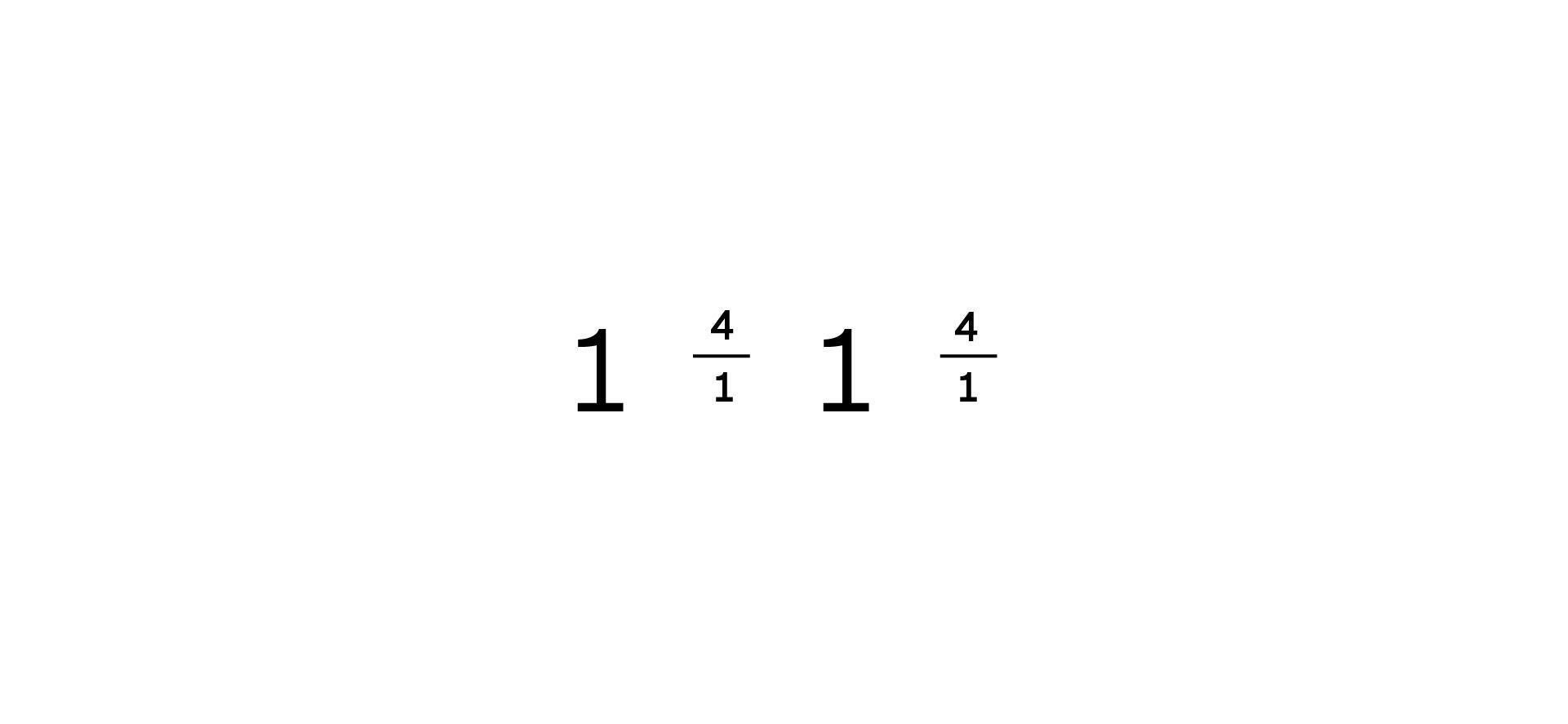
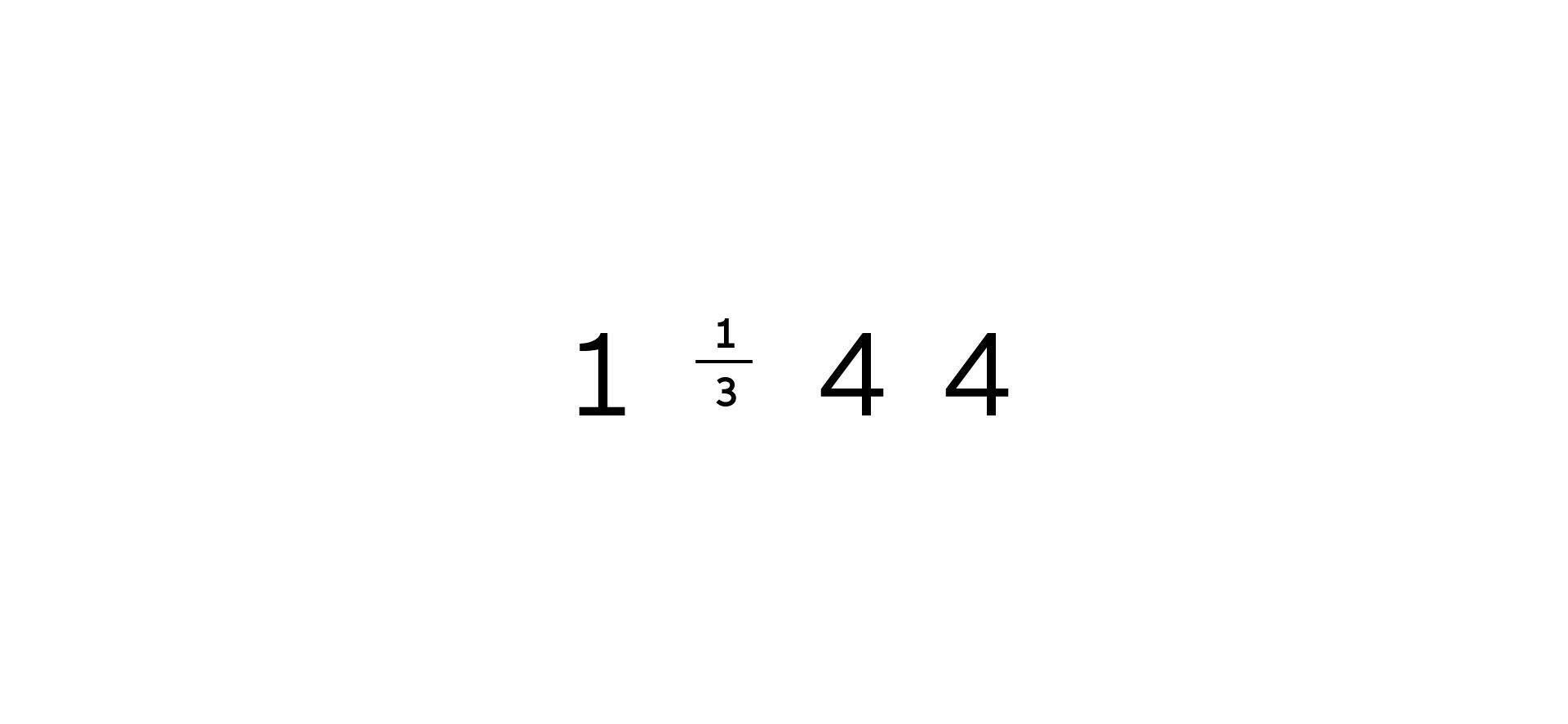
There’s one more chord modifier that should be mentioned: the method of notating inversions. The bass (or the left hand of the piano) doesn’t always play the root of the chord. You might have a passage with a C chord followed by an F chord with a C in the bass then another C chord; or a phrase that has a C chord, then a C chord with an E in the bass, and then an F chord. Inversions like these are written as fractions: C then F/C; or C then C/E (written as a fraction) then F.
Before moving on, let’s discuss songs in minor keys. The minor scale associated with any key (or scale) starts on the sixth note of the scale rather than the tonic note, or the “1.”
In the key of C, the relative minor chord is based on A, which is the sixth note in the scale. The chords associated with A minor are:
- 6– = A minor
- 7° = B diminished (if a 7 is used, it’s usually played as a minor chord)
- 1 = C
- 2– = D minor
- 3– = E minor (since it’s taking the place of a 5 chord, the 3 is usually played as a major chord)
- 4 = F
- 5 = G
If a song in a major key uses primarily 1, 4, and 5 chords, then a song in a minor key is likely to use 6–, 2–, and 3 chords.
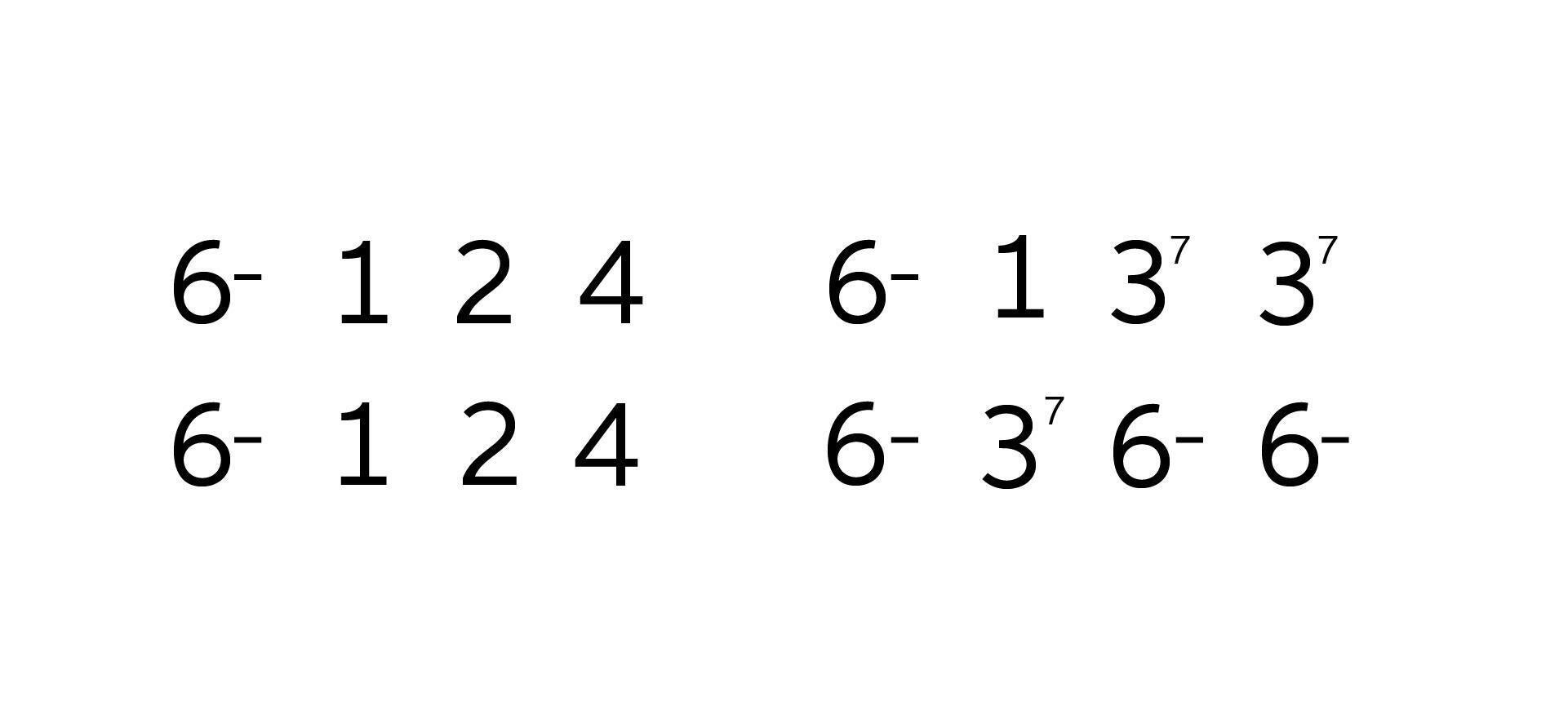
While there are times when it makes sense to write a chart in a minor key as a 1–, 4–, and 5, it will make more sense to the greatest percentage of musicians reading your chart to write it correctly (that is, as 6–, 2–, and 3 major).
As an example, here’s how a section of the classic blues song “House of the Rising Sun” would be written as a number chart (the recommended approach).
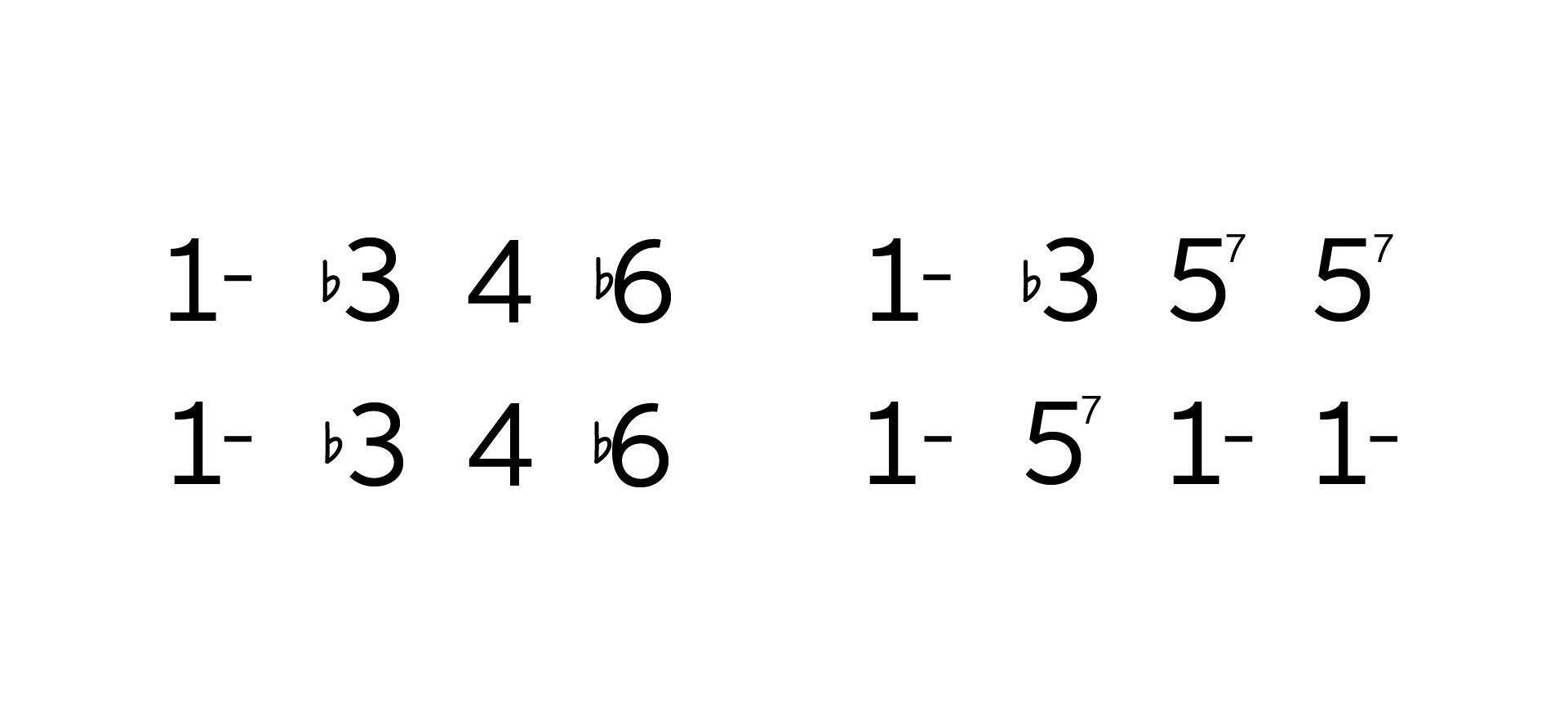
That’s not to say that you couldn’t write this same progression using a 1– as the tonal center — it simply makes it a little harder to visualize (the non-recommended approach):
Chords Not in the Key of the Tonal Center
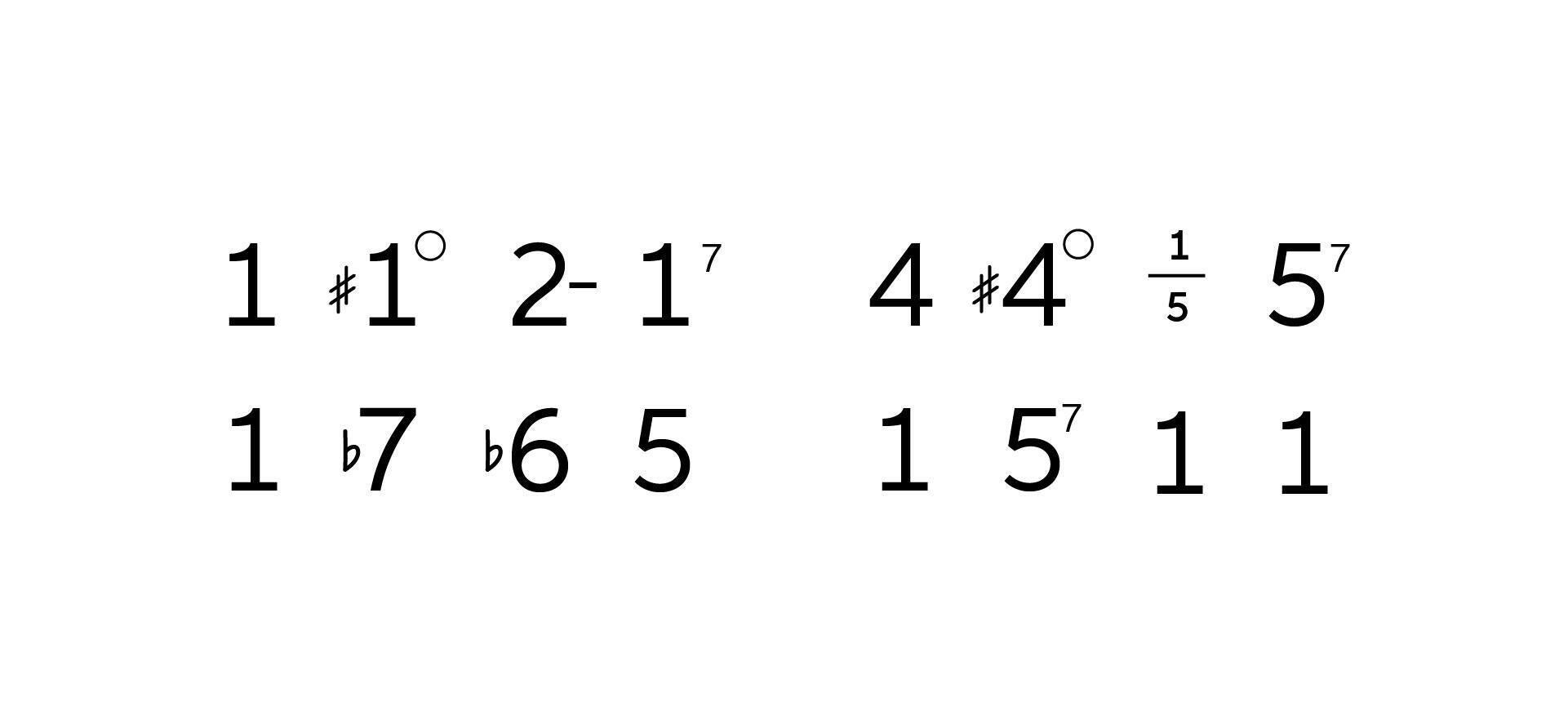
Chords that are out of the key (that is, that aren’t based on notes in the major scale based on the tonal center of the song) are simply written with modifiers. In the key of C, for example, you might have a B♭ chord. In the key of C, B♭ is a chord based on the flatted seventh note and would be written as a ♭7 chord. An E♭ chord (in the key of C) would be written as a ♭3 chord. In general, I’ll use the sharp symbol when moving from a 1 chord to a ♯1 (which is often diminished and, therefore, written as ♯1°) and from a 4 chord to a ♯4 (also usually diminished, or ♯4°). Otherwise, I tend to write them with the flat symbol since, after years of using numbers, a ♭2° and a ♭5° are harder to read than the standard way of writing.
How It Works, Part 3 – Timing
Bars and Beats
Every measure in a chart gets one or more numbers. In this way, anyone reading the chart will know when they need to change chords. If you’re writing a 12-bar blues, then each section will have 12 numbers, as follows:

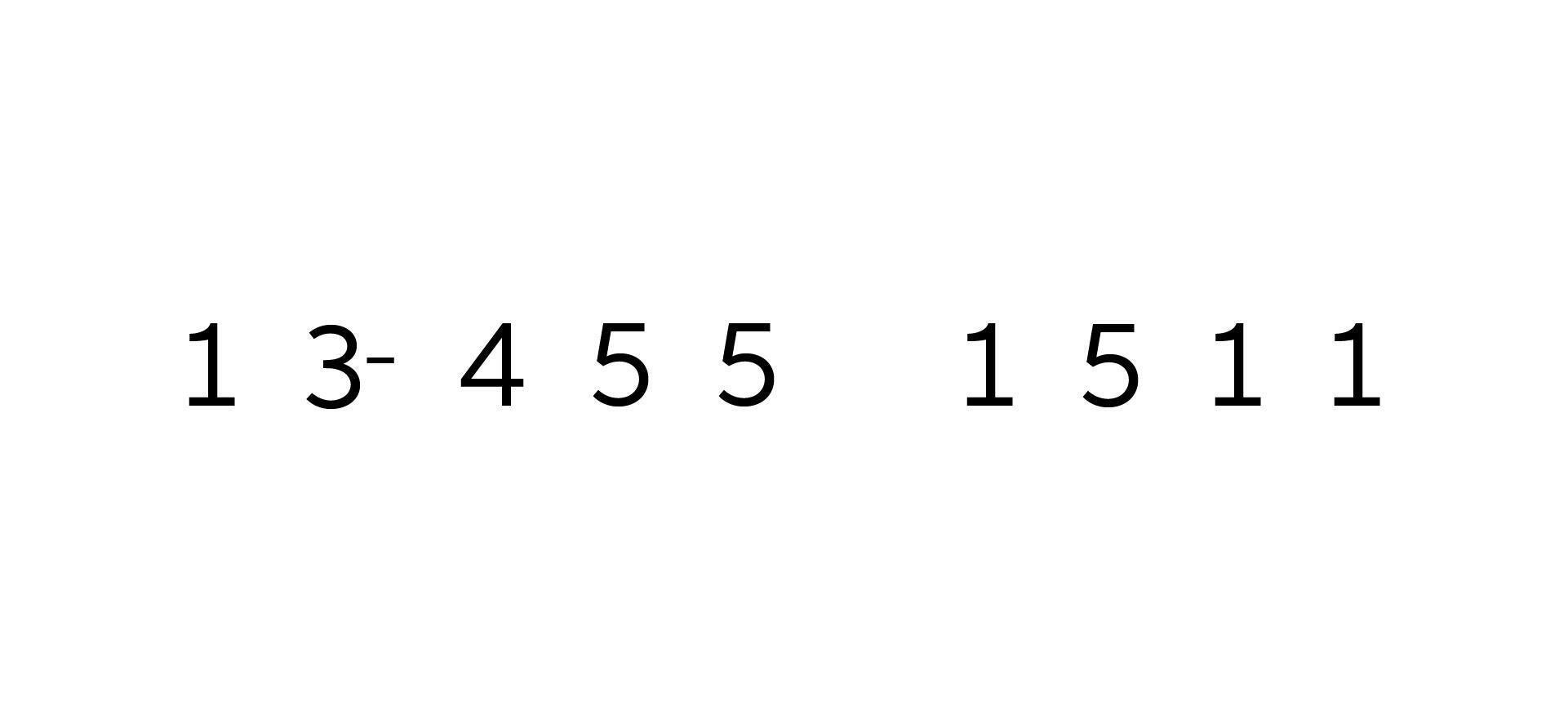
When writing charts with 8-measure phrases, it’s common to write eight measures per line, often with a bit of space between measures four and five; but 4-measure phrases (like the above example) are easy to read and understand when written with only four measures per line. So, what happens when you have a phrase that’s five measures long or only three measures long? Write it out so that it is easy to understand and play. Here’s an easy way to write a 5-measure phrase that makes it obvious that the phrase isn’t a 4-measure phrase:
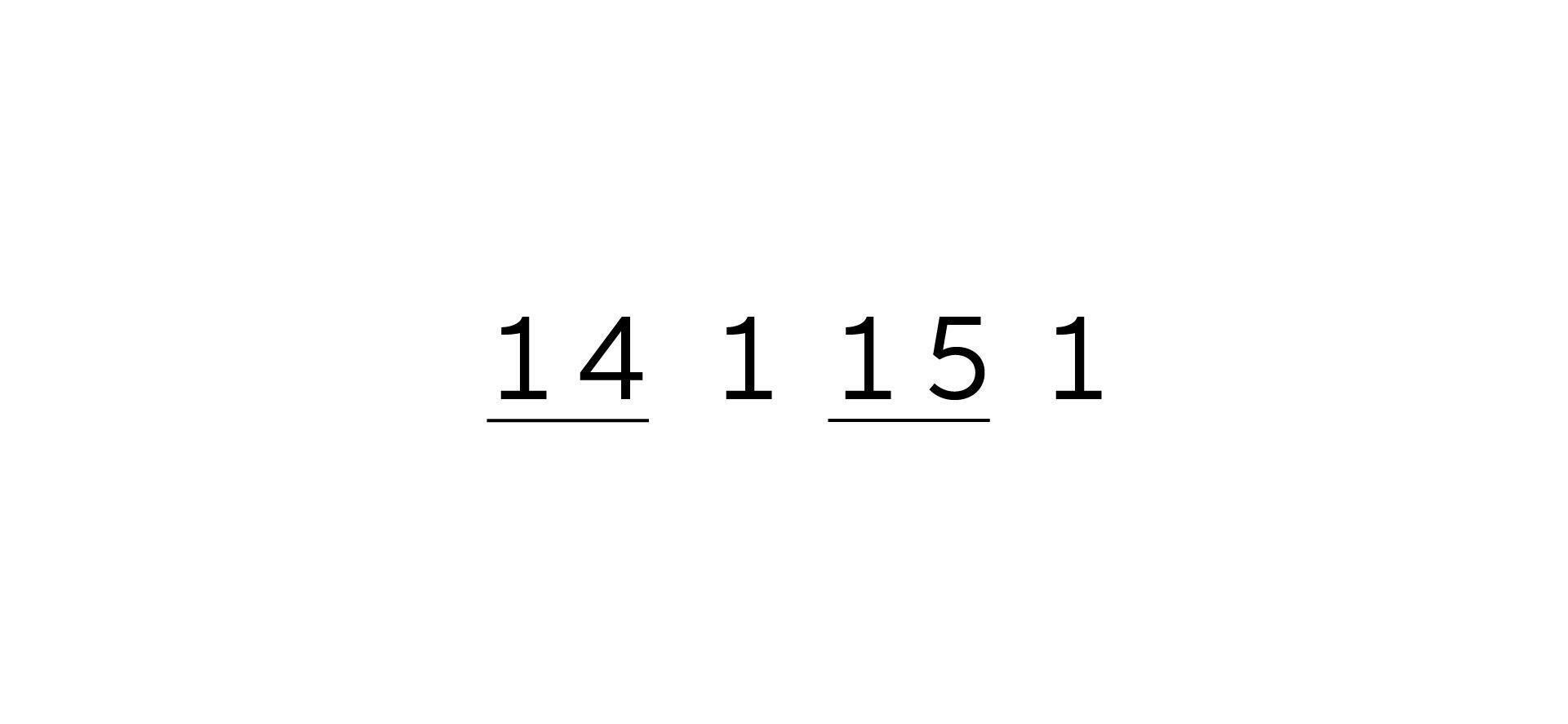
What happens when there is more than one chord in a measure? We notate it. When it’s an even split (for instance, two chords in a measure), we call it a “split bar” and notate it as follows:
When a measure is not evenly split (for example, if a measure has three beats of one chord then one beat of another), write the measure as a split bar but notate the split above it.
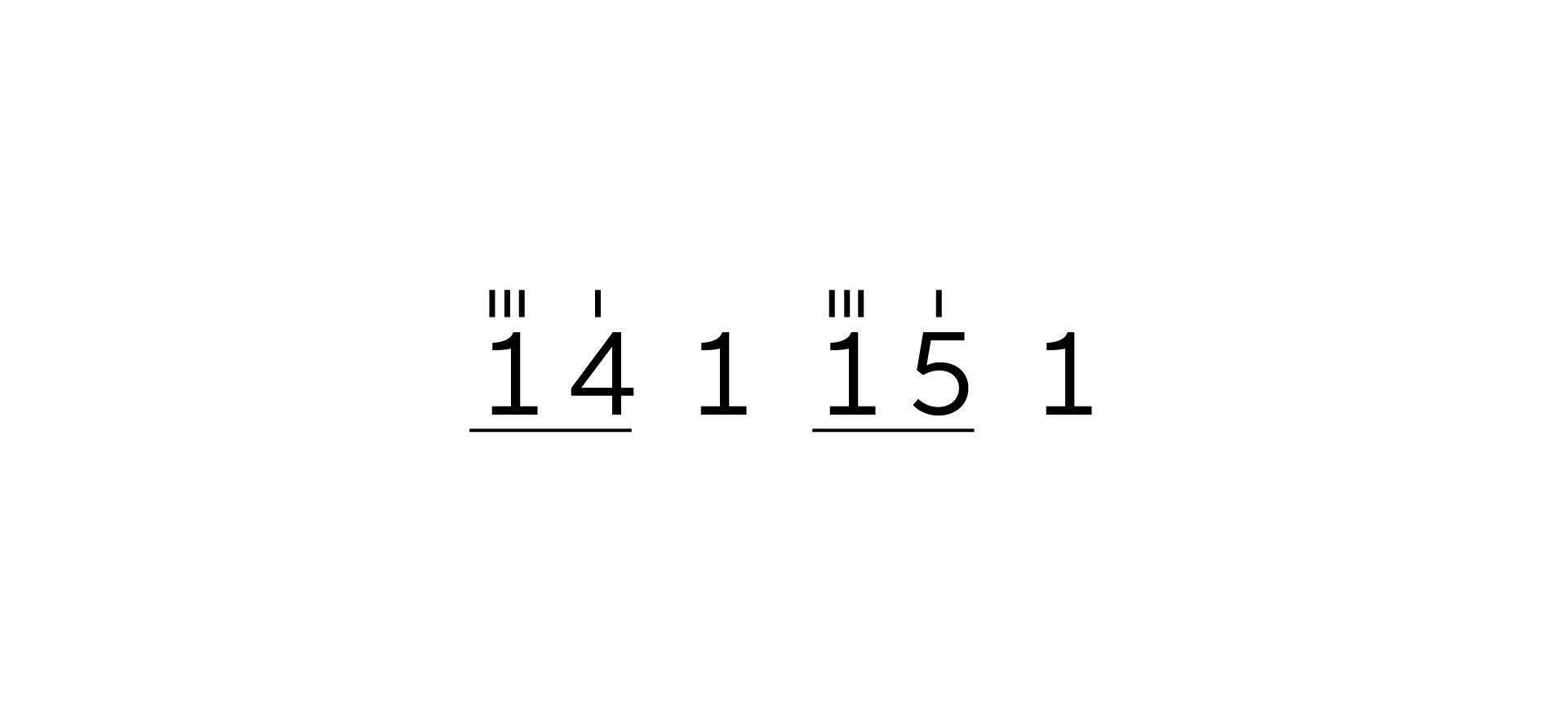
This is a graphic way to write that you have three beats of 1 then one beat of 4 in the first measure and one beat of 1 and three beats of 4 in measure four. It’s also not uncommon to use notation in the space above the split bar — a dotted half note then a quarter note.
Accents
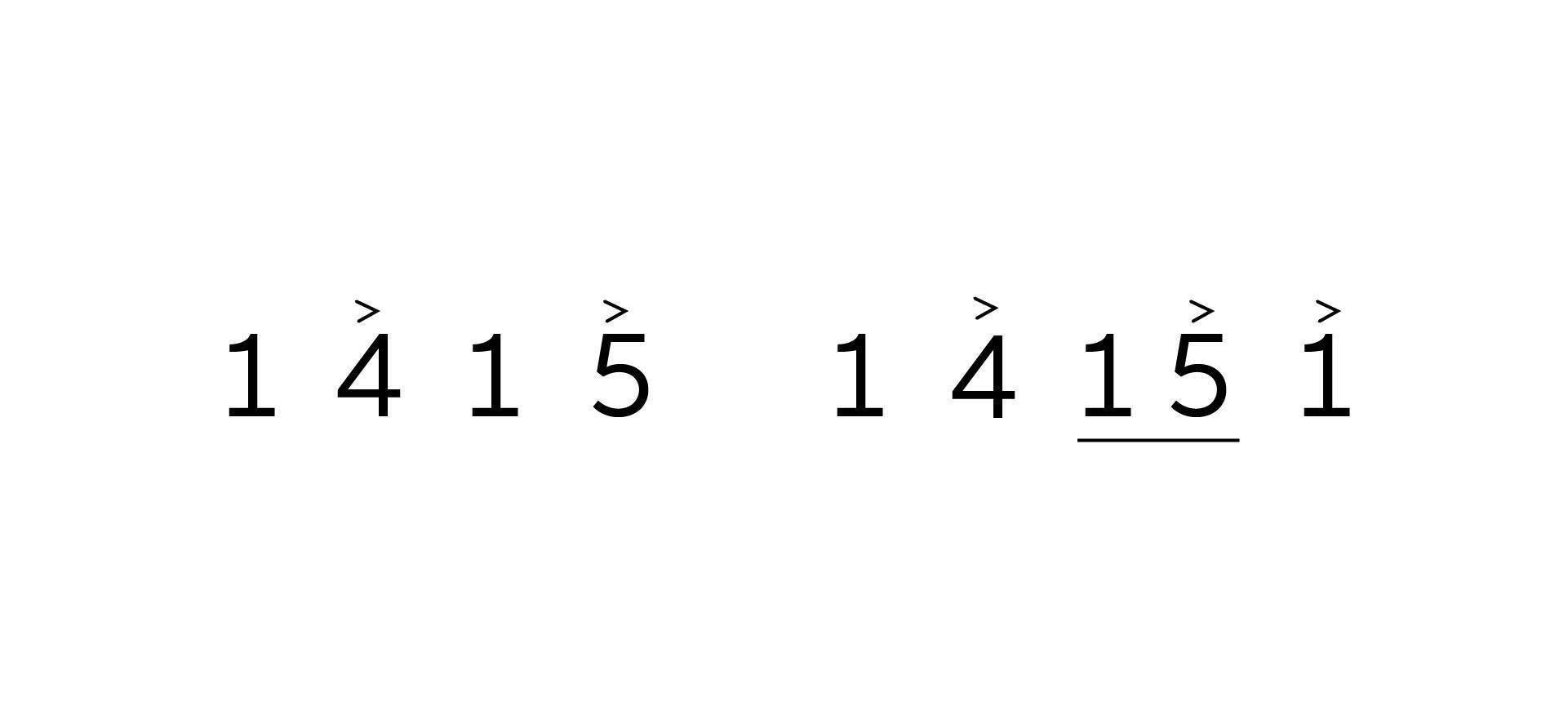
There are a number of ways to notate accents — perhaps a chord change happens an eighth note before the downbeat or, in a split bar, on the “and” of three. When I’m writing a simple push like that, a simple “ˇ” or “>” above the chord that starts an eighth note early is a good signifier. With a more complex rhythmic pattern, it’s common to use notation to specify exactly what’s going on. Remember that the goal is for other musicians to be able to read your charts correctly the first time they play it — write the chart accordingly.
Other Musical Notation
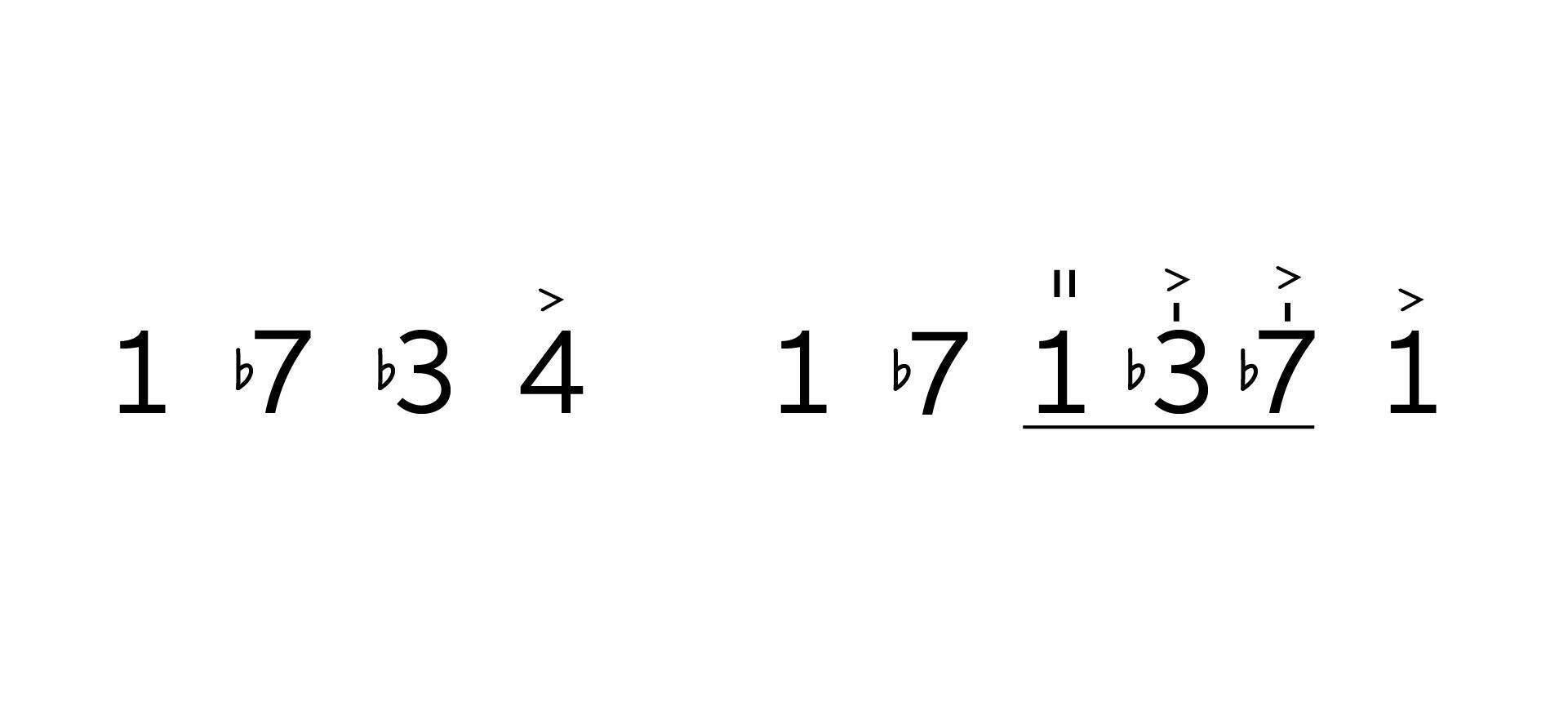
In the above section, you learned about using a tied eighth note to signify a pushed note. It’s not uncommon to use other standard notation — including quarter notes and half notes — if it makes the chart easier to understand.
The example below shows how a combination of numbers and notation can help make specific parts clearer:
Some other conventions from notated music — repeat signs, first and second endings, fermatas, and even DS’s and codas — are commonly used. Remember that the people who developed the Number System were great musicians who could also read notation. Number charts were simply a solution to the problems of artists who showed up without written charts — or the knowledge of what key they would need to do a particular song in.
So, let’s put all of this together into some example charts:

Notice that this is a waltz in the key of G with a first and second ending at the end of the first chorus, a bridge, and a short solo before the final chorus and tag. Pretty self-explanatory.
Notice the diamond at measure 16 of the verse? It’s a standard part of the Number System and typically represents a whole note (though, it can also be used to signify a half note in a split bar).

This chart is written as a swing chart with pushed chords on the back halves of some of the measures and even a pushed half-note diamond at the end of the verse.

Guitar-centric songs like this one are generally pretty easy to follow; the trick is to pay close attention to where you are in the chart.

Our final example is back in a minor key and is written with a half-time feel (think of Dolly Parton’s “Jolene” for the vibe). Notice that, as you go through the chart, it sounds like it goes to the relative major key for part of the solo; writing the chart in a major key (D), even though it feels minor (B minor), means that you don’t have to note key changes in the chart, which makes the chart easier to write and to understand.
Conclusion
While this is an overview of the Number System, I recommend that you visit https://nashvillenumbersystem.com and buy a copy of Chas Williams’s book. Chas wrote the first (and most successful) book on the theory and practice of the Number System, and you should have your own copy. Besides that, I used his Nashville Number System iPad app — NNS (also on his website) — to write all of the examples used in this article, so I suggest that you get them both.