

There once was a time when studio bass players showed up for a session carrying only their bass — but that was a different time. These days, it’s common for session bassists to bring multiple basses to the studio, plus the entire signal chain they prefer to use. That signal chain can be as basic as bringing their own direct box or it can go all the way up to a studio bass rack that includes preamps, EQ, and compression, along with a pedalboard for effects. Is a high-end bass rack overkill? Perhaps, but if you want to have complete control over your recorded sound and if you do enough studio work to make the effort worthwhile, then it’s the only way to go.
Before we get too deep, I should point out that there are upsides and downsides to building a high-quality bass rack. One downside is the cost of high-end gear; a rack filled with great signal processing can cost thousands of dollars. Another is the burden of carrying that rack around; even in recording centers such as Nashville, New York, and Los Angeles, cartage companies (and recording projects that will pay for cartage) are disappearing, so you’re most likely going to be schlepping the rack around yourself. For that reason, a strong back and a roller cart, such as the Rock N Roller R8RT, will be a big help. But there are upsides: in addition to having the bass sound of your dreams, you’ll also gain a measure of protection from engineers who might not be as sympathetic to the nuances you’re trying to capture. Once the engineer sees that you can run directly into his recording device, he’s less likely to use his possibly inferior compressors and EQs.
Start with a DI
If you’re thinking about upgrading your recorded bass sound, then start with a great DI. The A Designs REDDI works great for those who prefer the sound of tubes, and if you like Class A solid-state electronics, then the Avalon U5 is marvelous. The maximum output of both the REDDI and the U5 is line level, which means that you plug directly into the recorder, without going through a microphone preamp. But more pertinent to today’s topic, you can plug the output of either of these DIs directly into a high-end compressor.
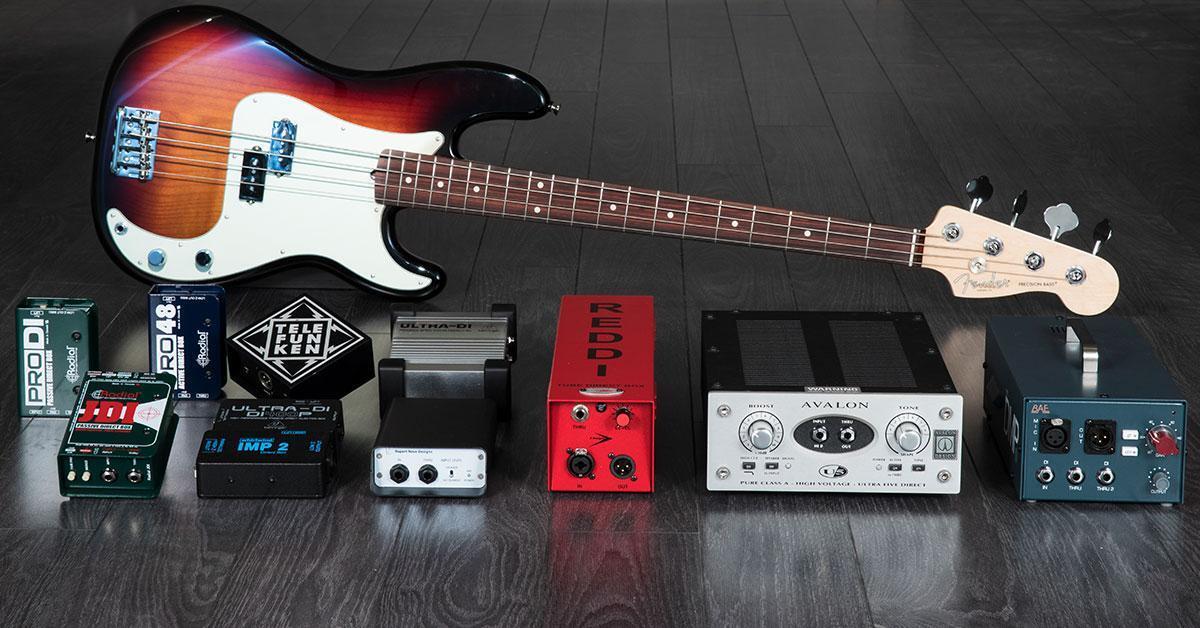
If you want to hear how much difference a DI makes, then check out our Bass Direct Box Comparison with Audio Samples.
Compressors — Beyond Pedals
There are great-sounding compressor pedals available these days, but when you move to high-end, single-channel, rackmounted optical tube compressors, the difference can be amazing. I’ll happily share that my all-time favorite compressor is Tube-Tech’s CL 1B; in the last 25 years, probably 90% of the sessions I’ve been on have included a CL 1B on the bass track. If a vintage vibe sounds more appealing, then remember that the optical compressor that started it all was the Universal Audio LA-2A. Universal Audio’s LA-2A captures the vibe of the original – not at all surprising, since Universal Audio’s founder, Bill Putnam, started manufacturing LA-2As in the 1960s; the current version was first reissued in 2000. Another option — one that has a vibe all its own — is the Retro Instruments Sta-Level, patterned on the classic 1956 Gates Limiter. The Sta-Level’s gain reduction circuitry sounds different than the optical circuit used in the CL 1B or the LA-2A, but that might be exactly the sound that suits you. Yeah, these compressors are pricey – but when you want the best, it usually costs a bit extra.
Going for Tone
The DIs mentioned earlier have massive amounts of output gain, so you don’t have to use a microphone preamp to get the levels you need. However, a great mic preamp can make a great-sounding track even better. I’ve always loved the sound of Neve’s classic designs, so here are a couple of single-channel preamps based on the Neve 1073. Vintech’s X73 is based on the classic 1073 module, while the Great River MEQ-1NV starts with the classic design but adds modern updates to the circuit. It’s certainly feasible to record with the REDDI or the Avalon U5 plugged directly into a compressor, but add the subtle coloration of a great old-school preamp and EQ, and you’ll have a winning combination.
What Else?
Get a power strip/power conditioner for the rack. Furman makes one to suit your needs: the M-8Lx. If you’re not a pedalboard user, then you might want a rackmounted tuner, such as the Peterson VS-R StroboRack. And finally, you’ll want to choose the right rack. If you’re the person carrying it, then a lightweight rack case from Gator or SKB may be perfect. If you have others moving your gear — or if you travel with it — then go for a heavy-duty road case.
I understand that a rack like this isn’t for everyone — but if you’re a bassist who wants the best sound possible, then a great signal path for your bass is a step in the right direction.