Some guitarists swear they can hear differences between guitar cables. Although people may ridicule that idea — wire is wire, right? — different cables can affect your sound. And there’s a technically valid reason: cables that sound a certain way with one amp may sound different with a different amp or audio interface or when using different pickups. In this excerpt from Sweetwater Publishing‘s best-selling book, How to Record and Mix Great Guitar Tracks, we’ll explore why these differences occur and how to compensate for them.
Even before your guitar’s signal reaches its first effect, amp input, or audio-interface input, much of the sound is already locked in due to three factors (apart from strings, pickup type, and pickup adjustment).
- Pickup output impedance
- Cable capacitance
- Amplifier input impedance
You don’t need to know the theory behind this, just the practical results. In fact, if you don’t want to know the “why,” you can just skip ahead to the section at the end called “Guitar Connection Tips.” For those who want to know more, we’ll start with cable capacitance, which is nothing more than a second “tone control” applied across your pickup.
A standard tone control connects a capacitor from your “hot” signal line to ground (fig. 1). With this tone-control circuit, the capacitor passes higher frequencies more readily than lower frequencies. Shunting the higher frequencies to ground reduces the treble. However, because the capacitor doesn’t pass lower frequencies, they continue along to the output. (For the technically minded, a capacitor has two conductors separated by an insulator — which also describes shielded cable.)
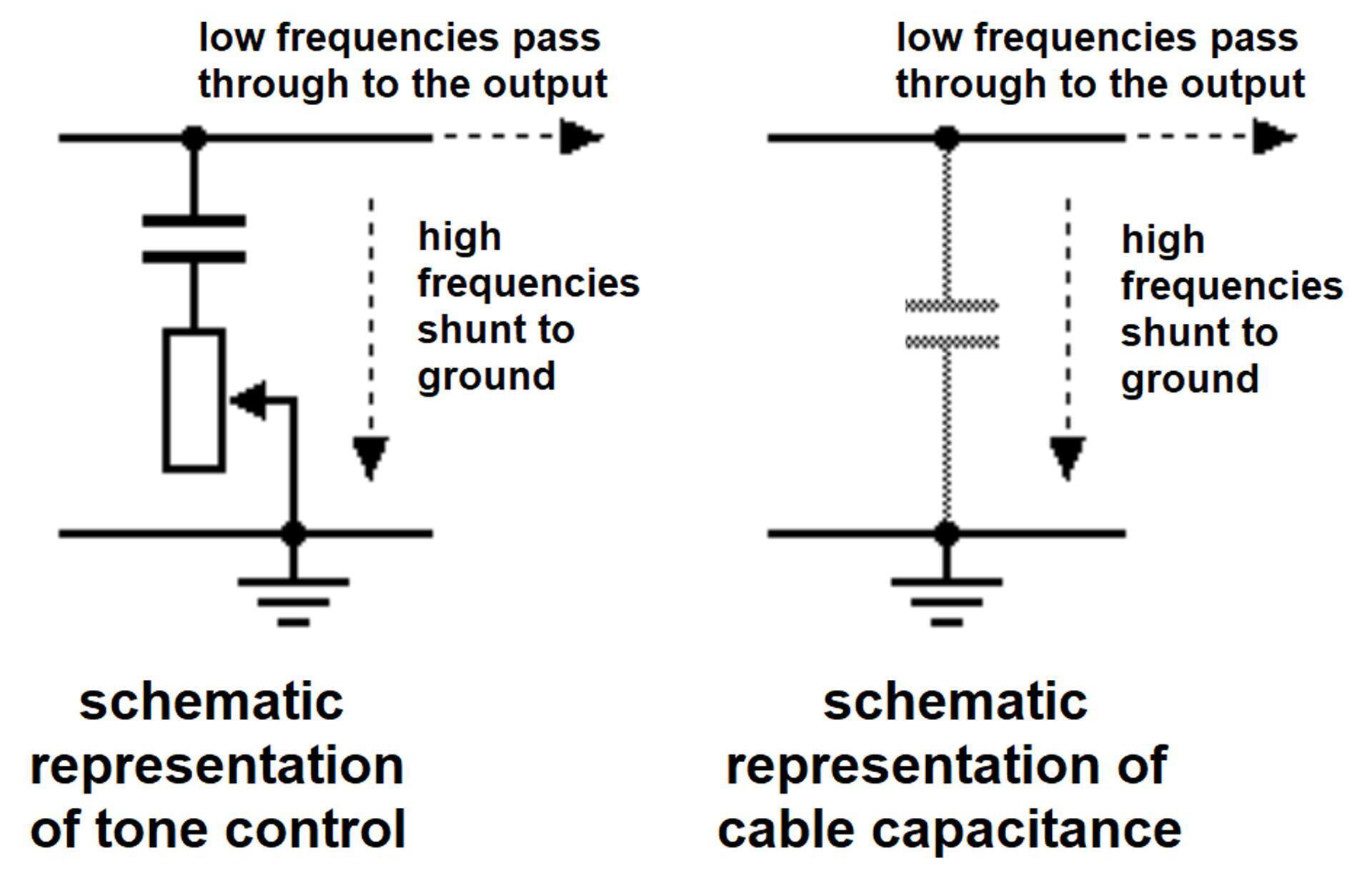
Any cable has some capacitance, although not nearly as much as a tone control. The longer the cable, the greater the capacitance and the greater the potential to dull the sound. Whether this has a noticeable effect depends on the other two factors: amp or interface input impedance and guitar output impedance.
Guitar Amp Input Impedance
When sending a signal to an amplifier, some of the signal gets lost along the way — sort of like having a leak in a pipe that’s transferring water from one place to another. Whether this impacts the sound depends on the amp’s input impedance. With passive guitar pickups, lower amp input impedances load down the pickups, which produces a “duller” sound. Tube circuits generally have a high input impedance, which may be one reason why some guitarists prefer tube amps.
Although a high amp input impedance preserves the pickup level and provides smooth tone-control action, it also accentuates the effects of cable capacitance. A cable that reduces highs when used with a high-input-impedance amp may have little, if any, audible effect with a low-impedance input. However, the downside of a very high-impedance input is being more susceptible to picking up noise, RF, and other electrical interference. The goal is to find the sweet spot between too low and too high an input impedance.
Audio Interface Input Impedance
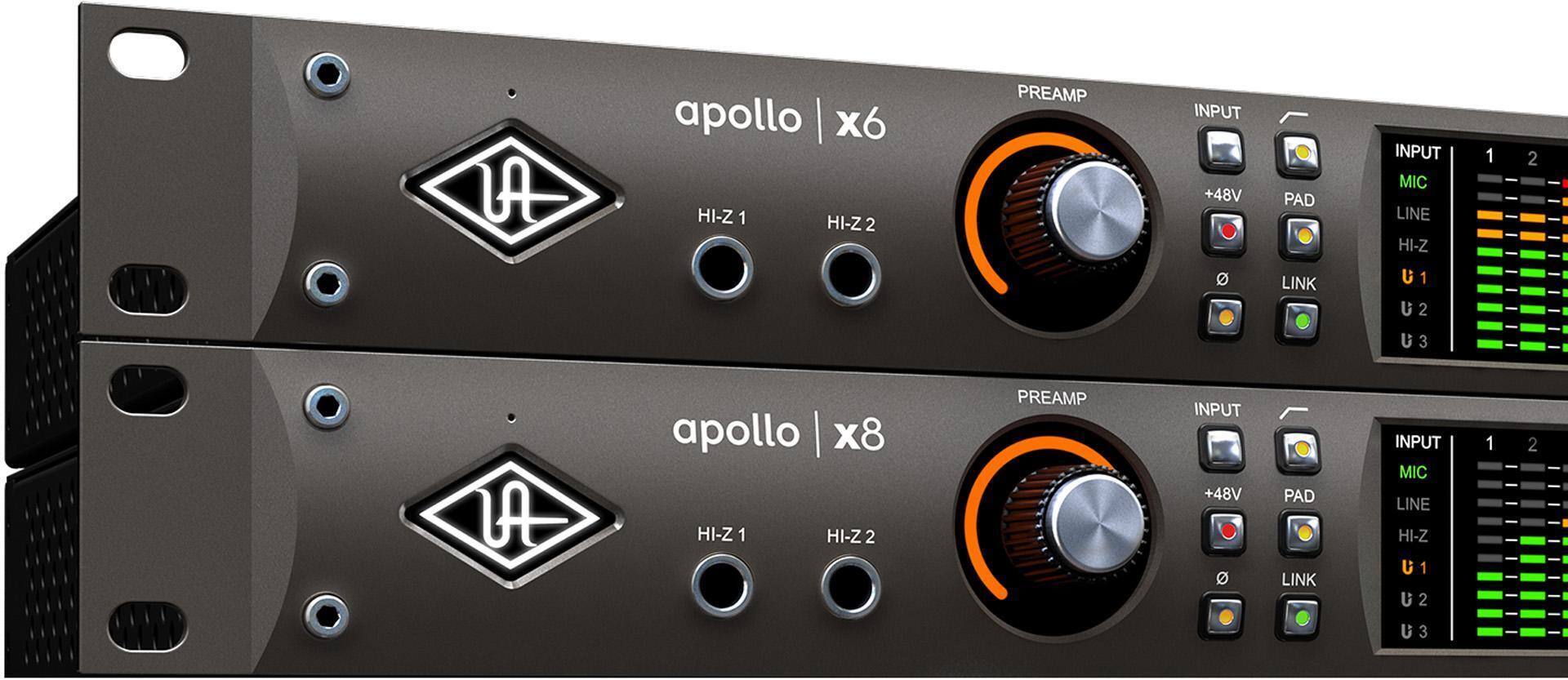
Instruments with passive pickups aren’t compatible with an audio interface’s XLR mic inputs or with 1/4-inch line-level inputs designed for electronic gear with high output levels. So, most audio interfaces include at least one high-impedance (abbreviated Hi-Z), 1/4-inch instrument input that’s optimized for electric guitar and bass (fig. 2). Use this input to retain level and high frequencies from your guitar and to send the cleanest sound to your DAW.
If an interface lacks a high-impedance input, then precede it with an effect or a direct box designed for guitar. Your guitar feeds the effect’s high-impedance input, while the effect’s low-impedance output feeds the audio interface’s input.
An audio interface’s instrument input is designed for the highest fidelity, not necessarily to be electrically identical to a typical amp input. Some guitar players feel an interface’s high-impedance guitar input lacks the subtle interaction between passive pickups and a physical guitar amp. Furthermore, some guitar players don’t always want a clean or bright sound.
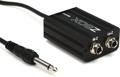
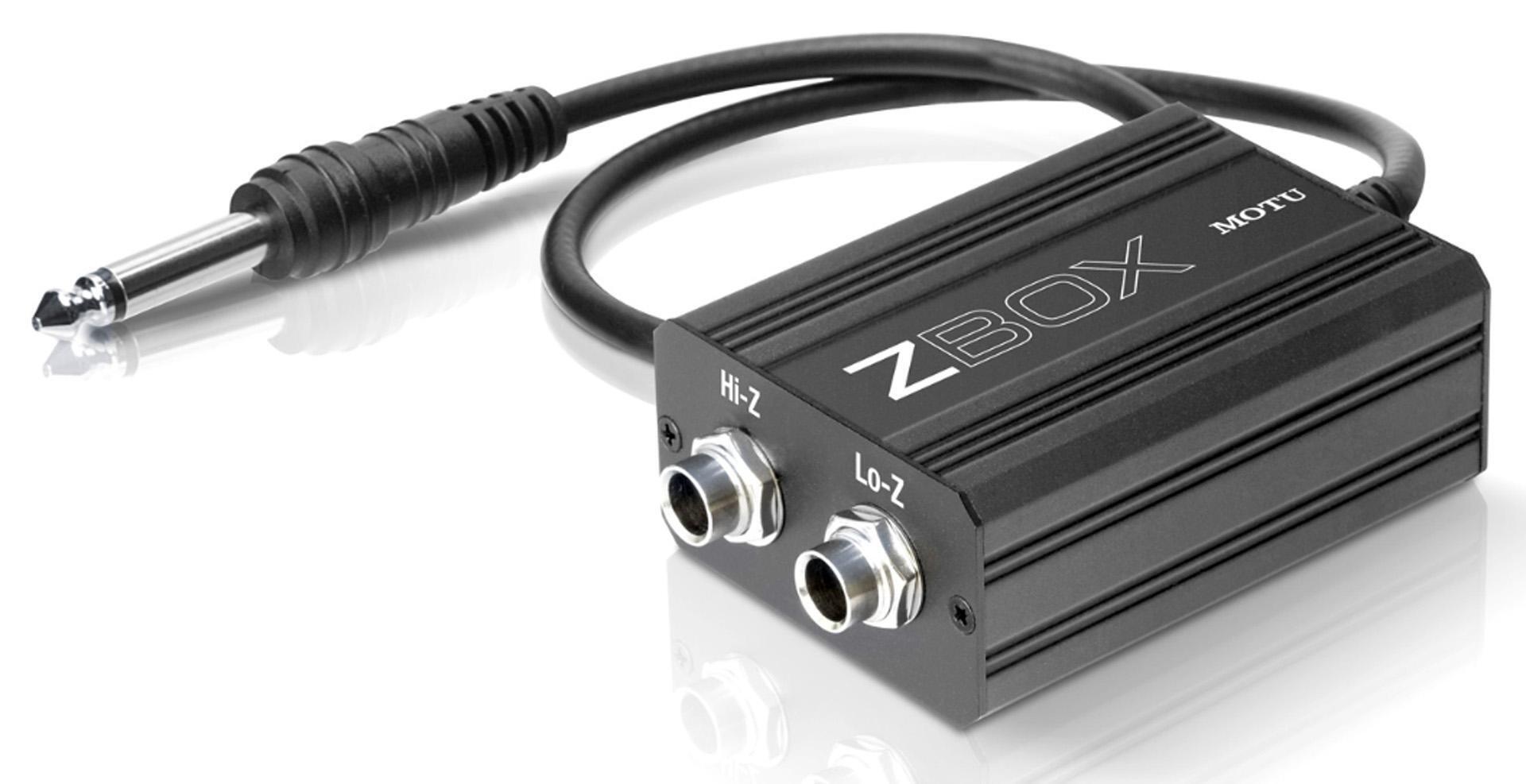
To better emulate an amp input, some audio interfaces (Avid Eleven Rack, Universal Audio interfaces with their Unison technology) include amp-like input circuitry. Radial Engineering makes direct boxes with a “drag” control that emulates cable loading and lower impedances to insert between the guitar and the interface input. MOTU’s ZBox (fig. 3) is a passive device that inserts between your guitar and interface. Its circuitry is more like a guitar amp’s input.
Patching a high-quality, guitar-specific cable between your guitar
and audio interface will provide the sound most players want. However, if
you’re accustomed to a cable dulling your sound, then use a long cable between
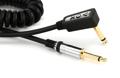
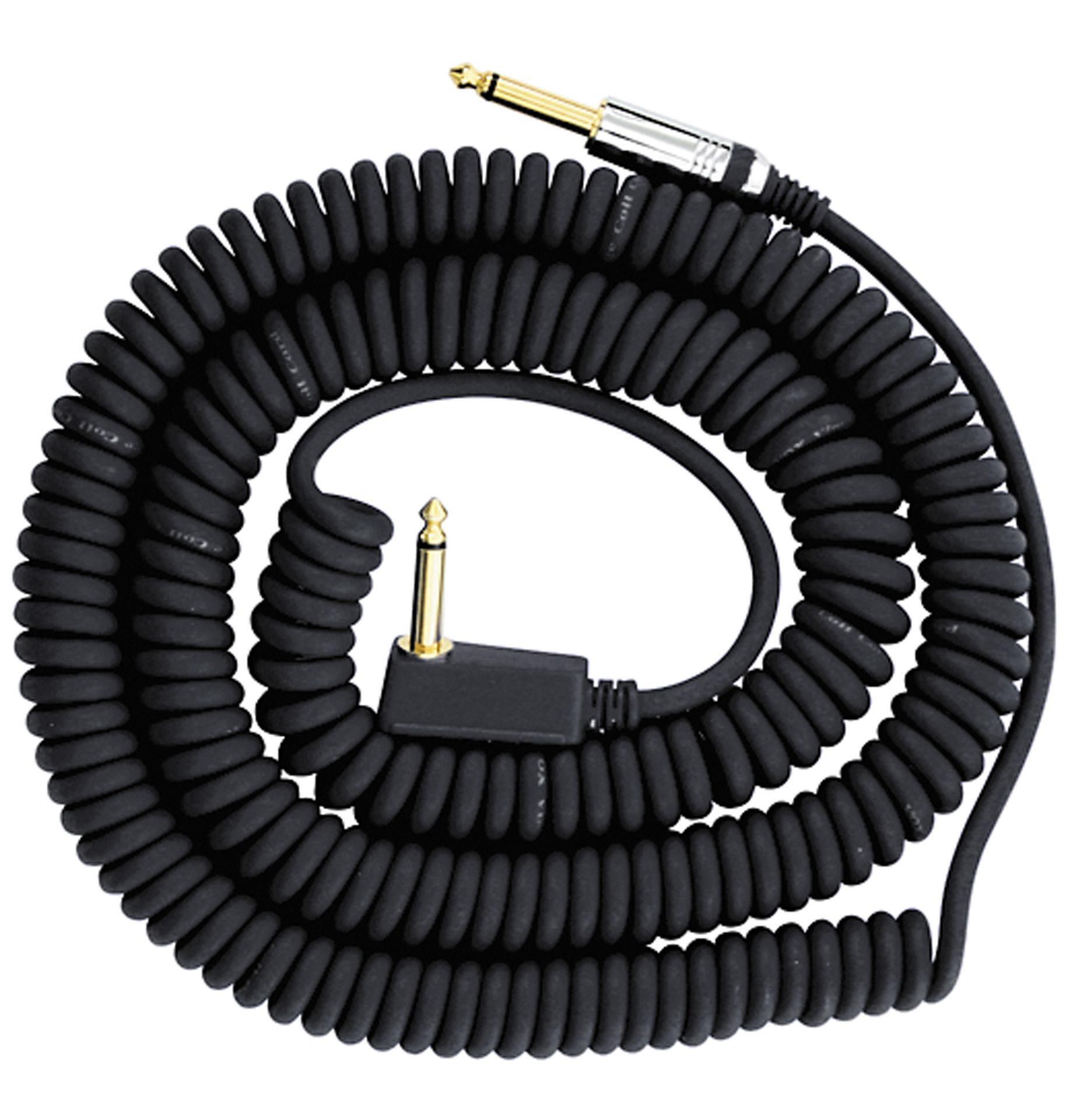
your guitar and the interface input. Also, a coiled guitar cord (fig. 4)
typically has more capacitance than a conventional
guitar
cable.
Pickup Output Impedance
Our final interactive component is the guitar’s output impedance. This is like inserting a resistor in series with the guitar that lowers volume somewhat. Like amp input impedance, pickup output impedance interacts with your cable to alter the sound. Here’s the takeaway:
- Almost all stock pickups have a relatively high output impedance, which is more susceptible to dulling from cables.
- Using stock pickups with a high-impedance input minimizes high-frequency and level losses.
- Active pickups with low output impedances are relatively immune to an amp’s input impedance and to any dulling effect from long cables.
Guitar Connection Tips
To achieve a guitar setup that’s relatively immune to amplifier loading and cable capacitance, you have three main options:
- Replace your stock pickups with active types.
- Add an impedance converter (“buffer board”) immediately after the guitar output.
- Follow the guitar output with any effect (compressor, distortion, etc.) that has a high input impedance and a low output impedance.
If you’re committed to connecting a stock guitar with passive pickups into a high-impedance amp or interface input, then follow these cable tips:
- Keep the guitar cord as short as practical. Longer cables have more cable capacitance.
- If you make your own cables, choose cables with the lowest “pF per foot” specification (picofarads are a unit of capacitance), consistent with cable strength.
- If artistically possible, keep your guitar’s volume control turned up all the way.
If your guitar doesn’t sound quite right, don’t immediately reach for the amp or amp sim control. A lot happens to your guitar signal, even before it hits an amp’s or audio interface’s input jack. And, if a guitarist swears that one cord sounds different from another, that could be true — and now you know why.
(Excerpted from How to Mix and Record Great Guitar Tracks, “Chapter 03 – Setting Levels, Recording, and Miking.” To purchase the entire book, please visit Sweetwater Publishing.)