So often, guitar strings are overlooked and thought of as a rig’s most disposable component. That couldn’t be further from the truth. The guitar string is the medium through which a musician tells their story. But have you ever thought of what goes into your guitar strings and how those strings affect your overall tone? If you haven’t, you’re not alone! Plenty of players pick a guitar-string brand and gauge early in their playing career and never look back. Believe it or not, though, your string choice has a sizable impact! In this article, we’ll cover the most common guitar string materials for both acoustic guitar strings and electric guitar strings in the hope that you’ll be inspired to experiment with different strings to see how they impact your sound. But, before we dive deep into what guitar strings are made of, we’ll provide a quick refresher on the different parts of a string and how string makers give guitars their voices.
What are Guitar Strings Made Of?
When string instruments first came around, strings were made out of whatever musicians could use, including animal intestines, silk, and other materials. Today, strings are commonly made out of steel, bronze, brass, silk, nickel, and more.
The Anatomy of a Guitar String
Core
A guitar string can’t exist without a core wire. Today, most cores take a hexagonal shape (hex) that helps the wrap wire sit securely in place. Strings with hex-shaped cores are very cost-effective and provide a slightly stiffer response. Traditional round-core guitar strings, like Thomastik-Infeld Jazz BeBop electric guitar strings, are still available today. Guitar strings with round cores add more sustain to your sound but at the cost of extra cash per set.

Winding
A wound string consists of a thin wire wrapped around the core. String makers today manufacture guitar strings in two main configurations — roundwound and flatwound. Here are the differences.
Roundwound
Roundwound guitar strings are the most common strings out there. In fact, most electric guitars and basses ship with roundwounds from the factory. The rounded shape of the wrap wire gives the strings a bright character with boatloads of harmonic overtones. Lively and responsive, roundwound guitar strings are great for any guitar and any genre.
Flatwound
Flatwound guitar strings are a staple among bassists and jazz players and are almost exclusively found on electric instruments. These electric guitar strings are made just like roundwound strings until it comes to the final wrapping. Flatwound guitar strings feature a thin layer of polished ribbon that facilitates a super-mellow sound and cuts down on finger noise. Want to know more? Check out the article “Flatwound vs. Roundwound Bass Strings” on inSync.

Flatwound vs. Roundwound Bass Strings
Examine the differences between flatwound and roundwound strings, both in terms of construction and how they sound.
Coatings
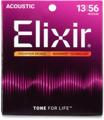
To increase the lifespan of their products, some manufacturers give their guitar strings a coating designed to protect them from finger oils, dirt, salty air, and humid environments. Coating a guitar string lengthens string life and, depending on the type of coating, can even cut down on finger noise while playing. Since coating materials vary from brand to brand, we recommend that you try at least two types of coated strings to determine which feel you like. Some coated guitar strings are quite slippery, which may require getting used to, but the benefits of the coating can easily outweigh the change in feel. Not all players love coated strings, but Sweetwater’s guitar players gravitate to Elixir’s Nanoweb strings. They’re smooth and responsive, earning them the distinction of being Taylor’s factory string.
Acoustic Guitar String Materials
Steel guitar strings
Generally speaking, there are two main varieties of acoustic guitar strings — 80/20 bronze and phosphor bronze — but you can find a number of different alloys by searching through the huge selection of acoustic guitar strings we carry. While the wound strings are made with an alloy wrapped around a steel core, the plain guitar strings are commonly made from tin-plated steel. However, it’s not unheard of to find plain strings with other plating materials. For more information on acoustic strings, check out Sweetwater’s picks for the best strings for acoustic guitar and our Acoustic Guitar String Buying Guide!
Best Strings for Acoustic Guitar
Explore some new acoustic guitar string options so that you can get closer to your ideal acoustic guitar tone.

80/20 bronze
Developed by John D’Addario and John D’Angelico in the 1930s, 80/20 bronze strings are made with 80% copper and 20% zinc. Technically, 80/20 bronze is a misnomer. Since 80/20 bronze is made with copper and zinc, it should be called 80/20 brass. However, musical misnomers are a subject to tackle in another article. Tonally, 80/20 bronze guitar strings offer a bright, sparkling tone that’s been heard on countless records. Unfortunately, 80/20 bronze strings oxidize relatively quickly, so you’ll need to change the strings on your guitar more often. You’ll notice that these strings are very bright when brand-new, which makes them a great choice for dreadnoughts and other large-bodied acoustics.
Phosphor bronze
Phosphor bronze guitar strings were born after players demanded that their strings have a longer lifespan. Phosphor bronze strings generally consist of copper with 8–10% tin and a small percentage of phosphorus — with some variation between brands. Guitar strings made with this alloy offer a mellow tonal profile that’s consistent throughout the life of the string. Phosphor bronze guitar strings, like the La Bella 7GPM, are great for bright guitars and players who like a soft and soothing sound.
Other alloys
80/20 bronze and phosphor bronze aren’t the only alloys to choose from. There is a multitude of string alloys out there, and Sweetwater stocks many of them. You can find strings made with aluminum bronze, nickel, Alloy 52, and more!
Classical guitar strings
Natural strings
Deep in the bowels (literally) of the guitar’s history lies a secret. Yes, before the advent of plastic and the subsequent nylon string, acoustic instruments like the violin, cello, double bass, lute, oud, and guitar used strings made from natural materials. They’re still around today but are often quite expensive. Commonly called “cat gut” or simply “gut” strings, these strings were made from animal intestines (usually cattle). For some classical guitar players, especially those playing early music, there’s nothing quite like the tone and feel of a gut string. While Sweetwater doesn’t currently stock natural gut strings, there are plenty of other options out there to choose from.
Synthetic strings
The modern synthetic nylon guitar string was born out of necessity during World War II. Albert Augustine was unable to make strings wrapped in silk and began using surplus nylon instead. Nylon strings are cheaper and easier to produce, are more durable than traditional gut strings, and create a nearly identical tone. Those key features have helped nylon strings become the most popular string for classical guitar and ukulele. Today, you’ll find “nylon” strings made from a range of materials, most commonly nylon and other synthetic fibers. Generally speaking, classical guitar string sets feature three plain treble strings made from nylon and three silver-wrapped bass strings. For classical guitars, we’re particularly fond of D’Addario Pro-Arte strings.

Electric Guitar String Materials
Like acoustic guitar strings, electric guitar strings feature steel cores. Then, they are wound with an alloy wrap wire for their final tone. Frequently, when players say they prefer a particular string alloy, they’re referring to the composition and plating of the wrap wire instead of how it’s wrapped. Some string brands rely on proprietary formulations, while others use tried-and-true materials. If you’re looking to keep things fresh, we created a “How to Choose Electric Guitar Strings” guide to help you get started. And, for bass players, we’ve got a Bass Guitar String Buying Guide, too!

How To Choose Electric Guitar Strings
If you’re ready for a change or just wondering what your options are, follow these simple steps to help you decide what the best electric guitar strings are for your needs.
Nickel-plated steel
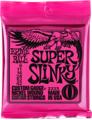
If you’ve ever picked up an electric guitar, then you’ve definitely played nickel-plated guitar strings. They’re the most popular type of electric guitar string on the market and are available in any size and number of strings you can imagine. Most electric guitar and bass strings are made with steel cores and nickel-plated steel wrap wire. They have the perfect blend of a snappy attack and a smooth sound that today’s players can’t get enough of. Like Ernie Ball Super Slinkys and D’Addario EXL110BTs, nickel-plated strings sound good and play well, making them a fabulous value.
Pure nickel
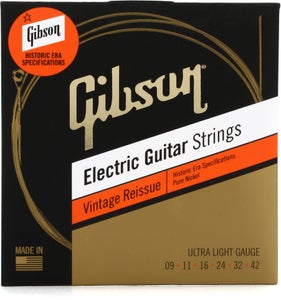
Pure nickel electric guitar strings are made with 100% nickel wrap wire. This material produces a warmer and creamier sound than other strings. You’ll find that these strings have a softer attack that compliments vintage-voiced pickups well. Pure nickel strings, like Gibson Vintage Reissue guitar strings, are a great choice if your guitar sounds just a little too bright. They’ll tame some of the harshness and bring the tone back into balance.
Stainless steel
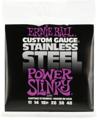
Stainless steel isn’t reserved for hardware and long-lasting frets! You can harness its bell-like tones, too! A set of stainless-steel guitar strings will be very bright, especially compared to pure nickel varieties, and will have plenty of snap. Since stainless steel’s formulation naturally resists corrosion, these strings are ideal for players who gig regularly or have sweaty fingers. Interested in trying a set for yourself? Check out the Ernie Ball Stainless Steel Power Slinkys.
Other alloys
Steel and nickel aren’t the be-all and end-all when it comes to electric guitar string materials. There are more than a dozen alloys here at Sweetwater to experiment with. Some cult classics would be cobalt, zinc-plated steel, and Superalloy. Each set of strings has a unique feel and tonal profile that can set your recordings apart from the rest!
Take Some Time to Experiment
Finding your preferred string type, size, and brand is something every guitar player can relate to. For the lucky ones, it’s as simple as walking into a store and grabbing the first set they lay eyes on. For others, it takes more extensive experimentation. If you’re not completely satisfied with your current string choice, here’s a tip: take some time to experiment. Trying out new string materials and manufacturers is a lot cheaper than buying and selling new pickups every month. You could find that you had the right string alloy but not the right brand.
For acoustic players, we recommend that you try strings that compliment your guitar’s natural tone. So, if you’re playing an all-mahogany dreadnought, a bright set of 80/20 bronze strings will give you the extra brightness that you need. And, to expedite your string exploration, give your Sweetwater Sales Engineer a call at (800) 222-4700. They’ll help you find the perfect string in no time.