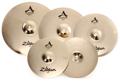
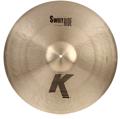
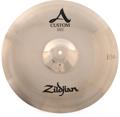
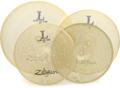
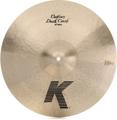
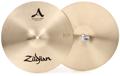
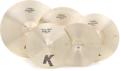
The Avedis Zildjian Company, Inc., or simply, Zildjian, has maintained its status as one of the world’s premier cymbal makers for an amazing 400 years! Not only is Zildjian a major innovator in the cymbal corner of the percussion market, but this 17th-century company holds the honor of being one of the oldest family-owned companies in the world. Though the Zildjian brand has widened its umbrella in recent years to include leading percussion companies, like Vic Firth and Balter, the Zildjian cymbal division remains a 15-generation, consistently family-owned business to this day that closely guards its trade secrets.
From humble beginnings as religious and wartime emblems to earning a place among jazz and rock music royalty, Zildjian cymbals have always stayed true to their Turkish roots. Sweetwater pulls back the curtain on the Zildjian legacy to learn how the company got its start, how it has survived and thrived for an incredible four centuries, and what’s next for one of the world’s most recognizable musical instrument brands.
- Turkey, 1623: The Birthplace of the Zildjian Dynasty
- The Introduction to Europe
- From the Ottoman Empire to the United States
- The Era of Avedis III
- Zildjian Cymbals in Jazz Music
- The Era of Armand
- Zildjian Cymbals in Rock Music
- As, Ks & Customs
- K Constantinople Cymbals
- The Zildjian Legacy Continues
- 400 Years & Still Counting
Turkey, 1623: The Birthplace of the Zildjian Dynasty
Zildjian’s cymbal-making roots can be traced all the way back to the Ottoman Empire of Constantinople (modern-day Istanbul), circa 1618. Zildjian family patriarch Avedis was the son of an Armenian metalsmith and servant to Sultan Osman II. The young sultan commissioned Avedis to make gold by fusing common base metals — a process known as alchemy. Although Avedis didn’t create gold, he did stumble upon one of the most expressive cymbal alloys ever discovered. Avedis found that this still-guarded formulation of tin, copper, and silver, which most likely resembles what we know today as bell bronze, could be flattened into sheets and struck with the hand to create musical tones — all without compromising its structural integrity. Sultan Osman II’s janissary marching bands used these early Zildjian cymbals to initiate daily prayer, royal feasts and weddings, and even the fearsome Ottoman army’s call to arms.
While Avedis’s craft certainly earned himself a name, it was the sultan who granted Avedis the Zildjian (which means “cymbal smith”) title in 1623 along with the freedom to set out making cymbals beyond the walls of the Ottoman palace. Thus, Avedis started his own cymbal foundry in the Constantinople suburb of Samatya.
The Introduction to Europe
Eventually, Zildjian cymbals made their way west and into the orchestras of Europe. The first European composer known to have written for cymbals was the German composer Nicolaus Adam Strungk, who used cymbals in his opera, Esther (1680). By the end of the 18th century, Wolfgang Amadeus Mozart’s The Abduction from the Seraglio (1782) and Franz Joseph Haydn’s Symphony No. 100 in G major (circa 1793, also known as the “Military” Symphony) both featured cymbals quite prominently.
In the mid-to-late 19th century, cymbals solidified their place in the orchestra, which continues to this day. Louis-Hector Berlioz and Wilhelm Richard Wagner even requested that only Zildjian cymbals be used in the performances of their compositions. Two of the most famous cymbal excerpts that contemporary orchestral percussionists are expected to know are the “sword fight” from Pyotr Ilyich Tchaikovsky’s Romeo and Juliet overture(1880) and Modest Petrovich Mussorgsky’s Night on Bald Mountain (1886).
From the Ottoman Empire to the United States
A series of fires left the Zildjian family unable to pay their debts, and although they received lucrative offers to transfer their company elsewhere, they did not wish to leave their beloved homeland. Fortunately, the sultan of the Ottoman Empire at this time, Abdulaziz, intervened and provided the family with the help they needed to keep the family business in Turkey.
Throughout the early 20th century, there was significant social and political upheaval in Turkey, during which the Armenian minorities were highly persecuted. Aram Zildjian, the Zildjian patriarch at that time (and Avedis III’s uncle), joined the Armenian National Movement and even tried to assassinate Sultan Abdul Hamid II. As a result, Aram Zildjian fled Turkey and relocated to Bucharest where he opened a second Zildjian factory. He eventually returned to Turkey and resumed shipping the now-legendary Zildjian cymbals all over the world.
The Era of Avedis III
Avedis I passed down his cymbal-crafting know-how to several generations of heirs before his trade secrets wound up in the hands of Avedis Zildjian III in the 1920s. This change in leadership and manufacturing would prove to be a turning point for the Zildjian cymbal company.
Avedis III and his family had already settled in the United States near Boston following the aforementioned political unrest in Turkey. In 1927, Avedis III received a letter from his uncle Aram urging him to carry on the Zildjian family business, to which Avedis III and his brother Puzant agreed. Avedis III and Aram established a presence stateside by opening the first American Zildjian factory in Quincy, Massachusetts, in 1929 — just as jazz music was beginning to take off.

Zildjian Cymbals in Jazz Music
Avedis III sought to bridge the gap between Zildjian’s orchestral and ceremonial roots by seeking out jazz players who could help bring the Zildjian brand into the burgeoning jazz world. Bear in mind that the drum set as we know it today was still relatively new in the early 1930s. And, prior to Zildjian’s emergence, trap players had to rely on cymbals that were primarily made for field and symphonic applications.
This mission led to a friendship between Avedis III and jazz legend Gene Krupa, who is famous for Benny Goodman’s “Sing, Sing, Sing (With a Swing)” and being the first drummer ever inducted into the Modern Drummer magazine’s Hall of Fame. Krupa’s vital input on what the modern trap-set player was looking for in a cymbal saw the development of thinner, larger, and flatter Zildjian cymbals with more pronounced bells that players could use to achieve various textures around the kit.
Avedis III remained closely connected to Krupa and the rest of the artists who played his cymbals. Further feedback from jazz and bebop drummers, like Chick Webb and Papa Jo Jones, helped drive the creation of the “hi-hat,” “crash,” “splash,” and “ride” cymbals — common names for cymbal types that we still use to this day.
The Era of Armand
Enduring sales throughout World War II, and new direction from Avedis III’s son Armand, helped to expand the Zildjian reach. Armand, the “Father of Artist Relations,” was known for hand selecting cymbal sets for top drummers in the industry, such as Buddy Rich, Elvin Jones, Max Roach, and Tony Williams. This led to an increased presence among players in the know.
Armand and the Zildjian company hit a home run in 1963 with the Louie Bellson–endorsed A (for “Avedis”) Zildjian New Beat Hi-hats. These cymbals were characterized by their mismatched lighter top and heavier bottom, which were marketed as giving drummers a more defined “chick” onstage. Sales exploded after their introduction — but even Armand couldn’t have predicted what the following year would bring.

Zildjian Cymbals in Rock Music
A watershed moment in Zildjian’s history occurred in 1964, when rock music’s most memorable mop tops — the Beatles — took the stage on The Ed Sullivan Show. Not only was it a key appearance for the Lads on this side of the pond, but it also gave coverage to the gear — which was beamed to millions of TV sets across the United States. Zildjian cymbals and Ludwig drums (and perhaps a Beatles record or two) began flying off shelves. By Christmas of 1964, Zildjian had a back order of some 90,000 cymbals. Zildjian has continued to dominate the rock cymbal market ever since, with its cymbals finding their way onto the kits of Keith Moon, Charlie Watts, Dave Grohl, Travis Barker, and countless others.
As, Ks & Customs
Following the opening of a new Massachusetts facility in 1973 and a complete retooling in the early 1980s, Zildjian has continued to reinvest its revenue streams into more refined cymballurgy techniques and new series of cymbals. Zildjian’s flagship K Zildjian series (named after Kerope Zildjian, family patriarch during the late 1800s) launched in 1981 to the critical acclaim of rock and jazz drummers everywhere. This was soon followed by the A Customs of 1990 and K Customs of 1995, whose thinner profiles and lighter weight gave a modern maturity to the classic lineups.
K Constantinople Cymbals
Armand’s final R&D project before his 2002 passing was the K Constantinople series. This legendary lineup would bring Zildjian cymbals back full circle to its Turkish roots, with the dark tones, rich complexity, and small-batch attention that early Zildjian cymbals are still sought for.
The Zildjian Legacy Continues
With Armand’s daughters Craigie and Debbie and granddaughter Cady at the helm, Zildjian’s cymbal innovations show no sign of letting up. In the last few years, Zildjian introduced players to the value-packed S series and I series and the practice-friendly L80 Low Volume cymbals. The company has also added value to its portfolio by acquiring the Vic Firth Company and Mike Balter Mallets, LLC, both of which are world leaders in drumstick and mallet production for percussion instruments.
400 Years & Still Counting
With Zildjian now celebrating its 400th anniversary, it has released a plethora of great products for you to peruse, including T-shirts, hats, drumsticks, and more. The company still sees no signs of slowing down, and its modern roster reads like a “who’s who” of world-famous drummers and percussionists, featuring names like Steve Gadd, Gavin Harrison, and Dennis Chambers.
Looking for Zildjian Cymbals? Shop Sweetwater!
There has never been a better time to explore the depth, musicality, and history of this iconic, family-owned business. Whether you’re a lifelong Zildjian player like many of us at Sweetwater or just piecing together your first Zildjian cymbal setup, give your Sweetwater Sales Engineer a call at (800) 222-4700.