

What’s the primary factor to consider when choosing a headset mic (also known as a headworn or earset mic) for your wireless system? If you ask a sound engineer, they’ll probably say:
The most important factor is sound. It needs to sound good. Yeah, definitely, sound is the highest priority — the single, most important thing.
Except it needs to be reliable. Yeah, absolute reliability is probably the most important thing.
But it has to stay on the talent — it’s no good if it falls off when they’re moving around. So fit, that’s it. Fit is the most important thing.
And, it’s crucial that it is fixable in the field in case it breaks. Otherwise, it’s useless. So, serviceability is the most important thing. Yeah, that’s it.
Except for price — affordability is important. If you can’t afford it, then that’s no good, right? Yeah, price is probably the most important thing…
As you can see, there are lots of variables, and they are all important. Here, I’m going to review a few of the factors that will sway your decision when shopping for a new headset mic. Then, I’ll get to what is truly the most important thing — which is how they sound — and I’ll let you hear them for yourself. I chose nine headset mics and then compared them side by side on a female and a male speaker so you can judge for yourself.
These are the mics we auditioned:
- Acacia LIZ Roadster Platinum
- Audio-Technica BP892xCT4-TH
- Countryman E6 Omnidirectional
- Countryman E6 Directional
- DPA 4088 CORE
- Provider Series PSM1
- Shure MX153T/O
- Shure TwinPlex TH53T/O-MTQG
- Sennheiser HSP Essential
Considerations
Reliability

Reliability is a key factor and very important regardless of your application: no matter whether it’s for a lecturer/pastor standing, stationary, at a podium or for a singing dancer who is flitting all over the stage. The more physical the talent, the greater the exertion on the cable and connectors will be. Are you doing Broadway shows with loads of makeup or hairspray that get on the microphone every day? Or are you miking up teenagers for junior high school plays? Or maybe it’s for speakers who move around less, such as librarians or politicians? Regardless, the weakest link in a headset mic system is the cable, which is tiny and gets bound and twisted and pulled with every use. Having a headset system with a field-replaceable cable will make it easier to fix at a moment’s notice; plus, having spare cables always at the ready will give you greater peace of mind.
Price
These headset mics cover a wide range of prices. Higher-priced mics frequently offer more interchangeability and include more accessories (like foam pop filters or interchangeable heads for altering sound characteristics). User serviceability and increased reliability are benefits of higher-priced models, which is why you’ll see touring professionals relying on premium brands.
Brand
If you ask touring or technical staff that handle wireless mics or headsets for a living, you’ll find they usually have a preference for one brand of wireless. Why? Primarily because “it works.” When you find a tool that works and works well, you tend to stick with it. Also, there are multiple standards for connectors on headset mics (Shure’s TA4F, Sennheiser’s locking 3.5mm, DPA’s MicroDot, etc.), and while each brand can be adapted to work with the others, it’s easier to find a standard connector within a brand and stick with that.
Fit
Headset mics come in two types: single-ear or dual-ear. Choosing one is frequently a matter of the artist’s preference. While single-ear headsets are much faster to put on and take off (which can be a huge consideration if you are changing out mics quickly on multiple presenters), a dual-ear system fits more snugly and is less likely to move or fall off. That said, some dual-ear systems are more challenging to fit on a presenter’s head. Having more adjustments means it can take longer to get the fit right, and there can be lots of tinkering to make it comfortable. Some headsets offer a more rigid construction, while some are “slinkier,” as our female voice artist, Heather, described the Shure TwinFlex headset that fit her head best.
Color
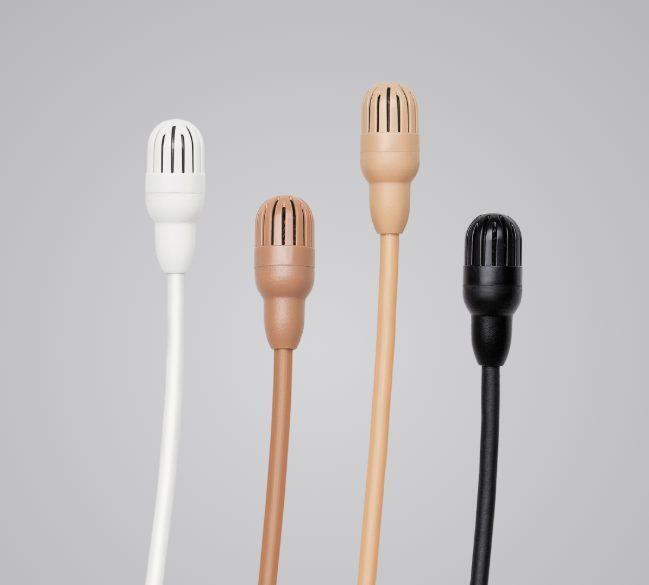
If you have to accommodate a wide range of skin tones, then match the headset mic color to the most common tone of your talent. Mics come in a range from white to black with skin-toned beige, tan, or cocoa colors in between. Pick whichever is appropriate for your artists or presenters. Here are the color options for the mics we reviewed.
| Manufacturer/Microphone | Available Colors |
|---|---|
| Acacia LIZ Roadster Platinum | Black, Tan |
| Audio-Technica BP892xCT4-TH | Beige, Black |
| Countryman E6 Omnidirectional | Cocoa, Light Beige, Tan |
| Countryman E6 Directional | Cocoa, Light Beige, Tan |
| DPA 4088 CORE | Beige, Black |
| Provider Series PSM1 | Beige |
| Shure MX153T/O | Black, Cocoa, Tan |
| Shure TwinPlex TH53T/O-MTQG | Black, Cocoa, Tan |
| Sennheiser HSP Essential | Beige |
Visibility
While color is a major factor in the visibility of the mic, the physical size of the mic element is a determiner here, as well. If the presenter isn’t being simultaneously shared on video camera, this is likely not an issue since most of these mics are small enough that they virtually disappear unless the audience is within a few dozen feet. Clearly using a pop filter (if required to minimize popping) increases the size and visibility of the mic element.
Sound
Everything else is important, but the sound of a wireless mic is the most critical aspect. Every sound person knows that the sound of a mic can range from just usable to spectacular. Finding the mic that sounds best on your singer or presenter is crucial. This whole listening project began when I was shopping for a better-sounding mic for the pastor at City Church in Fort Wayne, where I attend. The mic we were previously using was adequate; but when it started having technical issues, I began shopping for a replacement. I auditioned several options, listening to how they sounded and how they allowed the pastor to communicate with the congregation. The mic we ultimately chose was described by the production supervisor as sounding “just like he’s sitting next to me, having a chat. It’s so natural sounding — not like he’s talking into a mic.” That’s when I realized that most people don’t have a chance to hear headset mics before they buy them. So, I decided to get all these together to allow you to hear what they sound like on both female and male voice.
What to Listen For
As you listen to these samples, pay attention to the overall sound of the voice on the mic. Listen for brightness, which is good for clarity but potentially problematic when it comes to sibilance (“s” sounds). Listen for warmth and naturalness in the sound. Listen for plosives (“b” and “p” sounds), which can cause a thump on the mic. Foam pop filters are available to minimize those; but for this test, we wanted to see how each mic did without the pop filter, which is how they are most frequently used. Listen, too, for how much of the house sound (room tone) leaks into the mic.
Voice Talent
Female Voice

Heather Herron is a well-loved local news personality here in Fort Wayne. She began working in radio and TV when she was a teenager and spent 17 years as the evening news anchor at WANE-TV. Now, she works for Sweetwater in the role of Vice President of Corporate Communications.
Male Voice

Kelly Byrd has spent years as a professional communicator and encourager of leaders, most recently as Senior Pastor of Blackhawk Ministries. He leads the Fort Wayne Global Leadership Summit event each year. Since 2014, he has served as Director of Leadership Development and Personal Growth at Sweetwater Sound.
Headset Mics
- Acacia LIZ Roadster Platinum
- Audio-Technica BP892xCT4-TH
- Countryman E6 Omnidirectional
- Countryman E6 Directional
- DPA 4088 CORE
- Provider Series PSM1
- Shure MX153T/O
- Shure TwinPlex TH53T/O-MTQG
- Sennheiser HSP Essential
Acacia LIZ Roadster Platinum

Female
Male
Audio-Technica BP892xCT4-TH

Female
Male
Countryman E6 Omnidirectional

Female
Male
Countryman E6 Directional

Female
Male
DPA 4088 CORE

Female
Male
Provider Series PSM1

Female
Male
Shure MX153T/O

Female
Male
Shure TwinPlex TH53T/O-MTQG

Female
Male
Sennheiser HSP Essential

Female
Male
Technical Details
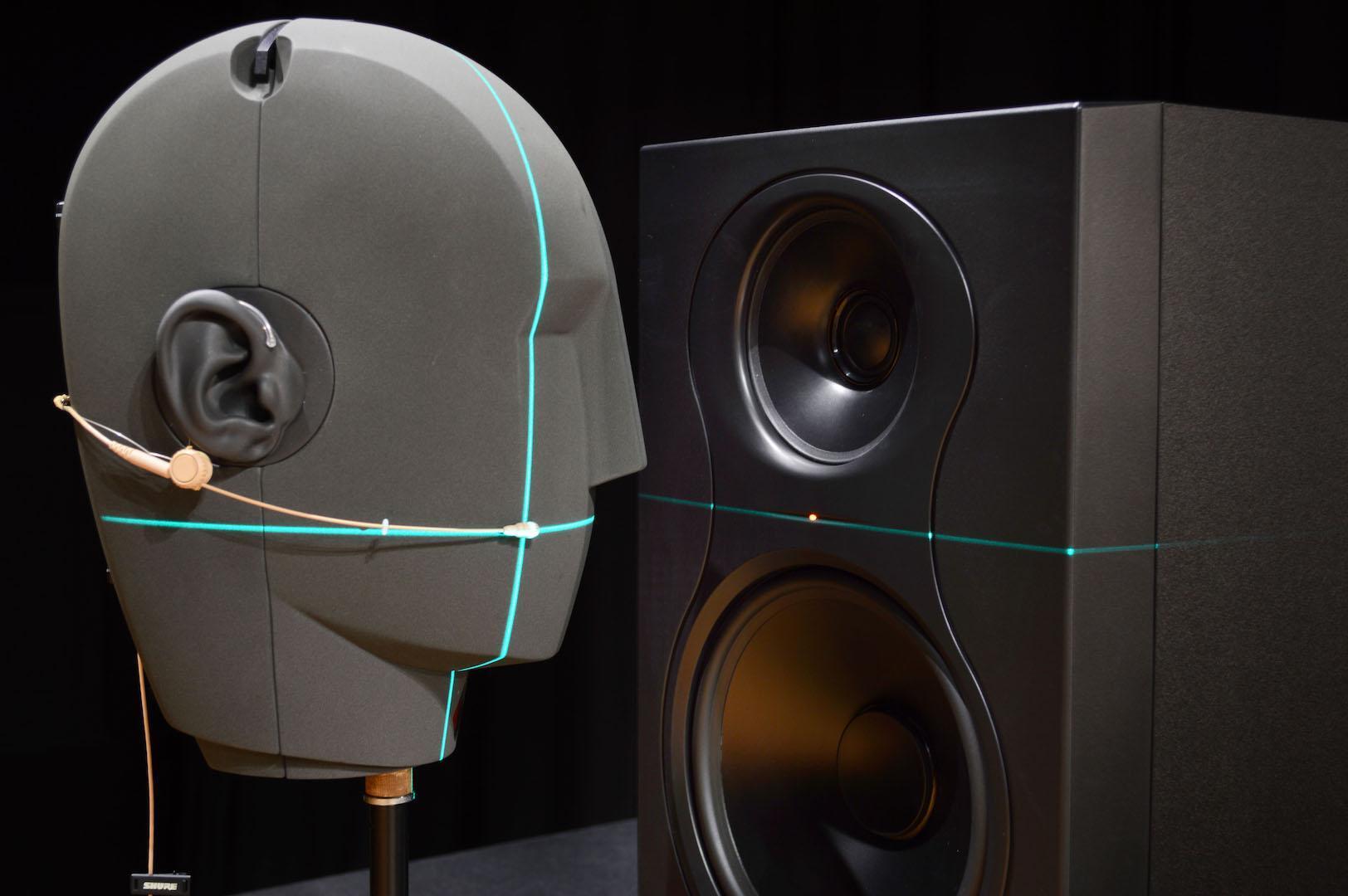
Since these mics are primarily used with wireless systems, we chose to use the excellent Shure Axient Digital wireless system for our auditions. We used the ADX1 and ADX1M bodypack transmitters for all the mics except the Sennheiser HSP Essential, which utilized the SK 6000 bodypack and the EM 6000 digital wireless receiver. We checked the polarity of all the mics using the Galaxy Audio CPTS Cricket and a Kali Audio IN-8, and we checked the levels to make sure they were consistent. All the mics were routed to the Digidesign D-Show Profile console in Sweetwater’s Performance Theatre and recorded into Pro Tools.
I hope that listening to these samples has helped attune your ear to the differences among these mics and given you a better understanding of which mic will work best for your application. If you have any questions, please call your Sweetwater Sales Engineer, who can help you make your final choice. Reach out to us at (800) 222-4700.


