
In the pair of videos, Classic Rock & Metal Riffs That Use Inverted Power Chords: Pt. 1 & Pt. 2, we take a look at a slew of examples of this from the likes of Deep Purple, Kiss, Jimi Hendrix, Ritchie Blackmore’s Rainbow, Pantera & Accept, plus an offering each from the fabled “Big 4” – Metallica, Slayer, Megadeth & Anthrax.
Yep, inverted power chord use in famous rock riffage is rife for the following two reasons:
- They sound darker and more ominous than their non-inverted brethren
- They sound loud, clear and clutter-free when played with massive gobs of distortion.
Add to that the fact that they’re really easy to play – we’re talking one finger here, folks! – and it’s easy to see why their use is so widespread.
That all said, what exactly is an inverted power chord? Read on and all will be revealed. First though, let’s just quickly explain this…
What Is a Power Chord?
A power chord is one of the simplest to play as it consists of only two different notes – the root of the chord (sometimes referred to as “the tonic”) and the fifth. These chords are staples of rock and metal because they remain clear and powerful (hence the name!) when used with high gain, while chords with just one more different note thrown in (e.g.: the major (root, major third, fifth) or minor chord ((root, third, fifth) can sound cluttered, dissonant and just plain ugly when played with a lot of distortion.
To add even more girth to a power chord you can add in an octave of the root &/or fifth. Even when this is done though, the chord is still only made up of those two important notes – the root and 5th.
The two most commonly used moveable power chord shapes in rock are:
- Power chord shape with its root note on the Low E string. FIGURE 1 shows a G power chord shape with its root note on that string, the low E. Because of its structure, this chord is often written as G5. Make sense? So, if someone says “play A5” – they mean play an A root/fifth power chord. Geddit?

FIGURE 1: G5 root/fifth power chord on low E and A strings
- Power Chord shape with its root note on the A string.
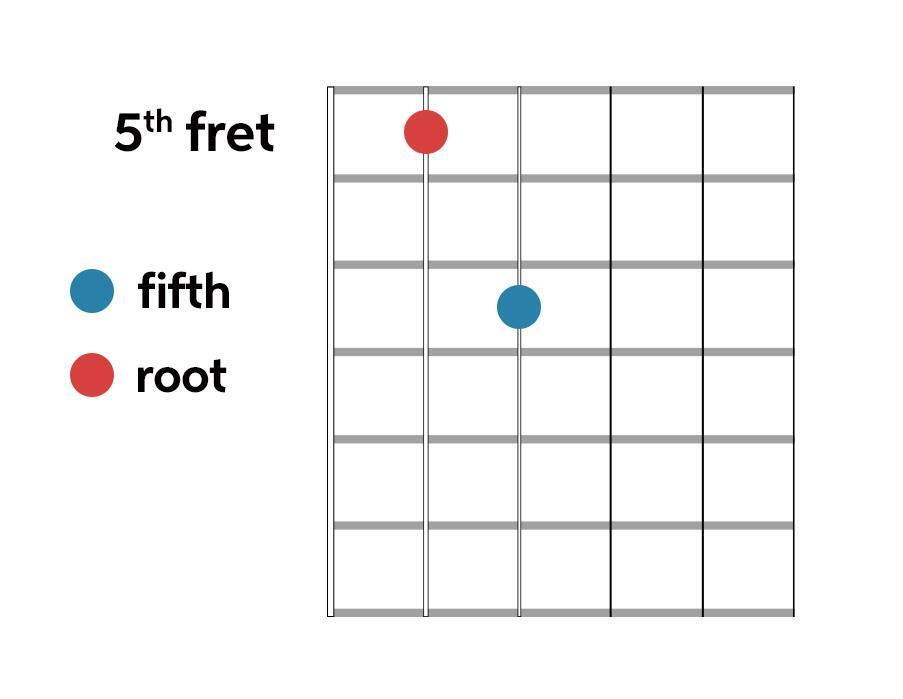
FIGURE 2: shows a D5 power chord shape with its root note on said string
Armed with this info, we can now tackle the meat of the motion:
What Is an Inverted Power Chord?
As its name implies, an inverted power chord is merely a root/fifth power chord reversed or flipped. So, instead of being root/fifth in terms of pitch from low to high, it’d become fifth/root – so the fifth is now the lowest note.
So, to invert the G5 chord shape shown in FIGURE 1, we’d merely remove the root note from the 3rd fret on the low E string, and play it an octave higher at the 5th fret on the D string. This is shown in FIGURE 3.

FIGURE 3: Inverted G5 power chord (G5/D) on A and D strings
As you can see, this is now a two note chord shape you can play with one finger…nice!! Also, even though it might sound counterintuitive or counterproductive to remove the lowest note from something called a “power” chord, the resulting dark sound of the inverted version more then makes up for it. As the fifth (the D at the 5th fret on the A string) is now the lowest note, this is often written as G5/D. Make sense #2?
Let’s do the same exact thing with the D5 shape shown in FIGURE 2 – invert it. There are two ways we can do this…
- In the same exact way we just flipped the G5 in FIGURE 1 to the G5/D in FIGURE 2 – simply remove the root note on the A string and play it an octave higher on the D string. The resulting D5/A is shown in FIGURE 4a and, as you can see, it’s another “play with one-finger job!”

FIGURE 4a: Inverted D5 power chord (G5/D) on D and G strings
- Because there’s nothing on the low E string in FIGURE 3, we could leave the root note where it is on the A string, remove the fifth from the D string and play it an octave lower on the low E. FIGURE 4b shows the resulting D5/G shape…and once again, it’s a “play with one-finger” affair..,
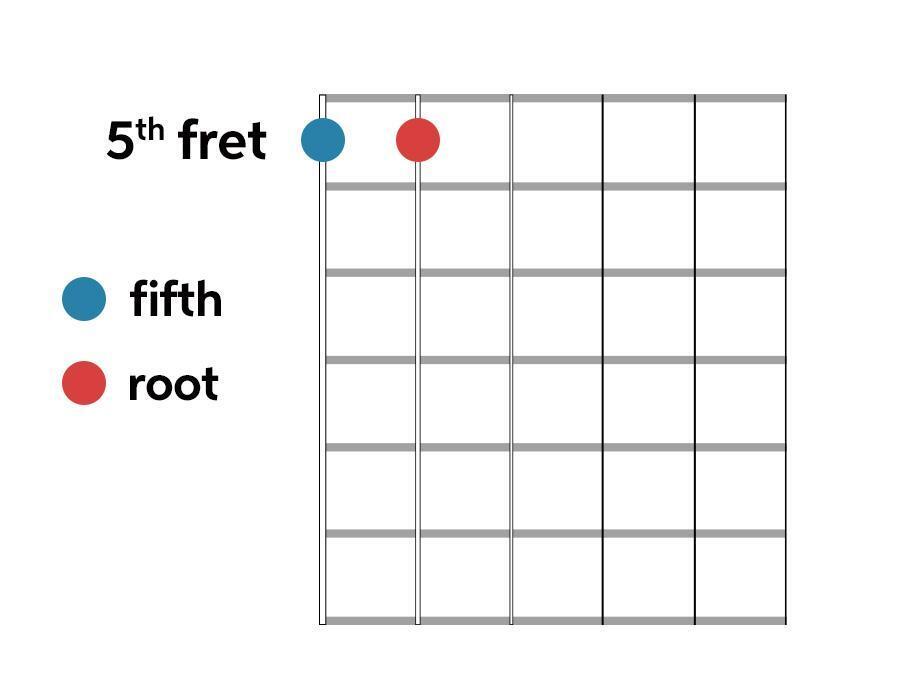
FIGURE 4b: Inverted D5 power chord (G5/D) on low E and A strings
In fact, to make our inverted, D5/G shape, sound really dark and heavy, we could simply combine 4a and 4b together so we’ll have – from low to high – fifth/root/fifth/root as shown below:
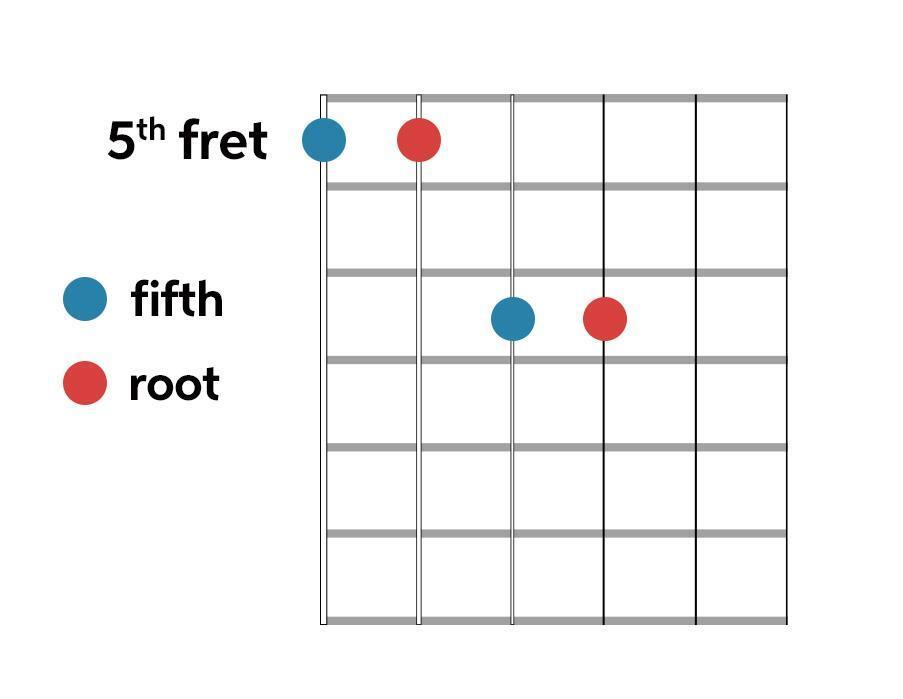
FIGURE 4c: Inverted D5 power chord (G5/D) on low E, A, D and G strings
Not only are these inverted power chords easy to play, they’re dark sounding and fun to use. And, as you’ll learn in both videos, a lot of really great sounding, iconic riffs use them. Try applying a few to some ideas of your own – mix ‘n’ match, don’t be scared to experiment…and, most important of all, have fun!!!
MUSIC THEORY NOTE: Because the root and fifth notes are in both major and minor chords, power chords can be substituted for either. Make sense #3?!