USB mics are the Rodney Dangerfields of pro audio. They “don’t get no respect!” Most professional engineers have very little love for a mic that won’t interface with their existing consoles and preamps. “No XLR out? Seriously? What do I do with this?” The truth is that USB mics are problem solvers. They’re designed to be a solution for lots of people that just need to record something onto their computer/tablet/phone and want to do so with a minimum of fuss and cabling.

So what exactly is a USB mic? It’s simply a regular microphone that adds a preamp, analog-to-digital converter (ADC), and headphone jack inside the mic. Think of it as a mic and interface all rolled into one compact package. Instead of having a mic-level output on an XLR connector, it has a USB connector. That means you can plug it directly into a computer without an interface, without a mic cable, and without worrying about phantom power. Everything the computer needs to receive audio is built into the mic. The advantage of this is that you can take just a computer (or tablet or smartphone) and record anywhere without even needing to plug into an electrical outlet — the mic is powered by the connected device. By comparison, the typical setup for recording on a computer involves 1) connecting your computer to an electrical outlet (120 volts), then 2) connecting your interface to power, 3) connecting the interface to your computer with a USB or Thunderbolt cable, and 4) connecting the mic to the interface with a mic cable. While that’s not too much trouble, what happens if you want to record an interview in a park under the trees, or you need to record ambient sounds in a remote location (like I did on the Na Pali coast of Kauai, where there aren’t even roads, much less electrical outlets!)? It’s situations like that where USB mics are ultra-convenient and will really shine.
Why USB Mics?
The real value of USB mics can be stated in two words: simplicity and convenience.
I’ve been using USB mics for years now, connecting a stereo RODE mic to my iPhone 4 (with the 30-pin connector) and using it to record ambience in wild and remote locations where hauling even a laptop would be challenging. I also have a portable rig that consists of an iPad and several USB mics that plug into either my laptop or the iPad for recording location interviews. My padded recording bag is just slightly larger than my 64G iPad (only 9″ x 13″ x 3.5″) and holds the iPad with a zippered pocket for earbuds, pop filters, and two mics and stands. It’s literally grab and go.
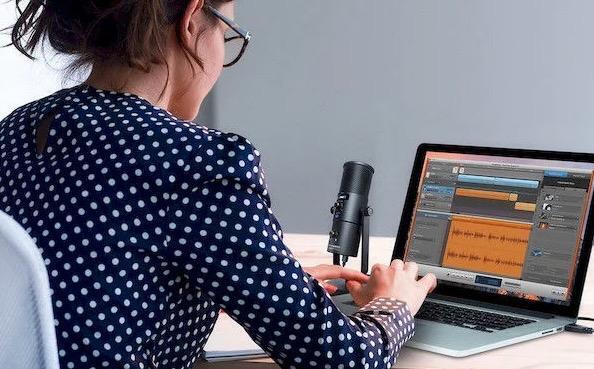
While USB mics aren’t always “plug-and-play” (or plug-and-record, rather), they really are amazingly simple to use. One mic, one cable, plug in both ends — done. If you’re moving fast or have a situation where you normally wouldn’t haul your computer and mics and power cords and interface and mic cables, then having just a phone and a mic is super easy. For me, it’s frequently the difference between recording something or not. Sure, you can pull out your phone and record a “voice memo” of questionable quality, but the difference between the sound of a real mic and the tiny omnidirectional mic that is built into your phone or computer (and was really designed for phone calls or videoconferencing) is shocking. Having a quality mic capsule and the ability to position the mic in the best space, control the pickup pattern (in case of multi-pattern mics), and add a pop filter makes a drastic difference in the sound of your recording. For a songwriter, an instrumentalist, a vocalist, or a journalist who is trying to make quality recordings with minimal expense and technical fuss, there simply is no better option. And for a young aspiring songwriter who wants to record good-sounding demos, a good-quality USB mic is the biggest bang-for-the-buck purchase you can make.

Which Mic Is the Best?
In addition to owning dozens of studio and live mics, I’ve also owned more than half a dozen USB mics. I’d love to say that I found one mic that is the best at everything, but it’s not true. There simply isn’t one best mic. Sometimes I need a compact mic that can be easily concealed, or a mic that will record in stereo, or a mic that is tailored for voice-overs that looks good on camera, or one that is rugged enough that I can use it outside covered with a windscreen to cut wind noise. I have yet to find a single mic that is best for everything.
How Do They Sound?
The biggest misconception about USB mics is that, in the interest of convenience, they are somehow sonically compromised. In my years of experience, that’s simply not the case. That’s part of the reason I wanted to conduct this listening comparison — not only for you to hear how they sound compared with one another but also how great they sound.
Testing, 1, 2, 3…
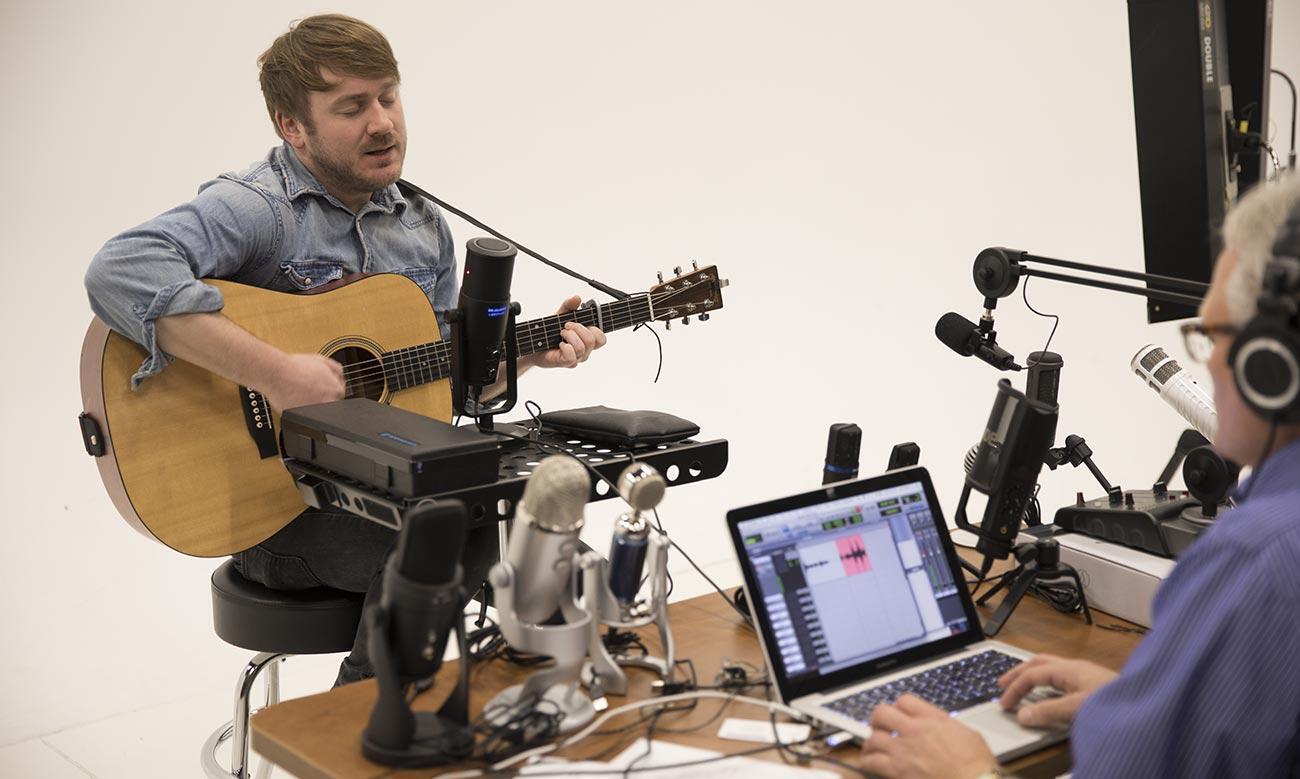
We set up in our live-sounding video studio and placed all the mics in front of vocal and guitar at exactly the same height and same distance.
For this recording session, I found a room that was quiet but not dampened down with treated walls like a studio. I used the live end of our video studio with reflective walls on three sides, as you can see. I set up the mics on a table, since most of these mics include stands that attach to the mics. Our table was the same height as a kitchen table or a studio desk where most people will use these. The talent stayed in the same position, and we placed each mic at the same height and distance from the artist, confirmed with the use of lasers to align the capsules. Each mic was plugged into my 2012 MacBook Pro running Pro Tools 2018 and recorded at 44.1kHz. These files are presented as 320K MP3s.
For this test, I used Sweetwater Studio’s Director of Sales/Artist Relations Mike Stanley reading copy about the mics and Sales Engineer Michael Morgan singing and playing guitar. Take a listen to the overall frequency balance, the amount of room pickup, and the differences between the sound of the patterns on the multi-pattern mics. The contrasts are very revealing.
The Mics
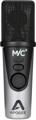
Apogee MiC Plus
The Apogee MiC Plus is a studio-quality microphone with USB and Lightning connectivity in a compact package with Apogee-quality 24-bit/96kHz sampling, making it great for those needing superior quality in a highly portable format.

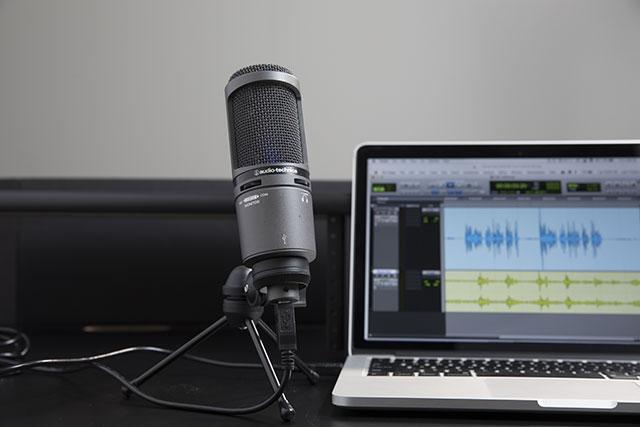
Audio-Technica AT2020USB+
Based on the popular AT2020 studio mic, the Audio-Technica AT2020USB+ is a cardioid side-address microphone that excels at home studio, voice-over, and remote recording applications.
Blue Yeti Studio Blackout
The Blue Microphones Yeti Studio utilizes a unique triple-capsule design that allows three different polar patterns plus stereo. With its heavy tabletop stand and a standard-thread mic stand mount, it works for desktop or studio use.

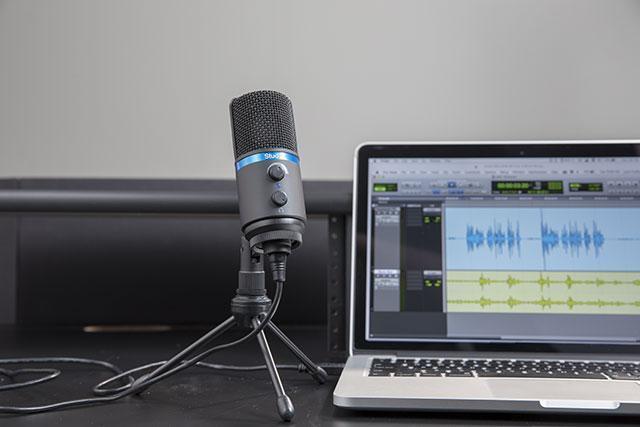
IK Multimedia iRig Mic Studio
The IK Multimedia iRig Mic Studio is an amazingly compact, side-address mic that is one of few that has Android compatibility. It features separate controls for mic gain and headphone volume along with a multicolor LED meter for monitoring signal level.
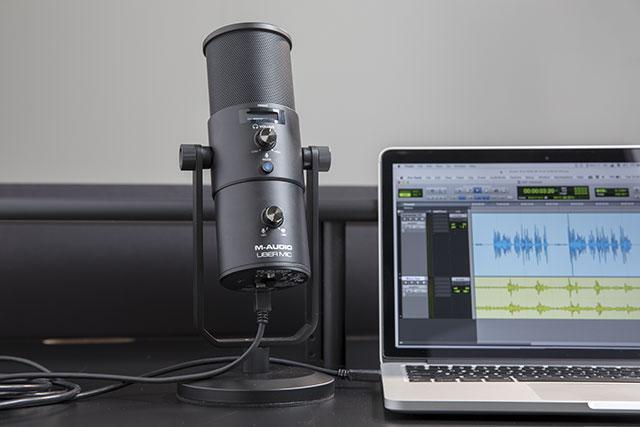
M-Audio Uber Mic
The M-Audio Uber Mic offers four switchable polar patterns, including stereo, in a side-address mic with an informative LCD display and Mute button on the front.
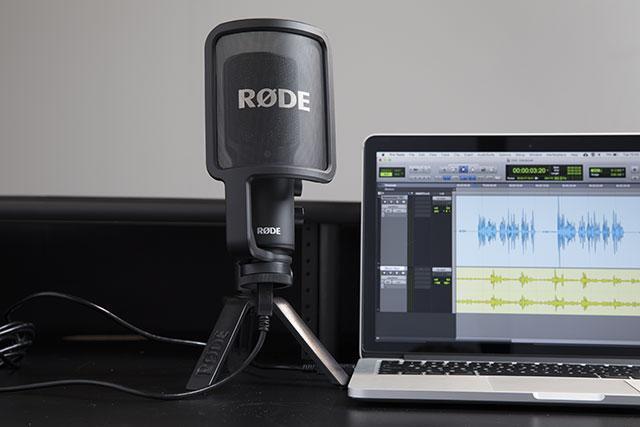
RODE NT-USB
The NT-USB by RODE is a studio-sized condenser microphone that comes with a tripod, a studio stand mount, and an integrated pop filter that makes it great for studio-quality vocals.
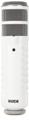
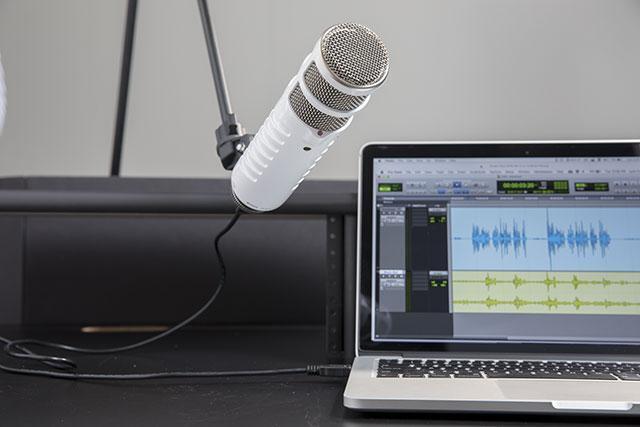
RODE Podcaster
The Podcaster by RODE is the only dynamic mic in this lineup. An end-address mic with the look of a professional broadcasting mic and a built-in pop filter, it is great for those who want to work close to the mic.
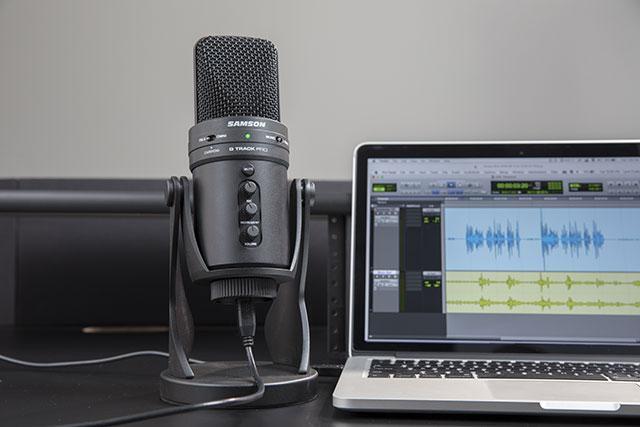
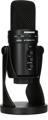
Samson G-Track Pro
The Samson G-Track Pro is not only a high-quality, multi-pattern studio mic, but it also has a 1/4″ line input on the back. You can plug in the instrument of your choice and record both at the same time with independent controls for mic and instrument gain.
Shure MV5
The Shure MV5 condenser microphone features unique retro styling in a compact form factor along with Mac, PC, iOS, and Android compatibility. It also features three DSP presets for matching the mic to your source.

Let’s Listen
Vocal and Acoustic Guitar
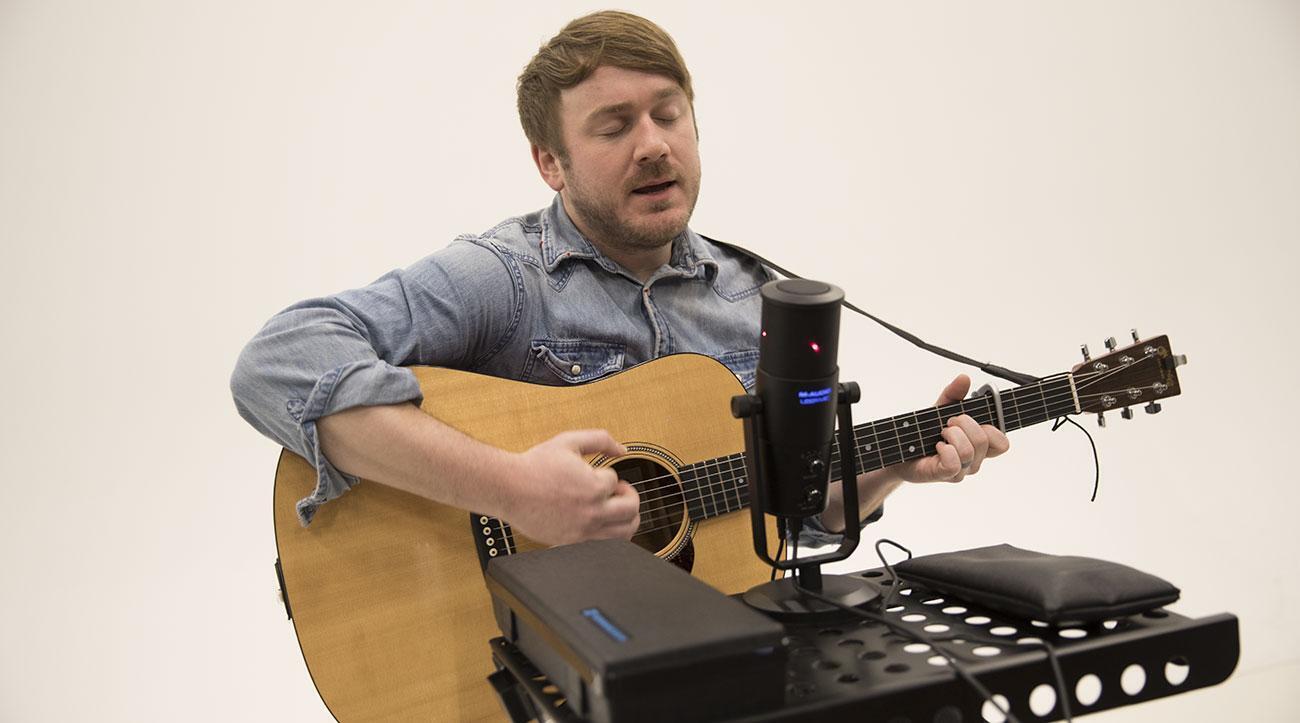
This clip features Sweetwater Sales Engineer Michael Morgan singing his self-published composition “Let it Die.” You can hear more of Michael’s music on his Youtube channel.
Apogee MiC Plus
Audio-Technica AT2020USB+
Blue Yeti Studio
Blue Yeti Studio – Cardioid
Blue Yeti Studio – Figure 8
Blue Yeti Studio – Omni
Blue Yeti Studio – Stereo
IK Multimedia iRig Mic Studio
M-Audio Uber Mic
M-Audio Uber Mic – Cardioid
M-Audio Uber Mic – Figure 8
M-Audio Uber Mic – Omni
M-Audio Uber Mic – Stereo
Miktek ProCast SST
RODE NT-USB
RODE Podcaster
Samson G-Track Pro
Samson G-Track Pro – Cardioid
Samson G-Track Pro – Figure 8
Samson G-Track Pro – Omni
Shure MV5
Shure MV5 – Flat
Shure MV5 – Inst
Shure MV5 – Voice
Voice-over Mic
Mike Stanley demonstrates what the mics sound like for podcasting.
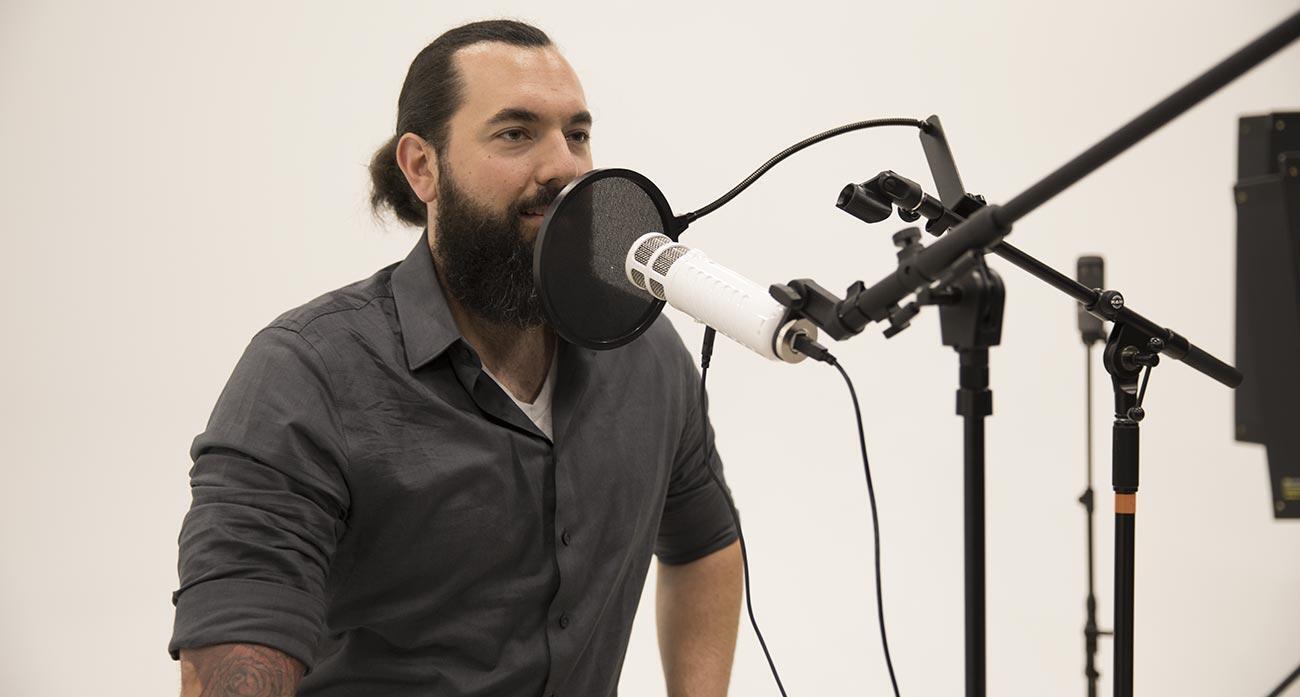
Mike Stanley reads into the Rode Podcaster.
Apogee MiC Plus
Audio-Technica AT2020USB+
Blue Yeti Studio
Blue Yeti Studio – Cardioid
Blue Yeti Studio – Figure 8
Blue Yeti Studio – Omni
IK Multimedia iRig Mic Studio
M-Audio Uber Mic
M-Audio Uber Mic – Cardioid
M-Audio Uber Mic – Figure 8
M-Audio Uber Mic – Omni
Miktek ProCast SST
RODE NT-USB
RODE Podcaster
Samson G-Track Pro
Samson G-Track Pro – Cardioid
Samson G-Track Pro – Figure 8
Samson G-Track Pro – Omni
Shure MV5
Shure MV5 – Flat
Shure MV5 – Inst
Shure MV5 – Voice
Observations
Sampling rates and converter quality are important
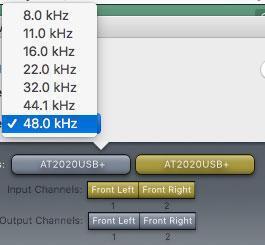
While the capsule is the biggest influencer on the sound of a mic, having high-quality converters is equally important. Listen to these mics and see if you can tell which are capable of handling higher sampling frequencies, even though these are all recorded at 44.1kHz.
Having multiple polar patterns is a real bonus
As you can hear, the proximity effect from using a mic in figure-8 adds a definite “radio voice” low-end boost that is very flattering to many voices. If you need to record a group around a mic, having the Omni setting is ideal. If you have a highly reflective room or wall, using the back side of a Cardioid pattern facing it is very handy.
Consider your need for a mute button
If you need a mute button for your mic, then I would suggest an external solution. Many of these (except the ProCast SST) make a noise when activating the switch (either muting or unmuting) that is audible in the signal. That’s not surprising, since the switch is mounted directly to the body of the mic. Some click when engaged and some make a ping (from the resonance of the body) when you push the mute button.
Account for latency
The biggest drawback when using a USB mic when doing overdubs, like singing to a track, is hearing the latency of your DAW in the headphones. Even if you pull the buffer down to its lowest setting, there’s still an annoying delay in the phones if you are hearing the live and DAW return signal. Many of these mics have a dry/DAW switch or knob that will allow you to monitor either signal, but you’ll have to change it each time to alternately monitor between your dry signal and the playback.
My Conclusion
In my opinion, many of these mics sound incredible. I’d use them in the studio with no reservations at all. When you need to record something quickly and easily, or you want to do a podcast where you don’t need to be doing overdubs and switching monitoring, I’d take one of these USB mics any day. For their size, convenience, and price, they are hard to beat.
Which one did I like the best? I’m not telling. The reason I conduct these listening tests is to allow you to listen and decide which one YOU like best. So listen, and decide which one sounds best to you.