A wise DJ once said, “Too much treble makes people want to leave — too much bass makes people want to dance.” There’s some wisdom there. Nobody listens to a song with bated breath, waiting for the “treble to drop.”
Over the past 60 years or so, the synthesizer has evolved to become the tool of choice for creating low-end excitement in everything from pop music to underground dance music to film scores. Today, we’re going to explore a few key techniques that will hopefully save you a ton of time and allow you to quickly get professional (and satisfying) results from your synth bass sounds.
Count to 808
In pop music today, you can’t go ten minutes without hearing a bass sound that emulates the classic Roland TR-808’s long-decay bass drum. While the 808 was intended to be a virtual acoustic drummer (it failed at that), its actual success came largely from the fact that it created larger-than-life bass drum sounds. Once samplers became standard music production tools in the ’80s, people were quick to sample their 808’s big, long kick sounds and re-pitch them, building massive-sounding basslines.
Fast-forward to the 21st century, and 808 bass has become all the rage. Trap music, pop music, underground dance music, even country and contemporary worship music have adopted the 808 bass line into their vocabularies.
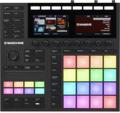
These days, it’s almost too easy to find or build an 808 bass line. Libraries like Beat Tools and Drum Machines, which are bundled with Ableton Live 10 Suite, come with a variety of pitched 808 samples. Native Instruments’ Maschine library is another great place to start, or you can create your own using pretty much any synthesizer, software or hardware.
Check out the video below to see how to build an archetypal 808 bass line from scratch with concepts that can be applied to any soft synth and DAW. We will also cover three other key techniques in this video — multiband processing, saturation, and portamento.
Process in Multiband
A useful bass sound is usually characterized by words like “thick,” “fat,” and “solid.” Solidity is priority number one when it comes to a bass sound. The whole mix suffers if the bass isn’t a great foundation. Sometimes, we also want to add interest to a synth bass using effects such as saturation, distortion, phasing, and flanging. There’s a lot of precedent for that! Unfortunately, applying any kind of effect to a bass sound is likely to add inconsistency to the low-frequency content, making it sound less solid.
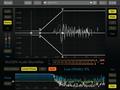
One way around that is by processing in multiband, as I discussed in the video above. By only putting effects on the mid- and high-frequency portion of your bass sound, you build interest without sacrificing power. Probably the best off-the-shelf tool for that job is Nugen Audio’s SigMod, which allows you to apply a crossover to your bass sound and address the lows, mids, and highs separately. SigMod is really a must-have for any electronic musician or mix engineer. It allows you to use mid-side processing and also gets you into phase correction — little tasks that have a huge effect on the quality of a mix.
Saturate
Whether it’s putting a TB-303 through an overdrive unit, running a P Bass through an SVT, or using plug-ins to add grit to a soft synth, saturation is key to making satisfying bass sounds. You’ve got to be smart about it, though, and process the sound without destroying the low end.
As outlined in the video above, multiband processing is one route to take when searching for the ultimate bass tone. One fantastic shortcut to amazing saturation is iZotope’s classic Trash distortion plug-in. Trash allows you to process different frequency bands individually and has boatloads of great presets, not that you need them since the interface is so easy to get around.
Keep It Simple
Why does the 808 work so well? First and foremost, it’s simple. Sure, stacking thirteen oscillators and adding several effects can add width and interest to a bass sound, but these techniques can introduce phase relationships that significantly degrade the power and consistency of your bass.
In fact, most iconic synth bass sounds are nothing more than a single oscillator going through a lowpass filter. Changing absolutely nothing besides the wave shape (saw and square for sounds with high- and mid-frequency interest; sine for unapologetic sub-bass), the filter cutoff and resonance, and the amp and filter envelopes, you can call up thousands of bass sounds that are used on innumerable recordings.
Listen to the video below if you want proof. We’ll break down a couple of classic bass patches from different eras that are amazingly simple.
As with most things in life, it’s important not to overthink things! As further proof of the power of simplicity, consider Ray Parker Jr.’s account of how he created the classic bass line for the original Ghostbusters theme song: “I plugged in my JP6 and put up the first bass sound.”
Bank 1, patch 1. Millions of copies sold. That literally happened.
Stay in the Middle Lane
If you do create a bass patch that has some movement to it, that’s fine, but you lose a lot of impact if you have low frequencies moving around in the stereo field. You get the most energy when the low lows are in mono — hitting hard out of both the left and the right channels.
One way of accomplishing that is by simply creating a lean, spartan patch in the first place. But if you want more interesting stuff to be happening, you can use something like Monofilter from Nugen Audio to reel it in.
Check the video below (and have your studio monitors cranked up) to hear what Monofilter does to tighten up your sub-bass.
Roll the Bass Out of the… Bass?
Heresy, you shout! Maybe, but it works. From The Chemical Brothers to Daft Punk to Noisia, music producers understand that sometimes it takes two basses to rule them all: one massive sub-bass that lives mostly between 50Hz and 100Hz and a second “mid-bass” that lives mostly above 200Hz.
Splitting it up this way allows for beats to hit harder than should be possible. One approach used by many producers is to have a very simple bass patch based on a sine wave holding down a simple bass line while a more midrange-centric bass sound brings the “impact” and “bite” to the mix, sometimes with a busier bass line to keep the sounds interesting.
Another method I explore in the video below is to employ a massive sub-bass note that opens up every time the kick drum hits while an aggressive, distorted bass that lives mostly above 200Hz pushes the track along.
This trick has been successfully deployed thousands of times over the years, and the video below shows how to use the trick similarly to the style of French dance music duo Justice on their classic album Cross.
With these techniques as part of your arsenal, we hope you go forth and generate some earthshaking low end. If you have questions about any of the products mentioned in this article or if we can help further, call your Sweetwater Sales Engineer at (800) 222-4700 today!