I’m going to begin with a huge disclaimer! In my humble opinion, there’s no such thing as “the best amplifier” for anything — regardless of whatever style of music you care to mention. Period. The end! It’s all about what works best for your own playing style, taste, and preference. That’s it, my friend. End of story.
As a much-used adage correctly points out: “One man’s meat is another man’s poison.” The same truth applies to guitar gear — my favorite metal amps, axes, and effects probably won’t match your favorites, and vice versa. And guess what, that’s a great thing! To that end, this article features 10 great-sounding tube amps that work well for metal guitar! According to ME!
- What Exactly Is “Metal,” Anyway?
- The Great Ongoing Debate: Tubes vs. Digital Amps vs. Modelers
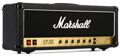
- Marshall JCM800 Modified 100-watt Head
- Mesa/Boogie ’90s Dual Rectifier 100-watt Head
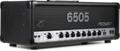
- Peavey 6505 1992 Original 120-watt Tube Head
- Diezel VH4 100-watt 4-channel Tube Head
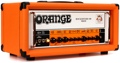
- Orange Rockerverb MKIII 100-watt 2-channel Tube Head
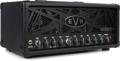
- EVH 5150III 6L6 50-watt Head
- PRS MT 15 V2 Mark Tremonti Signature 15-watt Head
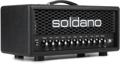
- Soldano Astro-20 20-watt 3-channel Tube Head
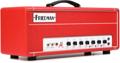
- Friedman JEL-50 Jake E Lee Signature 50-watt Tube Head
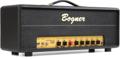
- Bogner Snorkler 50 50-watt Tube Head
What Exactly Is “Metal,” Anyway?
On the all-important subject of personal taste and preference, the same exact thing applies to the term “metal.” It’s all about your unique interpretation of what “metal” does or doesn’t mean. There are so many subgenres that fall under the metal umbrella right now, it’s hard to keep track. In fact, I wouldn’t be surprised if another one or two have been created while I’ve been penning these paragraphs!
Being the old-school guy I unashamedly am, I feel that the almighty Black Sabbath is the band that gave birth to the genre. Therefore, in my mind, they define “metal” by default! That said, I’ve met metal fans who consider Sabbath to be classic rock. Ditto bands such as Judas Priest, the so-called new wave of British heavy metal (NWOBHM), and the hair-metal outfits that dominated the ’80s, too. Plus, what was once labelled nu metal is now old metal — yadda, yadda, yadda! Maybe Pantera, Periphery, Slayer, Gojira, Meshuggah, Lamb of God, or Knocked Loose are more your cup of tea. Or maybe you prefer bands that are even darker, more dissonant, and more extreme. It’s all a matter of personal taste, and it’s all good!
The Great Ongoing Debate: Tubes vs. Digital Amps vs. Modelers
Amp simulation and digital modeling technology have come a long, long way over the past four decades and continue to be more impressive on an almost-daily basis. Countless recording studios and major global touring acts now rely heavily on digital devices instead of the huge walls of heavy, tube-driven amp stacks that were once the norm on both stage and screen. There’s still nothing that screams “metal” more than an impressive and imposing wall of Marshall, Mesa/Boogie, or Orange cabs, but this visceral visual isn’t as commonplace as it once was.
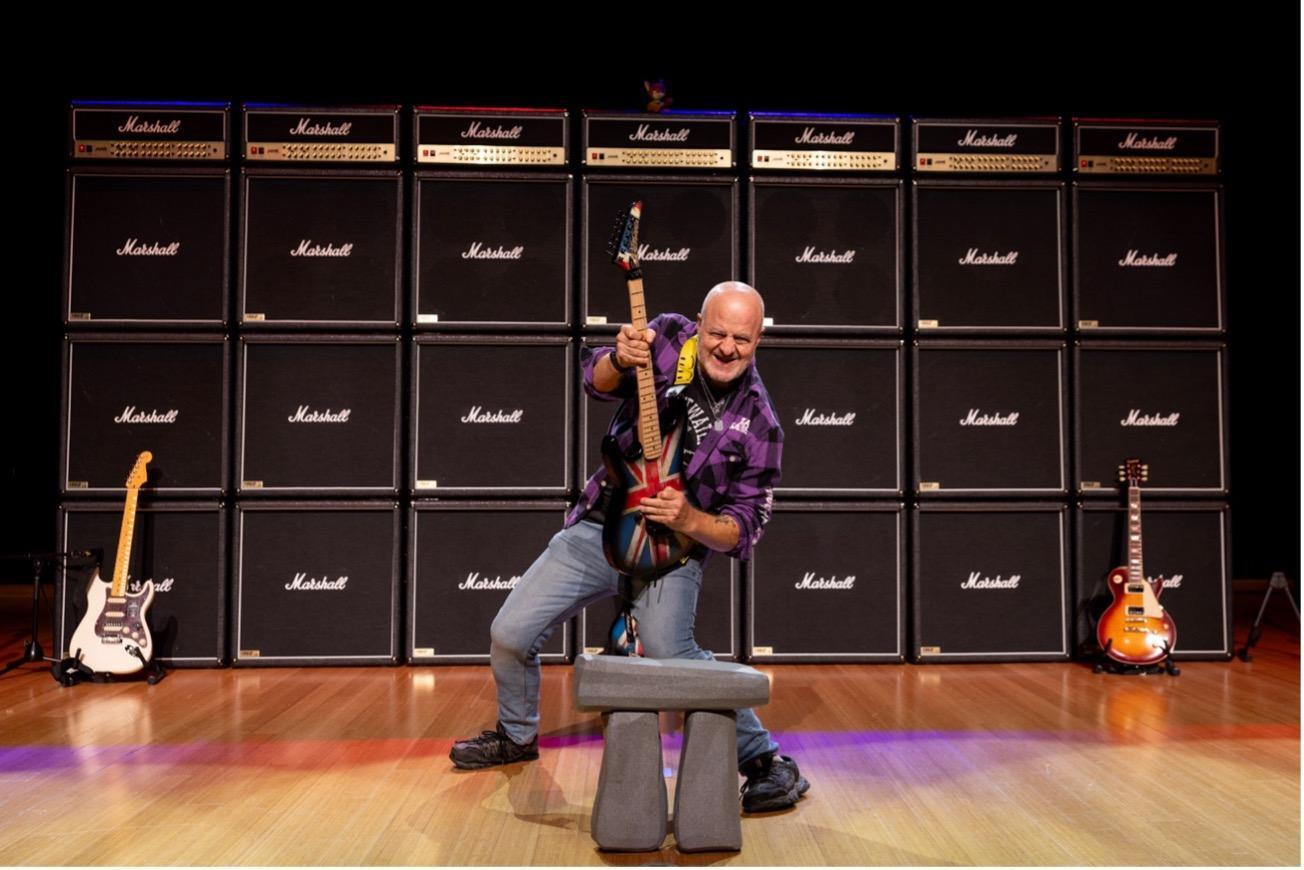
That said, in this writer’s opinion, there’s nothing quite like playing through a great tube stack . . . and it’s not about turning up to a Spinal Tap–approved “11” and making your ears, or the ears of your listeners, bleed either! It’s how it feels when air is being moved the way only a good tube amp can move it when driving a Celestion Vintage 30 speaker or four! It totally changes the way you play because not only are you hearing the notes and chords, but you’re also playing and literally feeling them, too. It’s almost primal. The amp’s tone grabs you like a sonic bear hug. It makes you want to play. It’s symbiotic. It’s inspiring. I could go on and on, but I think you get my point. I love playing through a great tube amp because of the positive feedback loop it creates. I enjoy all my digital stuff, too, but there’s just something about the way a tube amp rearranges my DNA!
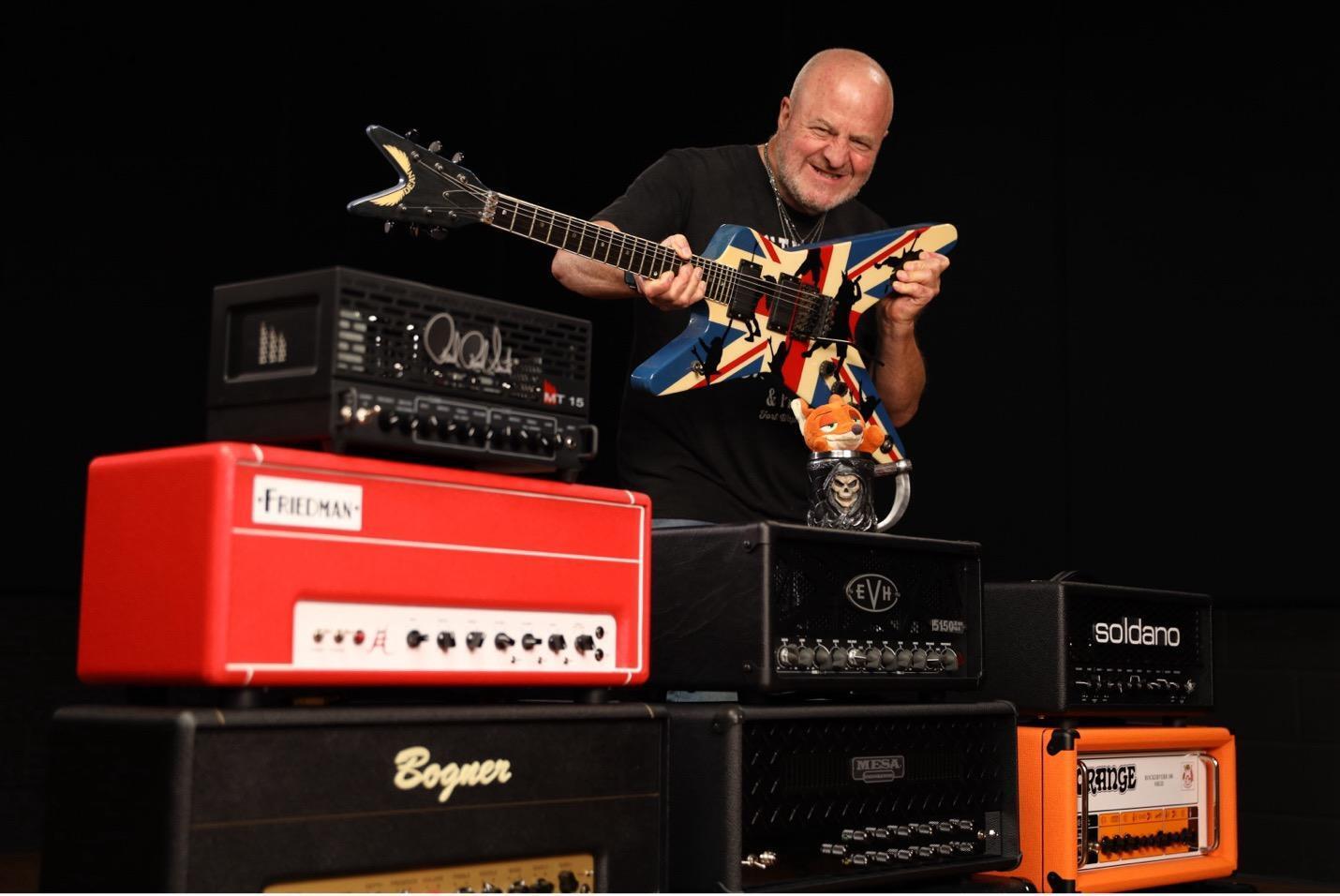
Anyway, enough rambling. Here are 10 beautiful beasts that the tube-amp-loving guitar clan at Sweetwater helped me put together. Hopefully what you’re about to read will whet your appetite to investigate a few of these fine, tube-driven guitar amplifiers further. Ditto the accompanying video.
Marshall JCM800 Modified 100-watt Head
The Marshall JCM800 2203* 100-watt tube head literally ruled the glorious metal kingdom that was the ’80s. From Motley Crue to Metallica, Slayer to the Scorpions, Dio to Dokken, the Marshall 2203 head was invariably omnipresent. This legendary head was also one of the most modified amplifiers out there and still is. The modifications made were typically the addition of more gain, the addition of a series effects loop, or both. Some mods were amazing while others quite literally ruined the amp!
The JCM800 Modified is Marshall’s answer to all the modified versions. In a nutshell, this made-in-England, 100-watt, single-channel tube amp is the legendary JCM800 2203 model with four “mod” options. All four of said mods are accessible via the three mini toggle switches on the front panel. There are two extra-gain boost options, a Tight switch, and a midrange boost option, too. Just like the JCM800 2203X reissue upon which it is based, this amp has a bypassable series effects loop — something the original head didn’t have. The amp’s tube complement is three 12AX7s and a quartet of EL34s.
*Note: 2203 is the model number of the head. JCM800 is the name of the amplifier series the 2203 was a member of.
Mesa/Boogie ’90s Dual Rectifier 100-watt Head
In the same way the Marshall 2203 is synonymous with ’80s metal, the same exact thing can be said of the Mesa/Boogie Dual Rectifier in the ’90s. And, just like the 2203, it was not only embraced by the metal and thrash communities but was also a favorite of many alternative and pop-punk bands, too. Enter the 100-watt, 2-channel ’90s Dual Rectifier reissue. Boasting five 12AX7s, four 6L6 power tubes, two rectifier tubes, and a series effects loop, this high-gain beast is back with a vengeance.
Its Bold/Spongy switch provides Variac-like functionality and feel; the Rectifier switch allows you to toggle between tube and silicon-diode rectification options; and a Bias switch makes swapping between 6L6 and EL34 power tubes a breeze if you ever wish to do so. When heard driving an extra-tall Mesa/Boogie Rectifier Standard 4 x 12-inch cab loaded with Celestion Vintage 30s, the Dual Rectifier immediately takes you back in time to the good ol’ ’90s!
Peavey 6505 1992 Original 120-watt Tube Head
In 1992, Peavey unleashed a high-gain, 120-watt, 2-channel tube head that took the metal, hard-rock, and metalcore scenes by storm. It was initially released with a different name as the signature amp of a legendary rock guitarist who is sadly no longer with us. When the artist and Peavey parted ways in 2004, however, the amp was renamed the 6505. I’m sure you don’t need any help filling in the blanks regarding who the late, great artist was or what the original amp was!
Boasting five 12AX7s and four 6L6 power tubes, the Peavey 6505 1992 Original head takes us back in time to when the amp’s gloriously savage story began. This footswitchable 2-channel tube head can take you from crystalline cleans to the high-gain sounds that can be heard on the likes of Machine Head’s groundbreaking 1994 album, Burn My Eyes, and anywhere in between. Controls for Presence and Resonance, plus an effects loop, round out this amp.
Diezel VH4 100-watt 4-channel Tube Head
When the Diezel VH4 100-watt 4-channel all-tube head was released in 1994, it didn’t take long for the metal and hard-rock world to embrace it like a long-lost son. From Korn to Tool, Mastodon to Metallica, the VH4’s tight, articulate high gain was a must-have hit. The VH4’s quartet of independent channels offer everything from sparkling cleans to cranked Plexi rock to tight, modern high-gain rhythm and lead sounds. Housing no fewer than seven 12AX7s and four EL34s, my personal favorite of the four channels is #3, which is aptly named Mega! The amp also has two global effects loops — series and parallel — and MIDI switching, too. To add further to its flexibility with effects, each of the VH4’s channels has its own insert with Send and Return jacks. So, if you just want a bit of compression on your clean channel, then insert away! Pair this formidable head with a front-loaded 4 x 12-inch Diezel cab loaded with Celestion Vintage 30 speakers, and you’re not only ready to rock, you’re armed and dangerous!
Orange Rockerverb 100 MKIII 100-watt 2-channel Tube Head
In the early 2000s, Orange entered the high-gain arena with a vengeance with their Rockerverb series of guitar amps. They were quickly embraced by gain-loving guitarists, especially in the hard-rock and metal kingdoms — including the likes of Ghost, Slipknot, and Corrosion of Conformity. As its name suggests, the Rockerverb 100 MKIII is a 100-watt tube amp with built-in (tube-driven), footswitchable spring reverb. It boasts two footswitchable channels, power scaling, a footswitchable attenuator, and a buffered, tube-driven series effects loop. To offer further versatility, you can switch off two of its EL34 power tubes, making it a 50-watt head. Housing four 12AX7s, two 12AT7s (for the reverb and effects loop), and four EL34 power tubes, the Rockerverb 100’s Clean channel can be charmingly polite while its Dirty channel can get pretty darned nasty and rude — in a really good way, of course!
EVH 5150III 6L6 50-watt Head
The late, great Edward Van Halen was not only a groundbreaking guitarist and amazing songwriter; he was also a self-confessed tone chaser. His lifelong obsession with all things guitar has gifted us a bunch of great axes, amps, and pedals in addition to his timeless musical legacy. Since the launch of his EVH brand in 2007, Edward’s line of EVH 5150 amps has not only grown but also evolved, thanks to the great man’s aforementioned tone-chasing nature. That’s exactly how the EVH 5150III 50-watt tube head came to be. Boasting seven 12AX7s and two 6L6 power tubes, this 3-channel head is capable of monstrous high gain as well as chiming cleans. A Resonance control, an effects loop, and MIDI footswitching further add to this amp’s guitarist-friendly flexibility.
This Black Stealth head plays nicely with any 4 x 12-inch cabinet, but nothing beats the sound and aesthetic when it’s paired with a matching, none-more-black EVH 5150III 4 x 12-inch Black Stealth cab loaded with Celestion G12 EVH speakers.
PRS MT 15 V2 Mark Tremonti Signature 15-watt Head
When PRS first launched the 15-watt, 2-channel Mark Tremonti signature tube head, it was an instant success. This is the second version, and as you’d expect from Mr. Tremonti, it has plenty of gain on tap plus a Clean channel that can go from pristine clean to old-school crunch, thanks to its push-pull Boost knob. In addition to its two totally independent, footswitchable channels — Clean and Lead — the MT 15 V2 includes a tube-driven series effects loop and a half-power switch that drops its output to a neighbor-friendly 7 watts. Housing no fewer than six 12AX7s and a pair of 6L6 power tubes, don’t let the diminutive size of the MT 15 V2 fool you . . . it packs a powerful punch.
As for finding the perfect cabinet for the MT 15 V2? Look no further than the matching PRS MT 112 Mark Tremonti 60-watt 1 x 12-inch cab loaded with a single Celestion Vintage 30 speaker.
Soldano Astro-20 20-watt 3-channel Tube Head
When Mike Soldano released the 100-watt SLO-100 tube head back in 1987, its unique high-gain sound quickly made it a favorite of a great many big-name hard-rock, metal, and even blues guitarists. Even though Mike retired in 2018 and sold his company to the excellent Boutique Amps Distribution, he thankfully stayed on as a designer. One of his most recent designs is the Astro-20. This is a 20-watt, 3-channel tube amp with a built-in IR loader with cabinet simulation, a series effects loop, MIDI control, and a programmable 4-button MIDI footswitch. Its tube complement comprises four 12AX7s and a pair of 6V6 power tubes. It can be used without a cab, making it perfect for silent stages and recording, too.
In addition to the six channel-assignable IRs onboard the Astro-20, you can load your own. The amp’s three channels are Clean, Overdrive 1, and Overdrive 2, and the four assignable Galaxies — Green, Blue, Purple, and Red — range from high-headroom clean to modern high gain with all points in between. Free editing software adds to the clever blend of old and new technology that is the Astro-20.
If you’re looking for the ideal cabinet partner for the Astro-20, then to my eyes and ears, the Soldano 2 x 12 vertical cab loaded with Celestion Vintage 30s is perfect.
Friedman JEL-50 Jake E Lee Signature 50-watt Tube Head
In the world of high-gain tube amplification, Dave Friedman needs no introduction. Just like other notable pioneers in the field such as Mike Soldano, Reinhold Bogner, and Peter Diezel, Dave’s reputation precedes him. One of his recent offerings is this striking Jake E Lee signature 50-watt, 2-channel tube head, the JEL-50. Clad in Red Bronco Tolex, this amp hosts several guitarist-friendly features including independent gain and volume controls for each channel, Dave’s renowned transparent series effects loop, and an XLR recording output with an excellent onboard cab sim. The JEL-50’s two footswitchable channels also have individual 3-way bright switches, and channel 2 also has a push-pull gain control for even more gain. As a result, the JEL-50 can take you from the “muscular, articulate rock tones” of the ’70s that Jake loves all the way to high gain that’ll have you barking at the moon — sorry, I just couldn’t resist the dreadful pun!
The JEL-50’s tube complement is three 12AX7s in the preamp and a pair of EL34 power tubes. As for a matching cabinet, look no further than either the JEL-112 or JEL-212 — Friedman Jake E Lee signature cabinets loaded with Celestion Creamback speakers and clad in Red Bronco Tolex, just like the head.
Bogner Snorkler 50 50-watt Tube Head
All my tube-amp-loving friends came back from the 2025 NAMM show in Los Angeles raving about the latest Bogner offering: the dual-mode, single-channel Snorkler 50 handwired tube head. This no-nonsense head features one of the earliest and now much-sought mods Reinhold made on 50-watt British master volume amps back in the late ’80s. The reason for the rather odd “Snorkler” name? Well, according to rock folklore, a renowned studio engineer had an amp modded by Reinhold, and he decorated it with a snorkeler logo he found. This amp was used on iconic albums in the early ’90s, including Alice in Chains and Jane’s Addiction, and as a result, the “Snorkler” head became the stuff of legend. Short backstory over, some 35 years later, this iconic amp is back!
The handwired Snorkler 50 is a 50-watt tube amp that offers two footswitchable modes: Blue and Red. Blue delivers some serious crunch while Red dives deep into high-gain territory. In addition to bass, middle, and treble controls, the Snorkler also has controls for Depth and Presence plus Bright and Deep switches, too. It also has an effects loop, a built-in noise gate, and a line output on its rear panel.
As soon as I plugged this EL34-powered beast into a Bogner Ubercab 4 x 12-inch cabinet loaded with an X pattern of Celestion Vintage 30 and G12T-75 speakers, I hit the Red mode and instantly understood why my tone-obsessed friends were so excited about this amp.
Menacing Metal Machines
And there you have it, my friend — 10 tube amps that work well for metal, hard rock, and much more. As mentioned at the start, there’s no such thing as “the best amp or amps for ____” (fill in the blank with any style you wish), but all 10 of these are great for metal . . . really great, in fact. There are plenty of other tube-driven fire-breathers we carry, too, and you can find them at Sweetwater.com or by calling your personal Sweetwater Sales Engineer at (800) 222-4700 and having a chat about all things high gain! Hopefully this article and the accompanying video have whetted your appetite to investigate a few of these fine amps further. Thanks for reading — happy hunting!