
Violin and Viola Quickstart Guide
Congratulations on buying a violin or viola from Sweetwater.
TIP: In all things regarding your new violin or viola, ask your private teacher or school orchestra director. As they teach you how to play the instrument, they will be able to answer your questions and give you advice about care and maintenance.
The violin plays the highest notes in a string section. The viola is much like the violin, but it is larger and plays lower notes in the musical ensemble. Because the two instruments are very similar, we will explain both of them in this guide. For the purpose of getting started, anything pertaining to the violin applies equally to the viola.
- Parts of a Violin or Viola
- Getting Started with Your Violin or Viola
- Using a Violin or Viola Bow
- How to Hold a Violin or Viola and Use Proper Playing Technique
- Let’s Play Some Notes!
- Putting Your Violin or Viola Away
- Violin and Viola Care and Maintenance
Parts of a Violin or Viola
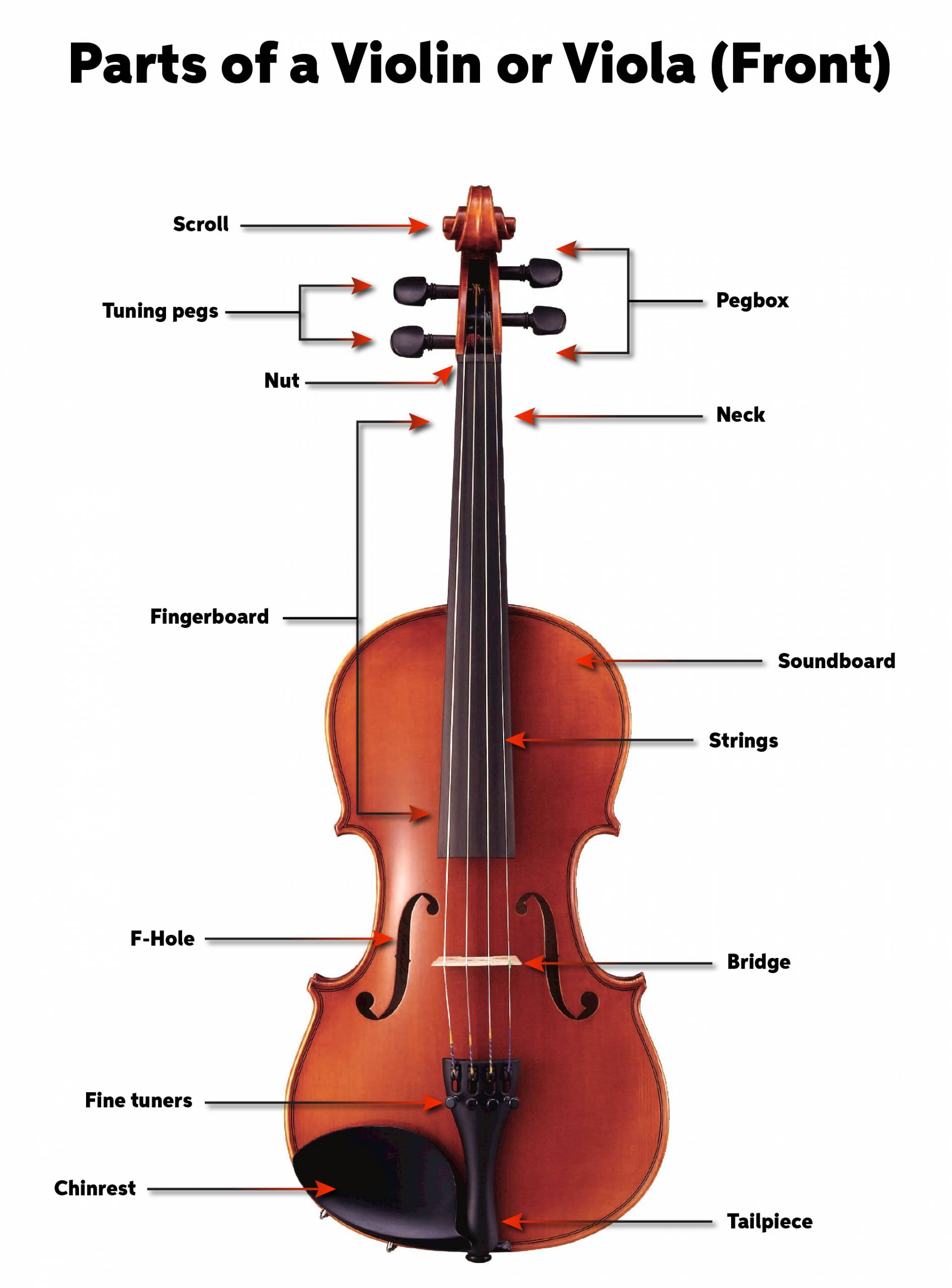
Parts of a violin (front)
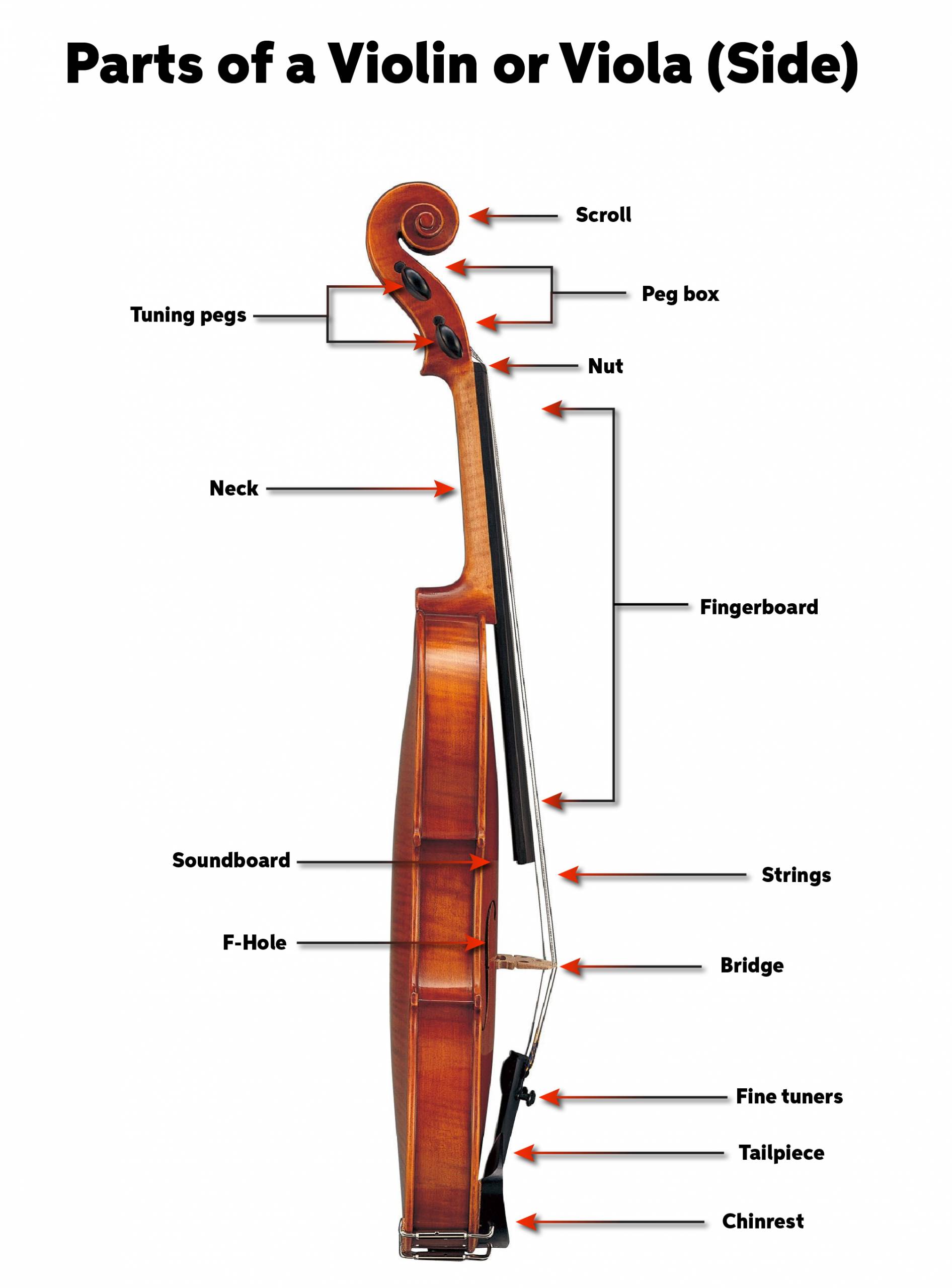
Parts of a violin (side)
The sound of your violin or viola starts with the four strings.
On the violin, the strings are tuned G3, D4, A4, and E5.
The viola is like a larger violin, but the strings are tuned lower: C3, G3, D4, and A4.
The strings sound when they are excited by the bow. You produce different pitches by stopping the strings with your fingertips on the fingerboard. The strings are anchored in the tailpiece at the bottom, and pass over the bridge. At the opposite end, they pass over the nut and are wrapped around the tuning pegs in the pegbox. The carved wood at the top of the pegbox is called the scroll. The strings are tuned by turning the tuning pegs at the top and the fine tuners attached to the tailpiece.
The violin and the viola have a chinrest to help you hold the instrument in the correct playing position. You can also attach a shoulder rest underneath to help you position the instrument so that you can play it in a relaxed manner.
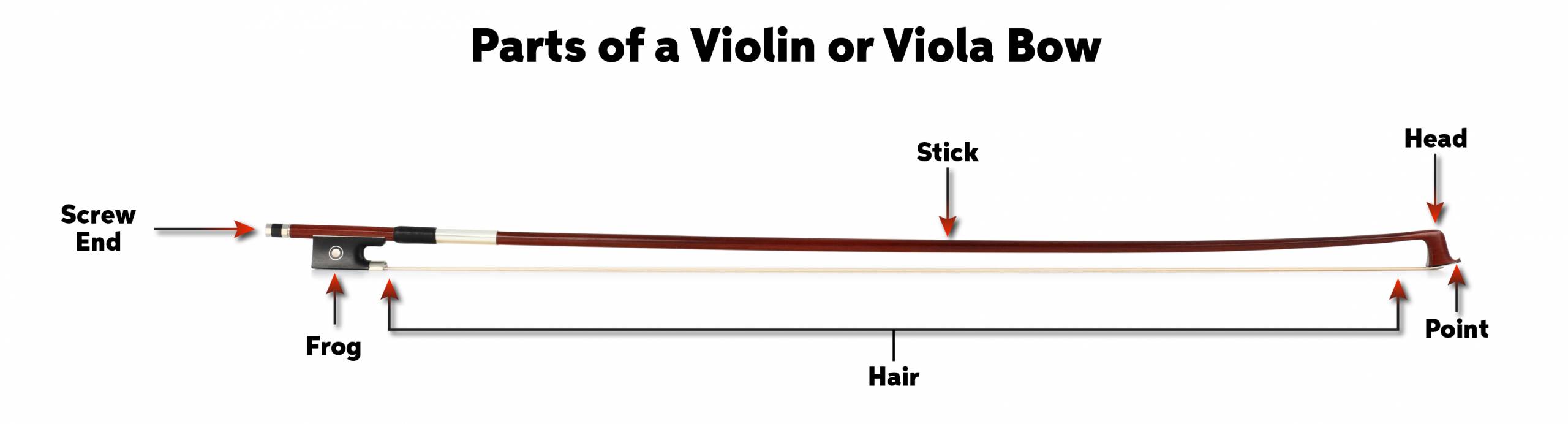
The bow is a stick of curved wood (or carbon fiber) that supports a length of horsehair (or a synthetic substitute) under tension between its point and its frog. The tension on the hair is regulated by the screw mechanism below the frog. To use the bow, you need to coat the hair with rosin to create friction so the hair can excite the strings. Rosin is processed, hardened pine tree sap.
You hold the bow in your right hand and bow its hair across the strings. The friction of the bow hair causes the strings to vibrate, producing the notes.
The strings, excited by the bow, transmit energy through the bridge and cause the carved spruce soundboard of the violin or viola to resonate. On either side of the bridge are the f-holes, which allow air to move in and out of the instrument as it vibrates.
Inside the body of the violin or viola is a piece of wood called the sound post. It is positioned just below the bridge and connects the carved spruce soundboard of the instrument to the maple wood back, transmitting the vibrations throughout the body.
Getting Started with Your Violin or Viola
A violin or viola, and its bow, are sensitive to changes in temperature and humidity. When your violin or viola got shipped to you, it passed through changes along the way. If you just received a new violin or viola, bring it inside, open the box, and inspect it to make sure everything is intact. But it’s best to close the case back up and wait a full day, perhaps two, to permit your violin or viola to acclimate to the temperature and humidity in your house. Then you can take it out.
The violin and viola chinrest and shoulder rest
Your violin or viola comes with a chinrest. This helps you hold the violin or viola in the correct playing position.
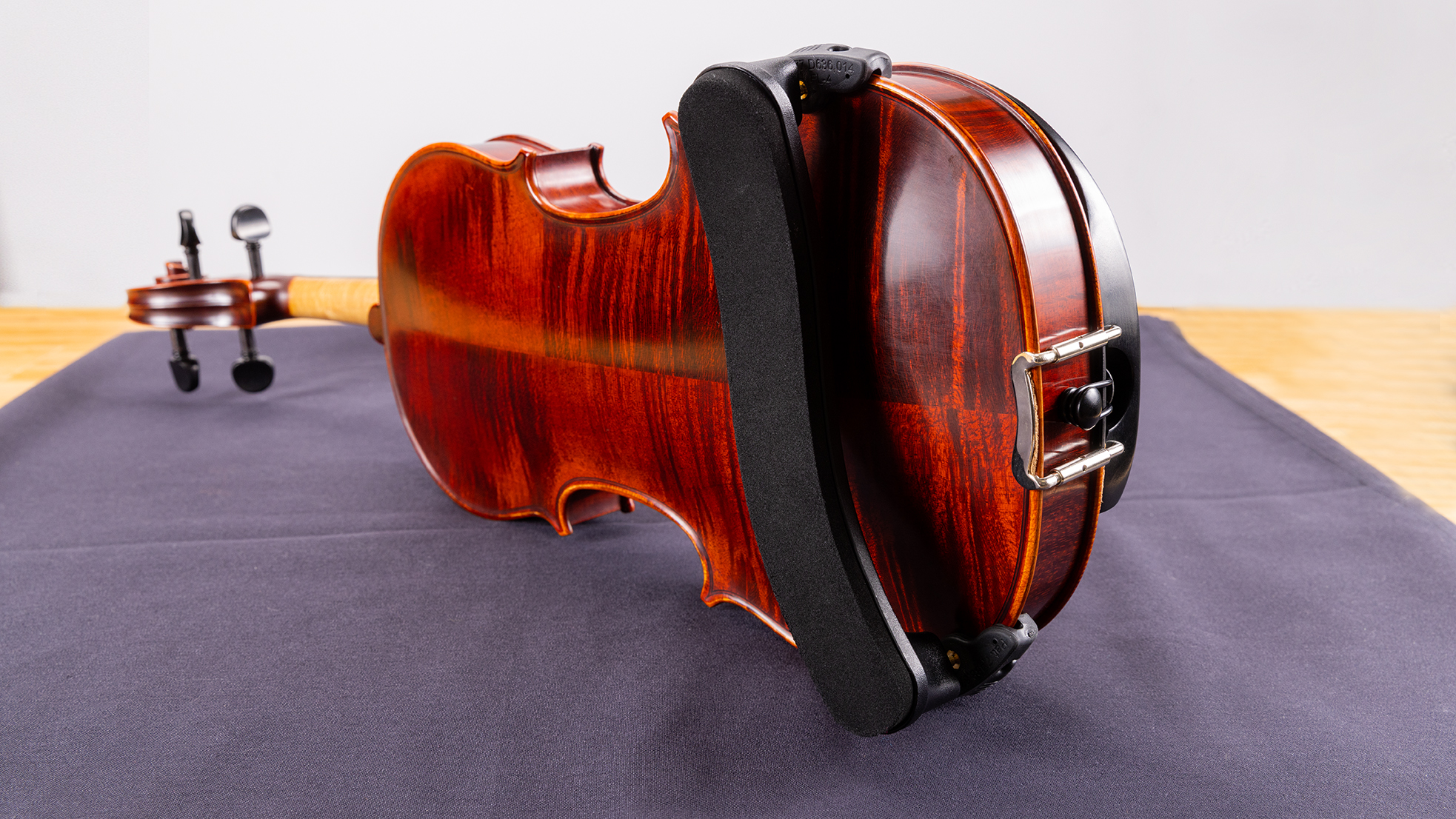
Your teacher may also recommend that you buy a shoulder rest. This helps you balance the instrument while leaving your shoulder and arm free from tension so that the instrument is easier to play. Your teacher can recommend the best kind and explain what fits your student violin or viola. Your teacher can show you how to attach your shoulder rest.
Tuning your violin or viola
IMPORTANT: If you have just bought your first violin or viola, whether you are an adult or a child, the professional string luthiers at Sweetwater recommend that you do not try to tune the instrument yourself. If you have not been taught how to do this, you can actually damage the violin or viola. Take your new violin or viola to your teacher or orchestra director and ask them to tune it for the first time. Follow your teacher’s advice, as learning how to tune the instrument goes hand in hand with learning how to play it.
Like every stringed instrument, a violin or viola needs to be tuned every time it is played.
Tuning takes place at two locations: at the tuning peg in the pegbox and at the tailpiece using the fine tuner knob.
IMPORTANT: Do not adjust the tuning pegs yourself. Let your teacher do this for you. It is a skill you will need to be taught.
After your teacher adjusts the tuning pegs for you, between lessons you can use the fine tuners to make small adjustments.
Get an electronic tuner for violin or viola
An electronic tuner senses the pitch of a string when you pluck it and displays whether the pitch is sharp, flat, or in tune. There are a number of tuner apps for your phone that use the phone’s microphone. These work best in a quiet room where your violin or viola is the only sound.
A better choice is an electronic tuner that clips to the body or pegbox of your violin or viola and senses the string vibrations directly. This will work in a noisy room.

Fine-tuning
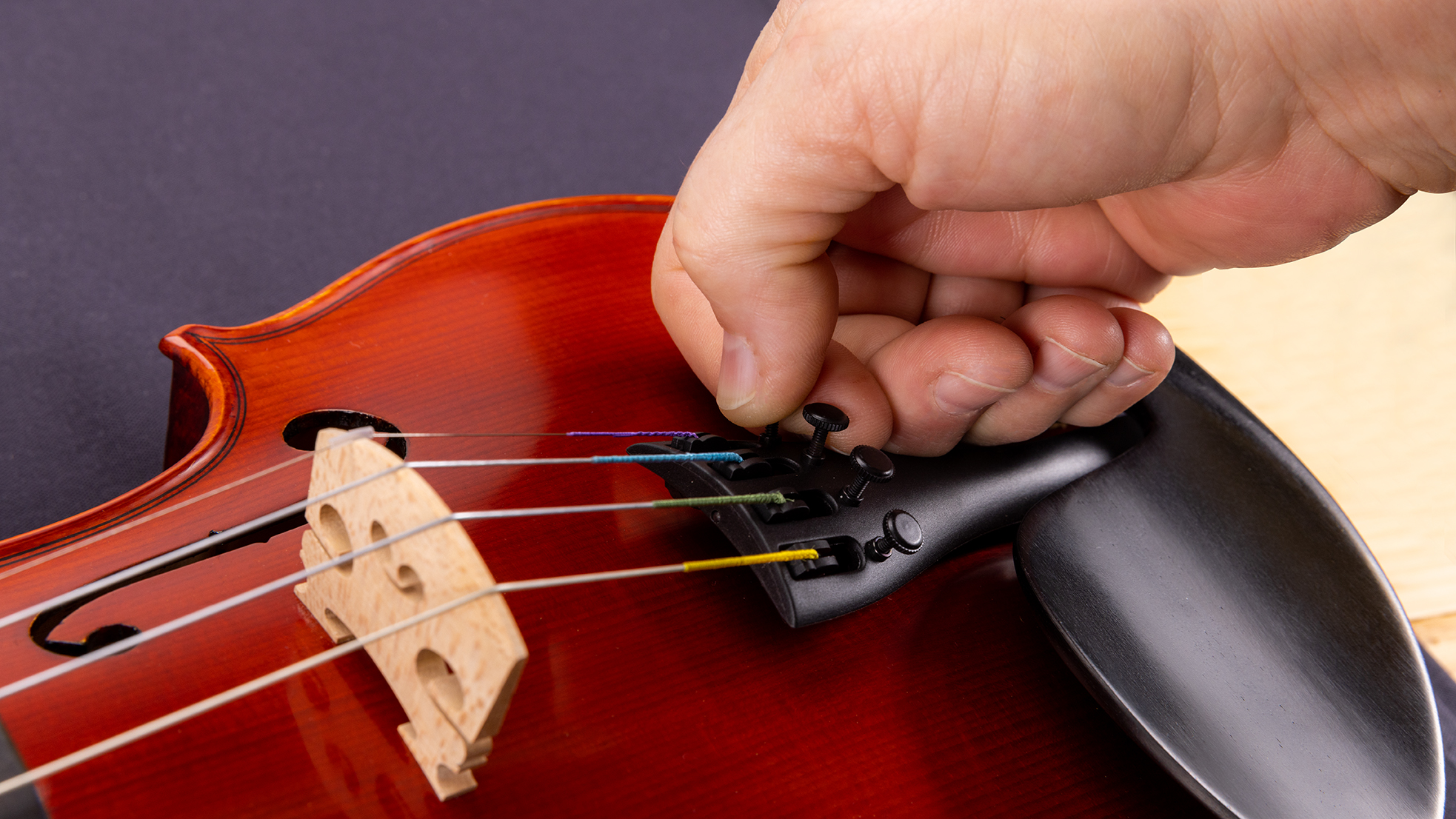
Attach your electronic tuner, positioned so you can see its display screen. Let’s start with the “A” string. Pluck the string with a finger on your left hand and watch the screen to see if the pitch is sharp or flat. With your right hand, grip fine tuner on the tailpiece, making sure it’s the correct one, and carefully adjust the knob. Turning it clockwise raises the pitch, and turning it counterclockwise lowers the pitch. Pluck the string again and watch the display screen on the electronic tuner. Repeat until the display indicates that the string is in tune.
TIP: Intermediate and professional violins and violas do not come with a fine tuner on all four strings. For those strings, you have to use the tuning peg alone. You can ask at a local violin luthier shop about installing additional fine tuners if you decide that you need them.
And repeat for each string
Repeat the process for the other three strings.
D’Addario Core: How to Tune Your Violin or Viola
Using a Violin or Viola Bow
Your bow comes to you with the hair loosened. Before you play the violin or viola, you need to tighten the bow’s hair. When you are done playing, you need to loosen the hair again before stowing the bow in its case.
The first time you play a bow with new hair, you need to apply rosin to the hair to make the hair sticky. Without rosin on the hair, your violin or viola strings simply won’t make any sound.
How to tighten and loosen the hair on your violin or viola bow
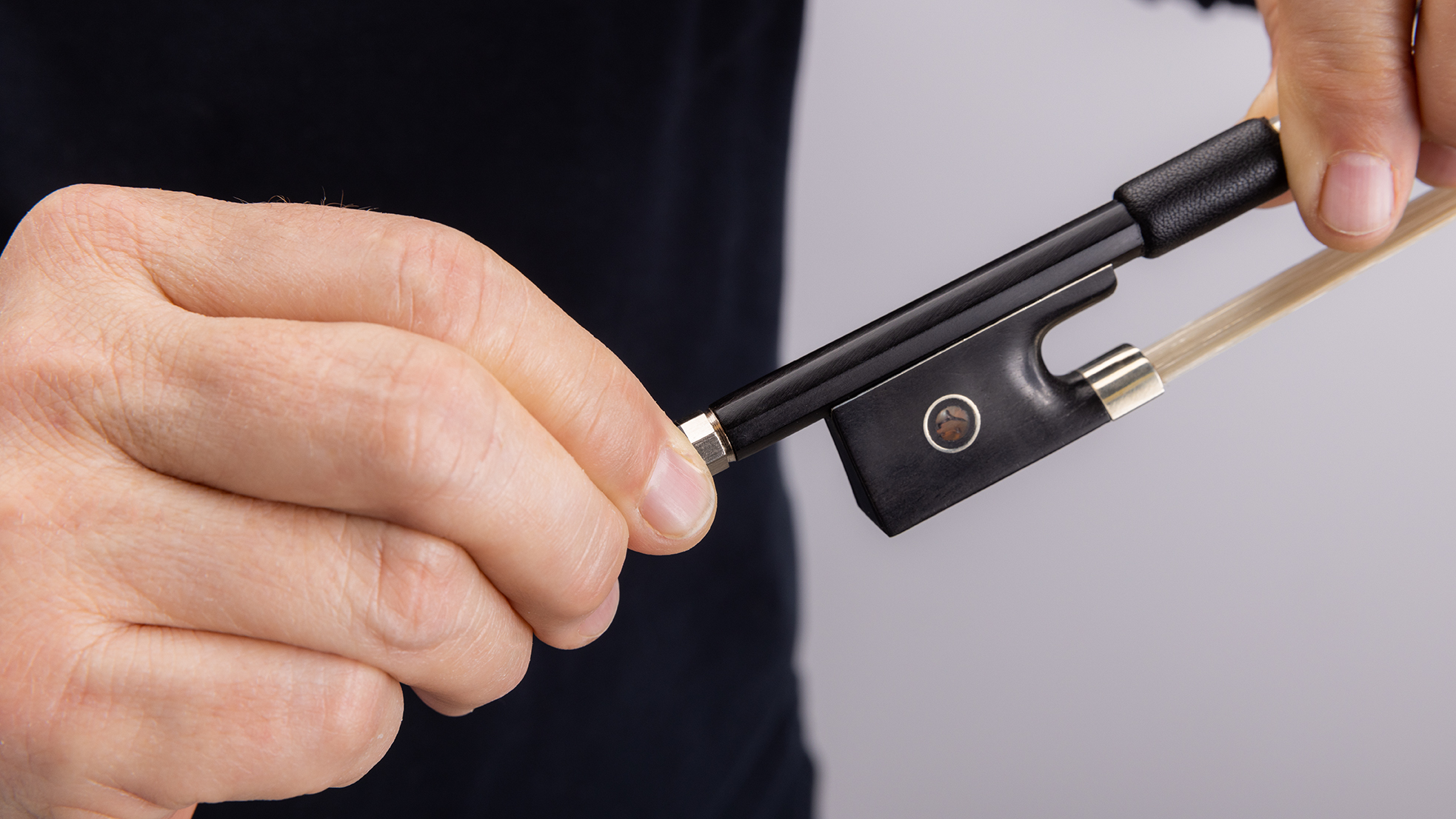
To tighten the hair, turn the screw counterclockwise. Tighten it just enough to leave a slight inward curvature in the stick. If the stick is straight, there is too much tension.
How to apply rosin to your violin or viola bow
TIP: When your bow hair is new, you need to spend 10 to 15 minutes coating it with rosin before you can use the bow to play your violin or viola.
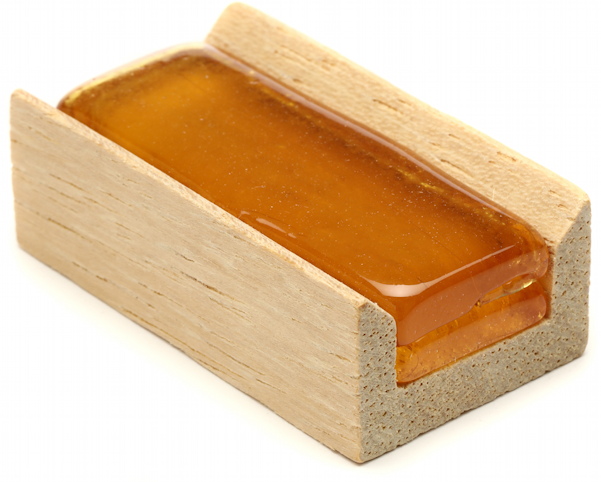
A small cake of rosin came with your violin or viola and is inside the case. You can use this rosin to get started. It would be a good idea to buy another cake of better-quality rosin and keep it on hand, however. There are different types and formulas of rosin. Ask your teacher to help you select something suitable.
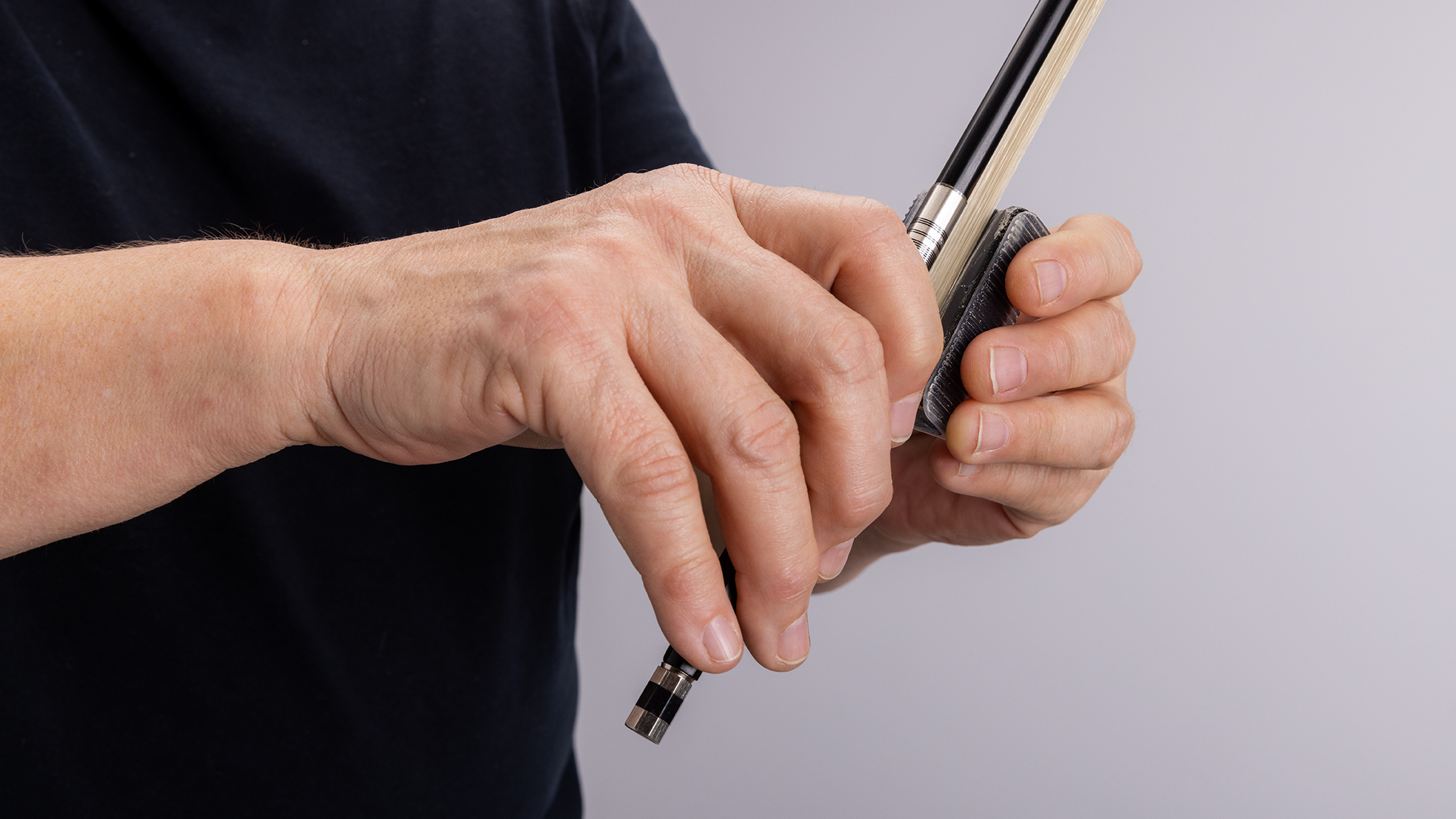
Make sure your bow has been tightened to playing tension.
Wash your hands so you don’t get your rosin dirty.
The rosin cake needs to be primed by roughening its surface so that the rosin will transfer to the hair. Scuff it with fine-grained sandpaper.
Hold your bow by the frog in one hand. Take the rosin cake in the other hand and draw the bow across the rosin cake from the frog to the tip, back and forth. For brand-new bow hair, spend 10 to 15 minutes stroking the rosin cake across the hairs. Do this gently, because the new hair has not settled in. Make sure the entire length of the hair is coated with rosin. Test it by bowing a string (see below). You will know that you have enough rosin when you can feel the hair grip the string and it makes a clear, resonant sound at all positions along the hair. If it does not, apply more rosin.
When you are done applying the rosin, wash your hands to remove the rosin dust.
In the future you only need to apply a little rosin to the hair whenever you notice that the bow is not producing clear notes.
How to Hold a Violin or Viola and Use Proper Playing Technique
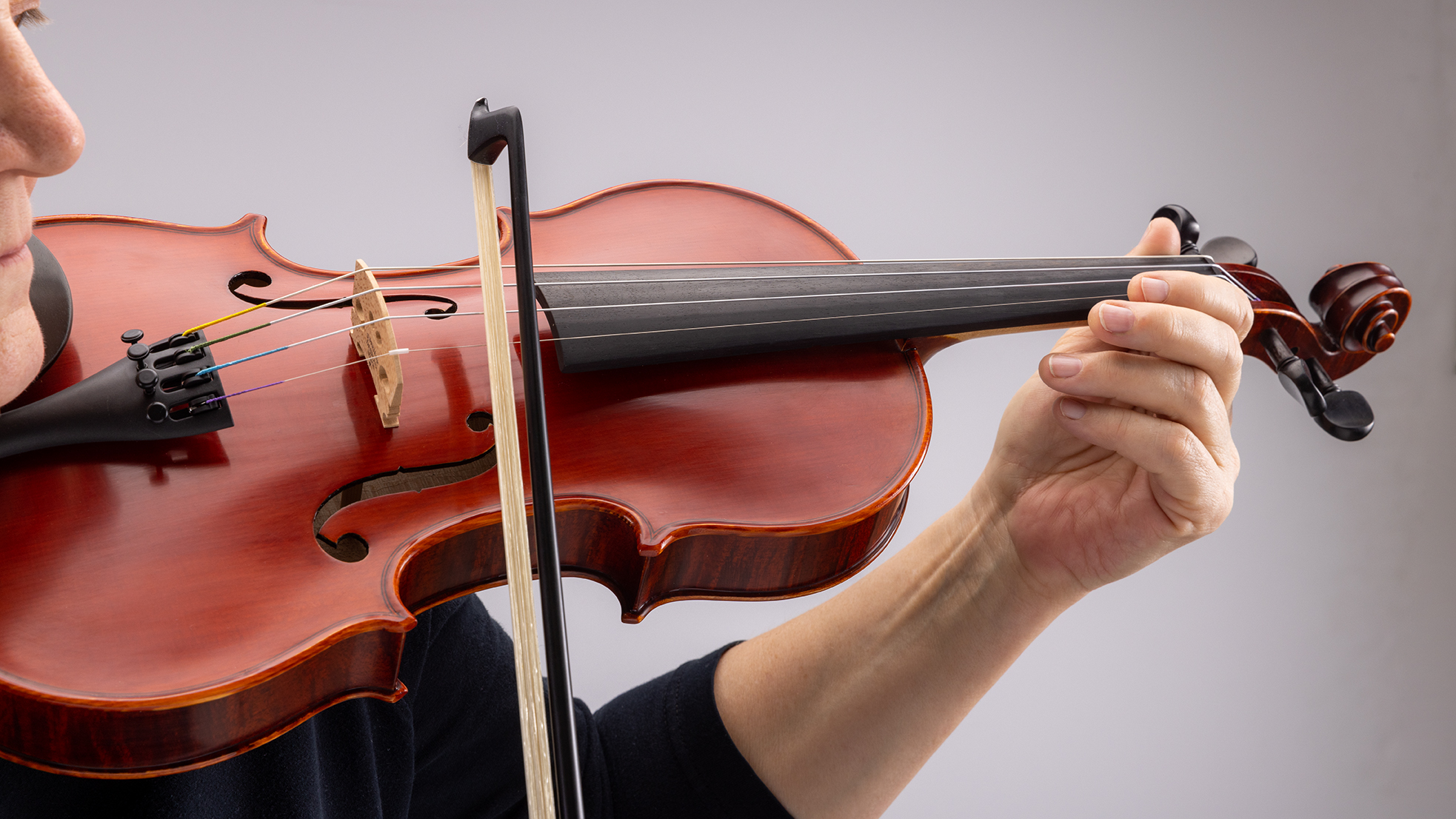
All musicians, and singers too, need to learn correct posture in order to play without stress and strain, and to make playing more enjoyable.
Your chair is important
Finding a chair of the correct height is important. You need a chair with no arms and a firm seat. The seat needs to be at a height where you can sit with both feet flat on the floor and with your hips at the same height with, or slightly higher than, your knees. Sit on the front part of the seat, with your back straight and tall. Don’t lean against the chair’s back.
Good posture means stress-free playing
Musicians are taught that when you sit up tall, you should pretend like you are a marionette with a string attached to the top of your head, and the puppet master is gently pulling the string to lift your head up. Keep your head erect.
Ask your teacher to show you how to hold and balance the violin or viola with regard to the chinrest and the shoulder rest.
Let’s Play Some Notes!
Whether you are right-handed or left-handed, you use your right hand to hold the bow, and you use your left hand to finger the notes on the fingerboard of the violin or viola.
To get started, let’s put the bow down and pluck some notes.
You pluck with your finger about halfway along the length of the string. Don’t pluck down near the bridge because that’s where you bow, and after you bow for a while, the strings will be sticky with rosin down there.
Pluck the open strings
Place your right-hand thumb on the edge of the fingerboard and pluck the first string with a side-to-side motion of your index finger so that the string moves parallel to the top of the violin or viola. Don’t snap the string upward. Now pluck the next string over, producing a different note. Then pluck the third string, then the fourth. Listen to each note resonate.
Congratulations: you are playing the violin or viola!
How to hold the bow
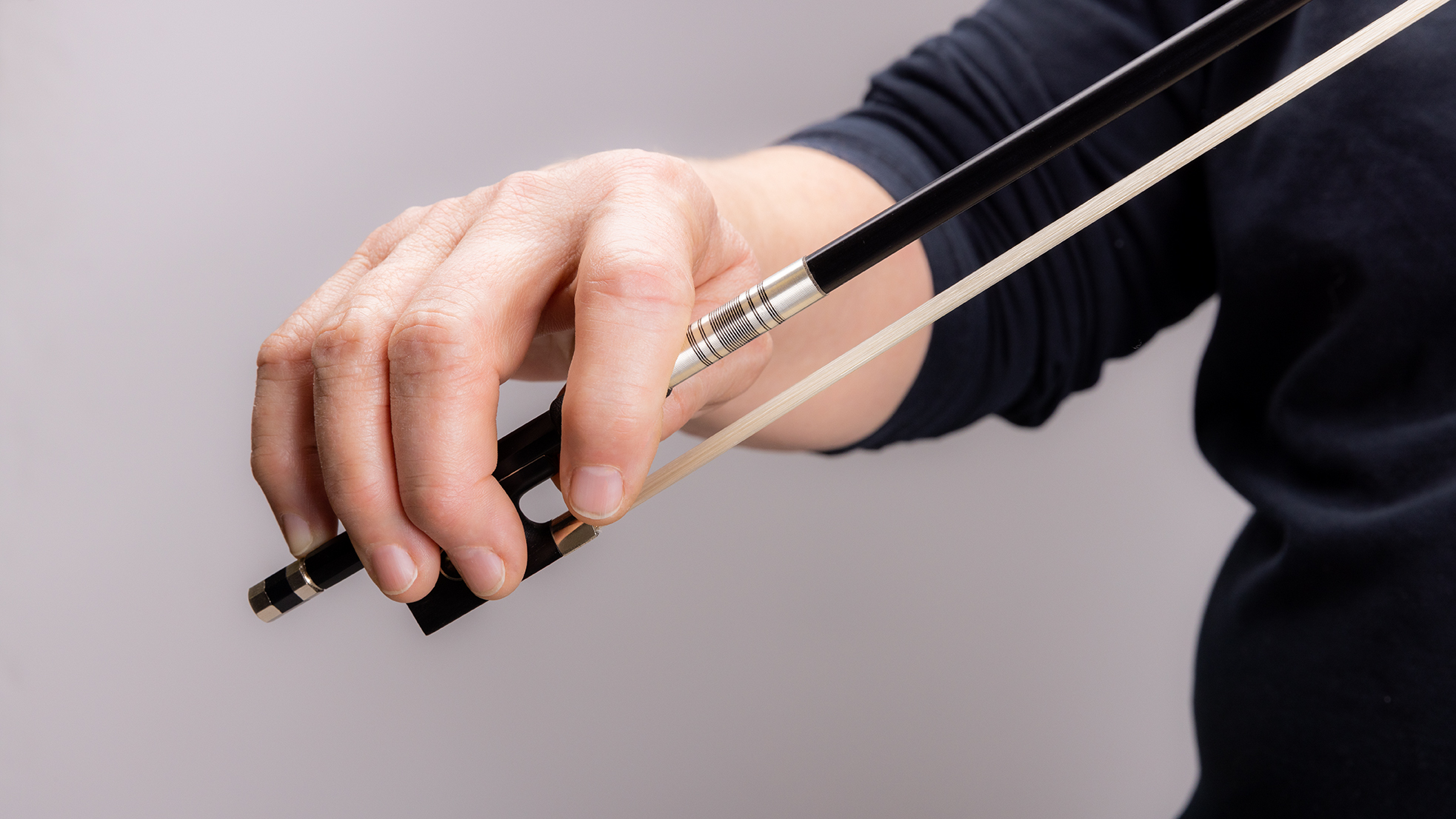
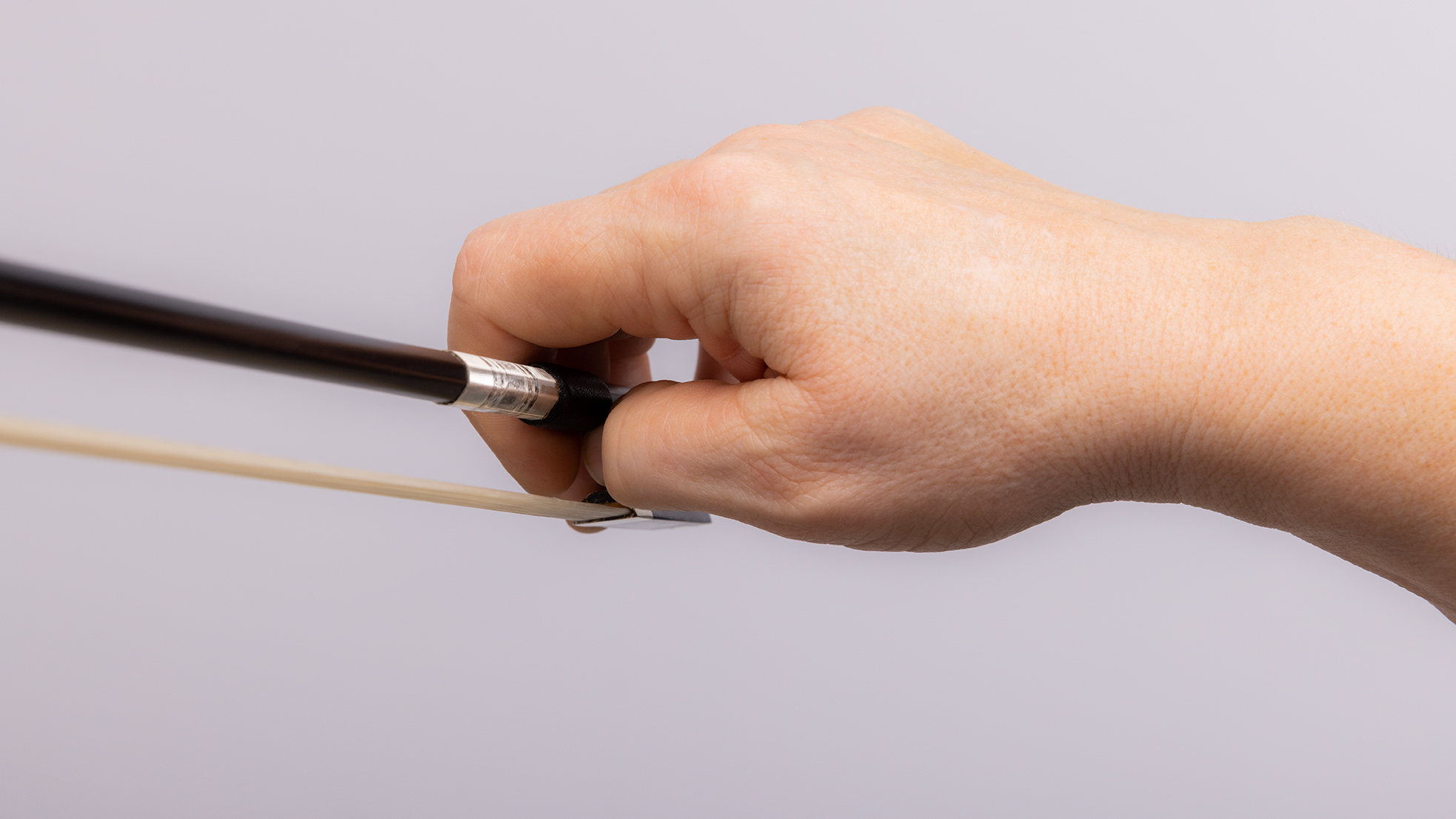
You hold the bow with your right hand. Hold the frog with your thumb closest to you and your first three fingers wrapped around the front in a relaxed grip. The stick goes up, and the hair goes down; you draw the hair across the violin or viola’s strings at a right angle to produce the sound.
Bowing the strings
Choose an open string to play. Place the bow hair against one of the strings, positioned between the end of the fingerboard and the bridge. Start with the bow against the string near the frog. Gently draw the bow outward, with a pulling action. When you hold the bow at a certain angle against a string, you will play one string, but if you adjust the angle a little, you can bow two strings at once.
When you draw the bow outward, it is called a down-bow. When you push the bow in the opposite direction, it is an up-bow.
If you don’t hear any sound from the string, you need to apply more rosin to your bow hair.
Using your left hand to finger more notes
You have heard the notes of the four open strings. You produce all the other notes by using a fingertip on your left hand to press a string against the fingerboard at a certain position while you pluck or bow the string with your right hand.
Your teacher will teach you how to use your four fingers to play different notes, melodies, and scales. Your teacher may begin by having you pluck the strings with your right hand finger. Eventually you will work on bowing the notes as well.
So how do you locate the different notes on the fingerboard? You learn by practicing and using your ear. You will come to appreciate that there are wonderful sounds and musical expressions unique to the violin, viola, cello, and upright bass that can’t be played on other kinds of instruments.
A word about fingers, fingernails, fingertips, and calluses
As with playing all string instruments, you need to file down the fingernails on your left hand so that only the fleshy fingertips touch the strings.
When you begin to play, your fingers will not be accustomed to pressing down on the steel strings. As you learn to play, you may even experience a little pain in your fingertips. Don’t be discouraged; this is normal. With consistent moderate practice, your fingertips, initially soft, will develop a thicker layer of skin, called a callus, which protects your fingertips and makes playing comfortable. Your calluses develop naturally while you play.
If playing seems uncomfortable, stop for the day. Ask your teacher about using your hands, fingers, and fingertips.
Putting Your Violin or Viola Away
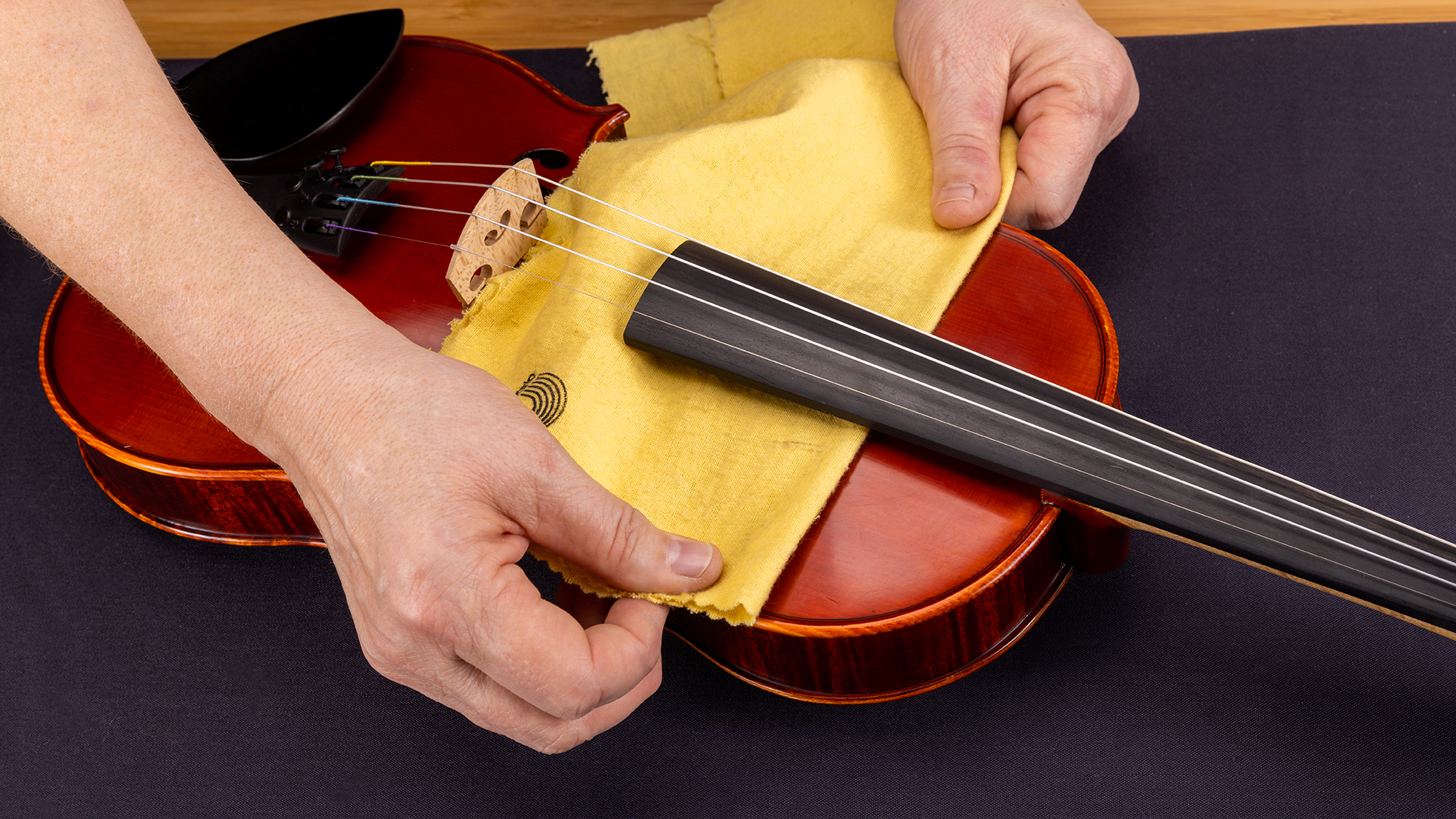
Every time you finish playing your violin or viola, you should use a clean cloth to wipe off the rosin dust from the surface of the violin or viola around the area where you bow. Rosin contains small amounts of turpentine which, over time, could eat through the violin or viola’s varnish.
Remember to loosen the screw on the bow to reduce the tension on the bow hair. You should always put both the violin or viola and the bow back in the violin or viola’s case and close it until it’s time to play again.
Violin and Viola Care and Maintenance
Your violin or viola is a delicate instrument that requires care to keep it in tip-top shape. Be sure to click on the link below and read our article on how to care for and maintain your violin or viola. There are steps you need to take to prevent damage and costly repairs. We at Sweetwater trust you will enjoy playing your violin or viola for years to come.
When you need help, Sweetwater has the answers!
Our knowledge base contains over 28,000 expertly written tech articles that will give you answers and help you get the most out of your gear. Our pro musicians and gear experts update content daily to keep you informed and on your way. Best of all, it’s totally FREE, and it’s just another reason that you get more at Sweetwater.com.