

Seven Great Ways to Reuse Old Drumheads
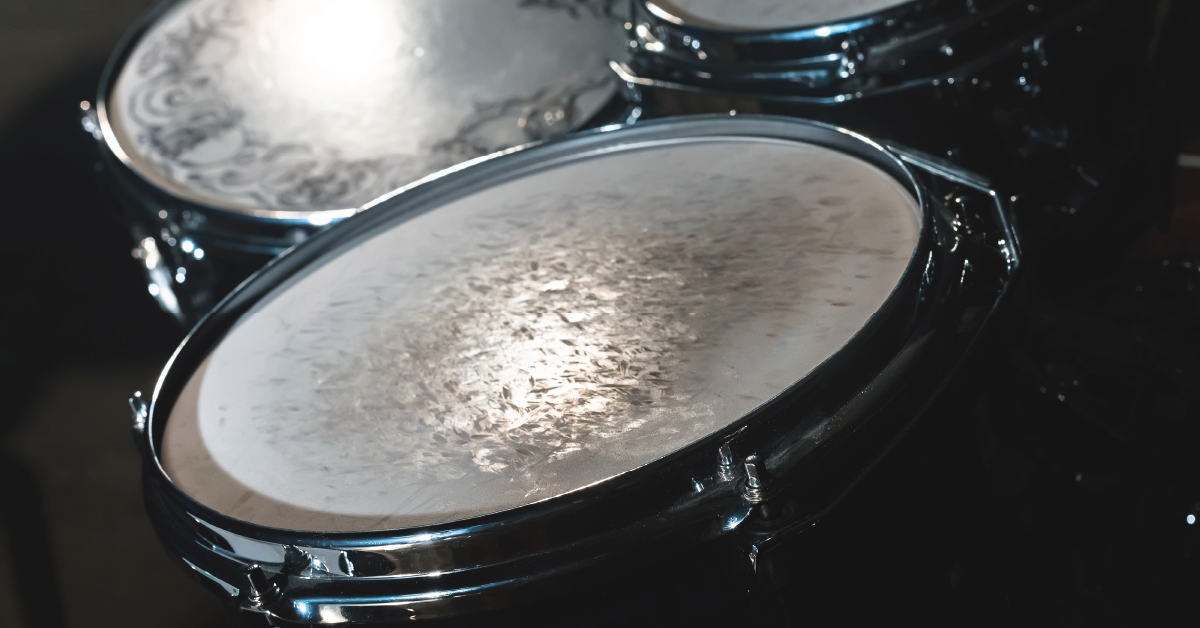
So, you just put on a new set of drumheads before your next gig. You might ask yourself, “What am I going to do with this pile of beat-up plastic?” Of course, the immediate thought is to toss them right into the garbage. However, instead of throwing them away, you can do some great (and clever) things with your used drumheads. So, in this article, we’ll cover seven ways to utilize old heads to your advantage.
- Change the tone of your snare drum
- Cut out O-rings
- Make a bass drum patch
- Make snare wire straps
- Control snare buzz
- Keep used drumheads as a backup
- Get creative
- Bonus: Donate them!
Change the tone of your snare drum
If you have some terrible overtones or want to beef up your snare’s sound, you can fix that in one second flat. Just throw a used head upside down on the snare drum and start playing. Like the Big Fat Snare Drum dampener, it dampens, makes the snare sound fuller, and drops the pitch. So, you’re achieving three things at once. You can use any head you want, but a good rule of thumb is that the thicker the head is (2-ply), the greater the effect.
Check out Casey Cooper (COOP3RDRUMM3R) demonstrating what it sounds like!
Casey Coopers 10 Snare Drum Sound Hacks
Cut out O-rings
CHECK THE TENSION FIRST! Uneven tension on a drumhead can cause less-than-desirable overtones, but it can also cause premature damage to your drumhead. So, make sure everything is at the same tension before dampening.
If there’s one thing that can get annoying, both in the studio and on stage, it is that bothersome ring from your toms and snare. There are multiple reasons why your drums might be ringing. The most common culprit is tuning. So, if you’re having a hard time tuning a drum, and the sound engineer needs you to dampen your drums and you don’t have any type of dampening system, just cut around the old head to turn it into a makeshift muffling O-ring. Just like putting an old head on your snare drum, the thicker the head is, and the smaller the hole you cut, the more dampening you’ll have.
Make a bass drum patch
Bass drum patches are a lifesaver, as they extend the life of your bass drumhead by adding a layer of protection between the drumhead and your bass drum pedal beater(s). These are particularly useful for heavy-footed drummers or for drummers who use plastic or wood beaters.
There might be a time when you begin noticing your bass drumhead is a bit dented, so this is where a bass drum patch comes into play. If you don’t have any patches on hand, you can always cut out a patch shape and tape it over the spot where your beater(s) strikes so the bass drumhead is protected.
Make snare wire straps
Keep your snare straps centered! Keep your snare straps as centered as possible! If they’re off center, it causes uneven tension on one side of the snare wires, which in turn, affects the overall tone of your drum.
There’s nothing worse than having a snare strap break before a gig, as it essentially turns your snare drum into a high-pitched tom or timbale. While snare straps are very durable, tightening your snare wires too much can cause the straps to snap. Unless you’re going for that snare-less snare sound, this isn’t good. This is where used drumheads can come in handy. All you need to do is cut a piece of the head into a strip, fold it over (for more rigidity), and insert it into the strap slots of your wires.
How to Change Snare Wire
Control snare buzz
One very common annoyance with snare drums is the dreaded snare buzz you get when hitting a tom or when low frequencies coming out of your drum monitor excite the snares. While it’s tough to get rid of snare buzz completely, there is one way you can control it.
Tuning your toms to a different frequency that is not in the snare drum’s range is the first thing you should always do to control snare buzz. But if there’s just a little bit of buzz, you can cut a strip of a used drumhead and place it between your snare wires and snare side head near the edge of the drum.
- You can achieve similar results using a playing card. But unless you’re a traveling magician, as well, then you’re probably not carrying a pack of cards around in your gig bag while you’re in the recording studio or on the road.
Keep used drumheads as a backup
Here’s a scenario: you’re in the studio recording, and in the middle of the session, your bass drumhead tears. Unless there’s a local music store open that sells drumheads or you have a studio kit on hand, the only thing you can really do is cut the session short and reschedule once you install a new head. This can be a time-consuming and frustrating situation for both you and the recording engineer.
Like strings for a guitar, drumheads are the most critical part of a drum kit. If one breaks and you don’t have a backup, it could be a big problem. So, once you’ve put your new drumheads on, put the used heads in your drum cases if you’re playing a gig or recording session, or store them in your rehearsal space.
Getting dents out
IT WON’T CHANGE THE SOUND! Before we move forward, it’s important to note that this is merely more of a cosmetic fix and won’t change the tone of your drum. More importantly, if you are denting your drumheads often, you need to consider the ply of the drumhead, the angle of the drums, the choice of drumstick, and most importantly, your playing technique.
If the used heads are dented up and you still need some backups, use a hairdryer or a heat gun and move it continuously around the head. This can help get the dents out. Don’t overwork it or keep the heat focused on one spot, though!
Get creative
Some may think that drumheads are just pieces of plastic and the only “hacks” are for drumming purposes only. But if you think about it, you can get very creative outside of the realm of drumming.
Use it for autographs
One way you can reuse an old drumhead is to have you and your band autograph it and hand it out to someone in the crowd. It’s a great keepsake for that fan, and it could make their concert experience that much more memorable!
Paint it
EXPERIMENT! Since drumheads are a completely different medium than canvas, they help you experiment with different styles and techniques. What’s better than experimenting, pushing yourself to try new things while repurposing a normally disposable item!
Another creative thing to do is to grab a paintbrush — drumheads can make great blank canvases (coated heads work best.) Once your masterpiece dries, you’ll have something unique to hang on the wall. It can most certainly be a talking piece for you and your friends!
Make a clock
If you like tinkering with things, you can turn a used drumhead into a clock. Just go to a local or online store that sells clock kits, and install it on the drumhead. The kits are cheap and easy to install, too, which means anyone can do it. Plus, having a drumhead clock hanging in your studio or rehearsal room will give it some personality.
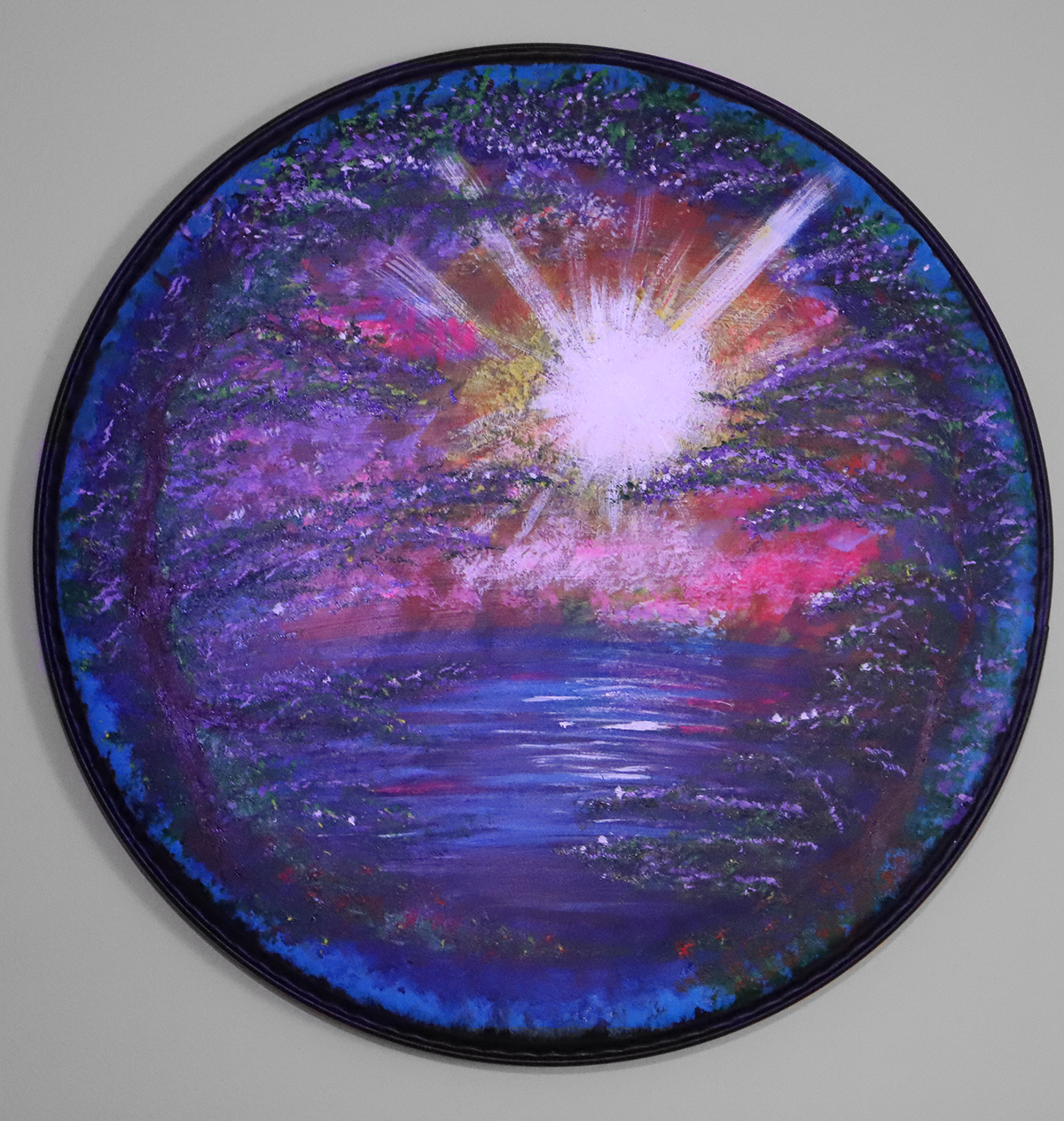
Painting by Krystal Davis
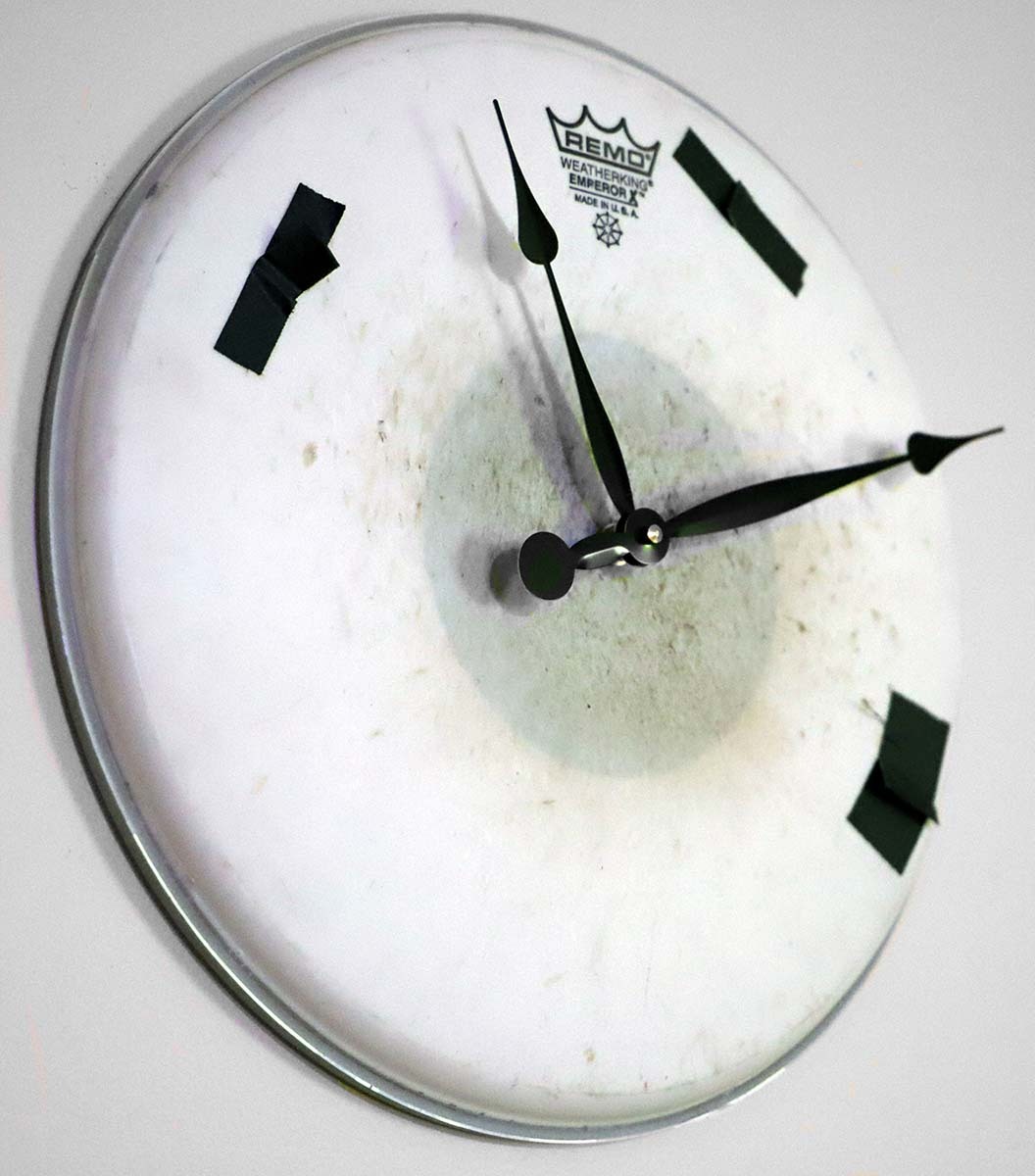
Clock by Eric Askew
Bonus: Donate them!
If you have very slightly used drumheads and replace them, such as ones you swapped out only after a couple of gigs, or if you replace them on a very regular basis and they aren’t dented, the last (and the greatest way) to reuse them is by donating them to your local school or a private drum class!
Replacing drumheads can be costly over time, so private drum classes or schools with smaller music program budgets may not be able to replace them regularly. If the school’s music department isn’t in need, ask the art department if they’d like to use them as canvases!
Related Articles
When you need help, Sweetwater has the answers!
Our knowledge base contains over 28,000 expertly written tech articles that will give you answers and help you get the most out of your gear. Our pro musicians and gear experts update content daily to keep you informed and on your way. Best of all, it’s totally FREE, and it’s just another reason that you get more at Sweetwater.com.