

Mandolin Care and Maintenance Guide

Congratulations on your new mandolin from Sweetwater. Whether you have an inexpensive beginner mandolin or a professional model, it’s worth caring for so that it brings you years of enjoyment.
In this guide, we will show you how to care for and maintain your mandolin, or other mandolin-family instrument such as the mandola, mandocello, octave mandolin, mando-guitar, and the bouzouki. Let us show you how to keep it safe during temperature and weather changes, how to keep it looking good and sounding great, and how to change its strings.
- The Best Way to Store Your Mandolin
- Accessories for Your Mandolin
- Temperature and Humidity Are Key
- How to Clean Your Mandolin
- Restringing Your Mandolin
- Annual Maintenance
The Best Way to Store Your Mandolin
IMPORTANT: Never leave a mandolin in a car in any weather. Never store a mandolin or other stringed instrument in an attic, a basement, a garage, or a shed. One season of storage in extreme heat and humidity, or extreme cold and dryness, can ruin your mandolin.
Mandolins are delicate musical instruments crafted from thin-carved pieces of resonant wood glued together and holding up under the tension of the strings. You should protect your mandolin by putting it back in its case when you are done playing.

Since mandolins are fragile, you may want to invest in a good-quality hardshell case or padded gig bag.
Mandolin Accessories
Inside the case, keep a strap, a clip-on electronic tuner, a polishing cloth, a set of replacement mandolin strings, a string winder and clippers, a humidifier, and a hygrometer, the uses for which we will discuss below.
Temperature and Humidity Are Key
Your mandolin is a fragile instrument that can suffer damage in extremes of temperature and humidity.
The wood in the mandolin will naturally expand a little in hot, humid conditions and will contract when cold and dry. In prolonged exposure to cold temperatures or low humidity, the mandolin’s wood may crack and split. The neck and soundboard, or top, can shift, changing the height of the strings from the fretboard (which we call the “action”), making the mandolin harder to play. If it’s too hot and humid, the wood can expand, the glue holding the back, sides, and top together can work loose, and the mandolin can begin to fall apart. Repairing these problems is expensive.
Protect Your Mandolin from Temperature and Humidity Extremes
A simple rule is to always keep your mandolin in the same rooms in the house where you keep yourself and your family.
When you transport your mandolin, don’t ever leave it in a car. In the summer, the interior of a parked car can get so hot that the mandolin can come unglued.
If you transport a mandolin in cold weather, it will be cold when you carry it into a warm house. Once inside, it’s a good idea to leave the mandolin in its case for half an hour or more so that it can slowly warm up before you take it out of the case, tune it up, and play it.
Never store a mandolin in an attic, a basement, a garage, or a shed. One season in extreme heat or cold, or humidity or dryness, can ruin your mandolin.
Maintain Consistent Humidity
You may not be aware of how widely the humidity inside your home changes throughout the year. Get a hygrometer (humidity meter). They display relative humidity as a percentage. Check the reading frequently.
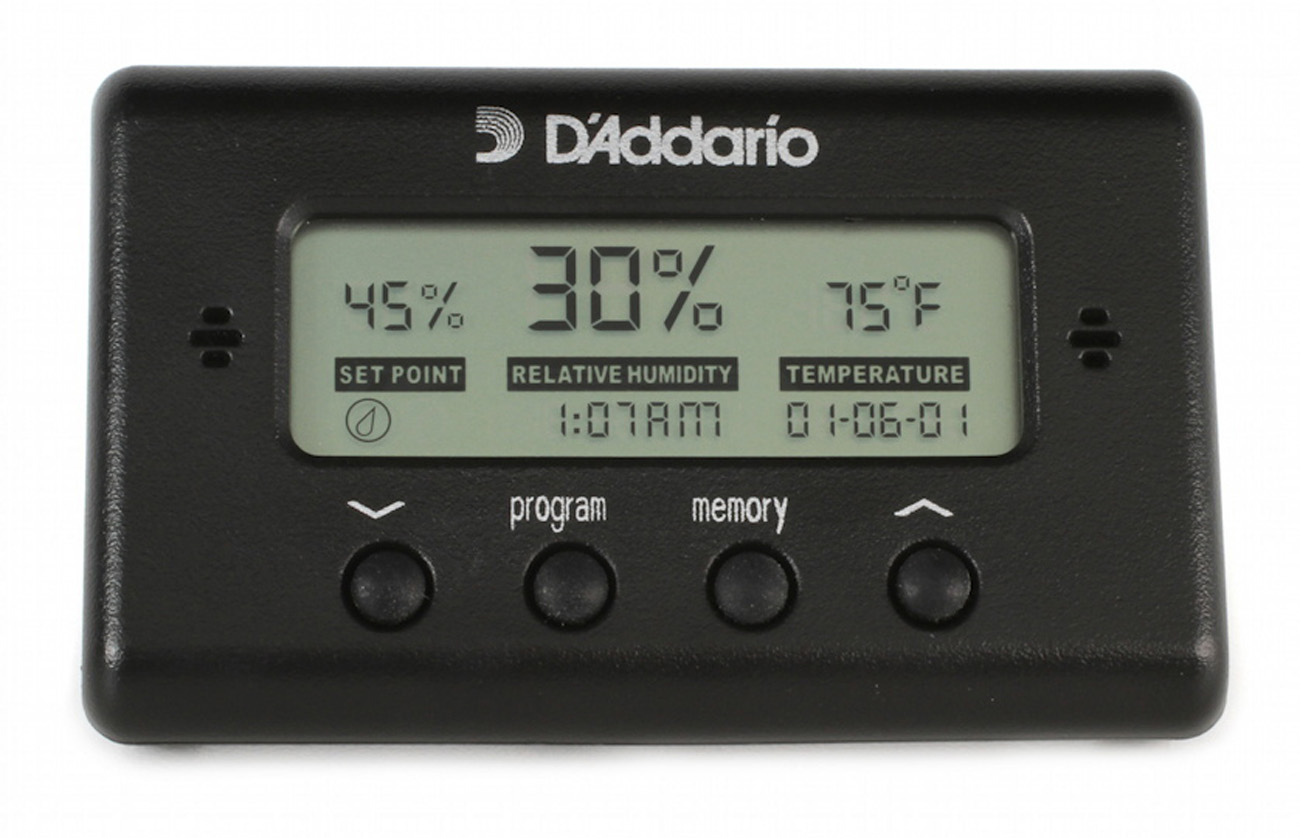
A mandolin, like any stringed instrument, should be kept in humidity between 40% and 55%. Outside that range, the mandolin may suffer damage, particularly in low humidity. In deserts and northern climes during the cold months, the humidity will drop to well below 40% indoors. During those months, you need to use a humidifier with your mandolin.

A simple humidifier is a holder for a sponge that you moisten with water. The water evaporates slowly and keeps the mandolin humid. Humidifiers only work when they are placed next to the mandolin, inside the case, with the lid closed. Whenever you are not playing your mandolin, return it to its case with the humidifier. If you go several days without playing the mandolin, open the case, read the humidity level on your hygrometer, and add water to the humidifier as needed.
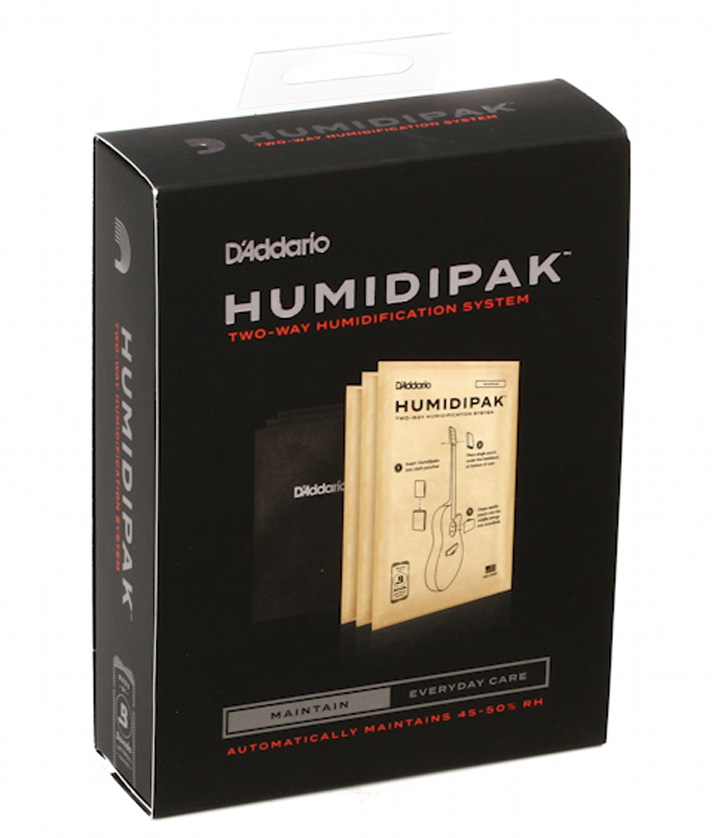
More sophisticated humidification systems, also marketed for guitar, are pre-moistened pouches that add or subtract humidity as needed, keeping your instrument within the recommended range.
Put one of these in the accessories compartment of your case, next to your mandolin, and follow the instructions. Continue to monitor the humidity and check to make sure that the pouch is working, as they wear out after a time and must be replaced.
For more details on how humidity affects your instrument, check out this SweetCare article on acoustic guitar humidity. The information applies equally to the mandolin.
How to Clean Your Mandolin
Start by washing your hands before you play. Our fingers are covered in dirt, oils, and sweat, but our mandolins don’t have to be.
After you are done playing your mandolin, wipe it down with a soft, dry polishing cloth. Never use alcohol, water, or anything abrasive.
Restringing Your Mandolin

Be prepared to replace a string if it breaks.
Even if they don’t break, all your strings will wear out eventually. Replace the whole set of eight if the strings become discolored or if they lose their tone and don’t sound good anymore.
On a mandolin, the bridge is not fixed in place: it “floats” and is held in position by the tension of the strings. The bridge must be positioned in just the right place so that all the notes play in tune up and down the neck. This is part of the process called intonation. Your mandolin teacher can show you how to adjust the position of the bridge.
At least once a year, you should remove all the strings together so you can clean the fretboard and apply fretboard conditioner. You can tape down the bridge first so that it stays in position while the strings are off.
Here’s a video that demonstrates how to change mandolin strings:
Mandolin Annual Maintenance
Sweetwater recommends that you take your mandolin to a professional luthier every year for maintenance, or more often if needed. A professional can check to make sure everything is set up correctly, adjusting the parts of the instrument to make it more in tune and easier to play.
When you need help, Sweetwater has the answers!
Our knowledge base contains over 28,000 expertly written tech articles that will give you answers and help you get the most out of your gear. Our pro musicians and gear experts update content daily to keep you informed and on your way. Best of all, it’s totally FREE, and it’s just another reason that you get more at Sweetwater.com.