
Bongo Care and Maintenance Guide
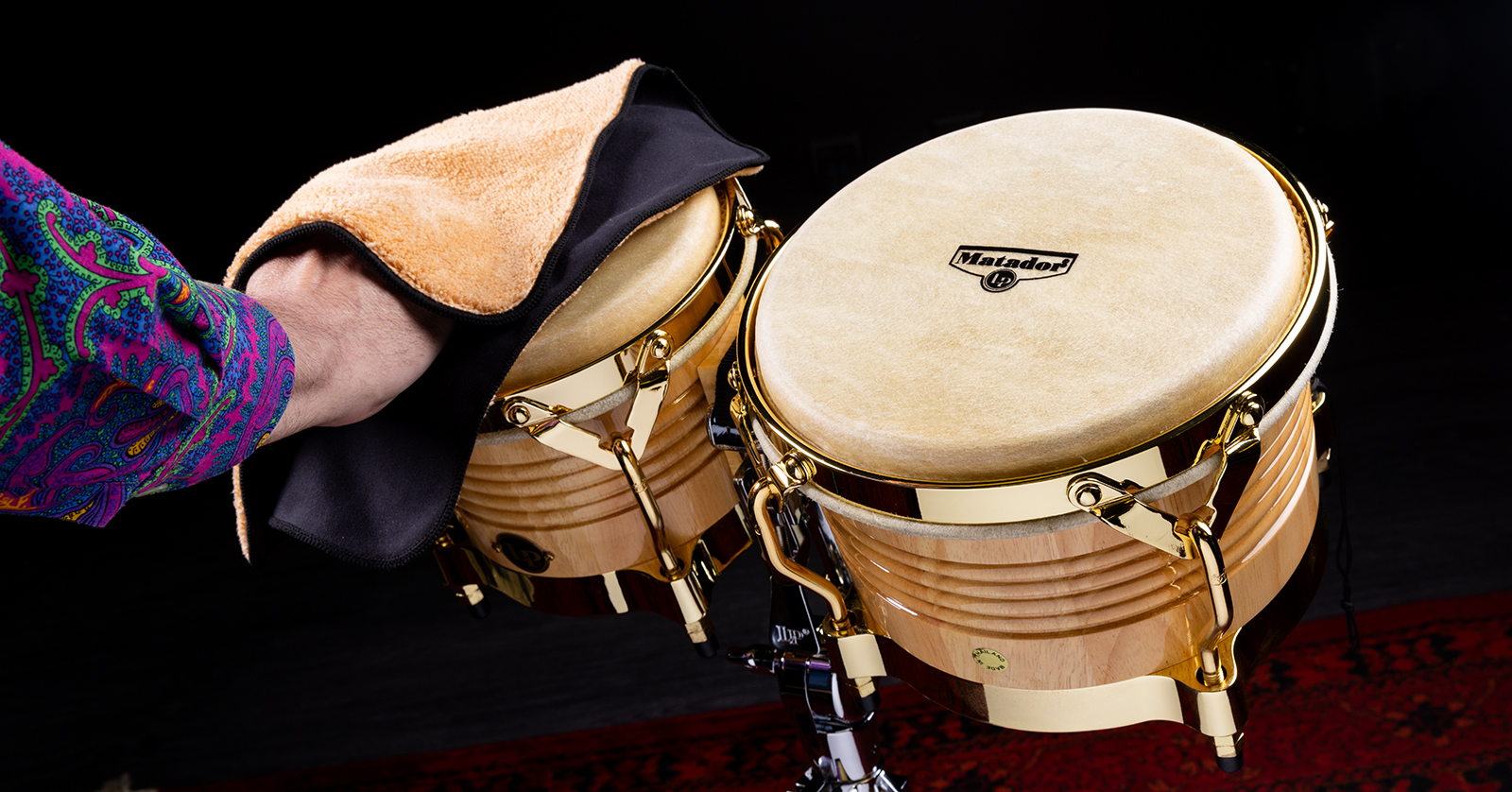
Bongos are great percussion instruments for both beginners and professionals, and keeping them in good shape will ensure they sound brand-new for years to come. In this guide, we will show you how to properly care for and maintain your bongos. Let’s get started.
- Storing Your Bongos
- How to Clean Bongo Shells and Hardware
- Bongo Head Care and Maintenance
- Best Practices
A note on synthetic bongos: Synthetic bongos and heads are much more forgiving and less affected by temperature and humidity than their natural counterparts. However, following basic care and maintenance is still great practice!
Storing Your Bongos
One of the most important things you can do to care for and maintain your bongos is to store them in a bongo bag. Doing so will prevent scratches and dust from collecting when you’re not playing or traveling.
Bongo shells are very resilient. Heads, on the other hand (particularly natural heads), are susceptible to the elements. Natural heads will breathe, meaning they will dry out in cold, dry weather. Conversely, heat warps heads, leading to premature wear.
Any bongo bag will do, but we highly recommend using a padded bag, as those provide the most protection in any condition.
👉 Shop all bongo bagsA note on bongo shells
Bongos are made with natural materials, so it’s wise to keep them in a room at approximately 65 to 75 degrees with 40% to 50% humidity, particularly for long-term storage.
You can easily monitor a room’s conditions using a quality hygrometer (humidity reader) that displays both temperature and humidity.
👉 Shop all hygrometersHow to Clean Bongo Shells and Hardware
It’s always nice to see shiny instruments, so regularly wiping down your bongo shells and hardware will ensure they look great under the lights. You simply need a slightly damp microfiber cloth to wipe down any hand- or fingerprints left behind after playing. After you wipe your bongo shell down, use the dry side of the cloth to dry it off. This prevents streaks.
For the hardware (such as the rims, tuning hooks, and nuts), use a slightly damp microfiber cloth to wipe stains down, then dry them off. If they are filthy, you can use a mixture of soap and water.
Bongo Head Care and Maintenance
NOTE: Like all conventional hand percussion instruments, authentic goat- and calfskin are the most widely used materials for bongo heads. These are commonly called ‘natural’ heads. Synthetic heads often offer very similar tones. Because these heads are made from artificial materials, oils are not necessary to maintain them.
Taking care of your bongo heads is one of the most essential yet easiest things you can do for your bongos. Like you do for your shells and hardware, take a slightly damp microfiber cloth and clean off any residue that remains after you play. Don’t soak the cloth, though! Too much water absorption can ruin the head.
If you don’t play often and have naturally dry hands, apply a small amount of shea butter to your hands, rub them around the heads, and wipe any visible excess. Shea butter (and lanolin) are natural moisturizers that will help keep the heads from drying out, which could lead to warps and cracks.
Sanitizing Bongos
Bongos are very popular in schools, so sharing among multiple students is inevitable. Hand sanitizer contains alcohol, which can quickly dry out the head. However, if you want to sanitize the heads, you can rub a tiny bit (about a pea-sized drop) on your hands, and when your hands are almost dry, rub them around the head, then immediately wipe off any excess. Do not apply hand sanitizer directly to the head!
Best Practices
Now that you know the basics of bongo and care and maintenance, here are some more tips and tricks to ensure they keep sounding like new!
- Never play bongos with sticks, and, if possible, remove any rings you wear before performing. Sticks and rings will lead to premature wear, resulting in tears.
- Learn proper playing technique.
- Do not use any chemicals to clean your bongos.
- Avoid moisture at all costs! Extreme humidity or heavy amounts of moisture can ruin a bongo head, so only use slightly damp microfiber cloths for cleaning, and immediately wipe down any spills.
When you need help, Sweetwater has the answers!
Our knowledge base contains over 28,000 expertly written tech articles that will give you answers and help you get the most out of your gear. Our pro musicians and gear experts update content daily to keep you informed and on your way. Best of all, it’s totally FREE, and it’s just another reason that you get more at Sweetwater.com.