
Bassoon Quickstart Guide
TIP: In all things regarding your new bassoon, ask your private teacher to show you how it’s done before you try it at home. As your teacher shows you how to play the instrument, he or she will be able to answer your questions.
Congratulations on your new bassoon from Sweetwater. The bassoon makes a distinct bass sound that stands out in the concert band or orchestra. You may have heard the bassoon solos in Stravinsky’s The Rite of Spring, Dukas’ The Sorcerer’s Apprentice in Disney’s Fantasia, and Prokofiev’s Peter and the Wolf. We are sure you will enjoy learning more about the bassoon for years to come.
- Parts of a Bassoon
- If Your Bassoon is Made of Wood
- How to Assemble a Bassoon
- Proper Playing Technique for Bassoon
- Take Your Bassoon Apart, and Clean the Parts
- Bassoon Care and Maintenance
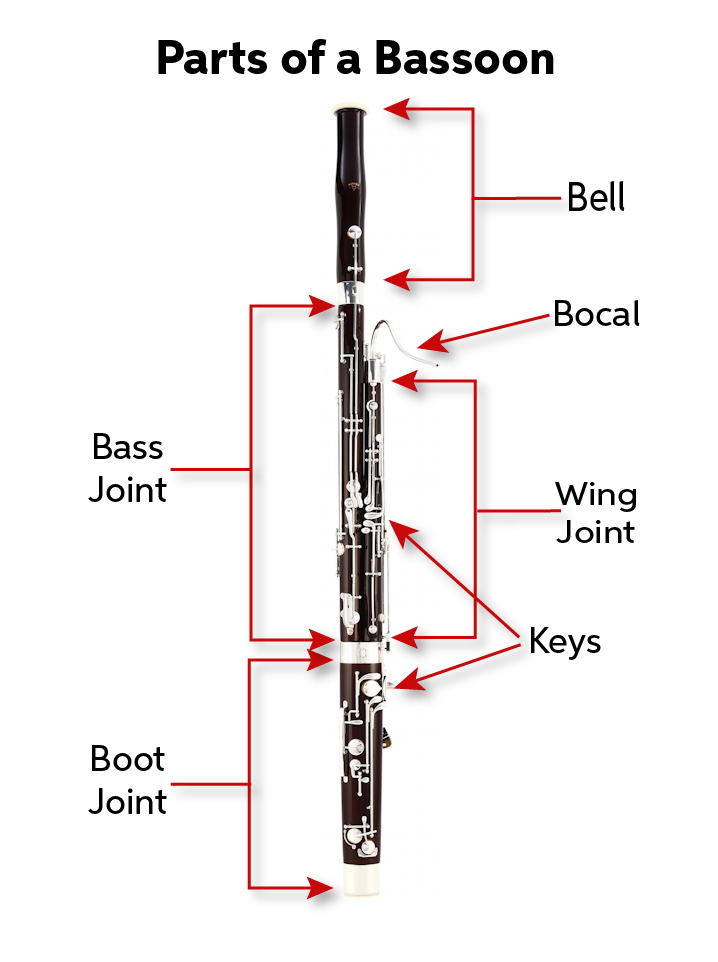
Parts of a Bassoon
The bassoon is a double-reed instrument in the woodwind family. The bassoon reed is two pieces of cane bound together. When you blow air into the reed, it vibrates to create the sound.
The bassoon’s body is traditionally carved from maple wood. Student bassoons are often made of plastic.
The column of air starts when you blow into the reed. The air flows through the bocal, descends down through the wing joint (also referred to as the tenor joint) and into the boot joint. At the bottom of the boot joint the column of air curves back up and into the bass joint (also referred to as the long joint) and then the bell. If the bassoon were not built in this curved shape, it would be about 9 feet (2.74 meters) tall.
Parts of a Bassoon
Reed
TIP: Having a couple of reeds that you switch between can make them last longer. Ask your teacher if you have any questions on the best way to care for these delicate reeds.
A bassoon reed
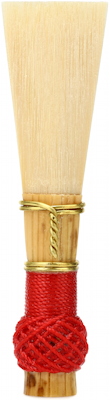
A bassoon reed consists two pieces of cane, shaped and scraped and bound together with wire and thread. The reed fits onto the bocal. The reed must be handled carefully, stored in a reed case, and replaced when it wears out or breaks.
Bocal
The curved crook of metal is called the bocal. You attach the reed onto the tip of the bocal. The other end of the bocal has a cork sleeve that you inserted into the top of the wing joint. When you insert the bocal into the wing joint, you must grip the bocal carefully, just above the cork, so that you do not bend it. Don’t put any pressure on the curved part of the bocal. A bent bocal is expensive to repair.
Your new bassoon will come with two bocals which are slightly different. Your teacher will help you choose which bocal works best with the kind of reed you are using.
Tone Holes and Keys
The body of the bassoon has a series of tone holes that are closed by keys or with your fingers. Opening and closing the keys in different combinations changes the note.
The Body of the Bassoon
The bassoon’s body is divided into sections which you put together.
Wing Joint
The wing joint holds keys and levers that you play with your left hand. One key from the wing joint connects to the boot joint via the bridge key mechanism. At the top of the wing joint is the whisper key, which is next to the bocal. The wing joint is fastened to the bass joint using the body lock pin.
Boot Joint
The boot joint is the U-shaped part of the body. Both the wing joint and the bass joint connect to it. The boot joint has the hand rest, and keys that you play with your right hand.
Bass Joint
The bass joint is connected to the boot joint, and latched to the wing joint. The bass joint has keys that you play with your thumb.
Bell
The bell sits at the top of the bass joint, at the end of the bassoon.
If Your Bassoon is Made of Wood
IMPORTANT: If your bassoon is made of wood, you need to take special care to protect it from drastic changes in temperature.
Never leave your bassoon in a cold place.
If you just received a new wooden bassoon, bring the box inside and wait a full day to permit your bassoon to acclimate to the temperature in your house before you take it out and assemble it.
Ask your teacher about caring for your new wooden bassoon.
Learn more in Sweetwater’s Bassoon Care and Maintenance Guide.
How to Assemble a Bassoon
TIP: If you have questions about putting your bassoon together, ask your teacher to show you how.
Place your bassoon case on the floor. Make sure the brand logo is on top, so you don’t open the case upside-down. Now lift the latches or unzip the case and open the lid.
Soak your reed

Soaking the bassoon reed in a cup of water
Dip the tip of the reed in a cup of water. Let it soak for a couple of minutes, while you put the bassoon together. When you see the water soak its way into the base of the reed, you know your reed is done soaking.
Connecting the Tenons
The sections of the bassoon are fitted into each other through the tenons. Your bassoon may have tenons wrapped in cork or thread.
Tenons with cork
When fitting tenons with cork together, if a connection doesn’t fit properly, apply a small amount of cork grease all around the cork. Ask your teacher for help if you are having any difficulties assembling your bassoon.
Tenons wrapped in thread
With tenons wrapped in thread, never apply cork grease; it’s not needed. If the joints don’t seem to fit, ask your teacher for help. They may suggest going to a repair person.
Assemble the Joints and the Bell
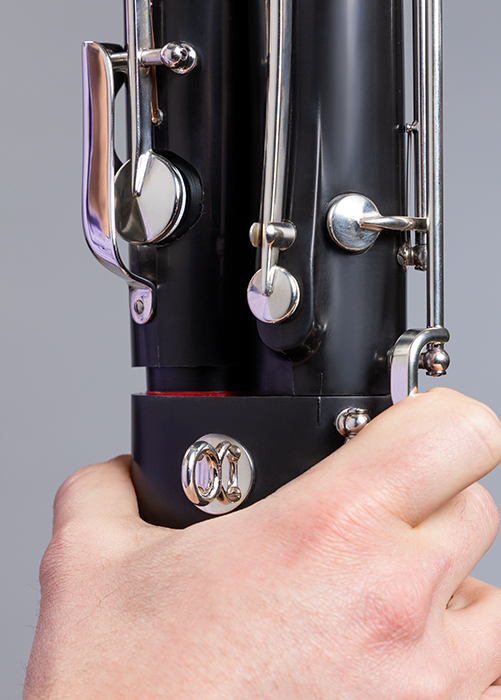
Connecting the Wing Joint to the Boot Joint

Connecting the wing joint to the boot joint
Take the boot joint in one hand and the wing joint in the other. Put the end of the boot joint on your knee or on the chair seat to brace it. When you grip both joints, avoid squeezing the keys.
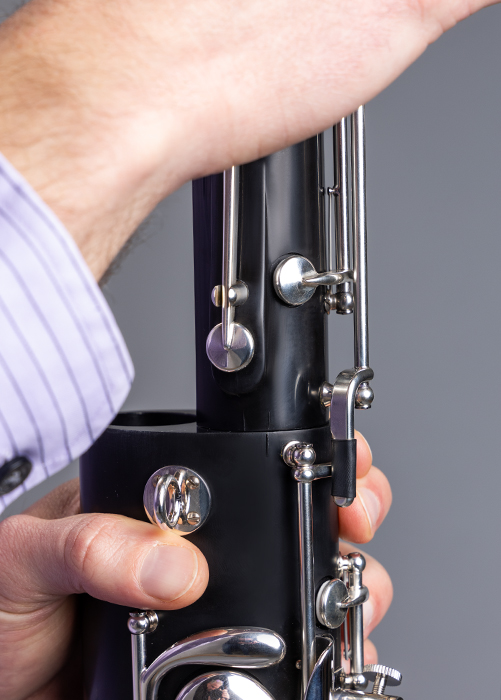
The two openings in the boot joint are different sizes; the wing joint goes in the smaller opening. Insert the tenon and attach it with slight twists, taking care to line up the key mechanism using the small notches visible on either part. The key that connects to the boot joint should be on the outside, as show in the photo.
Connecting the Bass Joint to the Boot Joint
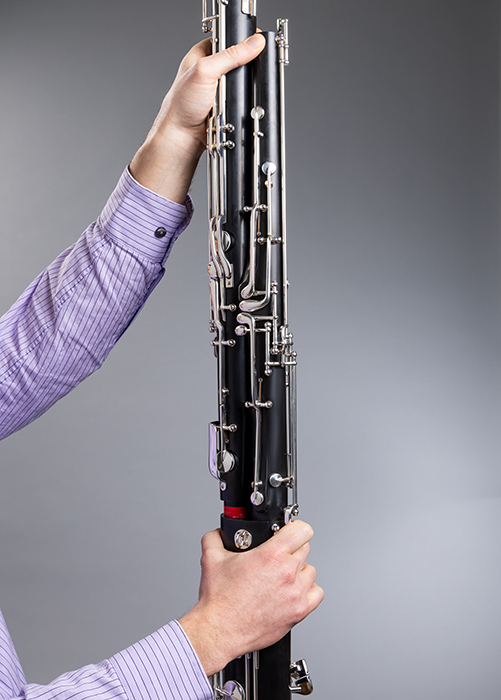
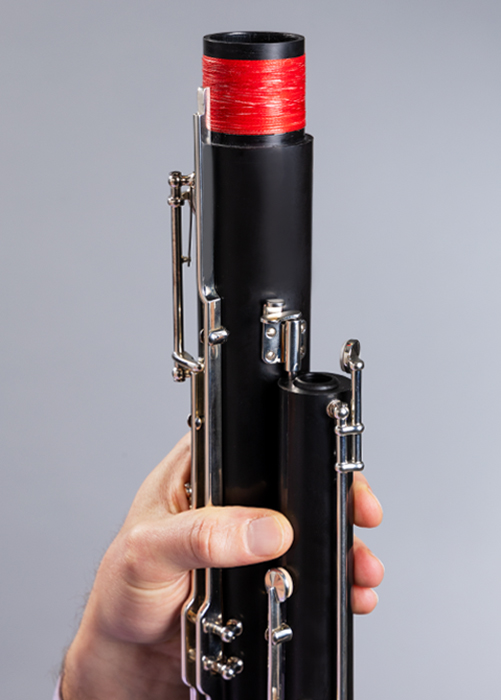
Grip both joints in places where you are not squeezing the keys. Put the bass joint into the boot joint, so that it fits next to the wing joint.
At the top is the body lock pin, which fastens the bass joint to the wing joint. Pull the body lock pin up, twist it over, and guide the pin into the hole on the wing joint. You may need to adjust the base joint a little so the pin will go all the way in.
Connecting the Bell

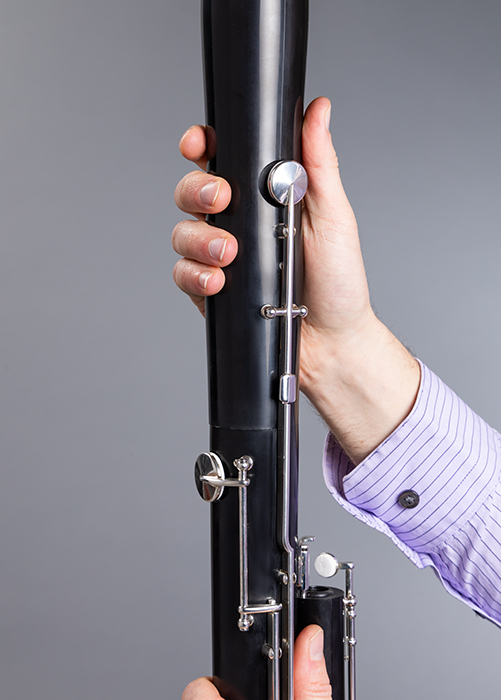
Grip the bass joint with one hand, and the bell in the other. Use your thumb to hold down the bell key to raise the mechanism so you can connect it to the part on the bass joint. Carefully twist the bell onto the bass joint.
Attach the Hand Rest

Attaching the hand rest on the boot joint
You have the option of attaching the hand rest if you and your teacher decide it would help you to hold the bassoon more comfortably.
Insert the shaft of the hand rest near the top of the boot joint and tighten the set screw slightly to hold it in place.
Attach the Bocal
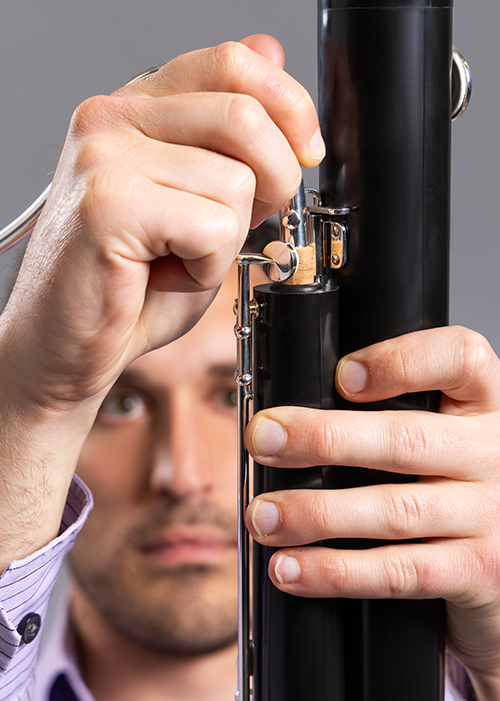
Inserting the bocal into the top of the wing joint
Grip the bocal carefully, just above the cork, so you do not bend it.
Make sure that the whisper key pad on the wing joint does not come in contact with the bocal. Insert the bocal into the top of the wing joint with a slight twisting motion.
If the cork doesn’t sit easily, remove it and apply a small amount of cork grease all the way around, and insert it again.
Attach the Reed

Attaching the Reed
Take the reed out of the water in the soaking cup, and attach it to the bocal. If the reed does not fit, ask your teacher for help.
Using the Chair Strap


In order to get the bassoon at the right height, use the chair strap that comes in your bassoon case.
- Stand up and lay the strap over the seat of your chair, with the hook dangling off to the right side.
- Sit back down and clip the hook onto the opening at the bottom of the boot joint.
- Raise up a little. Scoot the strap over to increase or decrease the length of strap that hangs over the edge of the seat. In this way you can find the right spot to raise or lower your bassoon so that the reed is positioned level with your mouth. Sit back down.
Posture, Breath Support and Embouchure
Playing the bassoon requires breath support, which means controlling the way you blow air through an instrument. Your teacher will spend a lot of time working with you on this. In order to have good breath support, you need to sit with good posture.
Your upper body and head need to be straight and tall. Your shoulders should be slightly back, but relaxed, not tensed up.
Your teacher will coach you as you play your first notes. Your teacher will help you form the correct embouchure, which means the way you hold your mouth and your lips with the reed inserted into your mouth.
Your teacher will show you how to position both hands and each of your fingers.
Proper Playing Technique for Bassoon
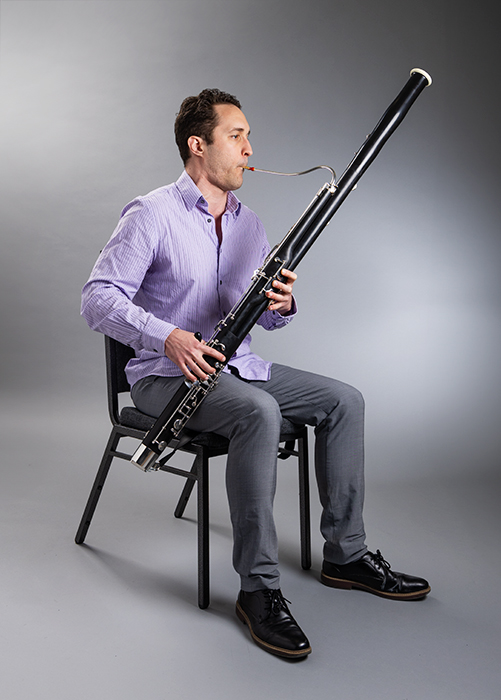
Good playing position for the bassoon
In the orchestra, you play the bassoon seated. Get a sturdy chair with no arms. Sit on the forward part of the chair with both feet flat on the floor. Hold your back straight and your head upright.
When you sit with the bassoon, you need to raise it to the correct height so that the bocal and the reed meet your mouth. Bring the instrument to you; don’t lean in to meet the reed.
Take Your Bassoon Apart, and Clean the Parts
Every time you finish playing your bassoon, you need to disassemble it and clean it. Water from your breath, or condensation, works its way through the bassoon while you play. The inside of the bassoon needs to be dried out before you put it away. First, take care of the bocal, and then use swabs to dry out the joints. Here is the order:
- Remove the reed from the bocal.
- Remove the bocal and blow it out.
- Remove the bell from the bass joint.
- Disconnect the bass joint pin that connects it to the wing joint, and remove the bass joint from the boot joint.
- Remove the wing joint from the boot joint.
- Swab out the wing joint, twice. Use a small swab.
- Swab out the boot joint, twice. Use a large swab.
- Wipe down the keys and metal parts.
- Put all the parts back in the case.
Here are the steps in detail.
Clear Out the Bocal
Remove the reed from the bocal. Place the reed in the reed case and set it aside.
Remove the bocal from the wing joint. Be careful handling the bocal, so that it doesn’t get bent.


While holding the bocal near the cork, place that end in your mouth. Use your thumb to cover the hole in the side of the bocal.
Blow through the bocal to clear it out. Be careful where you point it, so as not to blow moisture on your stand partner!
Carefully put the bocal back in your case.
Disassemble the Bassoon
Take each joint apart and place it back in your case. Here are the steps:
- Remove the bell. Holding down the bell key, twist and pull the bell off of the bass joint. Set the bell back in the case.
- Disengage the body lock pin.
- With small twists, pull the bass joint out of the boot joint. Don’t let the keys on the side of the bass joint hit the wing joint. Set the bass joint back in the case.
- Remove the wing joint from the boot joint. With small twists, pull the wing joint out of the boot joint. Set the two parts back in the case.
Swab the Bassoon
IMPORTANT: Be careful not to let the swab get stuck in the instrument. If you feel any resistance as you are pulling the swab through, pull it back out the other side. If it gets stuck, consult an instrument repair technician.
You need to swab out the wing joint and the boot joint; the bass joint and bell don’t require swabbing.
Swab the Wing Joint
Sit or stand and hold the wing joint vertically, and upside-down, with the tenon with the cork or thread on top. Again, grip carefully so you don’t squeeze the keys. Don’t rest the end of the wing joint on your lap; hold it up so that you don’t put any pressure on the whisper key, which will be protruding downward.
Unwrap the swab and unwind the full length of the string. Make sure there are no knots or kinks; otherwise, the swab will get stuck inside the wing joint.
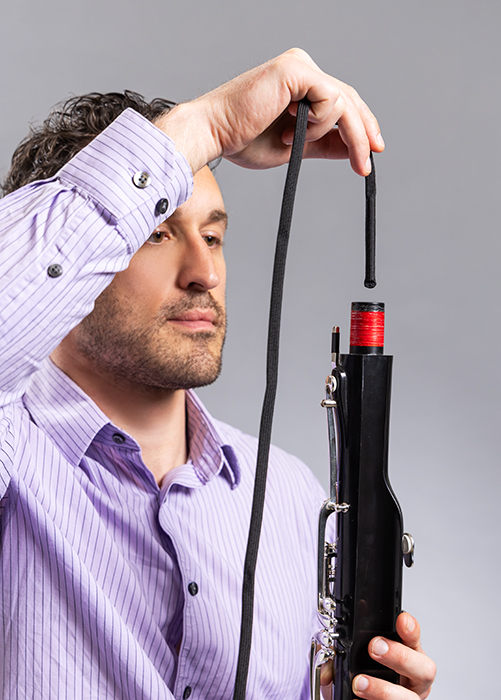
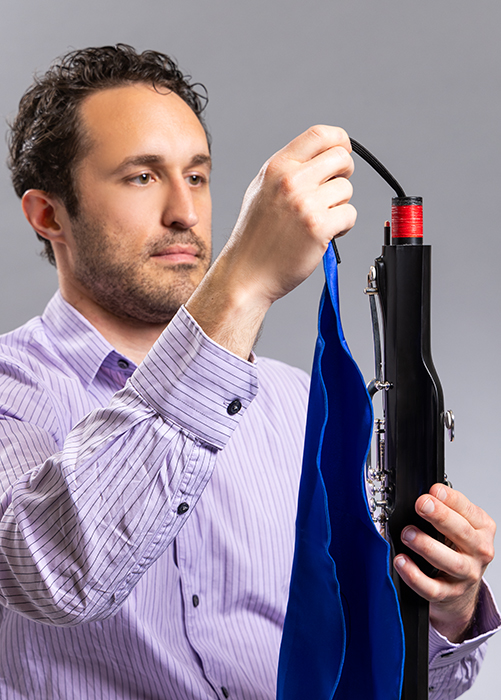
The swab for the lower joint has a string attached, with a small weight at the end. Insert the weighted end into the wing joint.


Let the weight fall through. Grab the weight when it emerges below.
Pull the string to draw the swab through the wing joint.
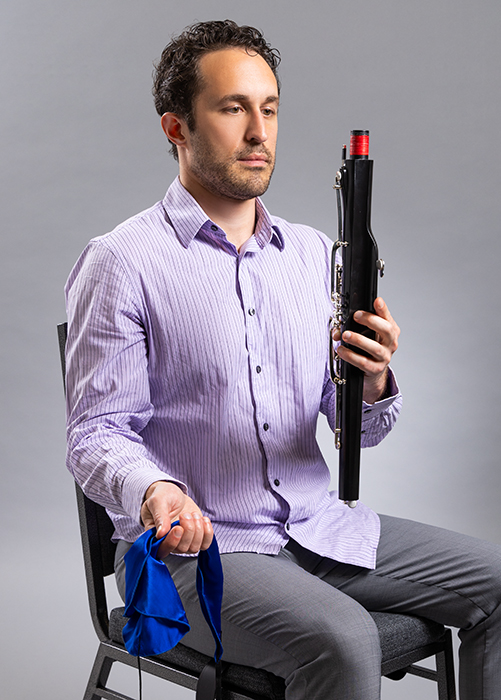
Removing the swab from the wing joint
After you have pulled the swab completely through the wing joint, run it through a second time.
Swab the Boot Joint.

Tipping the boot joint upside-down with the small side down to dump out any water
Pick up the boot joint. Remember that one side has a smaller hole than the other. Tip the boot joint upside-down with the small-hole side down and dump out any water that may have collected. Don’t rotate the boot joint the wrong way; you don’t want water to pour through the large hole. (With a wooden bassoon, the larger side does not have a lining to protect the wood from the water.)

Inserting the chain of the large swab into the large hole of the boot joint
Unwrap the large swab and play out the full length of the chain on one side and the string on the other. Make sure there are no knots or kinks.
Now return the boot joint to its upright position.
Run the large swab’s chain down the large hole.
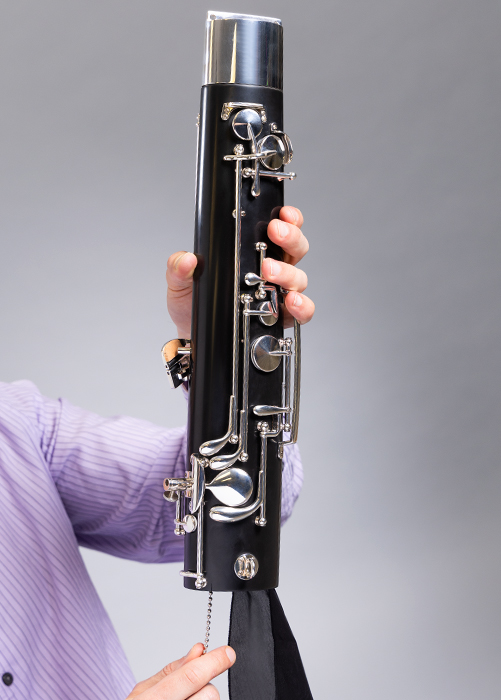

Flip the boot joint over to thread the chain through the small hole.
Draw the chain through so that the swab travels through both sides of the boot joint.
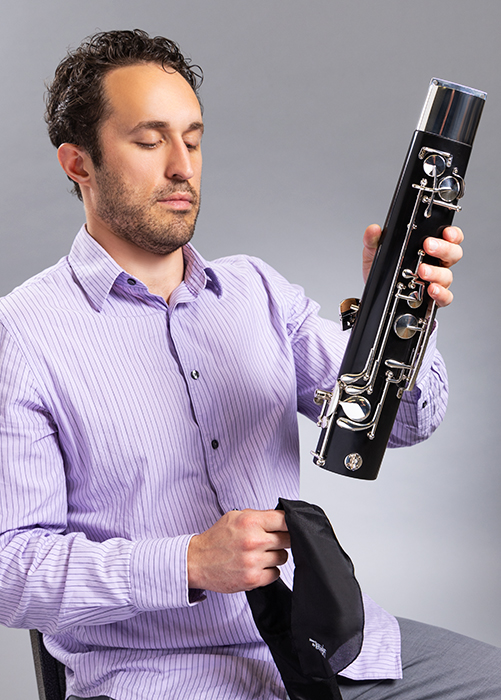
Removing the swab from the boot joint
After you have completely removed the swab, run it through a second time.
Now put the boot joint back in the case.
TIP: Put the parts back in the case, but leave the swabs out to dry.
Wipe down the keys and metal parts
Take each part of the bassoon out of the case for a moment and use a microfiber cloth to gently wipe down the keys and metal parts to protect them from tarnishing. Now place the parts back in the case and close it.
Bassoon Care and Maintenance
Now that you know more about your new bassoon, learn how to keep it playing smoothly. Read our Bassoon Care and Maintenance Guide.
When you need help, Sweetwater has the answers!
Our knowledge base contains over 28,000 expertly written tech articles that will give you answers and help you get the most out of your gear. Our pro musicians and gear experts update content daily to keep you informed and on your way. Best of all, it’s totally FREE, and it’s just another reason that you get more at Sweetwater.com.