Alesis Nitro Quickstart Guide
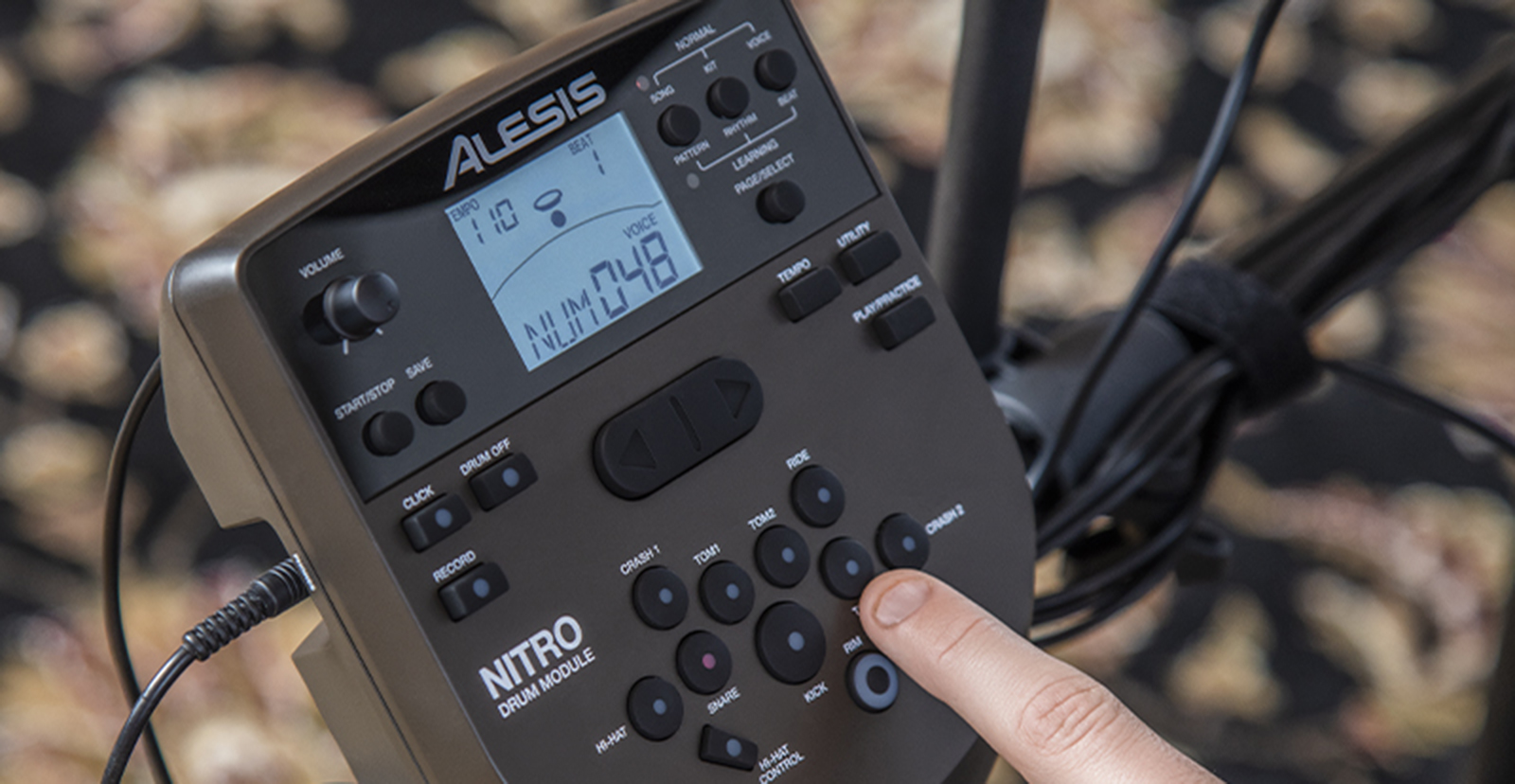
In this guide, we will show you how to register, set up, and use the Alesis Nitro Mesh electronic drum kit for the first time. Follow the sections below to get started. Also, be sure to check out the Nitro Drum Module User Guide for more information!
Register the Alesis Nitro
When you first take your Alesis Nitro out of the box, register the kit with Alesis. By registering the Nitro Mesh, you’ll receive a coupon code for 40 free drum lessons from Melodics, additional software downloads, and an extended warranty. Make sure to have your Sweetwater invoice, as you’ll need to enter your purchase date. Follow these instructions to get registered.
- Log in to your Alesis account. If you don’t have one yet, you can create one here.
- Go to the Alesis registration page, use the Product drop box, and select Nitro.
- Enter the serial number (located on the module packing box, underneath the module, and on the front page of the manual), enter the purchase date on your Sweetwater invoice, and then click Register My Product.
- Go to the Melodics homepage and download the free app for your OS. Once downloaded, go to your Downloads folder, run the installer, and launch the app.
- When prompted to enter your promo code, go to your Alesis account’s My Products section, then copy and paste the code listed.
Setup and Connections
Once you’ve registered your Nitro, you can then assemble it and get everything connected. When you open the box, there will be smaller boxes that contain each part of the kit. Follow the included assembly guide to build your new Alesis Nitro Mesh kit. Also, be sure to check out this useful video from Alesis!
TIP: Each cable on the wire harness is labeled with the pad it should be connected to, so make sure all cables are connected to the correct pads to trigger the right sound, especially the hi-hat connections. Also, use hook-and-loop strips or zip ties to secure the wiring harness to the drum rack.
Connect to your computer
You can connect your Nitro via the USB port to record MIDI data or to trigger a virtual drum instrument. It’s class compliant, so no additional driver software is necessary. This means you just need to plug it in, then set it up as a MIDI device in your DAW or your drum virtual instrument software!
Update the Module Settings
While the default settings are a great starting point, not all drummers play the same way, so you may consider updating the module settings to make it feel as comfortable as possible.
Kit settings
The first thing to adjust is the overall kit. This includes functions such as the EQ, reverb, and volume. To do so, press the Kit button, use the < and > buttons to navigate through each setting, and adjust as necessary.
Pad settings
Once the kit settings have been adjusted, next focus on the individual pads.
- Strike the pad you want to edit, press the corresponding Pad Select button, then press Voice.
- Use the Page Select button to select and update the following settings:
- Num/H-C: Drum sound
- Vol: Pad volume
- Pan: Pan the drum left or right.
- Pitch: Change the pitch of the drum sound.
- MID: Associated MIDI note.
- P-S: Pad song switch
- P-N: Pad song number
- Once you’ve updated the settings, press Save, use the < and > buttons to select the User Kit, and then press Save.
Utility settings
Now that you’ve updated the kit and pad settings, the last thing to focus on is the Utility settings.
- Strike the pad you want to edit, press the corresponding Pad Select button, then press Utility.
- Use the Page Select button to select and update the following settings. Check out our guide Electronic Drum Terms Explained for more information!
- SEN: Pad sensitivity
- THR: Pad threshold
- CRO: Pad crosstalk
- CUR: Pad velocity curve
- R-S: Pad rim sensitivity
- S-S: Hi-hat splash sensitivity. This controls how responsive the hi-hat pedal is when you press it down and up.
- LOC: When this is set to ON, the internal module sounds will trigger. If it’s turned off, it will ignore the module sounds and trigger anything connected via the MIDI OUT jack.
- GM: When GM Mode is turned on, MIDI messages sent to your module’s MIDI In will trigger sounds from the General MIDI (GM). When turned off, all MIDI messages sent to the module’s MIDI In will trigger the module’s built-in sounds.
- Once you’ve updated these settings, press Save. If you power off the module, everything will return to its default settings.
When you need help, Sweetwater has the answers!
Our knowledge base contains over 28,000 expertly written tech articles that will give you answers and help you get the most out of your gear. Our pro musicians and gear experts update content daily to keep you informed and on your way. Best of all, it’s totally FREE, and it’s just another reason that you get more at Sweetwater.com.