Though DAWs and digital interfacing can open a world of sonic opportunities, one unavoidable truth tempts us to dispel all of those conveniences. There’s something about the tactile experience of hardware effects modules that no amount of digital or software emulation could ever replace. From tweaking knobs to crafting real-time soundscapes to stomping the overdrive just in time to tear up a solo, it’s all part of the fun when performing.
So, what if we ran keys through pedals? Why let the guitarists and bassists have all the fun with their fancy pedalboards and whatnot? A whole world of hardware effects is just waiting to be explored, and just because something is labeled “guitar pedal” or “bass pedal” doesn’t take it out of the running for use with your keys. This goes double for desktop effects units: they’re not just for studio noodling and beat makers. This article won’t pretend to be a definitive how-to guide — there are thousands of pedals and effects boxes out there. While we stake no claim that this is the ideal set of choices for planning a signal path, choosing gear, or creating a definite hierarchy, we do know that this structure not only leads to some pretty cool sounds but also serves as a jumping-off point for constructing your rig with pedals or desktop modules.
- Gear & Setup
- Distortion
- Texturizing Tools
- Spatialization
- Wild Card: Personalize Your Performance
- Honorable Mentions
Gear & Setup
Arranging your gear most ergonomically is critical to both creative and performance processes. That said, it’s difficult to prescribe any singular way to accommodate every conceivable arrangement. So, we’ll run through a few options that will serve most keyboardists and synthesists in studio and stage contexts.
Stands & Surfaces
It may seem obvious to point out the importance of a stand, but there are some specific criteria worth considering if you’re interested in building a comprehensive rig. For one, you’ll want to pay attention to weight capacity, which will save you the headache of having a heavy instrument collapse the stand and become damaged or — even worse — broken. Most stands with a high weight capacity are capable of some modularity. On-Stage stands feature multiple adjustable configurations, accommodating all shapes and sizes with options to expand via additional tiers. Those with a smaller arrangement of desktop synths or effects consoles would greatly benefit from this company’s offerings.
Gator Frameworks produces both keyboard tables and platforms. Depending on the size of your instrument or your desired arrangement, you could utilize two of these in an L-shaped formation: one for your keys and one for your effects. Pedals aren’t limited to the floor, either. Those who want to indulge in more esoteric sound designs, prefer active and dynamic control of their effects, or want a mixture of pedals and desktop modules with direct access would also reap the benefits of a table/platform layout. Utility trays can also be attached for greater vertical range while supporting your effects machines.
Pedalboards & Floor Arrangements
What separates the pedals from the desktop units is the intention of use. Plenty of pedals boast a versatile array of sound-shaping opportunities, but the guitar- and bass-focused nature of their designs makes them more conducive to ongoing or instantaneous engagement, with room for tweaking and toggling presets. Refining your sound in the studio is one thing, but any performance setting would benefit from the simplicity and convenience of keeping your hands free. Size and arrangement are the names of the game with pedalboards, followed closely by their mechanisms of attachment. Some players opt for hook-and-loop attachments, which are great for modularity and regular rearranging, while others find that system lacks the longevity and stability needed for frequent use. Others more commonly opt for zip ties to keep pedals secured to avoid the risk of unwanted detachment. This means more work for rearranging your board and inserting new pedals, but your preference may vary. To save you plenty of space and hassle, try a pack of pedal power cables.
Power & Play
Our last stop before we get to the fun stuff is power. Regardless of your configuration, it’s essential to have plenty of outlets that provide consistent and clean power. Your sound quite literally depends on it! A power conditioner will solve that problem, but its size and capacity will vary with the power requirements of your gear. Brands like MXR, CIOKS, Strymon, and Truetone offer dedicated pedalboard power supply units with multiple outlets in various voltages for directly connecting pedal power cables. These fit neatly on your pedalboard, reducing clutter by eliminating the need for power blocks.
Distortion
We’ll use “distortion” as an umbrella term for the various creative descriptors found in the world of pedals: overdrive, dirt, fuzz, boost, and so on. While the number of available distortion pedals may only be narrowly dwarfed by the number of stars in the sky, we have a few suggestions for driving up your keys.
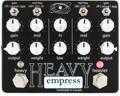
Empress Heavy Overdrive Pedal
The Empress Heavy overdrive pedal is known for its high-octane output, working to deadly effect with keys. Its two modes — aptly titled “heavy” and “heavier” — have dedicated, mode-specific controls for gain, output, weight, and midrange frequencies, the last of which is accompanied by a 3-way toggle to define the range. Each side has a noise gate and shares global low- and high-frequency attenuation. Moreover, the pedal’s single-channel design means you can only have one side active at a time. In practice, this would allow you to use the “heavy” side to boost and color your signal with a bit of grit while the “heavier” side is toggled as needed for solos or leads. Flexible operation? Check. Onboard EQ? Check. Two distinct voicing options with a shared analog architecture to ensure you’re preserving as much of your original signal as possible? Big check.
Other solid distortion-pedal staples among bassists and guitarists include the Pro Co RAT 2, the Ibanez TS9 Tube Screamer, the Electro-Harmonix Bass Big Muff Pi, and the BOSS DS-1 (as well as its Waza Craft variant, the BOSS DS-1W).
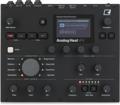
Elektron Analog Heat +FX Dynamic Sound Processor
Okay — this isn’t just about finding the most brutal crunch possible, right? Sometimes, your synth tones might need a subtle boost or roughing up around the edges. The Elektron Analog Heat +FX dynamic sound processor does all that and much, much more. Loaded with eight distortion circuits, a 7-way multimode filter, a 2-band EQ, and deep editing control, this all-analog powerhouse serves up an array of tones that ranges from boosted cleans to scorching high gain. Plus, it comes with onboard effects for ever greater sonic exploration. Its extensive I/O suite includes MIDI in/out/thru ports, two of which do double duty as sync connections, in addition to two CV inputs. Thanks to Elektron’s Overbridge technology, you can even manage the analog circuitry via USB-B with your DAW of choice. Assignable envelopes and LFO can be modulated onboard or externally controlled to ramp up the expressivity.
Texturizing Tools
Distortion, boost, and overdrive are great for beefing up your core sound and delivering some chainsaw synths worthy of inclusion with Mick Gordon’s DOOM video game soundtrack, but it’s just part of the foundation. And what do you do with a sturdy foundation? Build on it. Suggesting that phasers, flangers, and chorus pedals are interchangeable would be blasphemous. Still, for our purposes, we will presume that they can similarly supplement your sound with depth, texture, and presence.
EarthQuaker Devices Aurelius Tri-voice Chorus Pedal
With pedals like these, the primary difference lies in how many things they can do. We opted for the EarthQuaker Devices Aurelius Tri-voice Chorus pedal, which is capable of rich chorus and flanger tones alongside vibrato and rotary effects. It’s armed with six presets and just enough control to dial in your tone without being overwhelmed. Plus, it can accommodate an expression input for deeper integration via CV. Aurelius has fantastic rotary and vibrato — labeled “Mode R” and “Mode V,” respectively, on its 3-way selector — but we chose this pedal for its third mode: Mode C. This is the chorus/flanger, depending on how you attenuate the width and balance. Aurelius’s tri-voice architecture is felt with exceptional depth when used as a flanger, adding dimension while ever so slightly containing more-erratic edges that result from the distortion without compromising its aural core.
For flanger pedals, we’d also recommend the MXR EVH117 Eddie Van Halen Flanger, the Walrus Audio Polychrome, the JHS 3 Series Flanger, and the TC Electronic SCF Gold Stereo Chorus Flanger Pedal. We’d also throw in the MXR M83 Bass Chorus Deluxe pedal. Bass pedals are a natural fit, both for their technological capacity to accommodate a wider array of frequencies and for the number of synth-bass players looking for something to pay special attention to the low end.
Dreadbox Komorebi Analog Chorus/Flanger Effect Pedal
Though it technically operates with a footswitch, the Dreadbox Komorebi analog chorus/flanger effect pedal has enough interoperative potential to sit with the best desktop modules, especially with its soft-switch functionality. The word “Komorebi” lacks a direct English translation, but the original Japanese can be interpreted as the visual phenomenon of sunlight scattered and redirected as a result of tree leaves, as seen from behind a grove. Like its name, this pedal is a poetically inspired opportunity for endless personal interpretation — from its all-analog bucket brigade delay (BBD) circuitry to its multimode operation in flanger and chorus capacities to its triptych suite of LFO options. Keen-eyed keyboardists will likely notice that Komorebi features three CV patch points, affording numerous methods of control via Eurorack synthesis, expression pedals, and more. Its ergonomic layout and latent sonic potential make it a blast to manipulate parameters in real time.
Spatialization
We want to be careful about how and why we’re differentiating this section from the following section of expression. If you’ve ever heard the difference between a dry guitar signal and one with a bit of delay or reverb, then you’ll understand how much further you can take your sound by adding a touch of dimensional flare. A simple delay or reverb helps to produce a sound that feels more lived-in or natural rather than the sometimes-sterile nature of an unaffected instrument.
Electro-Harmonix Canyon Delay and Looper Pedal
Hailing from New York City, Electro-Harmonix has been pioneering sonic tools of multidimensional exploration since 1968, powering the innovative sound design of such artists as Pink Floyd, Devo, Nirvana, John Mayer, and so many others. The Electro-Harmonix Canyon Delay and Looper pedal is a masterful distillation of the spatial effects that would prove integral to the sonic boundary-pushing of the ’70s and ’80s. Its 10 time-based effects include Deluxe Memory Man-style analog delay, reverb, tape delay, echo, reverse, and more, alongside a 62-second looping mode. In our case, we’re using it for the Canyon’s Shimmer setting, which subtly produces swelling octaves behind your input and adds a dash of reverberated space that lets both your sound and the crystalline octaves behind it breathe.
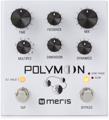
Other fantastic choices for reverb, delay, or other spatializing machines include the Strymon BigSky multidimensional and Cloudburst ambient pedals, the Meris Polymoon super-modulated pedal, and the Keeley Omni Reverb.
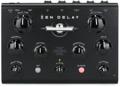
Erica Synths Zen Delay Effects Unit with Tube Overdrive
Latvian sound aficionado Erica Synths has developed a comprehensive stereo effects module called the Zen Delay. The Erica Synths Zen Delay effects unit with tube overdrive is designed alongside the famed English indie label Ninja Tune. This unit’s five onboard delay modes include tape, ping-pong, vintage, and digital configurations, which are further refined by a suite of shaping controls that have a 24dB multimode filter, dry/wet balance, and distinct feedback and resonance attenuators. Oh — and did we mention the dedicated drive function? The Zen Delay is equipped with a tube overdrive, turning a straightforward delay into a multi-stage, feedback-carving soundscape apparatus. In addition to its stereo I/O, Zen Delay accommodates both MIDI and CV for external control from numerous sources, allowing for dynamic modulation possibilities and deep sonic integration. Plus, for those looking for an alternative approach to the Zen Delay’s array of tools, Erica Synths offers its Zen Delay virtual plug-in version, which allows for complex automation possibilities to take the various delay modes into new territories that wouldn’t be possible in the hardware version.
Wild Card: Personalize Your Performance
While this entire exercise is meant to illustrate one of an infinite number of permutations in building an effects rig, we’d be remiss not to emphasize the importance of including something personal. This could be for incidental uses of added expression, a complex multi-effects box, or anything you think sounds cool. Frankly, that’s as good a reason as any. Otherwise, why bother putting any effort into tailoring our expressive faculties to our musical interests, experiences, and ambitions?
Meris Hedra 3-voice Rhythmic Pitch Shifter Pedal
So far, the placement of these pedals has been organized to suit the signal chain — but that’s far from the only working arrangement. Capping off the pedal portion of our proposed effects rig is the Meris Hedra 3-voice rhythmic pitch shifter pedal. It accommodates stereo outputs for its shimmering, multilayered voicing and features an additional connector for MIDI or expression. A host of morphing and swelling options complements the deep harmonization possibilities of cascading delays and pitch adjustments, making this a powerful, versatile expression piece to make any part stand out.
We’d also recommend the Walrus Audio Fable granular soundscape generator delay pedal, the Universal Audio UAFX Astra Modulation Machine pedal, and the Empress Echosystem Dual Engine Delay pedal.
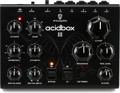
Erica Synths Acidbox III Tabletop Polivoks Filter with Overdrive
We happily return to our Latvian compatriots at Erica Synths for our final desktop option. The tabletop Erica Synths Acidbox III Polivoks filter with overdrive blends two distinctive tools into a single aural force: it stacks an overdrive with the oft-coveted Polivoks voltage-controlled filter (VCF). An onboard LFO is supplemented with extensive waveshaping options, including seven waveforms, divider/multiplier controls, and an adjustable envelope follower. Originally the product of Soviet sound design, the iconic Polivoks VCF includes a 2-way lowpass/bandpass resonant filter, evoking wraithlike howls and otherworldly sweeps bolstered by the dynamic, reactive overdrive. Next to the Acidbox III’s stereo I/O is an expression input that allows you to accentuate a passage instantly and bypass the unit entirely, making it a fantastic option for searing solos and powerful performances.
Honorable Mentions
Simply put, we felt these two products were too good not to include. Fortunately, they’re excellent choices for use alone or within a broader effects arrangement.
Walrus Audio Melee: Wall of Noise Distortion/Reverb Pedal
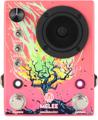
The Walrus Audio Melee: Wall of Noise pedal combines distortion and reverb into a single unit. Despite its stompbox design, it feels much more suitable for use with keyboardists, synthesists, and sound designers thanks to its unique, joystick-driven operation. The X- and Y-axes control the reverb mix and distortion levels, respectively, with a 2-way switch to invert the order of the distortion and reverb within the module’s signal path.
Dreadbox Raindrops Delay/Pitch/Reverb Pedal
Designed by the masterminds at Dreadbox, the Raindrops gives keyboardists a multifunctional delay that can shift pitch and add a blanket of reverb to accompany whatever you’re playing. The Raindrops features three delay modes (delay + pitch, delay + reverb, and modulated delay), each allowing you to save your own preset for a total of three presets! Additionally, this pedal comes in stereo for all those who love lush, wide delays and soundscapes. If you’re a keyboardist looking to add a delay pedal to your hardware, then look no further than the Dreadbox Raindrops delay pedal.
Further Considerations & Taking the Plunge
While it’s nearly impossible to beat the satisfying tactility of sonic discovery via hardware effects, we understand that DAWs are an integral part of the modern musical landscape. If that aligns with your workflow, then we recommend you read the article below about integrating hardware effects with synths/drum machines and a DAW.
A plethora of contemporary pedal designs includes MIDI control options, typically via 1/8-inch TRS connectors. It’s beyond the scope of this article to flesh out when or how these are useful. Still, with so much 5-pin or USB MIDI control available in the desktop modules, it’s worth considering how you might integrate them into your pedal arrangement.
Ready to elevate your sound? These pedals and modules comprise one of many possible configurations of hardware effects to use with keys and synths. If even one of these options sounds appealing, then we can assure you that many more tools — from the tame to the undiscovered sonic vistas of effects-driven opportunity — are available. Our Sweetwater Sales Engineers would love to help you craft and personalize your tone! Give us a call at (800) 222-4700 if you’re ready to take the plunge.