
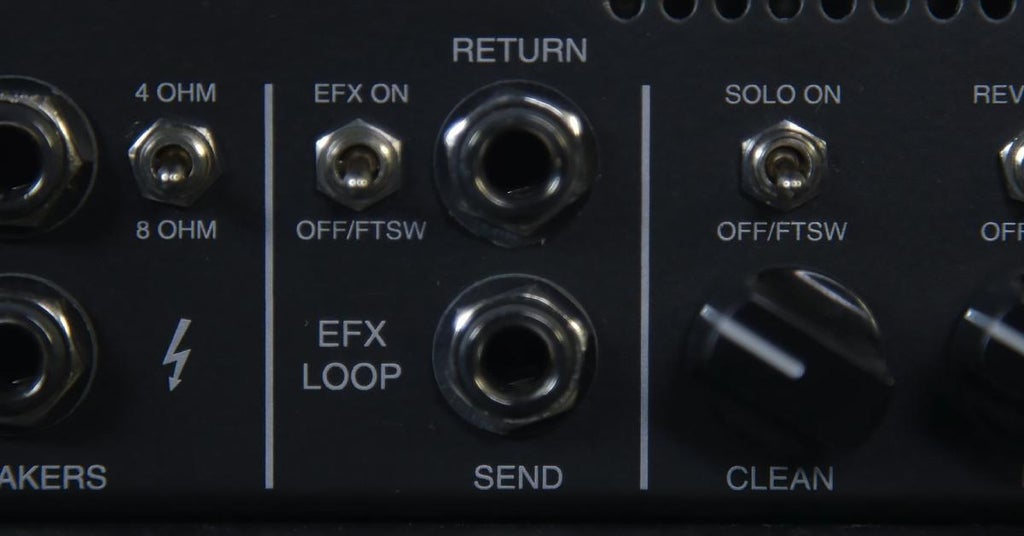
Go ahead and spin your amp around. Chances are, unless it’s a vintage-style build or sports its own built-in effects, you’ll find an effects loop. If you’ve wondered what those jacks are for, you’re not alone. Many players never explore this powerful option on their rigs, so they miss out on some massive tonal sweetening as a consequence. Give this article on tapping this tonal tool a read. You may find these misunderstood marvels to be the key to unlocking your sonic signature.
What is an effects loop?
In the decades before guitar amplifier effects loops, guitarists plugged their favorite tape delays and spring reverb effects directly into the front of their amps. This worked great for the clean-amp tones of the day. In fact, many players still choose this “pedal-platform” method due to the clear tones that envelop their playing in washes of ambience. But as rock ‘n’ roll ratcheted up the amp-based overdrive, players found that those same ambient effects quickly turned to a swampy mess. That happens because the amp’s overdriven preamp is distorting and compressing the sound of the effects, choking the tone from them. Amp designers have since combated this tonal malady by creating a way to insert effects after the amp’s overdriven preamp, but before the higher-headroom power section. This invention allowed players to run their amps as hot as they like, while still retaining their time-based effects’ full dynamics and sonic glory. This insert is known as the amp’s effects loop.
Types of effects loops
There are two main types of effects loops: series and parallel. With both, you run a 1/4″ instrument cable from the loop’s send jack, through your stomp or rack effects, then back into the loop’s return jack. But that’s where the similarities end.
Series
The most popular design by far is a series effects loop. This style of loop simply reroutes the entirety of your amp’s signal through the effects plugged into it. This is the most straightforward of the designs and allows you to dial your blend of dry and affected signals right on your pedals.
Parallel
The second style of effects loop is known as a parallel loop. With a parallel loop, your signal is split into two identical signals. One remains unaffected, while the other is sent to your effects. The benefit of such a design is that you can blend the two sounds to taste, while never compromising your original tone. It’s in the blending of the separate wet and dry “parallel” signals that your tone will shine.
**When using a parallel effects loop, you’ll want to be sure your effects are able to be run 100% wet**
What effects do I put in the loop?
There are no rules when it comes to which effects to run in the loop. But there are some common guidelines.
Time-based (delay and reverb):
These effects will almost always sound more natural through an effects loop. Though many iconic tones have been created putting them into the front of a driven amp, the presence and space they can add to your tone when in the loop is unmatched.
Modulation (chorus, tremolo, phase, etc.)
The waters get a bit murky when it comes to modulation. Your prized phaser, vintage chorus, or gig-ready multi-effects unit can sound fantastic either before or after your amp’s front end. Plug them into the front of your amp, and that same grit and compression that obliterated your time-based effects can add warmth and color. Run them through your effects loop, and you’ll open up their full dynamic range. When it comes to your modulation effects, try it both ways. Whatever sounds best to you is best.
Tonal foundation (overdrive, distortion, fuzz)
Much as reverb and delay almost always work better in the loop, your dirt boxes almost always sound better in front of the amp. This is thanks to the way the amp’s compression rounds off the harsh top end of these effects. Technically, you can use them in the loop. Just don’t say we didn’t warn you.
Volume (volume pedal, boost, buffer)
Your amp’s effects loop is also a fantastic place to put your level-control devices. By adding a volume pedal or clean boost to this section, you’re able to attain massive volume adjustments without encountering the added overdrive or tonal loss that can accompany running them before your drive section.
To buffer or not to buffer?
Like buffers on your pedalboard, a buffered effects loop is able to send a strong signal through multiple effects and long cable runs with minimal signal degradation. Luckily, adding a great buffer to an unbuffered amp loop is easy. Simply throw a high-quality buffer, such as the JHS Little Black Buffer or RJM Music Tone Saver, into the loop before your effects, and you’re good to go.
Get your levels right
Another element that is sometimes overlooked is ensuring your effects can handle the line-level output that is typically sent from your amplifier’s effects loop. Depending on the pedal, hitting your stompbox with a line-level signal can overload the circuit, resulting in less-than-desirable performance. Read your pedal’s manual to find out if it can hang with that stronger signal.
But don’t take our word for it…
There is a “correct” way to use your effects loop to attain the clearest, most noise-free, and most responsive character from your effects. This guide is a great step in getting you there. But the important thing to remember about effects loops is to throw all of this information out the window and experiment for yourself. That’s right. Van Halen’s “Ain’t Talkin’ ’bout Love” was delay right into the front of a savagely distorted Plexi. You’ll find countless genre-defining uses of sludgy, distorted reverb throughout shoegaze and blackgaze rock, and even tonal gurus like Eric Johnson achieve their lauded tones by pushing their amp’s front end with their favorite vintage effects units. Just because effects loops are a great way to get a “better sound” from your effects, doesn’t mean it’s the “right sound” for your music.
In conclusion
Spend some time getting to know your effects loop and how it works. You may find it’s the tool you’ve been missing to get your delay to sing when running a distorted amp. You may decide it is a fantastic way to unlock the full potential of your new tremolo pedal. You also may come to the conclusion that the sonic congestion brought on by your amp’s gritty input is your cup of tea after all. One way or another, once you harness the power of your amp’s effects loop, you’ll have a vastly wider palette of tonal options before you.