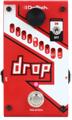
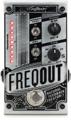
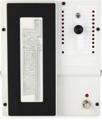
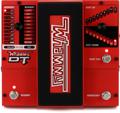
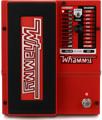
The GNX1 from Digitech throws off the gloves to the rest of the amp modeling processors out there. DigiTech’s AudioDNA™ DSP Engine and the software power of GeNetX™ make this an entirely different kind of modeler. GeNetX™ provides the capability to “warp” the characteristics of the most popular amp models and speaker cabinets you choose together into your own “Hypermodel”. Create a completely unique amp/cabinet combination to your specs.
Today we return to our studio and stage horror stories picking up where we left off in the 4/19 issue of inSync.
Bob Griesel
Many years ago I was the road engineer for a CBS-Canada band called Fosterchild. We were set up for one of those promo-in-the-park gigs when a problem with the portable generator caused unthinkable noises from the sound system and unspeakable terror on my part as I scrambled for power switches. With about one hour until show time, the promoter scrambled for a new generator while we crossed our fingers that the PA would still work.
When the new generator arrived, everything worked except the foldback output of our then new 16X2 Soundcraft board. I quickly opened the board’s case and saw that the left, right, and foldback cards were identical. Within a few minutes, I had moved the left output card to the foldback location. The show went off on schedule with the PA in mono, the soldering iron still hot, and components of the still-open board strewn about.
Chris D.
I remember the time we were playing a gig when one of our PA speakers failed and caught fire. By the time we figured out what was happening there were three foot tall flames emanating from the 18″ sub cabinet (no doubt the paper of the speaker was burning). Just as I was getting ready to unplug the speaker cable from the cabinet I see the drummer heading my way with his cooler, which was half full of water. Knowing that water isn’t a desirable solution for an electrical fire I had to stop, jump up, and head him off. I tackled him and the water went all over the dance floor. By this time the other band members had unplugged the cabinet and moved it away from the rest of the PA. A few moving blankets later the blaze was out and the show went on.
David Stewart (inSync Editor)
Dealing with the public (as we do) is often interesting in terms of the types of personalities we run into, however, dealing with artists also gets interesting, like the time I was working with a very well known band in the Midwest. We were at the mixing stage for an upcoming album. It had been a long day at the end of a long week of work. The guitarist, who normally seemed like a pretty normal guy, was at this point curled up in the corner of the control room in the fetal position. He began to go on about how the guitar didn’t sound the way he wanted. When I queried him for more specific info he said, “I want it to sound like a little blue box.” Now, this was the same guy we had overheard talking to his significant other on the phone during the tracking phase say things like, “I’ll be home when I’m home and that’s the name of the game, baby.” (That’s an all time classic I have used many times since then…yeah, right!) And, “lovin’ a music man ain’t always what it’s supposed to be, baby.” So we knew he was capable of a few choice words, but he went on to explain why and how he thought his guitar should sound like a little blue box. I’ll spare you the details. We never connected on that, and he couldn’t characterize what sort of shape or color it did sound like. Oh well, you can’t please everyone…
F. C.
I remember recording a band back in the late ’70’s where the two guitarists were always at odds with each other. I didn’t quite notice the symptoms at first, but I figured something was odd when they both kept bringing in more and more equipment to record. One would set up a 4×12 cabinet, and the other would put up a stack. Then the first one went out and got two stacks. Then the first one started adding PA amps and cabinets to his rig. Upon inquiring I discovered they were both truly concerned about being louder than the other. At that point I knew it was going to be a long day. After finally making them understand that it didn’t matter for recording because it could all be adjusted later they agreed to each work with one stack. I had to give them separate headphone mixes to keep the peace. Of course mixing was a nightmare. I finally got them to agree that they should be at the same volume. We spent hours proving to them that they were at exactly the same volume in the mix, but in the end the project sounded terrible. You couldn’t even hear the bass or half of what the drummer was doing. But that was they way they liked it.
Gren Fender (a.k.a. Associate inSync Editor)
In the midst of working at a producer’s home studio a few years ago, one of the strangest things I’ve ever encountered in audio work happened. This producer’s girlfriend had a 4-year old boy that we likened to spawn of the devil – you just never knew what he was going to get into. Well one late night we’re putting down some tracks and the girlfriend and her child are over, supposedly asleep in a bedroom in this house. Sitting at a keyboard with a clear view of the door of the studio, I see this child standing there with his face and hands completely covered in blood. He looked like Al Jolson in redface. I bring this to the attention of the producer fellow, who is immediately alarmed. Taking the child, he goes into the bedroom, at which point I hear him exclaim, “Oh my God, what have you done!” Immediately I and the other person that was there bolted to the bedroom, and what we saw was indeed shocking – his girlfriend sprawled, face down, on the bed with blood on her, not moving at all; she literally looked dead! For a moment none of us could move, but the producer finally goes to shake her. There were a good 5-10 seconds where we didn’t know whether or not she was alive, all the while I’m thinking the kid took a bite out of her neck or something (we wouldn’t have put it past him…), but she eventually came to. She had merely been sleeping the whole time, unharmed, and the kid had nothing but a really bad nosebleed. But the whole event was so disruptive (we were laughing about it hysterically after it was over) that we couldn’t work any more that night!
Anonymous
A sad but instructive tale: My studio has been ProTools based for about 3 years, previously having been ADAT based. I always backup my sessions to DDS-3 tape using Retrospect, and have never had a single problem. That is, until one day I went to restore a nearly finished solo piano project back to my hard drive for some final editing, when I found that my back-up tape – the only existing copy of the session data – was unreadable!
I called Retrospect who recommended a California data recovery service, but when I called them they estimated it would cost me between 3-4 thousand dollars for their services! So I explored various local options and found a company that sounded competent on the phone, in New Hampshire – about an hour’s drive from my suburban Boston studio. They estimated $1200-$1800, with a $195 non-refundable evaluation fee. I drove my tape to them, but after trying for over a week, they were not able to recover my data.Now I was faced with breaking the news to my client. The semi-happy ending is that I had burned a set of rough mixes onto a CD, that actually sounded quite good. Although I offered as much free studio time as the client wished to “recreate’ the original session, he decided that he liked the rough mixes well enough to dump them back into ProTools for some final tweaking, and use them as his CD! So all’s well that ends well…
But the moral of the story is:
1) ALWAYS have duplicate backups. (I do now.)
2) You might as well take a little extra time and make those rough mixes sound good – you never know…
3) If you are going to lose all your data except your roughs – do it on a solo instrument project!
We’re still accepting horror stories, so send your tales of audio terror to insync@sweetwater.com!