
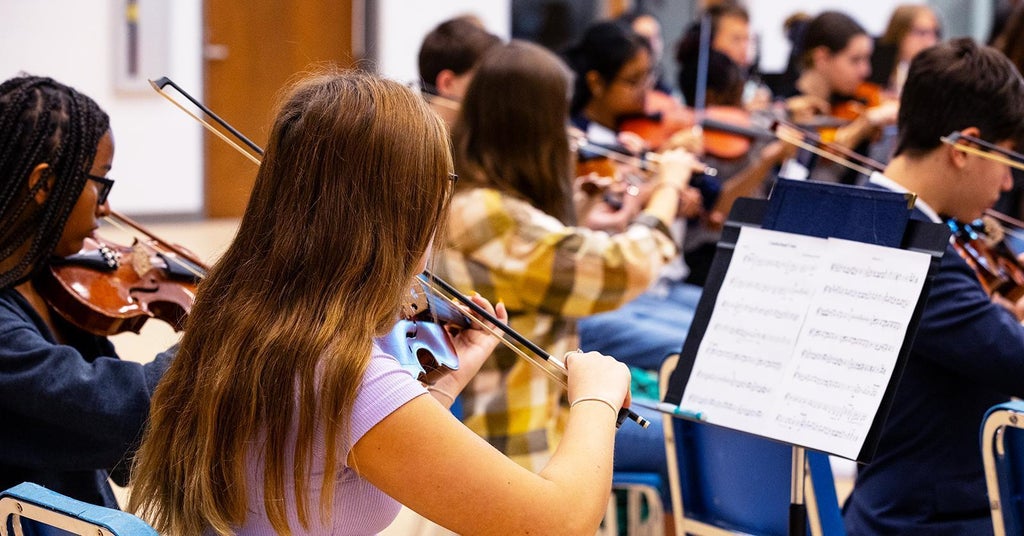
You’re a first-time orchestra parent, and you need an instrument. Congratulations! Starting a child in music can be an incredible journey for both parents and their kids. Whether in the school orchestra or just at home, playing a string instrument can enrich your child’s life and help them develop new skills.
Choosing the right instrument is an important decision that may seem daunting at first. But don’t worry — Sweetwater is here to help! In this parent’s guide to orchestral string instruments, we’ll review all the essential information you need to pick the right instrument for your child.
Ready to Rent? Read this!
If you’re considering a violin, viola, or cello, then check out our “How and Why to Rent a String Instrument” section below. We’ll walk you through some key considerations when choosing to rent and answer frequently asked questions. Plus, you’ll learn why Sweetwater is the best place to rent instruments for yourself or your child! We’ve partnered with numerous school programs to make the rental experience as seamless and stress-free. This guide includes a lot of great product recommendations, but you can narrow down your choices to the products specifically selected for you and your music educator with our handy rental wizard. Click here to learn more!
The Benefits of Playing in Orchestra
Music can be a highly positive experience for your child. In fact, playing an orchestral instrument has been shown to have numerous cognitive, social, and emotional benefits.
- Cognitive development: Playing an instrument can help improve memory, concentration, and coordination.
- Social skills: Playing in an orchestra will help your child develop friendships and critical social skills like teamwork, communication, and leadership.
- Academic performance: A wealth of research suggests a strong correlation between musical ability and good grades.
- Creativity and self-esteem: Learning an instrument can stimulate your child’s imagination and creativity. It can also be a huge confidence booster as they master new skills.
- Sense of community: Orchestra can provide a welcoming and safe environment for children. There, they can find a strong sense of belonging and camaraderie while working with others.
Of course, there are countless other benefits to playing an orchestral instrument. But if nothing else, playing a string instrument can be a source of joy and fulfillment all on its own.
What Are the Different Orchestral String Instruments?
There are four members of the orchestral string family: the violin, viola, cello, and double bass. Each one has four strings and makes sound by dragging a bow across said strings. The four instruments may look similar, but they are all different sizes and have different roles within the orchestra.
Violin
The violin is the smallest and most well-known member of the string family. To play the violin, the player holds the instrument’s body between their chin and left shoulder while bowing across the strings with their right hand.
Violins are incredibly expressive and versatile instruments. They can be used for playing fast and intense passages of music or slower and more lyrical pieces. Because of that, they’re often featured in solos.
Shop All Violins
Viola
The viola is the middle-range instrument of the string family. Many people often confuse violas with violins since they look and sound so similar. But in reality, the viola is slightly larger and has different proportions.
The viola has a lower sound than the violin and usually produces a deeper, warmer tone. Violas typically play a supporting role in the orchestra by providing harmony and filling in the middle range.
Shop All Violas
Cello
Cellos are the tenor voice of the orchestra. They’re known for their rich, expressive sound, making them a popular choice for players of all ages. A cello is played while sitting down with the instrument resting between the player’s legs.
In an orchestra, the cello often plays either the bass line or the supporting harmony. On top of that, its warm tone lends itself well to playing lyrical and emotional melodies.
Shop All Cellos
Double Bass
Sometimes called an upright bass or string bass, the double bass is the largest and lowest-pitched instrument in the orchestral string family. It sounds one octave lower than the cello (hence the name) and helps provide the foundation for the rest of the ensemble. It’s played while either standing up or sitting on a tall stool.
Double basses are also common outside of orchestras. In school settings, they’re often found in jazz bands. They’re also used in various other music groups like bluegrass and rock. Most schools will provide double basses for their students. But if they don’t, Sweetwater offers several options from some of the most respected bass makers in the world.
Shop All Double Basses
Fractional vs. Full-size Instruments
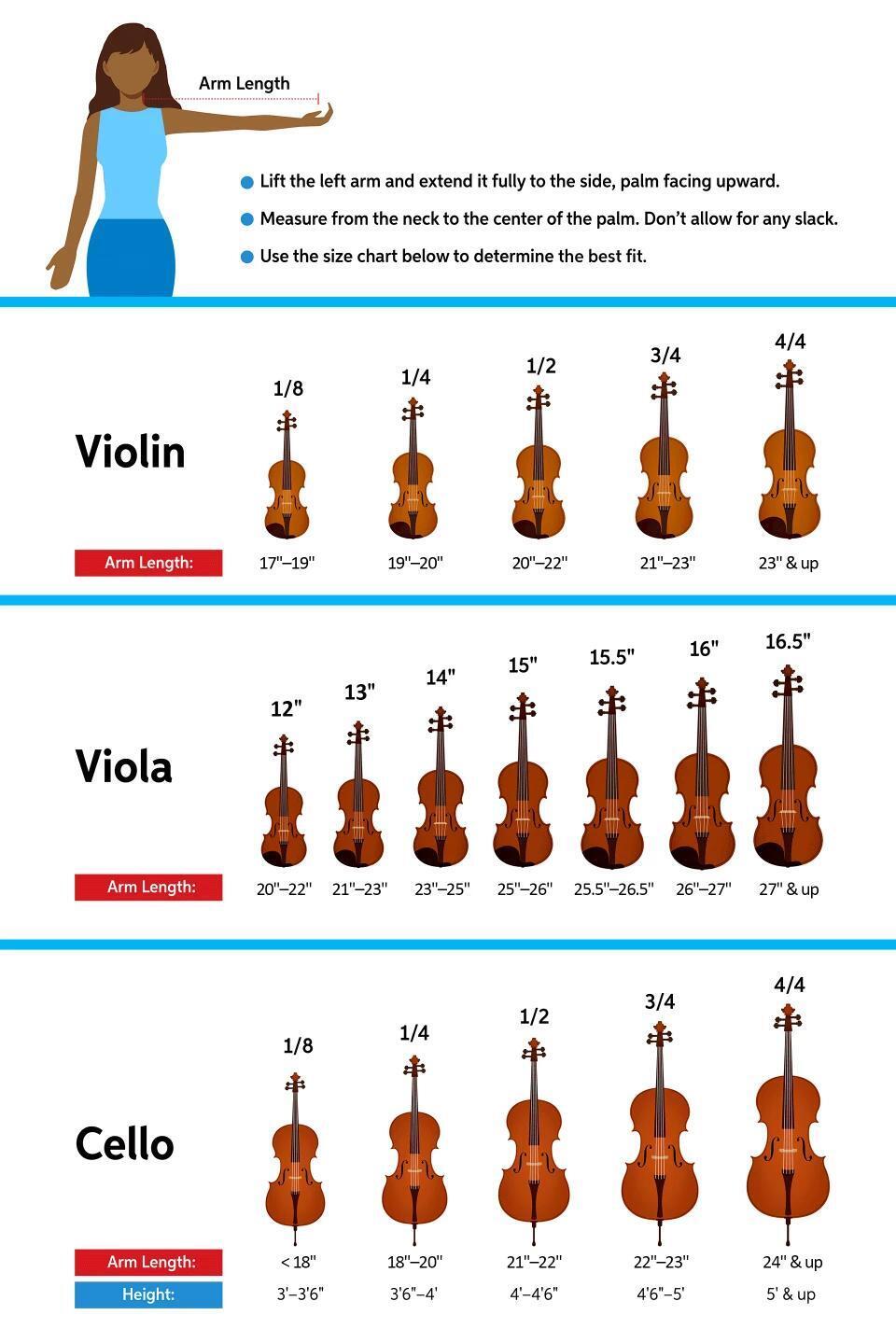
Orchestral string instruments come in many different sizes. And unlike other instruments, it very much matters what size violin, viola, cello, or double bass your child plays. A properly sized instrument allows your child to learn and play without straining or hurting themselves.
Generally, most teenagers and adults will be fine with a full-size instrument. Smaller children will need fractional instruments to start with but will gradually advance to larger sizes until they stop growing.
We’ve put together a comprehensive guide to help you figure out what size string instrument you need. You can also refer to the sizing chart below to quickly find your child’s proper violin, viola, cello, or double-bass size.
What to Look For in a Quality String Instrument
A musical instrument should be seen as an investment that potentially lasts your child several years. As such, a poorly made string instrument can actively hold back your child’s musical progression. To that end, you’ll want an instrument that meets certain quality standards.
Sweetwater works closely with private string teachers and orchestra directors every day to find instruments they want in their classrooms. With that in mind, here are three characteristics you should keep an eye out for:
- Playability: The instrument should be easy to play and stay in tune reasonably well. Ideally, it has a great setup with pegs that won’t slip out of place.
- Sound quality: Don’t buy into the notion that “beginners won’t sound good anyway.” Your child’s instrument should produce full tones that don’t sound too thin or too scratchy. Proper sound quality will leave plenty of room for them to grow, and your ears will thank you.
- Durability: Nothing will hinder your child’s musical success more than an instrument that keeps falling apart. Make sure it’s made from quality wood that won’t crack or warp easily!
If you need help finding an instrument that meets these quality standards, then you can always talk with a Sweetwater Sales Engineer at (800) 222-4700.
Laminate vs. Solid-wood Instruments
Traditionally, orchestral string instruments are carved and assembled from pieces of solid wood. But many student-grade instruments feature laminated (plywood) bodies instead. This construction has a few notable benefits.
For one, laminate wood reduces manufacturing costs. As such, it’s a fantastic option for those who need a more affordable and accessible instrument. Laminate instruments are also very durable and crack-resistant, making them ideal for classroom settings.
The biggest trade-off is tone. Plywood instruments won’t have as rich or full of a sound as solid-wood instruments. It’s not a huge deal for younger players on fractional instruments, but the limitations will become more apparent as your child progresses. Ideally, an advanced middle or high school student will be playing on a solid-wood instrument.
Hybrid-wood Instruments
Some cellos and double basses feature hybrid bodies that combine the best of both worlds. Usually, they have a solid wood top with a laminate back. This design offers the resonance and tone of a carved instrument with the durability of a laminate.
Tips to Help You Choose the Right Instrument
There’s an overwhelming number of instruments and brands to choose from. But before you make a decision, look over these tips to help pick your child’s instrument.
Talk with Others
Other people can help you make informed buying decisions. Here are some folks you should talk to before getting started:
- Your child’s music teacher: Whether it’s the private instructor or the school orchestra teacher, music teachers can offer valuable insights into instruments. Your student’s string teacher might also have preferences for specific instruments, brands, or setups. And in some cases, the school might have instruments available for you to rent or borrow.
- Other orchestra parents: It’s likely that there are other parents in your community who’ve had kids in orchestra or private lessons. They can tell you about their experience and how they got their instruments.
- A Sweetwater Sales Engineer: Sweetwater employs hundreds of musicians, including seasoned string players and former orchestra directors. Contact your Sweetwater Sales Engineer, and they’ll gladly help you find the perfect instrument for your child.
Inspect the Instrument if Possible
In some cases, like at your local music store, you can inspect the instrument and play it yourself. You could also have a repair technician look at it. But those options aren’t always available.
That’s why all orchestral string instruments at Sweetwater go through a rigorous 40-point Inspection process to ensure they meet certain quality standards. That way, you can buy with confidence and know that the instrument will meet or exceed your child’s musical needs.
Stick with Teacher-approved Brands
Not every instrument will meet the demands of your child’s music class. Nor will your child’s teachers approve of just any violin, viola, cello, or double bass.
Before you make a purchase, talk with your child’s music teacher; they’ll provide valuable input and may even have a list of approved instruments in their class.
Sweetwater also carries a wide selection of violins, violas, cellos, and double basses from some of the industry’s most respected manufacturers. There are brands that teachers have come to know and trust, such as Yamaha, Revelle, Eastman, and others.
New vs. Used Instruments
New instruments come with several advantages. For example, they’re in pristine condition and come with a manufacturer’s warranty. For extra peace of mind, Sweetwater instruments come with a free, two-year warranty, regardless of the brand.
But sometimes, you can get great deals on used instruments from places like your local classifieds or Sweetwater’s Gear Exchange. Buying used instruments can help you save money, but it also comes with risks.
There may be underlying issues that aren’t apparent in photos or descriptions. If you decide on a used instrument, then try to inspect it beforehand. And when you do buy it, be prepared to spend a little extra on new strings or other repairs.
String Instrument Rental: Why and How to Rent a String instrument
If you’re considering getting a string instrument like a violin, viola, or cello, you have two main choices: renting or buying. If you or your child have put in a significant amount of effort to master the instrument, purchasing one would be a wise decision. Having your own string instrument can be very rewarding, and you can personalize it with high-quality components that suit your particular preferences.
On the other hand, if you or your child are still undecided about playing the string instrument and haven’t fully committed yet, renting may be a better option. Renting allows you to try out a string instrument without a significant financial commitment. The Sweetwater Instrument Rental program makes it easy and hassle-free to rent a string instrument. Read on for more information!
Why Rent a String Instrument from Sweetwater?
You can be confident that when you rent a string instrument from Sweetwater, you’ll get the best instrument possible. Our collaboration with music educators throughout the country ensures that we provide the exact instruments they need in their classrooms. All of the string instruments we offer have been recommended by these educators and come from top-notch brands like Yamaha, Eastman, NS Design, Howard Core, and others.
In addition, Sweetwater’s 40-point Inspection process for instruments ensures that the string instrument you receive will be ready to play right away. Your student will get a high-quality instrument that promotes learning, produces excellent sound, and lasts for many years. The best part is that there are no hidden fees, and all of your rental payments go towards owning the string instrument. Once you finish your payments, the instrument is yours to keep.
How to Rent a String instrument from Sweetwater
Renting a string instrument for a low monthly fee from Sweetwater is a breeze. To get started, simply head over to the Sweetwater Instrument Rental page and click the “Rent Now” button. From there, fill out the form by selecting your state, school district, and your child’s school. You can then choose a string instrument from a list pre-approved by your child’s music teacher.
After submitting the form, your string instrument will be delivered to your doorstep within a few days. This straightforward and hassle-free process can be easily managed from the comfort of your own home, eliminating the need to wait in line or visit another store.
String Instrument Rental Repairs
If you’re worried about your rented string instrument getting damaged and needing repairs, Sweetwater has a solution. Our Instrument Protection Plan offers a quick and convenient way to swap out your instrument whenever needed, all for a small monthly fee.
Should any issues arise, simply notify us and we’ll dispatch a replacement string instrument on the same day. To return the damaged instrument, we provide a complimentary shipping label for your convenience. Once the replacement arrives, you can resume your rental period without any interruption. This fast and straightforward process eliminates the need for extended downtime, giving you or your student more time to play and practice!
String Instrument Rental Returns & Exchanges
If your child loses interest in their string instrument, don’t worry. With Sweetwater’s rental program, you’re not tied to any long-term commitments. You can return the instrument to us at any time, no questions asked, and your monthly payments will stop.
On the other hand, if your student is excelling with their string instrument and wants to upgrade, it’s a breeze! All of your rental payments can be applied towards another instrument at Sweetwater, allowing for an easy swap to a more advanced model. The equity stays with you, not the instrument!
Even if your student wants to try a different instrument, such as a horn or concert percussion, it’s just as simple. Sweetwater can help you exchange your current rental for a completely different instrument while retaining the equity you’ve built up!
When to Upgrade Your String Instrument
If your child sticks with music long enough, then you’ll have to make other important decisions. Eventually, they’ll have to upgrade their instrument.
Upgrading from Fractional Instruments
If your child is using a fractional violin, viola, cello, or double bass, then we generally recommend stepping up a size about every other year. That said, some kids grow faster than others. As always, ask your child’s music teacher to see if your child is ready for the next size up.
Upgrading to a Step-up or Professional Instrument
Some kids advance to a point where it’s absolutely worth it for them to have a very nice instrument. Here are guidelines for when you should think about stepping up:
- If your child’s current instrument holds them back: Some players will eventually surpass the capabilities of their student-grade instrument.
- If your child is thriving with their instrument: If your child is advancing quickly and seems really excited, then investing in a new instrument can be the best way to maintain their enthusiasm.
- If your child’s old instrument is in disrepair: Many orchestral instruments seem like priceless heirlooms, but some simply aren’t worth repairing. In that case, you’re better off putting that repair money into a new instrument.
Start Your Child’s Musical Journey with Sweetwater
Sweetwater offers an incredible selection of violins, violas, cellos, and double basses for players of every level. And with our comprehensive inspection process and unrivaled customer support, you can get your child the perfect string instrument with perfect confidence.
Start your child’s musical journey by contacting your Sweetwater Sales Engineer at (800) 222-4700.