Combining a piezoelectric transducer pickup with an impulse response (IR) changes the game for both acoustic and electric guitarists. You may be surprised by the options available.
Acoustic guitars equipped with a piezo combined with an IR can add tonal depth and polish with the tap of a pedal. That’s straightforward. But electric guitarists can also leverage this technology to access very usable acoustic tones that sound great onstage and even in the studio. Gone are the days of awkwardly swapping out guitars in the middle of a set. Guitarists who play in groups with other acoustic and electric guitarists gain a larger tonal palette to help each instrument remain sonically distinct. Some guitar models even allow the player to add keyboard and synth tones or control MIDI devices or computers.
The piezo/IR trend is catching on, too. Pedals and multi-effects pedalboards increasingly incorporate IRs as well.
Until recently, IRs were primarily used to improve or emulate amp and cabinet tones. Now — whether you play an acoustic or an electric — you can use IRs specifically to improve your acoustic guitar tone. Let’s dive into IRs, how to use them, and the pickups that drive them.
The Piezo Backstory
A piezo is a kind of acoustic transducer pickup. It’s not a new concept. As electricity became more widespread in the mid-1920s, piezo pickups began to be used on violins and pianos. Within a few years, guitar designers were looking to the piezo as a solution to help guitars hold their own in a big band.
Even with technological advancements since then, a piezo’s sound has generally been a compromise between the advantage of minimizing feedback and the disadvantage of sub-optimal tone. Electric guitar models experimented with combining a piezo with tone chambers, hollowbody or semi-hollow designs, and external acoustic processor pedals like the BOSS AD-10. Although the technology has come a long way over the years, guitarists wanting to have both acoustic and electric tones were restricted primarily to acoustic body designs with some capability to blend in electric tone from an additional humbucker or single-coil pickup.
While the greatest success of using the piezo has been with acoustic guitars, the resulting sound has been limited. The development of impulse responses changed all that.
Impulse Responses
An IR is much more involved than a digital EQ curve. Think of an EQ curve as a snapshot of a tone lasting a single instant. An IR is more like a collection of EQ curves showing how the tone starts and changes over a short period of time (21.33ms to 100ms, depending on the sample rate). The resulting sound is far more dynamic. Blending an IR with your guitar’s sound helps you to replicate the sonic qualities of your target instrument with significant success.
In other words, an IR can help an acoustic guitar sound more full-bodied and polished. For someone wanting to give a guitar’s piezo pickup a more natural acoustic guitar tone, an IR is a fantastic option. That’s great news for electric guitarists, too.
Single-output Electric Guitars
Single-output guitars are either piezo-equipped acoustic guitars or electrics that blend piezo and humbucker/single-coil pickups using controls on the guitar. The combined tone runs into an amplifier or processor through a single instrument cable. Even a couple of fretless basses get in on the act.
Danelectro’s Convertible acoustic-electric guitar and ’59 resonator guitar feature an affordable single-coil and piezo combination with a hollowbody design.
The Ernie Ball Music Man John Petrucci Series offers 6- to 8-string models and features a piezo and dual split-coil humbucker configuration for a wide tonal palette with neck-through resonance and options ranging from select tonewoods to fanned fretboards.
The Fender Acoustasonic Series combines a piezo with humbucker and single-coil pickup options and Telecaster, Jazzmaster, and Stratocaster body stylings. Fender developed an Acoustasonic acoustic amp specifically for these models.
The 4- and 5-string Ibanez Bass Workshop fretless models use piezo and humbucker pickups to create a blend of double bass and electric tones.
For a wide range of innovative bass guitar options, check out these NS Design bass guitar designs available in 4- to 6-string configurations, including fretless and upright models.
Schecter C-1 E/A semi-hollowbodies give a lot of bang for the buck by combining the piezo with modern coil-tapped humbuckers.
The Taylor T5 Classic electric guitar offers single-coil, humbucker, and piezo tones in a classic hollowbody design.
The Traveler Guitar Pro-Series Mod-X features a full-sized neck, a humbucker pickup with coil tap, and a piezo pickup in an affordable, compact package.
Dual-output Electric Guitars
On dual-output guitars, a single cable can be used (like single-output guitars), but you get the additional capability to run the electric and acoustic tones through separate outputs to entirely different rigs or pedal paths. This opens the door to blending a pure acoustic signal with atmospheric or crunchy electric tones, using live mid-side processing, controlling the blend with a foot pedal, or adding effects like distortion, delay, or amps/cabs separately to each channel.
Ernie Ball Music Man offers the JP15 Series in 6- and 7-string configurations, featuring a wide range of colors, split-coil humbuckers, and silky smooth, stainless steel frets.
ESP offers two dual-output models: the distinct LTD BB-600 Ben Burnley Baritone with two humbuckers and the LTD EC-1000 Piezo archtop with split-coil humbuckers.
Montreal-based Godin Guitars offers the dual-chambered, archtop semi-hollowbody Montreal Premiere Series and the single-chambered, carved-top semi-hollowbody Summit Classic HT models with dual-output acoustic/electric capability.
Paul Reed Smith offers three distinctly different models. With the popular Hollowbody II Piezo electric guitars, you can combine vintage electric depth with acoustic chime, all delivered with dual-chambered semi-hollowbody warmth and sustain. The newest PRS piezo model is the SE Hollowbody Standard Piezo electric guitar, a dual-chambered semi-hollowbody design with the added warmth of a mahogany top, sides, and back. The Custom 24 Piezo electric guitars combine their acoustic capability with a solidbody design and a pair of modern humbuckers for that famous PRS tone.
Electric + Acoustic + MIDI Guitars
A few models take the quest for unlimited options into another dimension by adding MIDI output for controlling keyboards, Ableton, pedals, or other MIDI gear. These guitars typically use a transducer saddle for each individual string and send each string through its own MIDI channel, which makes possible alternate tunings or key transpositions available at the press of a button or turn of a knob. You can even have different strings control different keyboard patches simultaneously. For example, in addition to the guitar tone, one string can be a saxophone, another string can be a vocal pad, and another can trigger a kick drum. It’s a brave, new world.
Godin Guitars has championed transducer/electric/MIDI-combined guitars for decades. (My custom LGXSA has been my primary gigging workhorse since 1998!) Godin xtSA models allow you to mix humbucker, single-coil, transducer, and MIDI split-synth pickups. The Godin LGXT electric guitar features split-coil humbuckers, transducers, and MIDI split-synth pickups with a carved maple top. In addition to their incredibly wide tone palette, any of these models allows you to output a combined electric/acoustic signal through the MIDI cable or send the electric and acoustic individually through dual cables or combined as a single output.
Line 6 Variax guitar models give you a single combined output for the blended humbucker or single-coil electric and acoustic tones plus MIDI out. In addition to the acoustic guitar tone, you get banjo and sitar options. These models can be played straight into any amp as an electric guitar or into a computer (with included software), modeler, or a Line 6 pedal for expanded options, including special benefits when used with one of the Line 6 Helix pedalboard models.
Related Guitar Options
While the Ibanez TOD10N Tim Henson Signature Nylon acoustic-electric guitar features a single piezo pickup, its popularity earns it a place on this list. Besides, it sounds great with an IR.
For a DIY approach, get out your router and drill and combine a Graph Tech PK-0680-00 Ghost Acousti-Phonic & Hexpander kit with a Graph Tech Ghost Loaded bridge, available in 4- to 7-string configurations, including tremolo options.
The Difference Between Split-coil and Coil Tap
A split-coil configuration cuts out one of the two coils in a humbucker pickup so the pickup functions like a single-coil pickup. A coil tap bypasses half of the full length of the pickup magnet windings on either a humbucker or a single-coil pickup to lower the pickup output, producing a more “vintage” tone that has somewhat reduced midrange and upper frequencies.
The Gear
You’re stepping into a huge arsenal of guitar tones with any of these guitar models, and your rig will either enable the guitar advantages to shine OR hold it back, so let’s look at the gear.
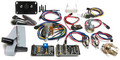
Even though the dual guitar output has been around for a long time (the stereo Rickenbacker 360 Deluxe bass was introduced in 1964), the search for a single cable with dual jacks on both ends has been difficult. Many guitarists have resorted to using two separate cables, creating DIY Frankensteins, or making custom cables. A Pro Co DK Excellines dual instrument patch cable resolves this issue as a single cable that features dual mono outs at both ends with varying lengths of 3 to 20 feet.
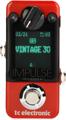
The TC Electronic Impulse is a reliable IR loader pedal preinstalled with 25 built-in IRs (including five acoustic IRs) and 74 slots for more. Plus, you can toggle between two primary IRs with the hands-free footswitch.
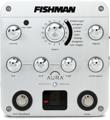
The Fishman Aura Spectrum is a DI pedal that enhances your piezo signal with a Fishman-created IR and additional EQ, compression, tuning, and anti-feedback features.
The Audio Sprockets ToneDexter is a unique acoustic instrument preamp that allows you to sweeten your piezo signal with one of 22 custom onboard WaveMaps (somewhat akin to IRs). You can create additional WaveMaps from your own acoustic guitar, banjo, upright bass, mandolin, violin, ukulele, and even dobro. Plus, you get included features like phantom power, a tuner, a feedback-fighting notch filter, and an effects loop.
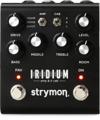
While most amp/cab pedals focus on electric guitar tones, some give you the ability to load acoustic IRs for use with piezo pickups. The BOSS IR-200 has built-in effects and 154 built-in cab, amp, and mic IRs, plus room to load in 128 user IRs. It can run up to two IRs simultaneously in either mono or stereo, too. The Strymon Iridium includes stereo ins and outs, 300 presets, three amps, and nine choice speaker cab IRs, and you can load your own IRs. The Two Notes Torpedo C.A.B. M+ speaker simulator pedal includes 32 cabs (plus 250 more online) and eight mic models in addition to accepting third-party IRs and including capture software to create your own.
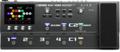
Multi-effects pedalsincrease your tonal options and allow you to incorporate additional IRs. The GX-100 guitar pedal from BOSS combines their flagship GT-1000 processor with touchscreen control, 23 amplifiers, and over 150 effects. The Headrush MX5 amp modeling guitar effect processor features a touchscreen, expression pedal, 46 amplifiers, 15 cabs, 300 IRs, and 63 effects. The Line 6 POD Go floor processors include an onboard expression pedal, more than 270 sounds, and a wireless guitar option. Also from Line 6 are the HX Stomp floor processors, which include 128 presets, 20 guitar and four bass cabs, 12 mics, snapshot control, and the ability to use up to 128 third-party IRs. The Zoom G6 multi-effects processor offers 70 preloaded cab IRs, 50 user IR slots, touchscreen control, rhythm patterns, a tuner, an effects loop, and an expression/volume pedal. Its big brother, the Zoom G11, includes additional features, like 70 preloaded cabinet IRs, a looper, and room for 130 user IR slots.
For single-output users, Kemper Profiler models allow you to use third-party IRs, along with those you create yourself, in addition to 200 amplifier profiles, a collection of effects, and an extensive online community.
For IR dual-output users and guitarists seeking robust processing capabilities, two multi-effects pedal platforms allow you to create multiple amp chains so you can simultaneously have a separate IR and effect path for each guitar output. Both platforms boast enthusiastic user groups, more than 1,000 amp/cab models, effects and presets, third-party IR support, built-in loopers, a dedicated tuner/tap switch, and continuing updates with new amps/cabs and effects. The Line 6 Helix guitar multi-effects floor processor is a modeler that includes an onboard expression pedal, programable scribble strips, deep aftermarket IR and patch support, and access to Helix Native (a matching DAW plug-in) and Line 6 Variax guitars. (The streamlined Helix LT multi-effects processor includes many of these features as well.) The Neural DSP Quad Cortex Quad-Core is a modeler/profiling floorboard featuring touchscreen control, reduced latency, onboard Wi-Fi, and the ability to create IRs from your own amplifiers, pedals, and speaker cabinets.
Player Tip
Create a stereo patch using two acoustic IRs. Pick one for its rich, full tone and the other for its sparkle and ability to cut through the mix. Either blend them together for the exact tone you need or pan one right and the other left with a slight delay (6 to 22ms) for an incredibly full acoustic sound. (On my Helix, I dove even deeper and developed a 3-IR patch with my primary IR tone cutting through in the center for articulation, complemented by a dual-IR pair panned hard left and hard right with reverb and parallel delays to add ambience and width.)
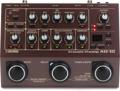
What if you don’t want to use an IR? Piezo-based guitarists have several non-IR options to consider. Both the BOSS Katana and Positive Grid Spark guitar amplifiers offer settings specifically designed to enhance piezo-equipped guitars. The BOSS AD-10 acoustic guitar processor pedal is a 2-channel preamp that enhances your piezo tone with a selection of guitar presets and extensive controls. The Zoom AC-3 acoustic creator, and its “little brother,” the Zoom AC-2, apply acoustic tone to your piezo signal. The TC Electronic BodyRez acoustic pedal enhances your piezo pickup tone with an easy-to-use single control. Sweetwater carries a wide range of acoustic guitar preamp pedals for piezo-equipped acoustic guitars as well.
Player Tip
If you have a dual-output guitar, then create a dual patch or signal chain that each routes to one of the inputs on a stereo foot pedal so you can control the blend between the two with your foot into a stereo or mono output.
IRs
While some pedal and piezo manufacturers have developed their own acoustic IRs, third-party developers have entered the pool. 3 Sigma Audio provides IRs for acoustic, bass, and classical guitars, as well as mandolins, strings, ukuleles, and upright basses. Worship Tutorials offers a wide assortment of acoustic guitar IR packs, including a free sample pack that’s a fantastic place to start. (They also created the patches and IRs included in the Sweetwater-exclusive Line 6 Worship Bundle available for the Line 6 Helix, Helix LT, HX Stomp, HX Stomp XL, and Helix Rack models.)
Combining IRs with transducer pickups has opened the door to a great palette of sought-after tonal options to enhance your live performance and studio capabilities. If you’re unsure how to maximize your gear, then please reach out to your Sweetwater Sales Engineer at (800) 222-4700 for personalized recommendations. They’re here to help you reach your music goals.