Producer, mixer, and musician Steve Mackey knows something about creating great music that stands the test of time. Since his band, Pulp, first made waves in the early 1990s, Mackey has remained busy as a musician, producer, and remixer, with credits that include such acclaimed artists as M.I.A., Death From Above 1979, and Florence + the Machine.
But it’s his work on 2017’s chart-topping Everything Now by Arcade Fire that has put him in the running for Best Alternative Music Album at the 60th Annual Grammy Awards celebration. On the album, which debuted at #1 on the Billboard top 200, Mackey harnesses a massive array of electronic and live instrument tonalities, pushing the band’s sound into new territory, while always staying true to the artists’ well-established vision.
Sweetwater had the opportunity to ask Mackey a few questions, from his home in the UK, about the creation of the album, the effect a great producer can have on an album, and how Universal Audio played a big role in his most recent Grammy-nominated work.
Congratulations on your Grammy nomination for your work on Arcade Fire’s Everything Now. Can you tell me a little about the process?
Everything Now was recorded over a two year period, mainly in Arcade Fire’s studio in New Orleans, some sessions in their Montreal studio, and a week at Daft Punk’s studio in Paris.
The band tracking was all to tape, a lot of it recorded in a very, very small room, which obviously was a challenge considering the size of the band!
I worked together with Thomas Bangalter of Daft Punk and Markus Dravs on the production side and New Orleans engineer Eric Heigle.
As ever, the band were very involved in the recording and mixing of their record. It was very much a collaborative effort between us all.
Do you try to imprint your sonic signature on the projects you work on?
Well, it changes record to record. Really the artists’ thirst and desire for sonic exploration determines what you can achieve in that way, how far you get to push it. So who you decide to work with is pretty important!
I worked with M.I.A. early in her recording career and realised you have a real opportunity to collaborate, and create, and define the sound an artist arrives with in those kind of situations. You can just go all-out. Artists are fearless at that stage.
“Galang,” her breakout single, was a good example of that. Between us, we all managed to create a really tough sound for her song. It was just all-out assault by us on a cool, but fairly tame demo. It really informed the sound of the rest of her debut album. And Diplo then picked [it] up from there with her and added his influences to other tracks on the album too.
In other situations it’s very different. An artist like Arcade Fire, the band already have a well-defined aesthetic and sonic signature they’ve developed over lots of great albums. So you can be on a different journey of exploration with them of how they want to represent their new era. They’ll have strong ideas about that. They’re obviously very accomplished on lots of levels. The band had done of lot of great experiments already with the sonic approach when I became involved. So you’re starting from a much more developed place and often working further into their existing ideas.
There’s only really one sonic benchmark. When the recording you have done, for whatever reason, makes you want to listen to it over and over again, you’re onto something! When I look back over the records I made with my own band Pulp, I sometimes wish we had been less varied across albums in terms of studio sonics, and focused more on just capturing those songs well as a live band. Most bands I truly love, my favourite album is their first, their most immediate expression.
A big part of a producer or engineer’s sonic fingerprint is the gear they use. What are some of your favorite pieces of gear?
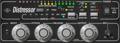
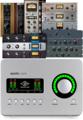
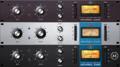
Analog boards, tape delays, all variety of distortion boxes, spring reverbs, these things all help a lot if you have access to that kind of gear. I love EMI TG desks. There’s a few in the UK. Old API desks, the UA 610 desk, Binson delays. UAD’s 1176 plug-ins – in the software domain – I like a lot. They just win hands down for me. They’re the first ones I really felt comfortable with sound wise.
As ever, song arrangement, good rooms, character-full players will do a hell of a lot of work for you. They’re the real starting point for recording any song! Gear choices come into focus alongside as you try to embellish, and colour, and twist those things.
 Tell me about your relationship with Universal Audio. How do you utilize their products in the studio?
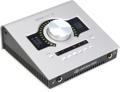
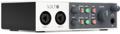
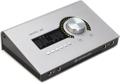
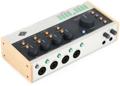
I started using their hardware about 15 years ago and probably used their compressors every session since. Then I bought various preamps of theirs and always loved them. I have a bunch of their hardware and software in my studio I use daily. Apollos, UAD Plugs, 1176s, [and] 2108 Preamps.
Last year with Arcade Fire we recorded on an original 610 desk of Win Butler’s. [It’s] a really amazing console.
How does a producer/engineer stay so relevant in an industry that’s always changing?
Finding great artists to work and collaborate with – it all starts there, whatever level you’re at.
 With the mass availability of recording plug-ins and products, there are more engineers and producers coming up than ever before. What advice would you give them?
More than anything, just to navigate to your own people. Find a way to work with musicians who are into the same things as you and get the stuff you love, who speak the same musical language, and just get busy there. Record them in any environment you can. If you’re into the same things, it’s likely you’ll make good music together, and things will come from that.
The recordings & demos that musicians produce themselves now are often so good. Not surprisingly. They know the vibe they want and can nail that. But they don’t always quite reach the finish line, somehow.
Learn to operate in that gap. Work on the skills they don’t have time for. Put the time and effort into learning how to make stuff, like the vocals or rhythm tracks, go from good to great.