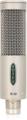
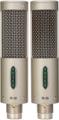
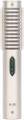
You’ll Capture Every Detail with Royer Ribbon Mics
Recording engineers have always prized ribbon microphones for their unique sound qualities, and Royer ribbon mics are the first choice of many world-class engineers – they even won a Grammy Award for their microphones’ contributions to the recording industry. And while you’re sure to capture amazing results from any Royer microphone in any setting, we’ve created this Royer Microphone Buying Guide to help you find the best Royer ribbon mic for specific applications.
Royer mics have the uncanny ability to sound incredibly vibrant and detailed while still sounding natural and un-hyped. Whether you need to capture the full body of an acoustic guitar, the intimate nuances of a vocalist, or even the true sound of a full orchestra in an amazing room, you can count on Royer ribbon mics to get the job done.
Five Reasons to Record with Royer Ribbon Microphones:
- Capture a natural, lifelike tone without excessive color or harsh brightness
- Create that “in the room” feeling in your recordings
- Fast transient response captures even the most subtle nuances of the performance
- Balanced tone takes EQ extremely well, making your tracks easier to mix together
- Enhanced proximity effect allows you to really fine-tune your sound just based on mic position
Royer Microphones in Detail

R-101
The Royer R-101 ribbon microphone brings Royer’s acclaimed ribbon sound within reach of home recordists and project studios. The sound is warm and full, with a natural top end that won’t sound harsh or shrill. As with all Royer microphones, the R-101 takes to EQ extremely well, so you’ll never have trouble fitting your recorded tracks in your mix. For an all-around workhorse ribbon mic at a sweet price, it’s hard to beat the Royer R-101.
- Warmth and detail at an affordable price
- High SPL handling is perfect for drums, percussion, and amplifiers
- Ultra-low self noise for amazingly clean recordings

R-121
The R-121 is the ribbon mic that earned Royer their reputation. If you could have only one microphone to record guitar amplifiers with, you’d be well-served by the R-121. Its amazing detail and wide, balanced response make it incredibly easy to achieve that “in the room” vibe with your guitar tracks. You’ll also find that the R-121 is an outstanding choice for acoustic instruments, vocals, and brass.
- Outstanding clarity and balanced tone
- No sonic coloration or distortion all the way up to the maximum SPL rating
- Fast transient response captures every sonic detail and nuance
Ross Hogarth on recording electric guitar with an R-121

R-121 Live
Royer took their already impressive R-121 ribbon mic and gave it a thicker ribbon to create the R-121 Live. All Royer microphones are built tough and can handle live performance applications, but the fortified R-121 Live is designed for maximum reliability for even the most demanding touring acts. When you want to take your studio sound on the road with you, the R-121 Live is the perfect solution.
- Classic Royer warmth and detail with a thicker, more robust ribbon transducer
- Enhanced ribbon design to survive the most demanding live sound applications
- Ideal for drums, guitar amps, brass, and woodwinds

R-122
Royer’s award-winning R-122 was the world’s first active ribbon microphone. The active electronics give the R-122 a hotter output and impedance-matching capabilities, which make it easier to match with some microphone preamplifiers. Ribbon microphones have a reputation for needing a bit more preamp gain than other microphones, but the R-122’s enhanced output ensures you won’t need to crank your preamp beyond its sonic sweet spot.
- World’s first active ribbon mic, with 14dB more output than the R-121
- Active electronics and impedance-matching circuitry make it easy to match with any preamplifier
- Requires phantom power for the active electronics
Fab Dupont recording Will Knox with R-121, R-122, R-122V, SF-24, and SF-2

R-122 Live
With the same design philosophy of the R-121 Live mentioned above, the R-122 Live takes the R-122 and adds a thicker ribbon for maximum reliability in demanding live sound situations. Just like the R-122, the R-122 Live boasts active electronics for a stronger signal output. It’s especially ideal for using with live sound consoles that don’t have enough gain to handle an R-121.
- Classic Royer warmth and detail with a thicker, more robust ribbon transducer
- Active electronics provide 14dB more output than the R-121
- Phantom power required for the active electronics

R-122V
Royer’s first ribbon mic with active tube circuitry, the R-122V boasts Royer’s highest output signal strength and headroom. The R-122V also uses a special Jensen output transformer to practically eliminate any induced noise, making this a high-output ribbon mic with a huge dynamic range and ultra-low noise floor. Even with the lowest-gain microphone preamp you can find, you’ll be able to get a great sound from the R-122V.
- Classic Royer ribbon mic design with active tube circuitry
- Exceptionally high headroom and ultra-low noise from the tube’s high operating voltage
- Strong output signal (10dB more than the R-122) makes this a good match for any preamp
Jonathan Merkel recording electric guitar with an R-122V

R-122 MKII
For maximum flexibility onstage and in the studio, the R-122 MKII takes the high-output design of the original R-122 and adds a 15dB pad and switchable bass roll-off. You’ll be able to record even the loudest sources without distortion, and you’ll be able to use proximity effect to your advantage while also eliminating low-end rumble. For Royer warmth and detail with maximum recording flexibility, choose the R-122 MKII.
- Bass roll-off switch helps eliminate sonic mud and low-end rumble
- 15dB pad allows you to record the loudest sound sources without distortion
- Ample output and impedance-matching circuitry for exceptional sound with any preamplifier

SF-2
The SF-2 ribbon mic is equipped with Royer’s thinnest ribbon design, giving it an even faster response and detailed sound. It’s designed primarily for classical recording applications and acoustic instruments in general. The phantom-powered active electronics in the SF-2 allow it to achieve the sensitivity of a top-notch condenser microphone, with the warmth and detail Royer is known for.
- Uses an ultra-thin (1.8 micron) ribbon element for maximum detail and sensitivity
- Rivals high-end condenser microphones in transient response and overall clarity
- Perfect for classical recording and solo acoustic instruments
Lukas Rossi and Kenny Aronoff with Ross Hogarth with R-121, R-122, R-122V, SF-24, and SF-2

SF-12
Royer’s SF-12 stereo ribbon microphone captures an amazingly wide and detailed stereo image that sounds as though you’re right there in the room with the instruments. It’s perfect for virtually any stereo miking application, especially classical recordings. You’ll also find the SF-12 is an outstanding solution for overhead drum miking, percussion tables, and other distant-miking applications.
- Capture wide stereo recordings with amazing clarity and imaging with just one microphone
- Uses ultra-thin (1.8 micron) ribbon elements for maximum detail and sensitivity
- Perfect for classical recording, drum and percussion overheads, and solo acoustic instruments

SF24
Take the Royer SF-12 mentioned above, add phantom-powered electronics for impedance matching and enhanced condenser-level output, and you’ve got the Royer SF-24 stereo ribbon microphone. The added electronics mean you can expect stellar results from any microphone preamplifier or console preamp, even if it’s light on gain. Just like the SF-12, you can expect a wide, incredibly detailed stereo image and outstanding warmth and richness, perfect for classical recordings and acoustic instruments.
- Stereo ribbon mic with active electronics for enhanced output and impedance-matching circuitry
- Active circuitry gives you the flexibility you need to get the best results from any type of preamp
- Perfect for classical recording, drum and percussion overheads, and solo acoustic instruments
Robert Friedrich recording the San Diego Symphony with SF-24, SF-2, R-122V, and R-122
| Mono/Stereo | Requires Phantom Power? | Polar Pattern | Ribbon Thickness | Max. SPL | |
|---|---|---|---|---|---|
| R-101 | Mono | No | Figure-8 | 2.5 micron | 135dB |
| R-121 | Mono | No | Figure-8 | 2.5 micron | 135dB |
| R-121 Live | Mono | No | Figure-8 | 4 micron | 135dB |
| R-122 | Mono | Yes | Figure-8 | 2.5 micron | 135dB |
| R-122 Live | Mono | Yes | Figure-8 | 4 micron | 135dB |
| R-122V | Mono | Yes | Figure-8 | 2.5 micron | 135dB |
| R-122 MKII | Mono | Yes | Figure-8 | 2.5 micron | 135dB |
| SF-2 | Mono | Yes | Figure-8 | 1.8 micron | 130dB |
| SF-12 | Stereo | No | Dual Figure-8, Blumlein and M-S | 1.8 micron | 130dB |
| SF-24 | Stereo | Yes | Crossed Figure-8 | 2.5 micron | 130dB |
Expect Detail, Warmth and Sensitivity from Royer Microphones
We know that words like warmth, detail, and clarity are somewhat overused in this industry – but Royer has earned the right to use these descriptions as much as they want because they’re undeniably accurate. We use Royer microphones regularly in Sweetwater’s recording studios, and many Sales Engineers rely on Royer mics in their own recording projects as well. Once you’ve tried a Royer microphone in your own studio or live act, we’re sure you’ll be a lifelong devotee too. This guide should help you decide which Royer ribbon microphone best meets your specific needs – and if you have any questions, just give your Sweetwater Sales Engineer a call!