Back in the ’60s, harmonicas were a big part of pop music. The Rolling Stones, Led Zeppelin, the Yardbirds, and many other rock bands used harmonicas in their music — but the “blues harp” style they emulated originated with the pioneering work of Little Walter (1930–1968) back in the late 1940s. He saw amplification as the key to creating a new type of harmonica sound (as well as a way to avoid being drowned out by guitar players), but he took it further than anyone else at the time and is often credited as the first musician to use distortion deliberately as an effect. Little Walter remains the only musician inducted into the Rock and Roll Hall of Fame specifically as a harmonica player.
My band in the ’60s was often on the same bill as blues greats like Junior Wells, so I heard blues harp at its best. YouTube is loaded with examples of amazing blues harmonica players — in addition to Little Walter, search for Sonny Boy Williamson’s “Bring It On Home,” James Cotton’s “Rocket 88,” Sonny Terry’s “Whoopin’ the Blues,” Jimmy Reed’s “Baby What You Want Me to Do,” and the Paul Butterfield Blues Band’s “Born in Chicago.”
These musicians created a big, brash, sensuous sound that made the pop music harmonica sound like water compared to Jack Daniel’s Tennessee Sour Mash. I wanted to incorporate that sound into my music, but no matter how hard I tried, I couldn’t achieve it. How did they do it?
Then I found the three essentials to playing blues harp, and I also found that blues harp is a lot of fun. Besides, harmonicas are relatively inexpensive and portable, and they can add entirely different textures to your music — and in the spirit of Little Walter, plug-ins can take them further.
Essential #1: Harmonicas Blow and Suck
A standard harmonica has 10 holes, and each hole produces its own pitch depending on whether you blow air into the hole or draw air through it (fig. 1).

You can blow or draw through several holes for polyphony, but more advanced players use their lips and tongue to isolate single holes and play one note at a time. Many of the blues greats played harmonica like a horn, with intense, single-note lines.
Another important technique is bending harmonica notes, which gives that bluesy, swampy sound. Some consider it an advanced technique, but it’s not really all that hard to do. Bending occurs most easily when drawing in air, because you need to change the airflow angle so it flows predominantly over the top of the reed. Applying downward pressure on the reed produces a lower pitch by slowing the rate of the reed’s vibrations. Also, the more you play, the more flexible the reeds become, and this makes it easier to bend the notes (some players soak their harmonicas in beer because they claim it makes the reeds more flexible, but I think it’s just an excuse to drink the beer afterward).
It’s easier to bend with lower notes, so it’s common to play much of a harmonica solo in the lower notes and use the higher notes to accent. But bear in mind that bending is variable; for example, you can bend some notes more than others. It’s difficult to describe in print how to bend, but I’ll try: move your tongue below the hole, bring your upper lip down a bit over the hole, and draw in deeply. You’ll find it challenging to discover the right combination of tongue and lip position to create bending, but like vocal vibrato, one day you’ll simply find out you can do it and wonder why you didn’t figure it out sooner.
Essential #2: Harmonica Keys Explained
Harmonicas come in different keys, but the key to cool harmonica playing is to ignore the key. Playing harmonica in its intended key, called Straight Harp, is great if you want to play around the campfire at night in a cowboy movie — and yes, it can work for blues and pop. But playing harmonica in the “wrong” key is where it gets really interesting.
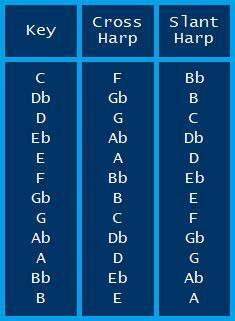
Cross Harp (also called Second Position), the most common blues technique, uses a harmonica key that’s a fourth above the key in which you’re playing. For example, if you’re playing in the key of E, choose an A harmonica and play mostly draw notes in the lower holes.
Slant Harp (also called Third Position) is less common, although Little Walter and others used it quite a bit — it’s a useful alternative to Cross Harp. It works best with minor keys and pretty much demands single-note lines; you choose a harmonica key two semitones below the key in which you’re playing (e.g., a C harmonica if you’re playing in D). See figure 2’s reference chart for more details.
There’s also a Fourth Position for harmonica where you (for example) play in E for a G harmonica, but this is difficult to use because you have to bend notes precisely to hit the desired scale notes. I don’t use it, but feel free to experiment.
Essential 3: Learn How to Breathe
There are a billion “how to play harmonica videos” on the web, but this one explains it all without a single word. Once you get past the shock of the first few seconds, pay attention — watch and learn. The reason it has 5,000,000 views (and counting) is because she nails it.
Video by Beck Wenger, “How to Play Harmonica (the Blues).”
The Mic You Like
Okay, now you’re playing in the right key, bending notes, and starting to think that maybe learning harmonica isn’t such a crazy idea after all. Time to boot up your host and start recording.
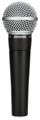
Harmonicas like dynamic mics. I use a Shure SM58 with a foam windscreen and hold the mic right up to the harmonica so my hands cup both the harmonica and the mic. The idea isn’t just to close-mic, but to smother the mic with the harmonica — the harmonica actually pushes air directly into the windscreen.
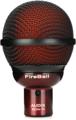
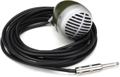
However, there are also somewhat pricier microphones designed specifically for harmonica, like the Shure 520DX “Green Bullet” and the Audix FireBall (fig. 3).
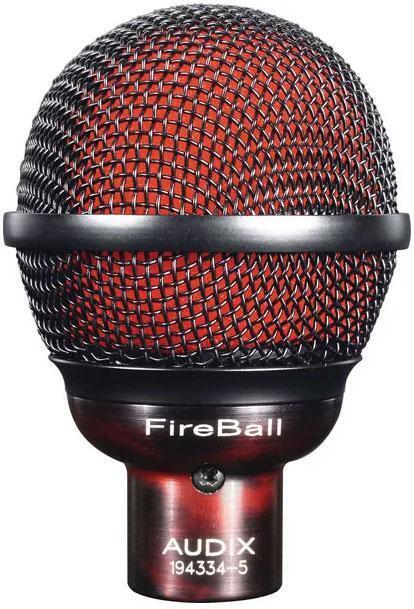
Compared to a conventional mic, a harmonica mic’s main difference is that it’s contoured to fit between the harmonica and your hands. The Shure model is omnidirectional, so the proximity effect doesn’t exist. Some will prefer that result, but for those who don’t, the FireBall has a cardioid pickup pattern (which also gives a large degree of off-axis rejection).
The Secret Ingredient
When it’s time for a bluesy, authoritative, powerful voice, insert an amp sim. You probably don’t want a super-high-gain amp, but something more like a Fender Twin, which you then overload. You’ll also want a cab, or you can use EQ to roll off high frequencies above 5kHz or so, to give it that throaty, smoky vibe. Figure 4 shows a harmonica amp preset I like using with IK Multimedia AmpliTube; note the slight midrange boost at 750Hz and 2200Hz.

However, pretty much any amp sim will do a credible job as long as you dial back the drive somewhat. Like physical amps, they’re all different, so choose the one that sounds best with your mic and playing style. Figure 5 shows a Line 6 Helix Native multiband preset dedicated to harmonica.

So yes, it is worth learning to play blues harp. I use it a lot on my album Simplicity, with “I’ll Take You Higher” and “Our Independence Day” being the bluesiest, and “To Say ‘No’ Would Be a Crime” being more pop (you can audition the songs as free previews at cdbaby). When people hear these songs, the usual reaction is, “Wow, that sounds like a harmonica! What synthesizer preset did you use?” But I really think it’s easier to learn to play the real thing rather than to try to wring that level of expressiveness out of a synth. Lee Oskar and Hohner harmonicas are the standards, but you can also save by buying a pack of multiple harmonicas, like the Fender Blues Deluxe 7-pack.
However, be aware that you get what you pay for. Although you can make sounds and have fun with pretty much any harmonica, the costlier ones will play more consistently, you won’t have to draw and blow as hard, and the bending will be more predictable. After all, a harmonica is a real instrument! Just ask Little Walter.
If you have any questions about harmonicas and related equipment, don’t hesitate to reach out to your Sweetwater Sales Engineer at (800) 222-4700.