

Some people swear by mixing with subwoofers. Other people insist that they’ll give you a false picture of your mix that won’t translate well to other playback systems. So which is it? Low-end reproduction is tricky — there’s no way around it. Not enough, and your mix sounds thin, but too much, and it’s boomy and muddy. In other words, it’s a little of both, and sometimes it’s space and genre specific. Below, you’ll find some of the pros and cons of mixing with a subwoofer.
Pro: Subwoofers Are Important When Mixing in Surround
Kind of a no-brainer, really. Whether you’re mixing in 5.1, 7.1, 10.1, or any other surround format, the subwoofer is the “.1” — it’s the LFE (low-frequency energy) channel that most of the energy emanates from for explosions, low-frequency sci-fi game sounds, and other elements of video. Subwoofers may be optional for mixing in stereo, but if you are going to be mixing in surround, it’s pretty much a requirement. Yes, it’s possible to mix in surround with just five monitors and leave the LFE management to others, but do you really want to do that?
Pro: Subwoofers Add Low End That Some Stereo Monitors Are Missing
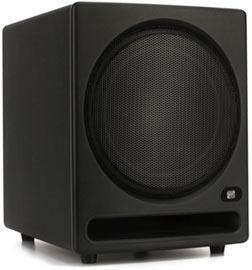 If you’re using smaller desktop speakers or affordable studio monitors in smaller enclosures, it’s a good bet that the compromises are all in the bass frequencies. This means that when you’re mixing, you won’t get an accurate picture of the bass, and you’ll end up overcompensating, resulting in mixes that sound good on your bass-starved monitors but are bass heavy everywhere else. Adding a subwoofer can bring those frequencies back. Many smaller speaker monitor systems have a subwoofer specifically designed with a crossover matched to the limitations of the desktop monitors; you can also get a subwoofer with an active (adjustable) crossover and set it to add the missing low end.
Pro: Subwoofers Can Help in Rooms That Swallow Low End
Do you have a room that seems to absorb the low frequencies before they get to your ears? If so, a subwoofer might be just what you need. A subwoofer with an active crossover can be adjusted to start reproducing frequencies at whatever point the low end in the room starts getting weak and lets you bring them back and turn them up to taste.
Pro: Subwoofers Are Vital for Some Mixes, such as Club Mixes
Clubs rely on massive sound systems pumping massive amounts of low end to the dancing masses. The only way to approximate that while you’re mixing is to have a subwoofer to reproduce that low end. In this case, you probably will want to turn up your subwoofer to the point that it makes your mixes bass heavy so you can mix appropriately for the kind of sound system that your song will be played on at the club.
Con: Subwoofers Are Finicky to Dial in Right
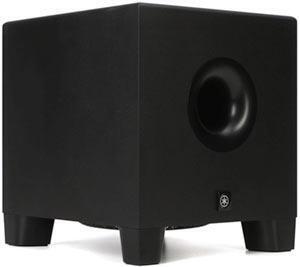 Dialing in a subwoofer is as much an art as a science. If your subwoofer has an active crossover, set the crossover to seamlessly pick up where your monitors leave off, rather than doubling the amount of bass energy at the points where the monitors and subwoofer overlap. Also, adjust the level of your subwoofer so that it sounds completely natural; too little subwoofer and it can’t adequately compensate for the monitors or room, too much, and you get a bass boost or risk exacerbating boominess in the room. As if that’s not tricky enough, the ideal level for the subwoofer changes whenever you adjust the level of your stereo monitors.
Con: Subwoofers Can Overwhelm Some Acoustic Music Mixes
Club music and dance mixes contain lots of sub-frequency energy. On the other hand, acoustic, classical, choral, and jazz music has less subsonic information. If you don’t have your subwoofer dialed in just right, you’ll be mixing in a bass-heavy environment, which may lead you either to remove what bass energy does exist, or to boost the treble frequencies to the point that your mix ends up top heavy. This goes back to subwoofers being tricky to dial in, and in some cases needing to be dialed in repeatedly depending on the mix level and the genre.
Con: Good Subwoofers Are Expensive
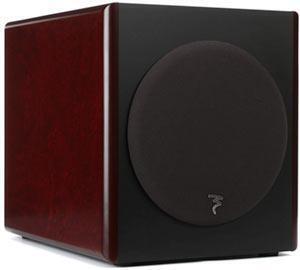 Yes, you can buy cheap subwoofers for only a few hundred dollars. But if you want a good subwoofer, one with an active crossover and other EQ features, as well as through jacks for surround monitoring and so on, the price quickly tops a thousand dollars and keeps creeping up. If you need a subwoofer for your studio, it’s worth the money, but if you’re not sure and just wondering what it might add — and you’ve already got good stereo monitors and your acoustic space isn’t swallowing the bass — that money might be better spent on other components.
To find out about the studio subwoofers that Sweetwater carries, click here. Or for more help, call your Sweetwater Sales Engineer at (800) 222-4700.