One of the great things about the music community is how willing many people are to share what they know with the rest of us. In the Summer 2018 issue of SweetNotes, I discussed plug-ins and mixing strategies in my “The Next Level” column. After reading the article, Kirk from Mammoth Recording emailed:

“SweetNotes is always welcome and is great reading for break time at work and has introduced me to some useful gear and practices. I think another option in your Plug-in Philosophy article should be represented. It’s not all encompassing, but buying your favorite/best-you-can-afford/best-your-computer-can-handle channel strip and working as though through a console is another valid philosophy. You’d still need ’verb and delay, etc., but they can be easy to master. Modules within the strip can usually be turned off if not used to save processing power. I use Apollo interfaces and often grab a Neve or API channel strip to start with. Maybe, since I never got to work on a big console, I’m making up for times gone by.”
Excellent suggestion, Kirk, thank you! Just load up a channel strip on each channel of the mixer, and you have EQ and compression readily available.
Our next topic? Mix bus processing. By “mix bus processing,” I’m referring to processors, such as EQ, compressors, and limiters, that are used on the entire mix — on the stereo or multichannel output bus of the mixer, whether real or virtual. These processors are used to “glue” the mix together, to make it punchier, to fix any overall frequency imbalances that may result from the tracks coming together, and so on.
Choose Your Approach
Approaches to mix bus processing vary:
- Some engineers prefer to place processors on the output bus (also known as the “2-mix”) before the mix begins and then mix into those processors for a more “finished” sound. Since adding mix processors may change the perception of balances, dynamics, and EQ in the mix, this allows you to mix with the end result clearly audible.
- Some use no mix bus processing at all, preferring to leave all post-mix processing in the hands of the mastering engineer. This would arguably be the “purist” approach, but it also allows all mix processing to be handled by the (presumably) super-high-quality mastering gear.
- Others apply mix bus processors late in the mixdown to lightly “touch up” the mix.
Personally, I fall into the third category when I’m mixing — I’m pretty conservative. I prefer to get the mix sounding as good as I can just based on the sound of the tracks and their blend. Then I like to do the minimum amount of mix bus processing required for a great-sounding mix. Anything beyond this, I leave until the mastering process.
Take It Easy
However you approach mix bus processing, I recommend using caution with how heavily you apply EQ and dynamics processing. If you over-EQ or -compress, or try to create a “mastered” sound on your mix, then you’ll likely tie the hands of your mastering engineer — even if you’re mastering yourself. In particular, mix bus processing should not be used to make the mix loud — compression and limiting should be used at this stage to glue and control the mix, not to increase level, which is better handled at mastering. Use just as much processing as you need to get the mix where you want it, but leave room for mastering to work its magic.
Box or Boxes? Or Plug-ins?

You can choose to use individual boxes or plug-ins to do your mix bus processing. For example, when I did the final mixes for my new EP, Foundation, in Sweetwater’s Studio C, I used a Dangerous Music 2-Bus+ to sum 16 outputs from Avid Pro Tools in the analog domain. The stereo output from the 2-Bus+ routed through a Dangerous Music Bax EQ, a Maag Audio EQ-4M, and a Manley Variable Mu limiter/compressor on the stereo mix bus. The final processed mix was then captured back into a stereo track in Pro Tools. (I work this way so that the final mix lives in the same Pro Tools session as the original tracks — it’s all in one place.) This combination of mix bus processing solidified the bottom end, brought out the air and detail in the mix, and gently glued the tracks together. You could do a similar thing with individual plug-ins on the output bus of your DAW’s virtual mixer.
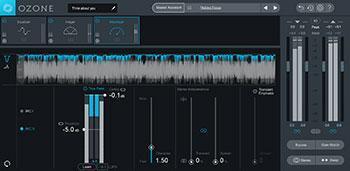
Another analog approach is to use an all-in-one mix bus processor, such as the Rupert Neve Designs Portico II Master Bus Processor or the new SSL Fusion. These combine EQ, compression/limiting, stereo field processing, and more, into one convenient package. Another option would be a mix-processing plug-in, such as iZotope Ozone or Zynaptiq Intensity, which allows you to do similar processing (and a variety of other things) in the virtual domain.
Last Chance
Mix bus processing is the last opportunity to get things “right” with a mix before it moves on to mastering. Choose your processors carefully and use them even more carefully, and you’ll have a great sounding mix that will only sound better once it has been mastered.