Which came first: The chicken or the egg? Nobody seems to know the answer to this age-old question. Likewise, many recordists wonder which gear they should upgrade first: their microphone or mic preamp? Like most topics in the audio world, the answer isn’t that simple. Let’s delve into the Sweetwater philosophy regarding this oft-posed question.
- It All Starts with Your Microphone
- There’s Nothing Wrong with Your Interface’s Pres
- “But My Affordable Mic Sounds Good on My Voice”
- Add Analog Character to Your Tracks
- Don’t Neglect Your Interface’s ADAT Port
It All Starts with Your Microphone
Microphones are, at least for musicians who record real instruments, the most essential parts of your studio. It is the first piece of gear in your recording chain, and it profoundly affects what your final tracks will sound like — so much so that plugging a high-end microphone into a standard-issue preamp (such as one built into a typical audio interface) will yield more drastic sonic dividends than plugging a lower-end microphone into a high-dollar preamp.
Because your microphone choice significantly impacts the sound of your recordings, it makes sense to use the best microphone you can afford that is also best suited for the job at hand. Therefore, most recordists will benefit more from leveling up their mic locker before upgrading to outboard preamps.
So, instead of plugging your cheap-sounding Fisher Price microphone into a Rupert Neve Designs Shelford Channel microphone preamp, inductor EQ, and diode bridge compressor and wondering why you’re not attaining a pro-level sound, get your hands on a couple of solid workhorse mics. Then, when the time is right, find the preamp (or preamps) that best complements your mic locker. In the meantime, plug straight into your audio interface, and let your microphones do their thing.
There’s Nothing Wrong with Your Interface’s Pres
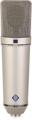
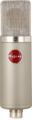
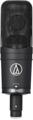
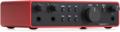
Despite what some audio-forum gear snobs might tell you, the pres built into most audio interfaces — even entry-level ones — are quite good. For example, the Focusrite Scarlett 2i2 4th Gen — a popular, budget-friendly USB audio interface — includes two low-noise, clean-sounding preamps with enough gain to accommodate most condenser mics, ample headroom, and even a vintage-sounding air effect. As countless recordists have done before you, you’ll discover that pairing a Scarlett 2i2’s mic pres with a high-quality condenser microphone, like the large-diaphragm Audio-Technica AT4050, Mojave Audio MA-200, Lauten Audio Atlantis FC-387, or Neumann U 87 Ai, produces excellent, professional-sounding results.
Know that most high-end interfaces, such as the Neumann MT 48U, RME Fireface UFX III, Neve 88M, and Apogee Symphony Desktop, contain onboard preamps that rival (and sometimes outperform) all but the most expensive of standalone outboard pres. For instance, the Neumann MT 48’s preamps boast 78dB of gain and can capture the full dynamic range of the company’s acclaimed microphones. The Neve 88M’s pres yield an ear-pleasing sound analogous to the company’s revered 80 Series consoles — no external hardware required. Moreover, RME’s and Apogee’s preamps offer state-of-the-art designs with top-shelf sound and a whole host of modern features guaranteed to elevate your recordings. To put it bluntly, you’ll need to shell out a lot of money to get outboard preamps that deliver subjectively better sound than the ones built into these interfaces.
Beyond that, cutting-edge audio interfaces, like those from the Universal Audio Apollo X series, provide you with professional-quality preamplification. They also include true-to-life built-in software emulations of industry-renowned preamps, putting a virtual rack full of hardware at your fingertips.
“But My Affordable Mic Sounds Good on My Voice”
There are instances where you may want to upgrade your preamp instead of upgrading your microphone. Some performers, for example, find that their voices pair exceptionally well with a relatively inexpensive dynamic mic, such as a Shure SM7B cardioid vocal mic or an Electro-Voice RE20 broadcast mic with Variable-D. This phenomenon isn’t limited to amateur musicians either. Bono of legendary band U2 allegedly captured many of his vocals with a Shure SM58-style handheld dynamic mic. His Purple Majesty, Prince, is rumored to have used a Shure SM57 mic on many of his hit recordings.
However, the drawback to using dynamic microphones is that they typically require more gain than condenser mics — sometimes, even more gain than what is available on the preamps built into standard-issue audio interfaces. On top of that, dynamic mics often benefit from a high-end preamp with a flattering sonic signature or an in-line booster, like the Cloud Microphones Cloudlifter CL-1 1-channel mic activator, to make them pop.
Add Analog Character to Your Tracks
Once you find the right mics for your studio, it will be time to start thinking about which preamps will pair best with them. It’s essential to maintain perspective on this, however. As we noted earlier in this article, your choice of microphone will significantly influence the overall sound of your recordings more than your choice of preamp. Preamps aren’t mythical magic bullets that take your recordings from drab to fab with a push of a button. Instead, they’re tools meant to complement your mics. Preamps are designed to bring your mic’s signals up to usable levels, and if you choose the best ones, then preamps can also add some sonic coloration that will take your recordings over the top.
Regarding character preamps, there are plenty of time-tested units to choose from. Neve and Neve-inspired microphone preamp plus EQ offerings, such as the Neve 1073SPX, Warm Audio WA73-EQ, Heritage Audio HA73EQ ELITE, and Chameleon Labs 7603, are among the most popular preamps in Sweetwater’s inventory, and they’re an excellent way to inject your projects with a classic British-console sound. API preamps, coveted for their aggressive mid-forward sound, are tailor-made for adding punch to drums, electric basses, and electric guitars. The Focusrite ISA series is also popular for adding a classic console sound to your recordings.
If you’re searching for a relatively budget-friendly way to add sonic coloration to your tracks, then look at the Warm Audio TB12 Tone Beast microphone preamp. This preamp has a zillion features (slight exaggeration) that allow it to conform to any sound you can picture in your mind’s eye (or mind’s ear, in this case).
Don’t Neglect Your Interface’s ADAT Port
Another good reason to invest in a high-quality preamp is if you need more channels to record drums or even an entire band. If this describes your situation, then you only need an audio interface with a spare ADAT optical expansion port and a compatible 8-channel microphone preamp, such as the Focusrite Clarett+ OctoPre or Audient ASP800.
Simply connect the ADAT output from the 8-channel expander to your audio interface’s ADAT input, and eight additional preamps will instantly become available to you — it’s like magic! The only issue you may encounter with this setup is dodgy digital clock synchronization between the two units. For most configurations, however, synchronizing your audio interface to the expansion unit’s internal clock signal will clear everything up.
You should also be aware that using an ADAT expander will limit your project sample rates to 44.1kHz or 48kHz — unless your interface and expander support S/MUX, which will then give you access to a 96kHz maximum sampling rate.
Give Your Sweetwater Sales Engineer a Call Today!
If you’re not sure what next step to take to elevate your studio to the next level, then give your Sweetwater Sales Engineer a call at (800) 222-4700.