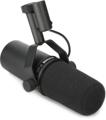
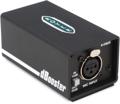
When Rodger Cloud started using (and eventually making) ribbon microphones back in 2007, he encountered a common problem when plugging them into many preamps — there was not enough clean gain available at the preamp to fully utilize the microphone’s capabilities. When using a ribbon mic (or low-output dynamic mics, such as the Shure SM7B or Electro-Voice RE20) and needing to add 60dB or more of gain, the level of noise coming from the preamp’s electronics was unacceptably high. He imagined solving that problem by adding a super-clean gain stage between the microphone and the preamp. That’s when Rodger conceived the CL-1 Cloudlifter Mic Activator, an in-line active amplifier that boosts the mic signal before the preamp. It was a brilliant idea and at just the right time. The Cloudlifter has been phenomenally successful and has garnered hundreds of glowing reviews, such as these found on our site.
“I absolutely love the extra headroom I can get from this little gem.“
— Mike M.
“I wasn’t sure how much of a difference the Cloudlifter would make, but I am pleasantly surprised, no more pushing my preamp to the max resulting in a much clearer vocal.“
— Carl H.
“Used with an SM7B, and was shocked at how much more sensitive the mic became.“
— Dan G.
“I bought an SM7B thinking I could skip out on the CL-1 because my interface can add up to extra 60db of gain….I WAS WRONG….more gain from the interface means more white noise. The CL-1 provided the proper gain power before the preamp so it’s insanely powerful and no white noise.“
— Josh M.
The CL-1 has been so successful since its introduction in 2011 that it has spawned a whole new class of similar products. Though called by different names (in-line active preamp, in-line mic preamp, mic signal booster, in-line signal booster, mic boost direct box), they all do the same thing — they’re active preamps that go between the mic and the interface. Offering 12dB to 28dB of gain (depending on the unit), they aren’t designed to replace your preamp but to augment your existing preamp and boost the signal from your mic.
How do the others sound compared to the Cloudlifter? I hear that question a lot, but I don’t know anyone who has done a side-by-side comparison. That can only mean one thing: I need to do it.
So, I gathered them all in the studio along with a classic radio/podcaster mic, the Shure SM7B, and had our own Mitch Gallagher read into each so we could listen and compare them. (The Cloudlifter/SM7B combo is such a popular pair that we sell it bundled here.) These were recorded through the very popular and affordable Focusrite Scarlett 2i2 USB interface.
Mic Boosters Auditioned
Here are the mic boosters that we chose to audition and the gain available (in dB) from each.
| Cloud Microphones | CL-1 Cloudlifter 1-channel Mic Activator | 25dB |
| Royer | dBooster In-line Signal Booster | 12/20dB |
| sE Electronics | DM1 Dynamite 1-channel Active In-line Preamp | 28dB |
| Radial | McBoost 1-channel Active Mic Boost Direct Box | 25dB (variable) |
Part I – Focusrite 2i2 Interface
Here’s what Mitch sounds like on an SM7B going through each booster into the Focusrite 2i2 USB interface.
Cloud Microphones CL-1 Cloudlifter

The CL-1 Cloudlifter uses direct-coupled, Class A discrete JFET circuitry for low-noise amplification. It comes in a compact metal box; offers up to 25dB of gain; is manufactured in Tucson, Arizona, from US-sourced parts; and is offered in 1- and 2-channel versions. There’s a reason it is the standard by which all other boosters are measured. Take a listen to hear what it sounds like.
Royer dBooster

As a leading manufacturer of ribbon microphones, Royer knows about low-output microphones; so they designed the dBooster to work well with both ribbon and dynamic mics. It features two boost settings (12dB/20dB) in an ultra-low distortion and ultra-low noise preamplifier housed in a durable metal case. It claims “minimal coloration,” but we thought it had a very unique sound. What do you think?
sE Electronics DM1 Dynamite

The sE Electronics DM1 Dynamite is unique in this collection because it is designed to get the signal directly from the output connector on the mic — no additional cabling required. The most compact of the units we auditioned, it’s built into an XLR-sized barrel connector and provides 28dB of neutral Class A amplification. Take a listen.
Radial McBoost

Often overlooked, the Radial McBoost active direct box offers more features and functionality than any of the others. Providing up to 25dB of signal boost, it also offers a variable-gain setting as well as a half-gain setting. And there’s also a three-position Load setting that tailors the input impedance to best match your mic.
Directly into Focusrite 2i2 USB Interface

In order to have a reference point for comparison, I also plugged the SM7B directly into the Focusrite 2i2 interface. We had to crank the input all the way up (almost 100%) to get adequate gain. Here’s what that sounds like.
Part II – Zoom H6 Recorder

Since the advantages of using a mic booster are largely dependent on the preamp that it’s plugged into, we decided to test it with another interface to see how big of a difference that makes. Since these are commonly used with portable recorders that offer less preamp gain, I reached for the Zoom H6 portable recorder with 46dB max gain. In this case, having a mic booster is nearly essential with a mic such as the SM7B. Here’s what Mitch sounds like on the same SM7B going into the Zoom H6. This is a different performance on a different day, so his inflections are different.
Cloud Microphones CL-1 Cloudlifter
Royer dBooster
sE Electronics DM1 Dynamite
Radial McBoost
Directly into Zoom H6
Testing Setup
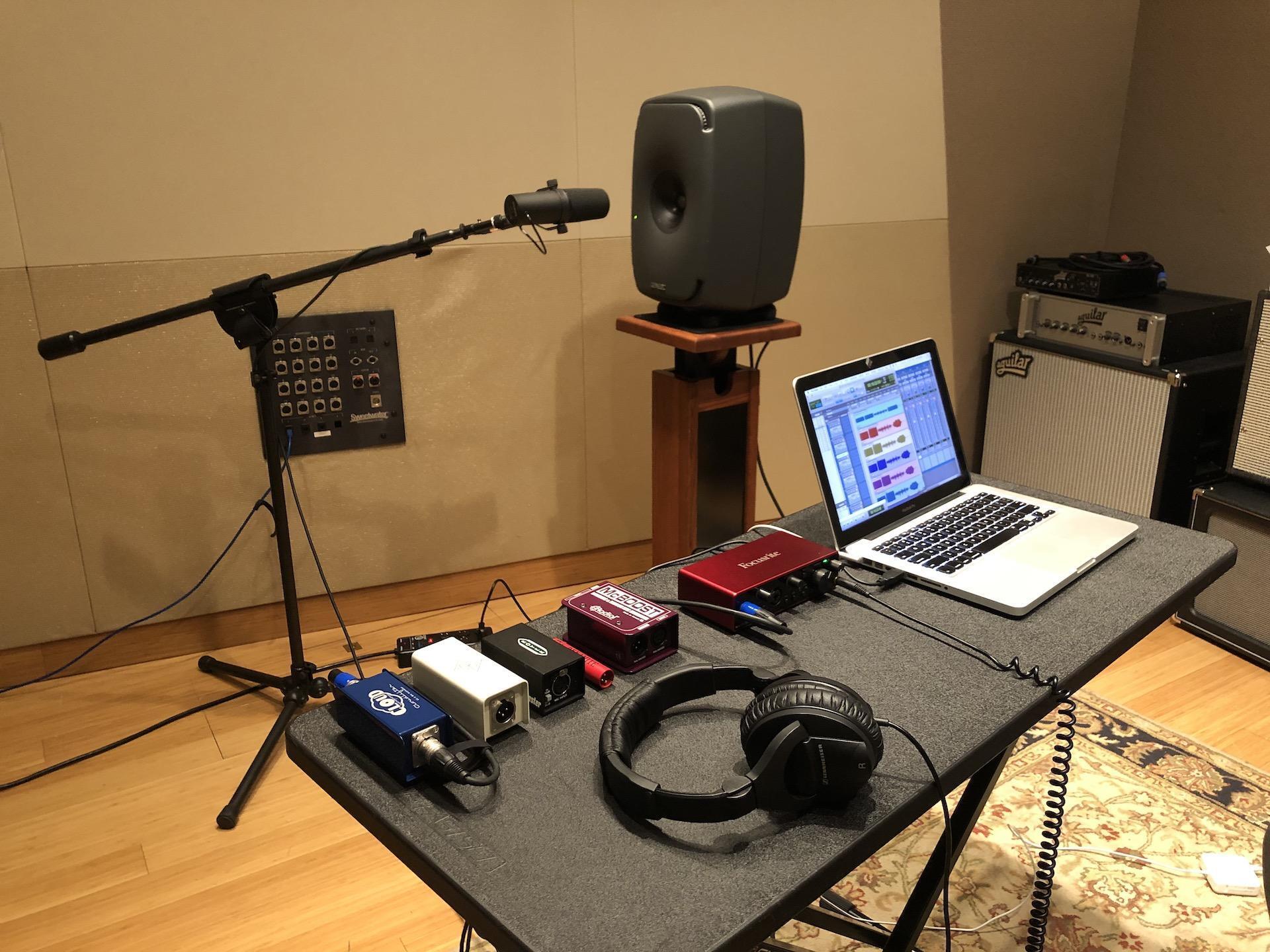
Mitch and I went into Sweetwater Studio B and set up just like many podcasters do: in a small room with a laptop and a mic. I used a Genelec 8351B with a 1kHz tone as my calibration source and matched the levels within 0.1dB.
Conclusion
What differences did you hear? There are definitely different characteristics to the sound of each of these. Which one you prefer is a matter of personal taste, but I think whichever you choose will do a good job. It mostly depends on the form factor you prefer and how much gain you need. But, certainly, whichever of these you choose will get the job done.
NOTE: These units are only designed to work with passive mics — mics that don’t require 48V phantom power — because they do NOT pass phantom power on to the mic. Though they DO require 48V phantom power coming from your interface to power their internal electronics, they won’t work with microphones that require phantom power.
Thank you to the following Sweetwater Staff for their assistance in setting up these tests: Shawn Dealey, Rachel Leonard, Dave Martin, and interns Jason Peets and Rachel Hachem.