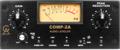
Effects plug-ins and software instruments have come a long way in the last 15 years. Today, we have stunning virtualizations ranging from the most exclusive German microphones to the quirkiest analog synths. Yet despite software’s leaps and bounds in sound advancement and unignorable convenience (any guess what 20 channels of LA-3As would run you in today’s money?), the demand for nuts-and-bolts hardware — mics, consoles, outboards, and instruments — grows by the minute. Here’s why.
Analog Mojo, Hardware Workflow
From Chris Lord-Alge to Glenn Fricker, producers across the board have come to recognize that there’s just something different about working with analog gear. Passing signal through several stages of capacitors, inductors, diodes, and transformers just appears to do something to a bass, vocal, or synth that our ears enjoy.
It’s a tale that reads similar to the time in music history when studios, in favor of lighter and more advanced gear, pitched their Universal 175s and Fairchilds — literally threw them in dumpsters — in adoption of the shiny and new transistor gear. A decade later, everyone collectively scratched their heads and asked one another “Wait — these new boxes don’t sound as good as the old ones, do they?”
Apart from the sound differences between hardware and software — which is approaching parity every day — there’s an inherent predicament that comes with the ability to have unlimited plug-ins and instant recall in a session. For starters, it can cause producers to become wooden in their approach. “This is my vocal chain” or “this is my guitar EQ,” rather than allowing the music to inform their mix decisions. Working on analog hardware with knobs, which may have settings on them leftover from a previous session, can cause us to work dynamically and interactively with the source material. It can even create some pretty cool accidents.
Cult of Personality
Another important reason why analog continues to be embraced is that some gear just does something special to a signal. Maybe it’s a tube that’s on its last legs. Maybe it’s a capacitor that’s about to give up the ghost. Maybe it’s the Dr. Pepper a client spilled on your Moog 30 years ago and never told you about. Fact is, tolerances vary widely between pieces of analog gear in ways that they don’t when using plug-ins. And to some producers, this little something extra — parasitics, mojo, whatever you want to call it — allows them to achieve a sound in their heads, in faster or more intuitive ways than routing a plug-in or instrument in a DAW.
Sum Like It Hot

Further evidence for an industry predilection for analog gear can be seen in the popularity of summing boxes, such as those offered by Dangerous Music and Coleman Audio. As Marek Stycos demonstrates in this demo, summing (passing multiple channels into discrete analog signal paths and combining them to a single stereo 2-bus) can help give in-the-box mixes some of the fullness and dimensionality — that so-real-you-could-point-to-it stereo imaging — of the analog console age.
Appreciating Returns

Cost of analog gear has certainly been a prohibitive factor for many of us musicians and producers. The fact is, to most players, a $99 amp sim that gets you 85% of the mix vibe of a 1960s Plexi is going to be the better investment. But today, especially in the case of audio interfaces and outboard gear, with mic preamps and “character” gear getting better by the day, the hardware is becoming so enticing that picking up a rack of Golden Age LAs or Warm Audio Pultecs isn’t extravagantly more expensive than the software emulations.
Our Conclusion?
Software isn’t going anywhere. But if you’re interested in seeing what the best analog hardware and instruments ever built can do for your sound and workflow, give your Sweetwater Sales Engineer a call at (800) 222-4700.