Miss the first installment of this series of articles? Check out Part I.
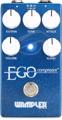
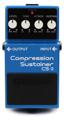
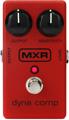
Part I focused on the basics of guitar compressors and how they work. In Parts II and III, I’ll show some sample settings and suggested uses. For my test signal chain, I used a Fender American Standard Stratocaster with Seymour Duncan Classic Stack pickups and a PRS S2 Singlecut for guitars, a Fender ’65 Princeton Reverb and a Mesa/Boogie Recto-Verb Twenty-Five for amps, a Radial Tonebone TriMode, Boss DS-1X, and Line 6 M9 for effects. I also tested a variety of compressors including the Seymour Duncan Vice Grip, MXR Dyna Comp, Wampler Ego, Boss CS-3, Keeley 4 Knob, and JHS Pulp ‘N’ Peel.
Remember that these compressor settings are basic guidelines, a starting point. Everyone’s playing style and gear combinations are unique, so start with these suggestions and tweak until it sounds right to you. If your compressor doesn’t have an input gain control, compensate with lower Sustain and Volume settings if you’re using a guitar with higher-output pickups. With that out of the way, let’s check out some sounds!
All-Around Compression
- Attack – 11 o’clock
- Sustain – 1 o’clock
This setting is the classic compressed guitar sound that has a wide variety of uses: clean, jangly rhythm; punchy, muted low notes; washy, ringing chords; pedal-steel-style bends; smooth, clean arpeggios and super-sustained, dirty slide guitar.
Chicken Pickin’
- Attack – Noon
- Sustain – Noon
This setting is best for faster tempos, where a quicker response time is needed. Set the Volume and/or Gain to give a slight, audible boost. If your comp has a Blend control, try setting it above 50 percent. This setting works best with single-coil pickups.
Clean Funk Rhythm
- Attack – 2 o’clock
- Sustain – 1 o’clock
Set the Volume at a unity gain setting to keep the sound as clean as possible. Blend settings above half-way will work best. This setting will make those two-and-three note chord stabs on the upper strings super-articulate. If your compressor has a tone control, a brighter setting would be appropriate.
Clean Sustained Lead
- Attack – all the way up
- Sustain – 12 o’clock
Set the Volume for a slight, audible boost so when you engage the comp, the single notes appear louder than your rhythm parts.
In Part 3 I’ll detail some less-than-obvious compressor settings. Always trust your ear as your best guide to good tone.