

Have you ever looked across the stars, pondering the universe in all its expansive wonder, and thought, “how do chords work?” If so, this is the first step on your journey to answering that very question! You’ll learn basic chordal terms like chord, dyad, major triad, minor triad, diminished triad, augmented triad, seventh chord, and chord progression. You’ll also learn some advanced terms like slash chord, extended chord, and modulation. All the musical examples featured in this article are provided as both a MIDI and an MP3 download, so you can load them into your DAW or music notation software. Whether you’re a new musician starting from the beginning or a longtime player who wants to brush up on their knowledge, this article will jump-start your adventure into the world of harmony.
Click the download button to get sheet music for the audio examples listed below.
Chords don’t have jobs, but they do work. A chord is a group of typically three or more notes sounded together, as the basis of harmony.
Notes
This is a note, an A♭.
A♭
This single note is not yet a chord.
Dyads
Play another note the interval of a major 3rd above the A♭, and you now have a dyad: A♭, C.
A♭, C
A dyad is a set of two notes or pitches sounded together. These are all dyads:
Dyad Examples
Dyads may imply a chord but are not chords.
Triads
Add another note a minor 3rd above the C, and now you have a chord.
This is an A♭ major triad: A♭, C, E♭.
A♭ Major Triad (A♭, C, E♭)
A triad is a set of three notes that are stacked vertically by the interval of a 3rd.
A♭ Augmented Triad
A♭ Minor Triad
A♭ Diminished Triad
Seventh Chords
If you add another note a major 3rd above the E♭, you now have a major 7th chord: A♭, C, E♭, G.
A♭ Major 7th Chord (A♭, C, E♭, G)
This fourth note, G, is the interval of a major 7th above the root of the chord, A♭.
A♭, G (major 7th)
The other two notes are a perfect 5th above the root (A♭, E♭),
A♭, E♭ (perfect 5th)
and a major 3rd above the root (A♭, C).
A♭, C (major 3rd)
The 3rd and the 7th are the most defining and structurally important notes of a chord.
For example, in a:
Major triad — with a major 3rd (A♭, C, E♭):
A♭, C, E♭
Minor triad — with a minor 3rd (A♭, C♭, E♭):
A♭, C♭, E♭
Major 7th chord — with a major 3rd and a major 7th (A♭, C, E♭, G):
A♭, C, E♭, G
Dominant 7th chord — with a major 3rd and a lowered/dominant 7th (A♭, C, E♭, G♭):
A♭, C, E♭, G♭
and so on.
In chord terminology, chord tones (root, 3rd, 5th, and 7th), extended tones or simply extensions (2nd/9th, 4th/11th, 6th/13th), and altered tones or alterations (♭9, #9, #11, ♭13, etc.) are derived from the seven tonal degrees or notes of the major scale. For example, the 6th note of the A♭ major scale is F. If our chord is A♭ minor(♭6), then the F would be lowered one half step to F♭.
Extended/Altered Chords
Other notes can be added and altered to add color to the basic structure of a chord, which is defined by the root, 3rd, and 7th. These are called extended chords. For example:
A major 9th chord, written “A♭maj9” (A♭, C, E♭, G, B♭):
A♭maj9 root position
A♭maj9 open voicing
A dominant 7th ♭9 chord, written “A♭7(♭9)” (A♭, C, E♭, G♭, B♭♭):
A♭7 (♭9) root position
A♭7 (♭9) open voicing
An augmented major 7th chord, written “A♭maj7(#5)” (A♭, C, E, G):
A♭maj7 (#5) root position
A♭maj7(#5) open voicing
A minor 9th chord, written “A♭m9” (A♭, C♭, E♭, G♭, B♭):
A♭m9 root position
A♭m9 open voicing
A sus13 (add 3) chord, written “A♭sus13(add 3)” (A♭, D♭, G♭, C, F)
A♭sus13 (add 3) close voicing
A♭sus13 (add 3) open voicing
A B major 7th chord over an A♭ augmented major 7th chord, written “Bmaj7/A♭maj7(#5).” Bmaj7/A♭maj7(#5) is a slash chord. In this context, it is meant to be read as a polychord, which is two or more chords played together. The Bmaj7 goes on top and the A♭maj7(#5) goes on the bottom.
Bmaj7/A♭maj7 (#5) close voicing
Bmaj7/A♭maj7 (#5) open voicing
Chord Progressions
Chord progressions are multiple chords in succession. Many popular songs have chord progressions based on triads and 7th chords built off the notes of a major or minor scale. For example, “Imagine” uses chords primarily from the key of C.
Chord progression for Imagine
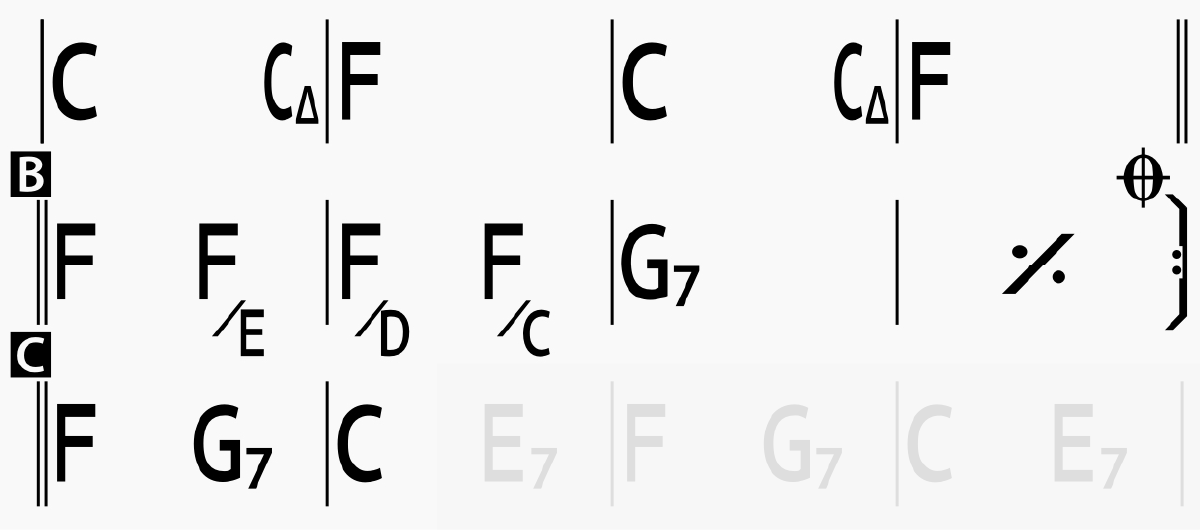
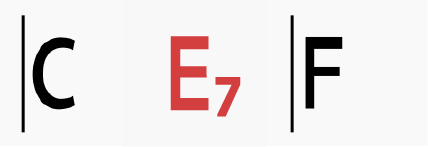
In the second bar of the C section, it goes to a chord outside of the established key, in this case an E7.
Some songs will even modulate to establish a new key and later return to the original key.
Chord progression for The Christmas Song
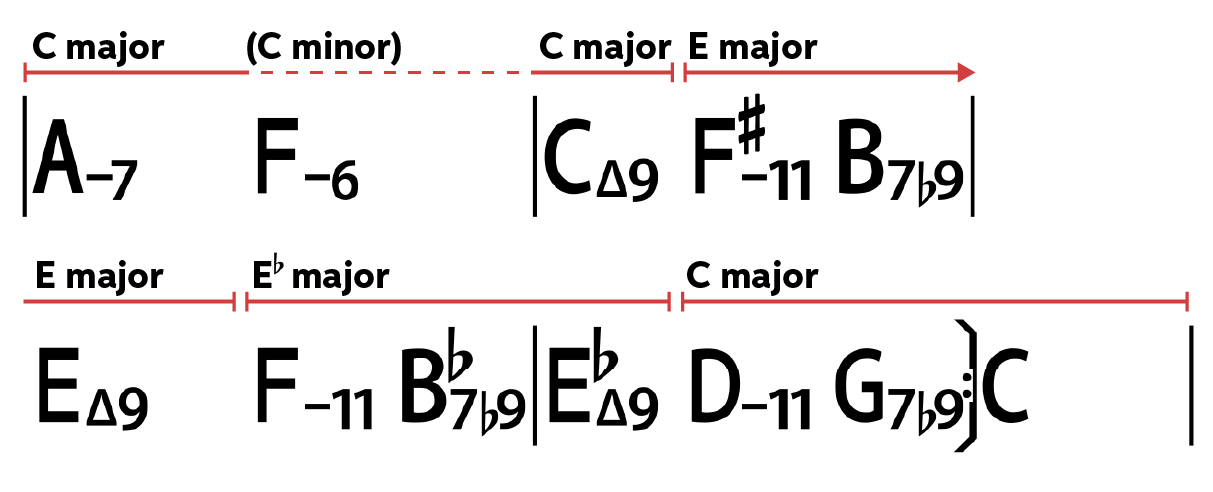
Others may modulate many, many times and even end in a different key than that in which they began.
Challenge yourself by spelling out these chords on your instrument and by building them starting on different root notes.
These are the basics of how chords work. You have now evolved from a harmonic hatchling into a chording apprentice. Go forth and harmonize the world!
- Click the button below to download the MP3 and MIDI files of the examples in this article.
- Learn more by watching our video lesson of about how chords work.