

Synthesis is a deep topic, and there is plenty of information out there about what oscillators are, what ADSR means, the different types of filters, and so on. For this brief article, though, we’d like to share some simple ideas that can lead to big sonic rewards. These ideas can be applied to a wide range of synthesizers available today, both hardware and plug-ins. Especially if you find yourself in need of sonic inspiration, these tips may help you find your way back to your creative zone.
Try creating a sound from scratch — without listening to it
Especially when working with a subtractive synth, we’ve noticed many synthesists start with a basic waveform and begin to shape it while either playing the synth with a controller or sequencing it. It makes sense — you hear what you’re doing in real time. But have you ever tried to create a patch without listening to it until you decide it’s mostly complete?

It’s actually a great way to learn to think in sound design terms. Do you want to create a short, percussive sound? A long, evolving sound? Is it harmonically complex? Is it being modulated? How much? Asking yourself these questions will dictate how you set envelope values, what you assign LFOs to, what oscillator waveshapes you select, and much more. Give it a try — take a moment to envision a sound, then see what parameters you need to dial in to get you close to that sound. Only when you think you’re close, hit a key on your keyboard or fire up a sequence to hear what you’ve created.
Even if the sound is nothing like you imagined it would be, it can be a great learning experience with any synthesizer. It’s a good exercise in goal-oriented synthesis, and you may just come up with some great sounds you’ll find yourself using often.
Add subtle sonic nuance with LFOs and EGs
This tip assumes you have a synth with more than one envelope generator or LFO available. Modulating a sound with an LFO or envelope is one of the most powerful ways of adding a whole extra dimension of movement to any synth patch — and it’s very easy to overdo it. The key to adding sonic intrigue to a sound is to add a bit of modulation that’s barely perceptible, encouraging your listener to examine it in greater detail. A good starting point for this exercise is a simple saw-wave lead patch.
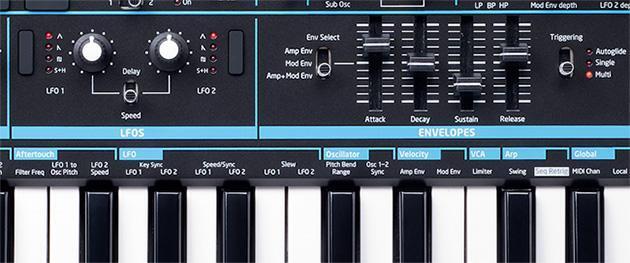
Assign a spare LFO to filter cutoff or oscillator pitch, and dial in a medium to fast speed. The key is to set the modulation amount very low, so that it’s only barely manipulating the filter or the oscillator — just barely enough to hear it. Then, assign an envelope to the LFO rate — using your amplitude envelope is a good place to start. Experiment with both positive and negative envelope modulation. As you play or sequence the synth patch, you’ll notice an extra layer of sonic interest that’s barely perceptible, yet you’ll miss it if you take it away.
The main idea is to use any spare LFO and EG sources you have to add subtle interest to your patches. Instead of sounding like a cliche effect, you’ll be adding interesting modulation that doesn’t alter the core character of your sound.
How to create a lot of original synth patches fast
This is simply an easy and fast way to turn one initialized (blank) synth patch into many and can be a fun way to overwrite the factory presets on a new synth (assuming you’re using a synthesizer that has presets and the ability to store your own). Start by making the most basic lead-type patch you can think of — one oscillator, maybe one filter set to taste, and fast envelope times plus sustain. Think basic. Save this as your starting template for lead sounds.
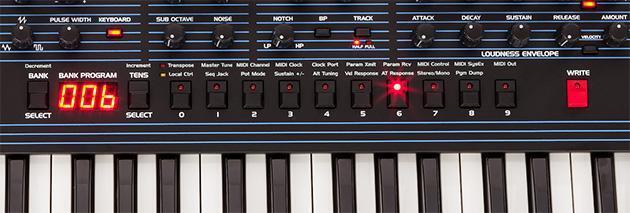
Now’s the time for multiplication — from your starting template, select a different oscillator, but change nothing else. Save that as a new sound. Change the oscillator again, and save it again — do this as many times as you need to in order to have a preset for each oscillator waveshape your synth offers. Once you’ve done this, go back to your original template patch, and tweak the envelope times for use as a pad sound — longer attack and release times plus sustain. Now repeat the process. The idea is to change one fundamental thing about your base patch in each new version.
The goal is to quickly fill up your synth’s user presets with a wide range of starting points with a minimal amount of work. These won’t sound like finished patches with fine-tuned filters and modulations — you’ll use these as starting points to add all that later, and save again as a finished patch. This process rewards you with a wide range of different timbres and response curves to start from. If you’ve ever initialized a synthesizer, only to be left with 128 patches of raw saw wave, you can see why it’s worth a few minutes to build up dozens of your own presets in this fashion.
Synthesis with intent
We hope you found some useful creative tidbits in this article or that you’ve made your own rewarding discoveries while trying out the ideas above. Creative results can certainly be born from random methods, but it’s worth exercising goal-oriented synthesis sometimes too. Have fun, and to learn more about creating your own synth sounds from scratch, check out this article by Sweetwater’s Daniel Fisher.