

The new Apollo X audio interfaces from Universal Audio are a huge step up from their predecessors. Whether you’ve been on the fence about getting your first Apollo or are an existing user looking to upgrade, you’ll have plenty to get excited about. When compared to earlier Apollos, these new interfaces boast more DSP, higher plug-in counts, upgraded AD/DA converters, native surround compatibility, and more. All models employ Thunderbolt 3 technology, ensuring near-zero latency, UA’s Realtime Analog Classics Plus plug-in bundle, and sleek rackmount enclosures. Apollo X interfaces work with both Mac and PC and are backward-compatible with any Mac with a Thunderbolt port.
The most obvious new feature in these new interfaces is the increased processing power. The SHARC chips in previous Apollos were powerful, but newer, processor-intensive plug-ins required a lot of their resources. The Apollo X series takes this into account, employing UA’s new 6-core HEXA Core processor, which yields 50% more power than previous Apollos. This supplies you with significantly higher plug-in counts, especially if you network multiple units together. More so than ever before, Apollo X users will be able to instantiate a massive number of exclusive UAD-powered plug-ins from SSL, Neve, Studer, Manley, API, Ampex, Lexicon, Fender, and more.
Processing power isn’t the only big change under the Apollo X’s hood. UA’s upgraded elite-class AD/DA conversion rivals any high-end standalone converter out there. These aren’t just any off-the-shelf converters, either. The engineers at Universal Audio auditioned the best AD/DA tech for these interfaces — they wanted the absolute best that modern technology had to offer. They then paired these elite-class 24-bit/192kHz converters with retooled analog circuitry to get the best sound possible.
Apollo X series interfaces are loaded with a multitude of new features that are aimed squarely at pro users. Surround monitoring support, complete with speaker calibration and fold-down, is a boon for engineers working on audio and music for video games, film, television, and the web. Interfacing with your analog console or other high-end analog gear is a breeze, thanks to selectable +20/+24dBu operation. You also get integrated talkback for easy communication and slating takes. With pro-level features like these, putting an Apollo X interface at the center of your studio is sure to turbocharge your workflow.
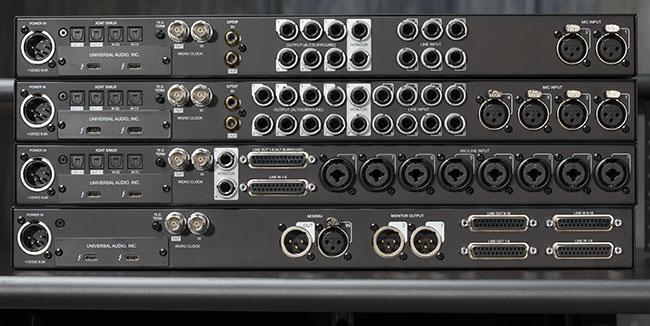
The Apollo X series operates using blazing-fast Thunderbolt 3 technology, which delivers speeds up to 40 Gbit/s. Translation: no more problems with latency! Each interface includes two Thunderbolt 3 ports, allowing you to network up to four Apollos (and six total UAD-2 devices). This combination will infuse your studio with unprecedented levels of fast, high-bandwidth I/O and DSP. Best of all, Apollo X interfaces are backward-compatible with Thunderbolt 1- and 2-equipped Macs, although you’ll need a Thunderbolt 3 to Thunderbolt adapter (sold separately).
Like its predecessors, the latest iteration of this interface uses Universal Audio’s acclaimed Unison technology, injecting the Apollo X series interfaces with the sound of legendary studio preamps. These aren’t mere digital emulations — this technology actually adjusts the preamp circuit itself, shifting its impedance, analog gain structure, and more, thereby duplicating the sound and interactive behavior of the original hardware. You also get UA’s Realtime Analog Classics Plus plug-in bundle, which gives you a terrific arsenal of modeled analog gear to get you started.
Universal Audio’s Apollo X interfaces are available in four configurations: the x6 (16 x 22, two preamps), x8 (18 x 24, four preamps), x8p (18 x22, eight preamps), and x16 (18 x 20, no preamps). If you have any questions about the Apollo X series and which model is best for you, give your Sales Engineer a call at (800) 222-4700. They’ll be happy to help you out.