

When the new Gibson SG landed in music stores in 1960, its two mischievous beveled horns quickly became an icon of the burgeoning rock movement. The SG filled a gap in Gibson’s electric guitar line and responded to trends at the time. Gibson’s first electric, the Les Paul, was well made but hefty and expensive. At the time, players favored lighter-weight, cheaper electric guitars, so Gibson chose to try something along those lines.
In the beginning, Gibson used the SG to replace the Les Paul, and the earliest SGs even said “Les Paul” on the headstock. But, ultimately, Gibson realized these guitars appealed to different players just like two sides of the same coin. The SG retained the Les Paul’s defining features — a powerful mahogany body paired with muscular humbucking pickups — while addressing common complaints aimed at the Les Paul with the SG’s carefully contoured body and significantly lighter weight that made it a hit with players of all types.
Countless players flirt with the SG, but we’ll focus on some who’ve shown long-term dedication to this guitar. Their styles range from blues to metal, punk, country, indie, and more; all the while, they showcase the versatility of this famed Gibson creation.
- Angus Young
- Tony Iommi
- Pete Townshend
- Thom Yorke
- Daron Malakian
- Sister Rosetta Tharpe
- Jeff Tweedy
- Drive-By Truckers
- Ian MacKaye
- Carrie Brownstein
- Jordan Shih
- Dewey Finn
- Brian Molko
Angus Young – AC/DC
It’s no secret — the SG has become a de facto symbol of hard and classic rock! It helps that the SG’s striking figure has always been incredibly photogenic, but no guitar becomes a hard-rock stalwart without talented players pulling the literal strings. AC/DC’s Angus Young was one of the first players to cement the SG’s hard-rock reputation with classic ’70s albums like High Voltage and Highway to Hell. Young purchased his first SG shortly after high school and stayed with it after falling in love with the SG’s slim neck, stage-friendly weight, and dramatic looks. Each part of the SG is well suited to Young’s expressive stage antics, and he’s stuck with this guitar for decades . . . or some version of this guitar at least. By Young’s own account, his wild showmanship works up a sweat. Like a lot of sweat — so much so that his average guitar has serious water damage after only a few years of play. But that shouldn’t be a problem for you unless you’re hoping to join AC/DC soon.

Tony Iommi – Black Sabbath
It’s hardly a surprise that Black Sabbath’s left-handed riff maestro Tony Iommi favors the slightly devilish Gibson SG. As far back as 1969, Black Sabbath was one of the first bands to tune down and mangle blues rock into heavy metal, and their power source was Tony Iommi’s SG. Iommi did things with a Gibson SG that an SG was never intended to do. The SG has shown itself up to the task and has gone on to become a staple of sludge and doom bands inspired by Sabbath and their peers. Iommi favors the SG Special outfitted with P-90 pickups instead of humbuckers. These hot, soapbar-size single-coils work great for vintage-tinged hard rock, and they’ve got more midrange than a standard single-coil pickup, which helps Iommi’s nasty, mucky riffage jump out of the mix. Iommi’s affinity for this guitar also speaks volumes about the SG’s comfort. At age 17, Iommi suffered a serious hand injury while working in a factory that cost him two fingertips on his fretting hand. The accident greatly affected his ability to play guitar at first, and Iommi’s work in the wake of this tragedy speaks volumes about the comfortable playability of the guitar he turned to in the aftermath. Check out his signature Gibson, available as a right- or left-handed model, available here at Sweetwater.

Pete Townshend – The Who
Pete Townshend of The Who put the Gibson SG front and center at several influential rock festivals including Woodstock (1969), Isle of Wight (1969 and ’70), and Leeds (1970). Like Tony Iommi, Townshend was particularly fond of the SG Special. From power chords that stunk of proto-punk to hip bluesy riffage, the SG Special’s two P-90 pickups did it all in style. Much like Angus Young, Townshend owned dozens of SGs throughout the height of The Who’s fame. It’s not that the SGs kept breaking but that Pete kept breaking the SGs as part of The Who’s famous instrument-smashing finales. Eventually, the supply of the late-’60s SG Special that Pete preferred dried up (perhaps because a certain rock star kept breaking them onstage each night), and Townshend has since moved on to different guitars. Still, The Who’s greatest shows and most iconic work will always be remembered alongside the Gibson SG.

Thom Yorke – Radiohead, Atoms for Peace
When you’re the Radiohead front man, you collect lots of guitars. And, while Thom Yorke does just that, he’s also a steady repeat customer of the Gibson SG, especially when choosing instruments for his live and touring rig. Thom’s been seen playing an SG as far back as Radiohead’s early Pablo Honey days, and it’s a guitar he still busts out when the situation demands. What makes the SG work for Thom? For one, its light weight, making it perfect for the band’s hours-long performances at major festivals. But there’s also the SG’s neck and fingerboard, which work well for the intricate Thom Yorke fingerpicking essential to many Radiohead songs. But that’s not to undersell Thom’s SG, which packs a walloping punch and can get fierce during the band’s riff-driven tracks like “Bodysnatchers.”

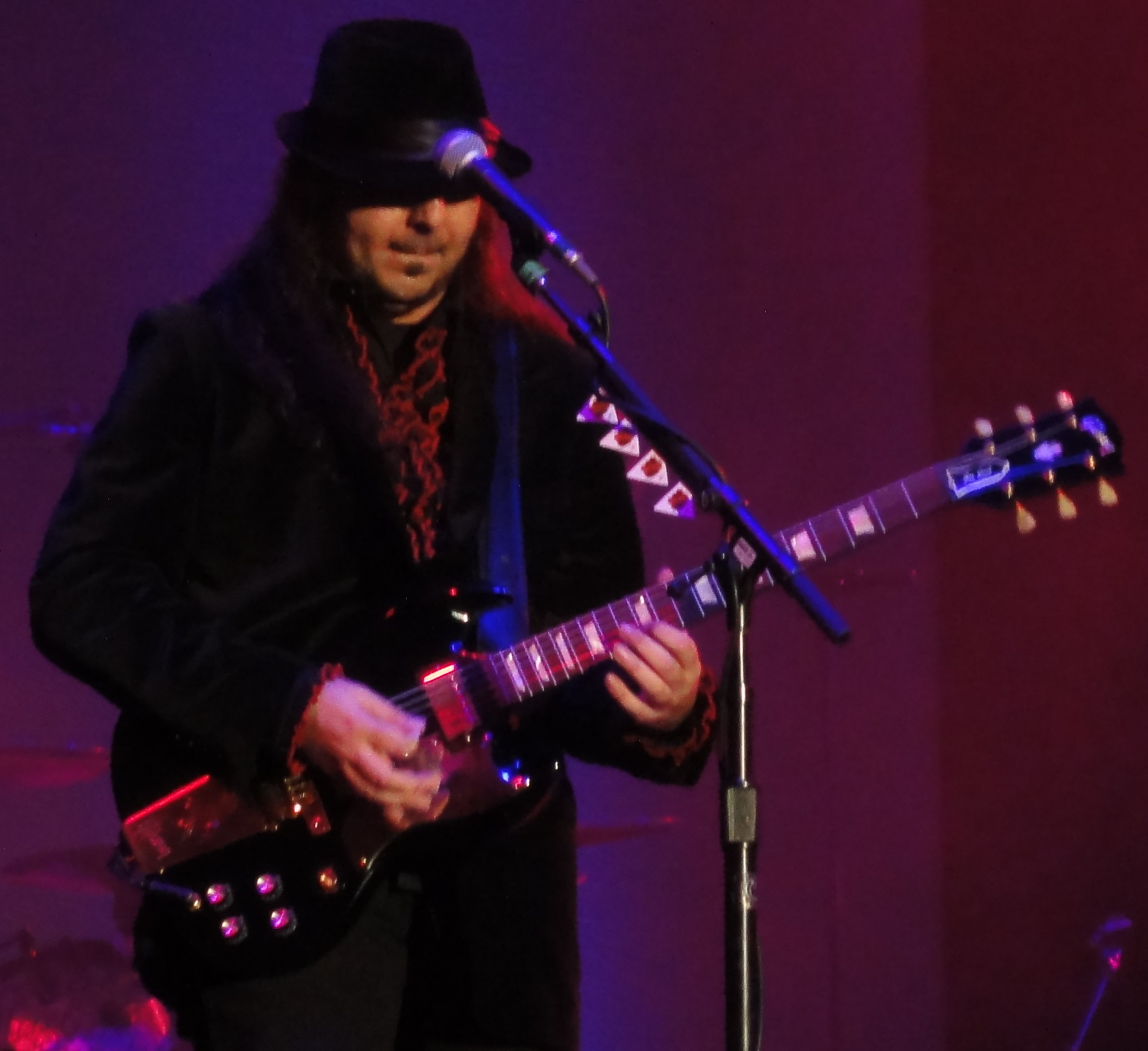
Daron Malakian – System of a Down, Scars on Broadway
Few bands throw us back to the early 2000s quite like System of a Down. This Los Angeles band expertly gave nu metal some much-needed pep and operatic scope with their politically charged lyrics and influences gleaned from outside the usual metal canon (all of the band are first- or second-generation Armenian immigrants). While front man Serj occasionally picks up a guitar, System of a Down most often works as a one-guitar band with Daron Malakian handling most of the rhythm and lead work with his Gibson SG. The SG’s action is low, buttery, and well suited for SOAD’s drop tunings and dramatic song structures (the SG’s mahogany body doles out plenty of sustain and gut-punching heft). Take a close listen to a song like “Aerials,” and you’ll notice how Malakian seamlessly hops between low distorted chugs and the song’s considerably softer main riff. The SG’s shapely neck profile delivers stellar performance across both these styles and is essential to SOAD’s fun and heavy alt-metal anthems.
Sister Rosetta Tharpe
There’s hardly a more real deal than Sister Rosetta Tharpe. Born in 1915 to field hands in Arkansas, Tharpe soaked up 19th-century influences from her parents but reinterpreted them for the age of radios and electric guitars. Musically, Sister Rosetta Tharpe favored gospel and pop, but, unlike a staunch traditionalist, she was open to newfangled creations like the Gibson SG. Her midcentury work became a source of inspiration for countless future rock stars, including Johnny Cash, Little Richard, Chuck Berry, and Elvis. Tharpe’s career was long and forever evolving, but, once the electric guitar found its way into her hands, she sketched the outline of the contemporary guitar virtuoso by taking her Gibson SG to its limits with her tasteful melodic style that blurred the lines between rhythm and lead. The most iconic portraits of Tharpe show her with a white Gibson SG, a rare early-’60s model with three humbuckers and a stylish folding vibrola. Gibson toyed with several unusual SG styles during this era. If you’re looking for something similar here at Sweetwater, then we offer the Gibson SG Standard ’61 complete with a sideways vibrola that’s retro through and through.

Jeff Tweedy – Wilco, Uncle Tupelo
Wilco is arguably one of the past two decades’ most critically acclaimed and respected guitar acts. The band doesn’t exactly scream hard rock, but — “Heavy Metal Drummer” jokes aside — Jeff Tweedy has favored the Gibson SG for much of Wilco’s career. Tweedy’s SG roots stretch back to his early-’90s stint with Uncle Tupelo, a Midwestern alt-country band that merged speed punk with cowboy chords and country motifs. While it may seem unexpected, Tweedy’s affinity for the SG makes perfect sense when viewed in the full context of his career. The SG’s tone was raw and snarling enough for Uncle Tupelo yet cleaned up nicely when Tweedy started writing Wilco jazz-rock epics like “Impossible Germany.” In both cases, the SG turns Tweedy’s electric tracks into invigorating counterpoints that balance out his dreamier, acoustic numbers. Tweedy owns a classic 1965 SG in Cherry Red and has recently been spotted playing what appears to be a Gibson Custom re-creation of Sister Rosetta Tharpe’s white 3-pickup SG with a sideways vibrola.

Patterson Hood, Mike Cooley, and Jay Gonzalez – Drive-By Truckers
Drive-By Truckers is in good company with Jeff Tweedy. The band rose out of the same ’80s/’90s alt-country scene as Wilco but taps into a beefy Southern hard-rock sound inspired by time in northern Alabama and Georgia. Founding members Patterson Hood and Mike Cooley have long favored the Gibson SG, and so does third guitarist Jay Gonzalez, who joined the band in 2008. The Truckers always have at least one or two Gibson SGs onstage, sometimes even three. The lightweight SG is an excellent pick for the Truckers’ brawny guitar section as a band that plays intensely and often. The neck is especially suited to the unison passages that Hood, Cooley, and Gonzalez tackle in Skynyrd-like fashion with splattered notes, crashing chords, and twisted-metal solos that support the burnt-asphalt lyricism of this critical darling. Even after a quarter century truckin’ across 14 studio albums, they keep sounding like the Truckers, thanks to the Gibson SG, and we wouldn’t have it any other way.
Ian MacKaye – Fugazi, Minor Threat
Punk and hardcore front man Ian MacKaye is renowned for his influential ethics and self-reliant philosophy. From Minor Threat’s foundational impact on straight-edge hardcore to Fugazi’s experimental, angular punk and MacKaye’s hand in pushing the DIY ethos that’s still so prevalent in the little leagues, MacKaye made a big splash, albeit an underground one. MacKaye is also an SG player, most notably during the Fugazi years. And, though he’d probably loathe a big corporate boogeyman like us giving him a shout — well, sorry Ian, some of your fans here at Sweetwater are trying to quit dumpster diving and pay the rent on time. It was you, sir, who made the corporate-made Gibson SG part of Fugazi’s totally immune, totally noncorporate sound! Jokes aside, the SG works well for MacKaye’s style in Fugazi. Here he makes the SG sound jangly, slinky, and devious like schemes and dreams or maybe like a cat skulking through a dark alley on a moonless night.

Carrie Brownstein – Sleater-Kinney, Portlandia
Though she’s probably more famous for her acting work on the Emmy-winning TV series Portlandia, Carrie Brownstein was an accomplished musician before becoming a big-screen writer and actor. Brownstein was essential to the Pacific Northwest riot grrrl scene in the 1990s that merged feminism with punk rock and fought back against the toxic machismo so prevalent in many corners of rock ‘n’ roll. Brownstein first found success with Sleater-Kinney, a slinky ’90s punk act not entirely unlike Fugazi but with its own distinct sound. For most of Sleater-Kinney’s early career, Brownstein faithfully played an SG. “I like a guitar that has a little bit of a growliness to it and one that feels like the harder you play, it will react,” she says. She finds the SG “a little masculine” but also “not as masculine” as its bulkier, pricier cousin, the Les Paul. Brownstein gets a few bonus points from us for recording most of Sleater-Kinney’s notable work on an Epiphone SG, not a Gibson — proof that great music only requires passion and purpose behind the work.


.jpg)

Jordan Shih – SALES
There’s no such thing as bad press, right? That’s the attitude the Orlando-based lo-fi duo SALES took earlier this year when their 2016 song “Pope Is a Rockstar” swept across TikTok. In the trend, users paired clips of their friends, family, or loved ones doing little things that made them proud with the SALES song, but it turns out listeners misheard the lyrics as “go little rockstar!” when “Pope Is a Rockstar” is what the band had written down. But the band is just fine with the mix-up, and, fortunately, SALES is more than a one-hit wonder. Their music reminds me of sleepy summer afternoons, a gentle thunderstorm, and wanting to take a nap (in a good way); it’s a lo-fi, dreamy brand of guitar pop that is timeless yet utterly contemporary and a breath of fresh air. SALES’ guitarist Jordan Shih favors a Gibson SG, and it fits his intricate picking and chordal riffs like a glove. Shih’s work proves that, despite this guitar’s edgy looks and hard-rock reputation, the SG can make laid-back, relaxed music with buckets of style and grace.
Dewey Finn (The Teacher Formerly Known As Mr. S.) – School of Rock
When it comes to rock films, School of Rock, starring Jack Black, riffs on our heartstrings in all the right ways. Black plays a down and desperate musician named Dewey Finn who scores a teaching gig at an elite prep school. But Dewey’s not a teacher; he’s a musician. So, to get the job, he poses as his clean-cut roommate, Ned Schneebly. But Dewey just can’t quit chasing music and ultimately turns his teaching gig into a rock gig, showing 4th graders the fundamentals of being in a band — not just notes and chords but also how to play hooky and scheme their way to the top. Dewey Finn’s Gibson SG is an essential accessory to the movie’s look and vibe. This Cherry Red SG captures the rock ‘n’ roll ethos in a single attitude-packed six-string, and School of Rock just wouldn’t be the same without it. There are lots of laughs and lessons learned along the way as the all-star cast jams to a star-studded soundtrack, learns self-confidence, and uses their newfound talents for personal fulfillment instead of for the sake of “the man.”

Brian Molko – Placebo
These inheritors of glam rock boldly wear their inspiration on their sleeves with cues borrowed from the Cure, Smashing Pumpkins, and Nirvana with a heroic dose of androgyny à la David Bowie. (Bowie was even featured on the title track of the band’s 1998 album, Without You I’m Nothing). That’s not to say they aren’t original. Placebo’s distinctly European take on guitar-driven alt rock sounds like walking out of a discotheque at 4AM on a weeknight covered in sweat, but in a good way, with tons of synths, drum machines, and glitchy digital textures adding pizzazz and fanfare that stand out. Placebo front man Brian Molko often favors the Gibson SG, and, despite performing as a three-piece for most of their career, the band sounds melodically huge in this setup. Molko often uses the SG’s bridge pickup for an aggressive but brittle sound that leaves plenty of room for the band’s driving rhythm section and dance-worthy beats.

The Verdict Is In
While this article covers some of our favorite SG devotees, the decades-long influence of this guitar is more intertwined with rock history than words will ever capture. If you’d like to get an SG of your own (or if you want to argue with us about the article’s lack of Frank Zappa or Robby Krieger), then make sure to give your Sweetwater Sales Engineer a call at (800) 222-4700!