

What’s the Deal with the Jazzmaster?
Though we may instinctually identify Fender’s Jazzmaster with the heyday of 1960s surf rock, this offset axe was initially designed to take up the gauntlet of the model’s namesake genre: jazz. That might seem odd now, but, by its 1958 NAMM debut, it was the next logical step for Fender, having already established its presence in rock ‘n’ roll, R&B, and country music spaces. Surf rockers’ preference for the Jazzmaster and other offset-body styles proved fruitful for Fender for decades, subverting expectations as artists from New Wave to grunge, alternative rock, indie, and more would find variably innovative and iconic implementations of this versatile instrument. The Jazzmaster would be the first Fender to boast two separate tone circuits. Its unique visual aesthetic, floating vibrato, tremolo-locking system, and heavier assembly created a diverse array of sonic possibilities, allowing it to span multiple genres. Today, we’ll walk through 17 of the Jazzmaster’s most iconic players!
- Thom Yorke (Radiohead, Atoms for Peace, the Smile, Solo)
- Alex Trimble (Two Door Cinema Club)
- Robert Smith (The Cure)
- J Mascis (Dinosaur Jr., J Mascis + The Fog)
- Jim Root (Slipknot)
- Takaakira “Taka” Goto (MONO)
- Neige (Alcest, Amesoeurs)
- Bilinda Butcher and Kevin Shields (My Bloody Valentine)
- Ric Ocasek (the Cars)
- Troy Van Leeuwen (Queens of the Stone Age, Gone Is Gone, Enemy, Sweethead)
- Wendy Melvoin (The Revolution, Wendy & Lisa, Solo)
- Lee Ranaldo and Thurston Moore (Sonic Youth)
- Tom Verlaine (Television)
- Mickey Baker (Solo, Mickey & Sylvia)
- Elvis Costello
Thom Yorke (Radiohead, Atoms for Peace, the Smile, Solo)
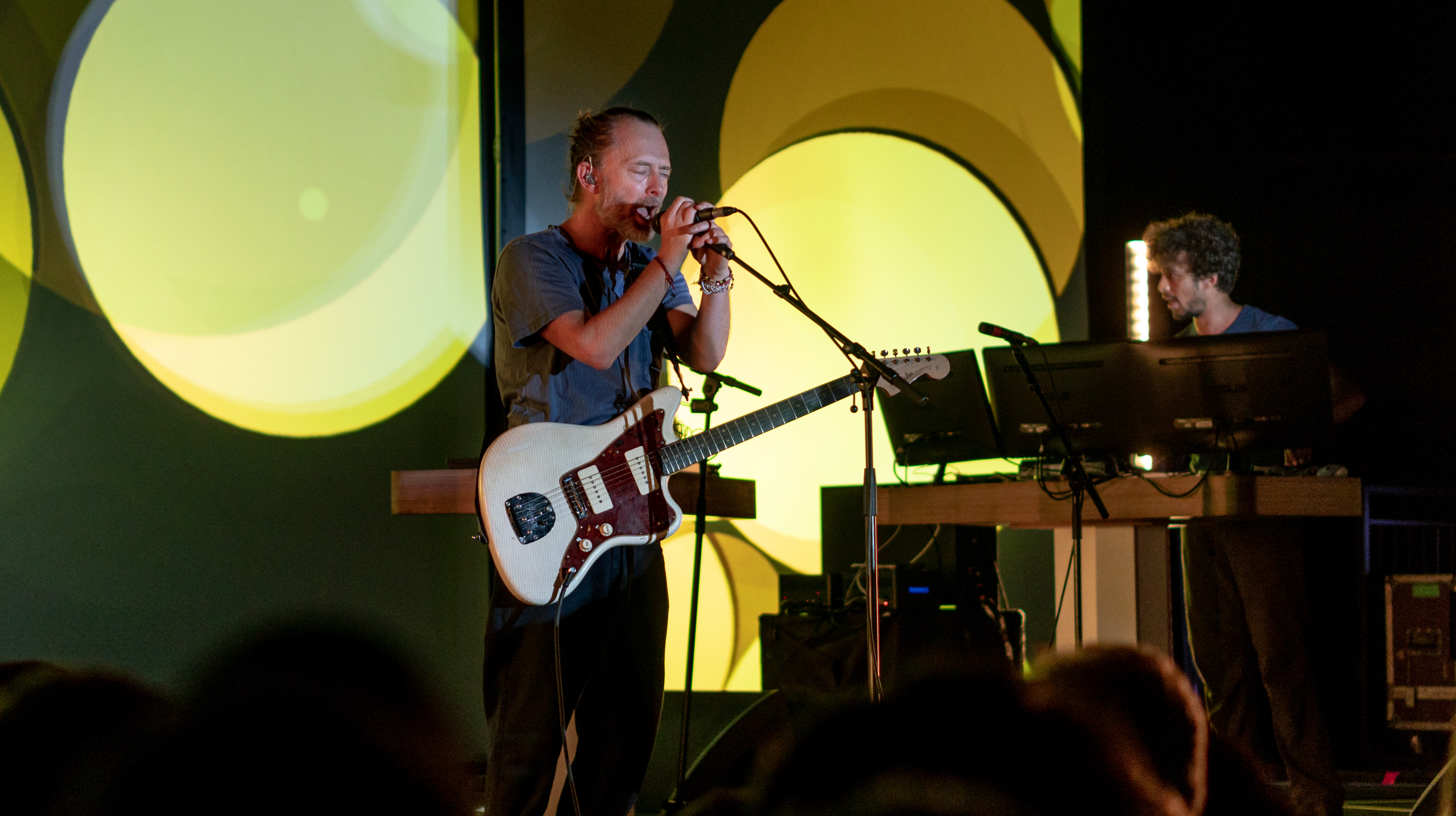
While this list covers many genres, few can claim the eclectic pantheon of artistic output accomplished by Thom Yorke. Debate abounds over Yorke’s work, especially with Radiohead. From their breakout success with Pablo Honey to dabbling in electronic shades on Kid A and Amnesiac, Yorke has proven himself to be an unrelenting force of creative expression, where synthesizers and bass guitars are just as common in his instrumental rotation. Yorke’s solo career leans more heavily into the electronic, rubbing shoulders with indie-electro powerhouse XL Recordings. He formed Atoms for Peace — a live band arrangement for his solo work — in 2009, recruiting longtime Radiohead collaborator Nigel Godrich, Flea of the Red Hot Chili Peppers, Joey Waronker of R.E.M. and Beck, and Mauro Refosco of Forro in the Dark. His creative endeavors don’t stop there, and this multi-instrumentalist isn’t in the Rock & Roll Hall of Fame for nothing.
.jpg)
Yorke is at his most controversial when engaging in being a capital-A “Artist,” drawing the ire of critics and the adoration of die-hard defenders for his audacious voice. Given his self-described inflated ego, ruffling feathers is nothing new. His lyrical criticism of right-wing politics and the War on Terror were inevitably divisive choices, as was his willingness to undermine music industry norms. Far ahead of today’s status quo with digital music, Yorke was in favor of pay-what-you-want downloads and BitTorrent releases, much to the chagrin of his label. Now, if you’re asking yourself what this has to do with the Jazzmaster, then it’s simple: Yorke and this offset classic are “of a kind,” as they say. Both have found success in unlikely places, have disrupted norms at times that were thought to be little more than a novelty, and have continuously found new ways to apply themselves in an ever-changing musical landscape. A Fender man through and through, Yorke has been known to brandish numerous iterations of an Olympic White Jazzmaster. One such model featured heavily in his 2005 solo set for the UK-based web series From the Basement as well as on Radiohead’s 2018 world tour. In the latter, he opted for a hot-rodded variant of a ’64 Jazzmaster that featured a Mustang bridge.
Alex Trimble (Two Door Cinema Club)
If the various subgenres of punk exist downstream from the surf-rock source, then Northern Ireland trio Two Door Cinema Club’s post-punk, electro-tinged indie rock is making its way to the ocean. Alex Trimble heads the project, taking on lead vocals and rhythm guitar duties. His musical talents extend to drums, programming all the drum parts for Tourist History, which boasts one of the band’s biggest hits, “What You Know.” The breakout success of the album would lead to a flurry of promotional appearances, festival spots, and world tours, culminating in Alex Trimble being hand selected by filmmaker Danny Boyle to sing “Caliban’s Dream” — penned by Underworld’s Rick Smith — during the 2012 Summer Olympics opening ceremony.
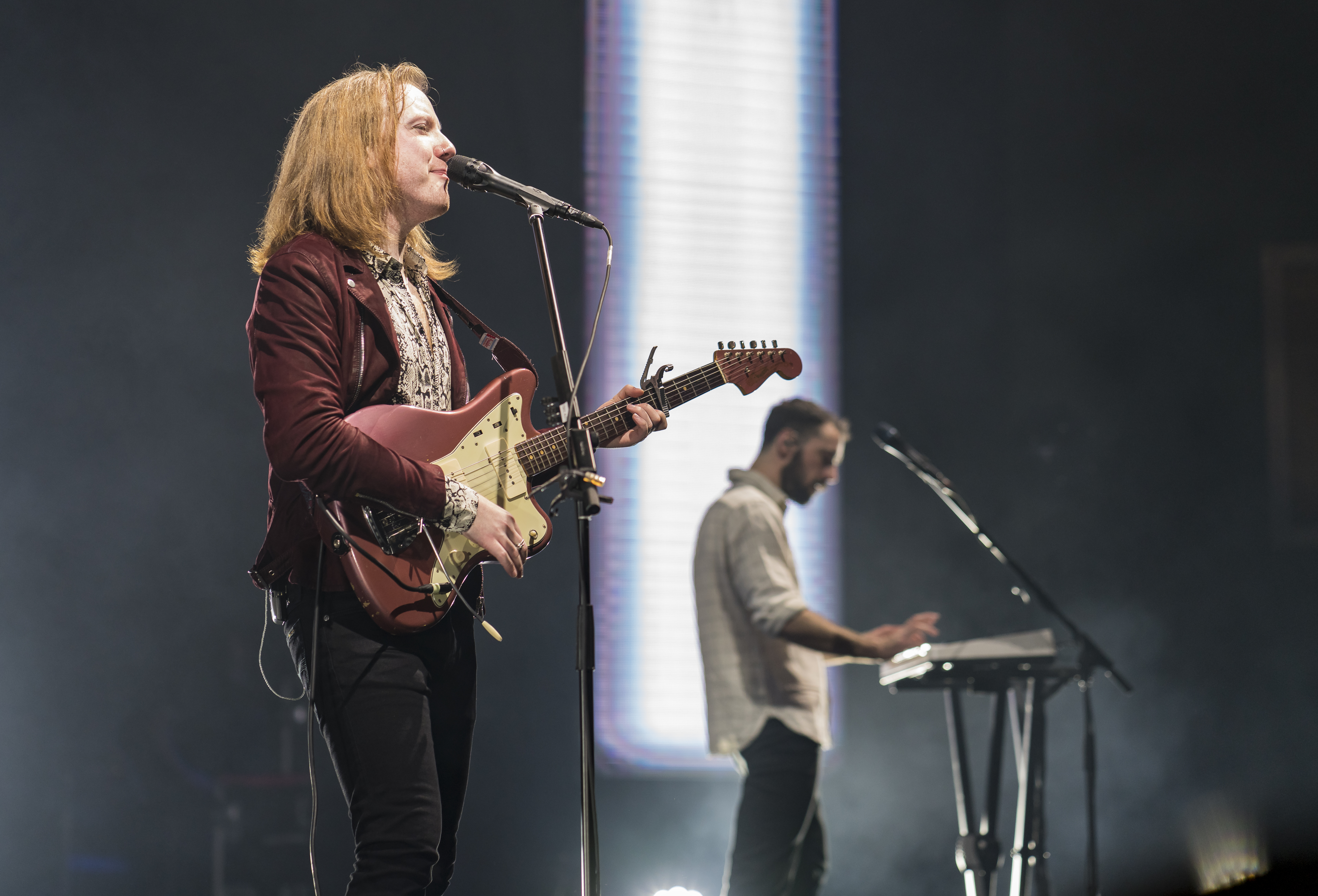

Throughout the ensuing years, Trimble and his trio would continue to evolve their dance-punk aesthetic, blending and reimagining glistening guitars with driving rhythms and a chorus of synths reliably topped with Trimble’s infectious vocals. While it’s far from the only guitar in his rotation, Trimble’s Fender Jazzmaster ’62 Reissue has featured heavily in their live arrangement, being instrumental in bringing their multifaceted studio energy to stages worldwide. Funnily, the dancing days of the Jazzmaster’s surf-rock heritage find a raucous new life among the electric post-punk licks of Two Door Cinema Club, genuinely coming full circle while remaining a multigenre dark horse all the same.
Robert Smith (The Cure)
We all know this list wouldn’t be complete without goth’s patron saint of New Wave, Robert Smith, whose aesthetic consistency throughout the decades has been a gauntlet of attrition but one he proudly endures. The makeup-donning, all-black-wearing artistic engine of The Cure has long made the Fender Jazzmaster his go-to guitar. Smith attributes the inspiration to make this choice to watching Elvis Costello on Top of the Pops performing “I Don’t Want to Go to Chelsea” with a Jazzmaster. Smith would hot rod his own to feature a Woolworth Top 20 pickup (his first electric), transplanting its charismatic tone to the bridge position for The Cure’s debut album, Three Imaginary Boys.
As the band would continue to define themselves with their gothic innovations on the then-burgeoning New Wave scene, Smith became synonymous with the Jazzmaster. His creative force would net the band numerous gold and platinum record certifications on either side of the pond with 1989’s Disintegration going double platinum in the US and 1992’s Wish peaking at number two on the US charts (the highest in their career). Pornography and Faith would heavily use the Jazzmaster with the goth go-to repainting it several times. Outside The Cure, Smith and Steven Severin (known for bass duty with Siouxsie and the Banshees) would form The Glove, exploring various psychedelic and post-punk elements as a reprieve from Smith’s near collapse following the psychologically punishing production of Pornography. Though Smith’s work with The Cure would earn him a 2019 Rock & Roll Hall of Fame induction, he would go on to lend his artistic talents to a laundry list of artists and projects, including Blink-182, Junkie XL, Smashing Pumpkins, Tim Burton’s Alice in Wonderland, and so much more. Smith’s illustrious, diverse career is surely evidence of the Jazzmaster’s versatility, holding its own with anything you can throw at it.
J Mascis (Dinosaur Jr., J Mascis + The Fog)
Many recognize J Mascis as one the premier purveyors of feedback and fuzz, brandishing the Jazzmaster with heavy regularity throughout his decades-long career. The co-founder of Dinosaur Jr. (née Dinosaur before a legal dispute) is one of the guitar’s most notable shepherds into the world of heavy music. The Jazzmaster is so interwoven with the DNA of the noise-rock trio’s aural aesthetic that it was the proving ground for J to hone his first chops. The comically dubbed “Vermont Trailer Park” Jazzmaster was an original ’58 model, serving as the building blocks for his own signature guitar. Like its distant relative, the J Mascis Squier Signature Jazzmaster sports a vintage white finish and is adorned with glistening gold hardware and pickups modified by Mascis himself.


Though it may seem to push the outer boundaries of where Leo Fender could have envisioned the guitar being used, the Jazzmaster’s continued ability to subvert expectations makes it a formidable choice for someone like Mascis. It can be easy to glean the gritty distortion and searing noise of Dinosaur Jr.’s catalog and write off the Jazzmaster as a purely aesthetic choice — that Mascis is just performing with the guitar. There may be some truth to the notion that its visual appeal stands on its own, but this chimera — physically, tonally, stylistically, and historically — has demonstrated a genre-defying resilience that we can hear J Mascis endlessly capitalizing on, pulling influences from funk and pop sensibilities that may feel traditionally closer to the Jazzmaster’s aesthetic position.
Jim Root (Slipknot)
Slipknot has managed to traverse an almost-inconceivable arc. Their early Iowa days would have best depicted them as a nightmare circus of death metal, turntables, and prison-break clowns. Today, the globe-trotting rockers have become a household name. Their enduring career has earned them a namesake music festival, headlining alongside a robust array of acts who span enough time to cite the band as a significant inspiration. Truly, this is a testament to their perseverance. Fellow Des Moines heavy-metal compatriot Jim Root was recruited in 1999, following his time at the helm of Atomic Opera, one of the area’s heaviest hitters in their day. Root would contribute to Slipknot’s breakout self-titled album in the wake of the band securing a seven-record deal with Roadrunner Records the year prior. After helping to pen such tracks as “Purity” and “Me Inside” on their debut, Root — now designated as #4 within the band — would become one of the band’s primary writers, handling an array of compositional duties.


Root’s predilection for Fenders can be spotted throughout his discography, including his initial contact with the band via lead singer Corey Taylor’s Stone Sour project when Root was handling rhythm and lead guitar. While enjoying an assortment of axes, this ultimately led to a signature Jazzmaster from Fender: a streamlined, heavy-metal variant that strips back the embellishments, comes loaded with EMGs for high-heat tone, and ditches the tremolo for a hardtail bridge. It might not seem like a crazy aesthetic decision, but looking at his signature model alongside the conventional Jazzmaster design shows how much form and function interrelate, hearkening to the guitar’s diverse, illustrious history.
Takaakira “Taka” Goto (MONO)
Known by his mononym, “Taka,” Takaakira Goto is the multi-instrumentalist leading composer and guitarist for MONO, an instrumental ensemble whose collective aural aesthetic is as heterogeneous as the neon assemblage of the Tokyo cityscape from which the band was born. If calling them “instrumental rock” feels too generic, then perhaps “art rock” or “post-rock” more succinctly articulates their massive scope of influences and releases from wall-of-noise prog-rock clash to deeply intimate choral arrangements that lack any discernable lyrics. Like his namesake’s translation, Taka has run a gauntlet of endurance, taking MONO around the world for 150+ shows per year and hitting over 59 countries throughout an unimpeded 20-year career.


As the composer/leader of the four-piece post-rock outfit, Taka pulls equally from classical, avant-rock, and shoegaze/dream-pop sensibilities to erect a sonic fortress that brims with ineffable aggression, concealing a profound, unspeakable sadness. Enough to bring fans to tears, its transcendental nature even led to an NME journalist dubbing it to be the music of the gods. Contrary to the implication of the band’s broad musical reach, Taka has traversed much of this musical landscape with one critical tool: a 1966 Fender Jazzmaster. Purchased in 1993 from Shinjuku’s Hyper Guitars, this model was — as Taka tells it — manufactured for only one year, as indicated by the neck binding. Looking every bit its age, worn edges and electrical tape encase this workhorse with such character that no relic job could hope to reproduce it with any authenticity. In 2018, Taka gave MusicRadar a rig rundown, informing them that “all of MONO’s studio albums were recorded with the main guitar alone,”* referring to his time-tested Jazzmaster.
* https://www.musicradar.com/news/rig-tour-monos-takaakira-taka-goto
Neige (Alcest, Amesoeurs)
Stéphane Paut — better known by his mononym, Neige — hails from France’s Bagnols-sur-Cèze. Neige is often credited as one of the forefathers of the shoegaze/post-rock/black metal/post-metal intersection that has more recently (and conveniently) fallen under the moniker blackgaze. Songwriter, singer, multi-instrumentalist, and record producer, this multi-hyphenate guitarist initially rose to prominence as part of the French black-metal group Peste Noire, alternating between drum and live rhythm guitar duties. Neige would go on to found the now-defunct project Amesoeurs, overlapping with taking up the mantle as the once-solo project (now a duo) Alcest.


If you’re unfamiliar with the genre, then blackgaze is a nuanced blend of the lush, dreamlike soundscapes of shoegaze with the technicality and dark aggression of black metal. In reviewing Le Secret — Alcest’s 2005 EP — Stereogum’s Michael Nelson penned his description of blackgaze with this record as sounding “like a Cocteau Twins/Burzum collaborative split.” For Neige, in particular, a notion of spirituality has underpinned his writing, using little more than a guitar, his phone, and (eventually) Logic to create demos. A true seeker of the ur-creative spark, Fender guitars have regularly adorned his arsenal with various Jazzmaster models instrumental to his process in the studio and on the stage.
Bilinda Butcher and Kevin Shields (My Bloody Valentine)
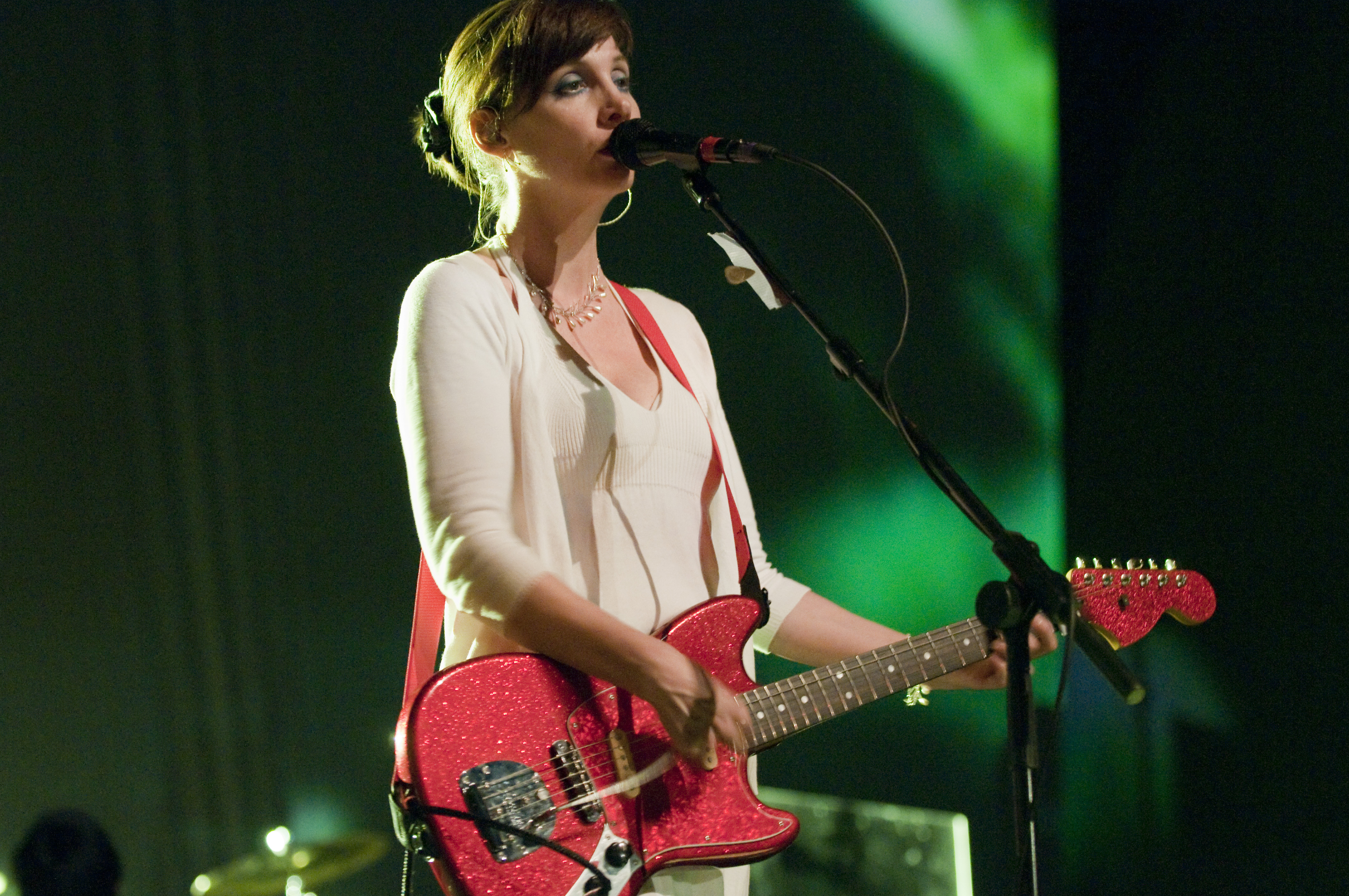
Few artists can boast such a widely recognized and critically acclaimed musical oeuvre despite releasing only two full-length albums and a slew of EPs throughout such a short initial career. While technically beginning in 1983, the band’s signing to Creation Records in 1988 would crystallize the lineup known to many fans. This would mark the beginning of a nine-year stretch that would see the release of two major studio albums, including 1991’s Loveless, often considered the band’s magnum opus. By ’95, the lineup would begin to dissolve again, leading to the total dissolution of the band in 1997 with founding member Kevin Shields “[going] crazy” after failing to pen a worthy successor to the ’91 career-defining release.

.jpg)
Shields and vocalist/fellow guitarist Bilinda Butcher were instrumental in crafting the post-rock noise pastiche whose androgynous, effects-heavy sound would define their shoegaze-soundscape aesthetic. Noise “interludes” were a mainstay of live performances — serving as a raw distillation of the band’s transcendental, distorted ethos — known to last upward of 30 minutes, clocking as much as 130dB. Used by both Butcher and Shields, the Jazzmaster would prove an integral tool in constructing the dream-noise force of sound that would define their aural aesthetic. Shields even invented a playstyle to achieve this output referred to as “glide guitar.” With an extended vibrato bar in hand, he would continuously and rhythmically waver the pitch, with the guitar signal running through a reversed reverb effect (usually digital).
This would undoubtedly influence the proliferation of Jazzmaster adopters among unlikely and experimental musicians where discussions of texture and sound spaces take precedent over notation and lyrics, the latter of which were often penned by Butcher and self-admittedly “nonsense.” The band’s 2007 reunion has led to multiple tours and the long-awaited release of their third studio album, m b v (2013). Throughout it all, Jazzmasters have been the reliable tool for building the unmistakably gaze-y sound of My Bloody Valentine and all they’ve inspired.

Ric Ocasek (the Cars)
What can be said about the Cars that hasn’t already been said? As early as the 1980s, music journalists were singing the praises of the band’s carefully curated sound and their unique ability to meld a range of genres into a cohesive project. Influences spanned power pop and rockabilly to minimalist punk and art-rock synthesizers. For founding member and rhythm guitarist/occasional vocalist Ric Ocasek, this thoughtful, intricate confluence of styles extended well beyond the diversity of his catalog with the Cars. A seasoned record producer, Ocasek lent his versatile ear to an assorted array of projects. Bands like Bad Brains, Guided by Voices, Suicide, No Doubt, Bad Religion, Motion City Soundtrack, and so many more were lent his studio touch. His most profound relationship seemed to be with the band Weezer, working on several entries in their discography, two of which even went multiplatinum.
The late multi-hyphenate regularly employed numerous variations of Fender’s Jazzmaster to do his sonic bidding. In a 1982 interview with Ocasek in the now-defunct Musician magazine, he indicated his then-favorite guitar was a 1974 Jazzmaster, which he had painted pink to match the instruments of his compatriots. The same guitar was used throughout 1981’s Shake It Up, and Ocasek elaborated that he “uses it on every record.” How long that trend continued is difficult to say, but the iconic pink purveyor of tones was kept in regular rotation until his unfortunate passing in 2019, shortly after his last live show: the induction of the Cars into the Rock & Roll Hall of Fame. Like many artists who keep the Jazzmaster in their arsenal, Ocasek’s illustrious career moved with the larger tides of culture, untethered by the conventional limits of genres. His work allowed him to traverse a constellation of styles, reimagining them through the prism of the many sounds and ideas he’d picked up throughout the years.
Troy Van Leeuwen (Queens of the Stone Age, Gone Is Gone, Enemy, Sweethead)
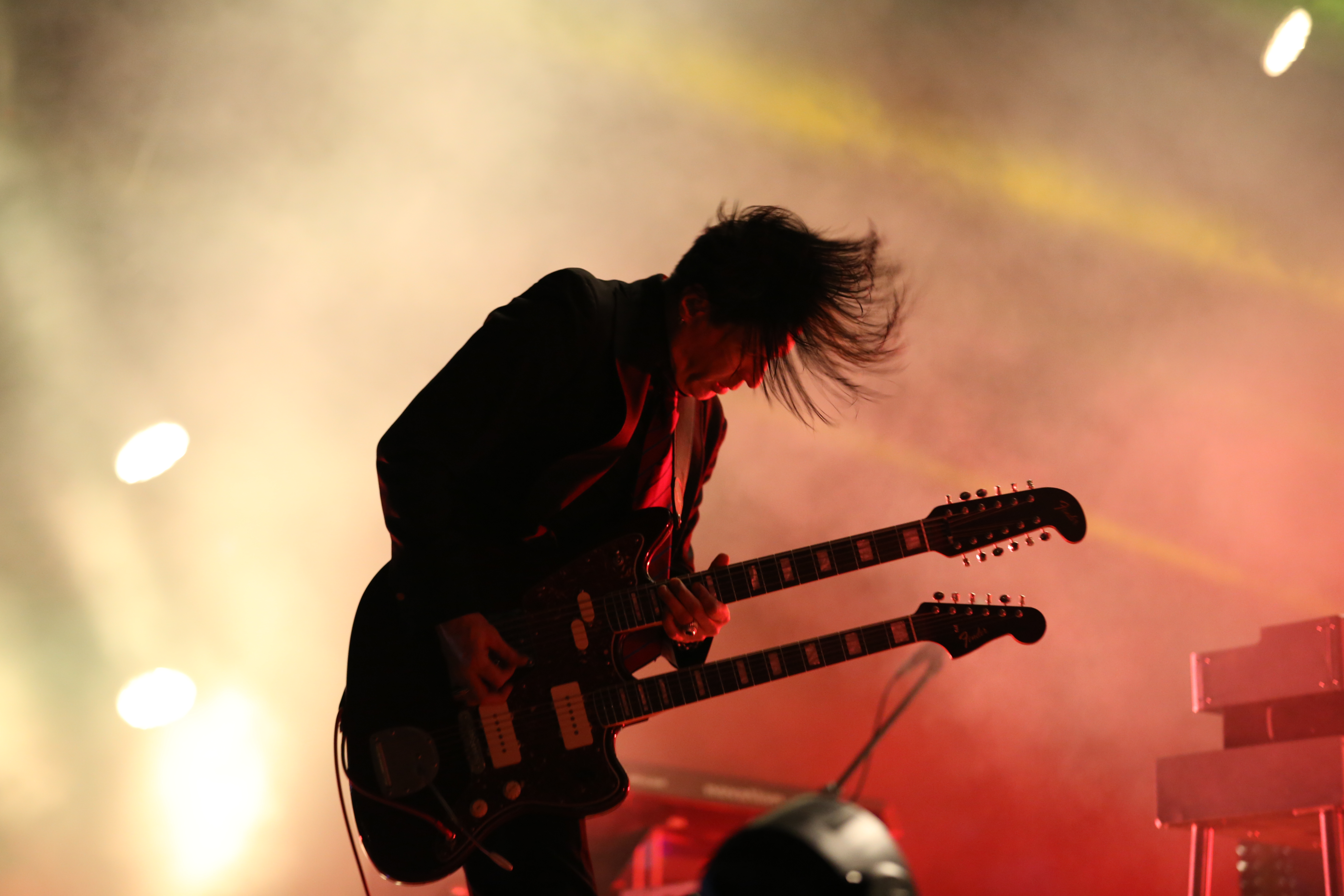
Before he was penning tracks for desert-rock outfit Queens of the Stone Age [QotSA], multi-instrumentalist Troy Van Leeuwen had built a reputation as a reliable rocker. As a session artist or an engineer, Van Leeuwen’s credits already included Crazy Town, Coal Chamber, Orgy, and Korn. In 1999, Van Leeuwen was offered the guitarist slot in Tool front man Maynard James Keenan’s alt-metal/art-rock project A Perfect Circle, where he contributed to their first two albums — Mer de Noms (1999) and Thirteenth Step (2003). At the time of writing, A Perfect Circle’s debut album is still the highest-ever debut for a new rock band, which inevitably led to extensive touring, including landing an opening spot with Nine Inch Nails. Before all this, Van Leeuwen spent time in the LA-based ’90s band Failure, where he would first meet Josh Homme, longtime collaborator and founder of QotSA.
.JPG)
Beginning his tenure on the band’s Songs for the Deaf tour, Van Leeuwen would write, record, and perform for all their subsequent releases, beginning with 2005’s Lullabies to Paralyze. Outside of QotSA, Van Leeuwen has lent his talents to a number of projects, one of the most notable being Gone Is Gone. The supergroup put him in the company of Troy Sanders (Mastodon), Tony Hajjar (At the Drive-In), and multi-instrumentalist Mike Zarin. Other side projects include Sweethead and Enemy, the latter of which includes former bandmate Kelli Scott, the once and current drummer of Failure. At present, Van Leeuwen’s expanded oeuvre ranges from Eagles of Death Metal to Chelsea Wolfe and Iggy Pop. His illustrious, multifaceted career wouldn’t have been possible for an artist less attuned to their musical reach, appetite, and capacity, someone who knows what they want from their artistic odyssey and how to sense the changing winds. Such a nomadic approach to music makes the Jazzmaster a natural extension of Van Leeuwen’s musical menagerie, even netting him a signature model with Fender. The design hearkens back to the iconic guitar’s colorful history with a masterful collage of iconic detailing and personal panache — a fitting choice for an artist with such a robust repertoire.
Wendy Melvoin (The Revolution, Wendy & Lisa, Solo)
You could argue that, at the height of The Revolution — of a particularly purple variety — none were artistically closer to Prince than composer, bandmate, and songwriter Wendy Melvoin. She and partner Lisa Coleman were integral to developing and elaborating on the Minneapolis sound that Prince and area interlocutors pioneered. Melvoin had found herself in Prince’s orbit shortly after Coleman became a part of the band for the performance and promotion period surrounding the 1980 release, Dirty Mind. Once Melvoin came into the fold to provide backup vocals on 1999, she and Coleman would become a critical force in Prince’s artistic output, driving The Revolution until its official disbanding in 1986.
Despite once being instrumental to the architecture of the era most integral to Prince’s stratospheric stardom, Melvoin persevered. She and partner Lisa Coleman would release multiple Wendy & Lisa albums, including a brief re-encounter with Prince for 2004’s Planet Earth. The duo would deliver mountains of session writing and scoring, contributing to artists such as Seal, Grace Jones, Gwen Stefani, Madonna, André Cymone, Mac Miller, and more as well as 1995’s Dangerous Minds and several TV shows. With such a versatile output, it’s understandable that Melvoin would need an equally diverse roster. She knows where to anchor her sound, sitting well with the multidisciplinary vectors of the vaunted Minneapolis sound, telling Guitar.com, “I prefer using a Tele or a Jazzmaster. A Gibson 335 or a Gretsch. I like guitars that can create a mid-tone kind of funk and have a thud.”
Lee Ranaldo and Thurston Moore (Sonic Youth)
Co-founding the experimental/indie-rock band Sonic Youth with Kim Gordon, guitarists Thurston Moore and Lee Ranaldo were integral in establishing the band as a bona fide force of influence for the burgeoning scenes of noise rock, alternative, and indie music. Lee Ranaldo would join Sonic Youth after a chance encounter at New York City’s June 1981 Noise Fest, where he performed as a member of Glenn Branca’s post-minimalist guitar ensemble, courted by a very impressed Thurston Moore. The band would experience several lineup changes, taking many stylistic detours as they evolved within and around the various noise-music spaces emerging through the 1980s. Following an undulating career that propelled them to superstardom, Sonic Youth formally dissolved in 2011, closing out a 30-year career of undeniable influence.

.jpg)
Ranaldo and Moore were known for inventive and unorthodox guitar tunings and preparation methods. The pair’s shared affinity for offset Fender guitars would finally be sated after a few gigs with Dinosaur Jr., seeing what J Mascis accomplished with his Jazzmaster. That, combined with the longer scale of the model, turned the Jazzmaster into such a staple that it would net them signature models from Fender. Though heavy modification was a staple of the duo’s sonic output, Ranaldo was known for one particularly heavy mod: the Jazzblaster — the use of Tele Deluxe humbuckers in a Ranaldo Jazzmaster. These guitars were so coveted that a van’s worth of gear was stolen en route to an LA gig in 1999. Observant fans and pawn shop connoisseurs through the years would finally unearth many of these models some 13 years later.

.jpg)
Tom Verlaine (Television)
To the unfamiliar, the musical output of New York City band Television may be an unconventional proposition. As a staple of the scene surrounding hallmark NYC nightclub CBGB, Television blended art-rock and punk sensibilities into what we would later define as variations of proto-punk and New Wave, all thanks to the artistic vision of founder and leader Tom Verlaine. Drawing from both the avant-garde jazz and rock ‘n’ roll scenes of the 1960s, Verlaine’s use of the Jazzmaster would bring the guitar’s use much closer to its intended use than it ever saw in its surf-rock heyday. His work with Television would undoubtedly influence the renewed interest in the jazzy offset seen by the bands he would inspire.
The band would experience a few notable lineup changes, but Verlaine regularly incorporated a Jazzmaster into his sound. Sometimes this was the guitar proper; other times, it involved ripping out parts and electronics to transplant into other instruments. The guitar’s capacity to dance through and around the numerous genres in which it would find a home is illustrated well by Verlaine’s playing style: generous use of slap delay, reverb, flanger, and other effects, often with low levels of distortion as he meandered down expressive avenues of soloing and jamming at a time where neither might have been seen as a “popular” choice in the broader rock atmosphere. It’s hard to imagine a more fitting instrument for a musical auteur like Tom Verlaine than Fender’s iconic, versatile Jazzmaster.
Mickey Baker (Solo, Mickey & Sylvia)
By now, the irony of the Jazzmaster’s birthright should be pretty obvious: For all the use it has found across the decades and genres, it never seemed to be the right choice for the bona fide jazz musicians of the era. Arguably the dark horse of this list, guitarist Mickey Baker is one of the few “proper” jazz and blues artists that regularly featured the Fender Jazzmaster in his musical lexicon. His career was defined mainly by his work as a session artist — working alongside names like Ray Charles, Doc Pomus, Louis Jordan, and more — and as part of the pop duo Mickey & Sylvia. Of the smattering of solo releases, his 1959 debut, The Wildest Guitar, with Atlantic Records featured Mickey rocking a Jazzmaster front and center.
Baker was notoriously private, sharing very little about his personal life through the years. He would move to France in the 1970s, working alongside artists like Ronnie Bird and Chantal Goya. A few solo records would pop up, including work with British record label Big Bear Records, which would include one such work with legendary trombonist Gene Conners. Outside his performances, he was steeped in guitar education. His self-teaching series Complete Course in Jazz Guitar has remained in publication for over 50 years — truly a testament to his talent and capabilities as someone self-taught with the Jazzmaster never leaving his arsenal.
Elvis Costello
He’s been name-dropped by countless adopters of the axe, so what list would be complete without the oversize frames of the genre-bending Elvis Costello? Costello could already be seen brandishing the classic offset when kicking off his career with 1977’s My Aim Is True. An illustrious career would lead to musical flirtations far from his pub rock roots, including post-punk, New Wave, and soul as well as the occasional country efforts, including the 1981 cover album, Almost Blue. Throughout his career, Costello variably earned the ire and admiration of many for his boisterous antics, frequent criticism of record labels and systems of power, and willingness to transcend genre limitations.

.jpg)
Throughout his diverse career, Costello has collaborated with countless artists across numerous spaces, contributing to soundtracks and netting innumerable awards along the way. Moreover, Costello has frequently advocated for using music — his own and otherwise — as a force of healing, ranging from vegetarianism to humanitarian aid efforts. No matter your ideological alignment, Costello has been one thing: consistent. Well, consistently inconsistent, in a sense, always willing to explore with a sonic through line to connect his efforts in a way undeniably Elvis. The Jazzmaster has been an integral tool in this effort, appearing on countless records and releases, and a staple of live performances since the beginning. Eventually, Costello earned a signature model from Fender, which, though discontinued, was nevertheless adopted by offset compatriots such as J Mascis, Lee Ranaldo, and Kevin Shields.
Variations on a Theme
The sonic odyssey of the Jazzmaster tells us a few things about making music, and one of the most important things is that, as long as what you make sounds good, the tools you use aren’t always that important. Having the right gear for the job is valuable, but sometimes we can find even more interesting artistic opportunities by looking beyond the near and the familiar. With the Jazzmaster, artists from surf rock and art punk to New Wave and black metal have all found unusual yet undeniably interesting ways to sculpt their sound out of an instrument whose intended purpose couldn’t have been further from where it’s ended up. Despite the almost overwhelming variety of styles on display, it’s clear that the Jazzmaster’s versatility has been its greatest asset. If you’re ready to take the plunge, then call your Sweetwater Sales Engineer at (800) 222-4700 to get set up with the perfect Jazzmaster!