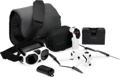
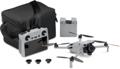
While there have always been different kinds of cameras, the digital revolution enabled even more innovation. Now, a “camera” isn’t just a box with a lens and film, it’s a magnet on a necklace, a 360-cam mounted to your car, a drone flying high above the trees — or a box with a lens and a sensor coupled to an AI-powered processor. You can make great images with any camera, but different kinds of cameras are tailored for different kinds of content creation. And once you’ve got a camera, you’ll still need lighting, microphones, and something to stabilize the whole rig to get the best images possible. Whether you’re just starting out or looking to expand your kit, we’ve got you covered.
Note: At Sweetwater, we know there’s no such thing as “best” when it comes to music gear. Every player and artist has unique tastes, which is what makes selecting gear so fun! The items on this list feature some of our favorite products from top manufacturers to help you start your buying journey! Explore these recommendations and dive into Sweetwater’s massive collection of gear on our online store. For personalized picks and expert advice, please contact our knowledgeable Sweetwater Sales Engineers at (800) 222-4700!
In this article, we’ll cover:
- Best Camera Bodies Above $1,000
- Best Camera Bodies Under $1,000
- Best Point-and-shoot Cameras ($1,000–$1,500)
- Best Point-and-shoot Cameras ($500–$1,000)
- Best Vlogging Cameras
- Best Action & POV Cameras
- Best 360 Cameras
- Best Canon Lenses
- Best Sony Lenses
- Best Panasonic Lenses
- Best Fujifilm Lenses
- Best Camera Drones Above $1,000
- Best Camera Drones Under $1,000
- Best Camera Gimbals
- Best Travel Tripods
- Best Vlogging & Tabletop Tripods
- Best Creator Lighting
- Best Camera Cases & Bags
- Create with Confidence
- Best Wireless Mics for Phones
- Best Wireless Mics for Cameras
- Best On-camera Shotgun Mics
- Get Expert Advice on Your Camera & Video Gear
Best Camera Bodies Above $1,000
Interchangeable-lens mirrorless cameras (mirrorless cameras for short) offer unmatched versatility and superb image quality. Entry-level options are a great starting point, but a more professional-level body can give you room to grow. These mirrorless cameras tend to offer more robust feature sets with more customization than their entry-level counterparts.
Whether you’re considering a full-frame, APS-C, or Micro Four Thirds mirrorless camera, prosumer and professional bodies tend to have fast autofocus and the latest sensors and image-processing technology, often inherited from flagship-level bodies. Other common features include dual card slots for backup or expanded storage, wireless flash control, and advanced audio and video I/O.
Key to their versatility, mirrorless cameras can accept a variety of lenses tailor-made for different purposes. Pairing an advanced mirrorless body with a quality lens can open the door to new and different genres or advanced techniques to further refine your creative style.
Best Camera Bodies Under $1,000
For those looking for the versatility of a mirrorless camera who don’t need advanced features, bodies under $1,000 still offer unique capabilities that you won’t find in a smartphone. These value-packed cameras deliver fantastic image quality with granular control when you want it and competent automation when you’d prefer to focus on composition or other aspects of your project.
Many offer user experiences like a smartphone with touchscreen interfaces and built-in image processing. Unlike smartphones, these cameras can swap lenses for more reach, more light, or higher quality. Plus, their sensors are larger than those found in smartphones, making them more capable in low-light situations.
Aspiring content creators will also appreciate features such as microphone inputs, subject-tracking autofocus, and flip-out screens, so you can film yourself with the camera on a tripod. Smartphone connectivity via the camera manufacturer’s app lets you transfer images, apply quick edits, and even stream on location with ease.
Best Point-and-shoot Cameras ($1,000–$1,500)
While interchangeable-lens systems offer wide-ranging versatility, they also tend to be larger and more complicated than other camera systems. Point-and-shoots offer a great compromise between the quality of a dedicated mirrorless camera and the portability of a smartphone.
Options in the $1,000–$1,500 range boast feature sets that rival similarly priced mirrorless cameras, including advanced video-recording capability, robust connectivity, and sensors that are larger than those in smartphones. Many feature hot shoes to mount external flashes for still photography and dedicated audio inputs so videographers can add microphones.
Where point-and-shoots truly shine is their all-in-one design with camera and lens as one cohesive unit. No need to carry additional lenses or pause shooting to swap — a high-end point-and-shoot has everything you need.
Best Point-and-shoot Cameras ($500–$1,000)
For those wanting a more accessible all-in-one camera, point-and-shoots under $1,000 deliver much of the benefit of the above category at a more budget-friendly price. From bridge cameras with unparallelled reach to ultra-slim, pocketable cameras, these point-and-shoots can help you level up your creative game.
Designed as one unit with the lens perfectly complementing the capabilities of the camera’s sensor, you won’t need to think about changing lenses to get the best shot. User-friendly interfaces, smartphone connectivity, and high-resolution image capture let you create and share with ease.
Best Vlogging Cameras
One of the most popular genres of content creation, vlogging puts you front and center. The right camera can streamline your workflow so you can focus more on content and less on the little things that can make recording a hassle.
Vlogging cameras span a variety of other camera categories but share many common features. Front-facing screens let you monitor footage while you film, and robust subject tracking keeps you in focus even if you move around the frame. And they’re designed with portability in mind, so you can take them anywhere.
Many of the vlogging cameras here at Sweetwater offer advanced audio inputs via either a 3.5mm jack for camera-mounted shotgun mics or wireless connectivity for lavaliers (more on both below). Several also function as webcams so you can stream with ease. For those looking to grow their skill set, raw video formats offer more flexibility for post-production adjustments. Whatever your vlog focuses on, a dedicated vlogging camera is sure to help you grow your channel.
Best Action & POV Cameras
The most exciting visuals happen outside the safety of a studio. Action cameras are purpose-built to showcase the extremes of human activity on the ground, in the air, or underwater. But you don’t need to be an athlete to appreciate the durability and convenience of an action cam! Whether you’re looking for an ultra-compact video camera for your travels, a set-it-and-forget-it B cam, or something to record your next drop-in, these rugged cameras can do it all.
One of the biggest perks of an action cam, versus traditional cameras, is its ability to capture point-of-view footage without getting in your way. A wide-ranging accessory ecosystem lets you mount it to your dash, board, bike, head, or even in your mouth bite-guard-style. Combine this versatility with 8K video capture and hyperfocal lenses, and you can catch every detail for immersive playback.
Best 360 Cameras
A recent evolution of the action cam, 360 cameras deliver similar ruggedness with a bonus: you don’t need to frame the shot. While you can create virtual-reality content with a 360 cam, they’re often used for flat, 4K content creation. Their dual-lens design captures spherical footage all around the camera, which you can then selectively edit into a video viewable on any device by using just a portion of the sphere. They’re great for content showing you and your environment, from swimming to motorsports and everything in between.
The best 360 cameras offer up to 8K video resolution, onboard microphones or wireless mic connectivity, and accessory compatibility ranging from extensible selfie sticks to dedicated dive housings. Sophisticated companion apps let you easily transfer footage to your smartphone, with AI editing tools flagging highlights so you can spend less time editing and more time creating.
Best Canon Lenses
Traditional wisdom is that the best Canon lenses have a thin red ring around the end of the barrel. While these L-series beauts do deliver amazing image quality and pro-grade construction, the best lens for a Canon camera is the one that enables you to best capture what you envision.
Having the right lens for the job can make or break a shoot. Any lens can capture anything, but a wide-angle lens helps convey an expansiveness that telephotos can’t quite show; and close-ups of distant wildlife are easier with a 300mm than with a 10mm. The right lens for you depends on what you’d like to capture.
A Canon standard zoom is incredibly versatile, covering focal lengths that offer fields of view like the human eye for natural-looking photos. Prime lenses, on the other hand, often offer wider apertures, lighter weights, and/or increased image quality at their focal length compared to a zoom. They lock you into a single field of view, encouraging you to think outside the box to get creative angles, from ultra-wide to super-telephoto.
Best Sony Lenses
Similarly, you don’t always need a Sony G Master lens — or even a G lens — to take your vision from idea to print or the silver screen. Sony’s widely varied lenses are tailored to various genres or preferences, with a lens custom-made for nearly every creative idea.
While a standard zoom kit lens can be all you need, stepping up to a professional zoom adds features such as a constant aperture, stabilization, and an advanced optical formula for clearer, sharper images. Depending on your style, an upgraded zoom lens covering the “standard” focal-length range can deliver more subject-background separation, steadier handheld footage, or sharper images. For an even larger upgrade, G Master lenses are Sony’s best of the best and deliver professional quality and dependability regardless, whether they’re a zoom or a prime.
Prime lenses from Sony cover nearly all the most common focal lengths from wide angle to telephoto. Generally smaller and lighter than comparable zooms, a Sony prime can be easier to travel with and more discreet to use. And they can push you to try new angles to best capture your subject.
Best Panasonic Lenses
Lumix owners also have a plethora of excellent lens choices to suit their creative endeavors. Whether you’re an L-mount luminary or an MFT maestro, a Panasonic Leica lens delivers some of the Japanese brand’s highest image quality, thanks to its partnership with the legendary German optics company. Panasonic’s in-house Lumix lenses are hard to beat and are a perfect match for their Lumix cameras.
L-mount lenses pair seamlessly with Lumix S-series full-frame cameras. Depending on your style, the best lens for you may be a fast prime lens, excellent for low-light scenes or discreet street photography. For travelers, an upgraded zoom lens with a constant aperture can deliver exceptional imagery while simplifying your kit.
Don’t worry, Micro Four Thirds creators — Panasonic offers excellent lenses for you, too. Designed for G-series cameras, these tiny lenses deliver impressive quality. G-series zooms are small and light, and upgrading to a constant-aperture zoom lens helps keep your exposure constant during cinematic zooms.
Best Fujifilm Lenses
In addition to excellent film simulations, Fujifilm’s long history helps the company develop excellent lenses for both its medium-format GFX cameras and its APS-C X Series. Both series offer a variety of prime and zoom options to help you find the best focal length for your style.
GF lenses must meet the demanding 100MP resolution of Fujifilm’s medium-format GFX cameras. A range of fast-aperture primes from 23mm to 500mm ensures you’ll find the focal length you need while their zoom upgrade options offer more reach, stabilization, or a faster, constant aperture versus a kit lens.
Red-badged XF lenses represent the company’s highest-quality APS-C glass, but you won’t need to jump straight to the top to get great imagery. This series also includes a massive selection of primes, ranging from street-friendly pancakes to long super-telephotos for sports and wildlife. A purpose-built XF zoom upgrades your kit with weather resistance, fine-tuned reach, or improved optics and stabilization.
Best Camera Drones Above $1,000
Those looking for even more capability and control should consider stepping up to a prosumer-level drone. Serious creators will benefit from advanced obstacle-avoidance technology, large imaging sensors, and granular recording options.
Drones with advanced flight tech — including robust obstacle avoidance — open the door to creative aerial maneuvers. First-person view (FPV) capability puts you in the pilot’s seat, and advanced features such as waypoints, a wide range of pre-programmed movements, and long transmission distances let you further expand your horizons.
Imaging-wise, more advanced drones pack more advanced camera hardware and software. Large imaging sensors, better lenses, and advanced stabilization help you capture clear content, and some even record 360-degree footage for unbeatable creative flexibility. Speaking of flexibility, these advanced drones also come with more recording options, including Log video formats for increased latitude while color grading.
Best Camera Drones Under $1,000
Drone photography has never been more approachable. Whether you’re an experienced pilot or just starting out, it’s easy to find a highly capable and affordable drone. Even entry-level drones now feature 4K video, gimbals, and AI tracking to help you get the perfect dronie or follow shot.
Important considerations when choosing a drone include battery life, controls, and weight. Regarding battery life and controls, many drone combo packages include spare batteries for extended flight time as well as remote controllers, with or without onboard screens. Some beginner-friendly drones fly controllerless using tracking algorithms and by responding to hand gestures, often with backup control via a smartphone app.
Every drone currently available at Sweetwater falls under the FAA’s 250g weight limit, making them exempt from its registration requirement and able to be flown recreationally without a Part 107 license. You’ll still need to take the FAA’s free TRUST safety test, though, and read up on your local laws and ordinances before flying.
Best Camera Gimbals
For those keeping their creativity on the ground, handheld camera gimbals can keep your footage stabilized. The electronic stabilization found in most cameras and smartphones can work well enough, but it crops in on your footage. A dedicated gimbal all but eliminates the shakiness from handheld shooting without sacrificing a single pixel.
Gimbals built for cameras offer a higher weight rating to handle a mirrorless or DSLR body-and-lens combination. Support for focus modules and wired or wireless camera control help you nail each shot while AI tracking features make capturing steady, well-framed footage even easier.
Smartphone gimbals come in a little smaller and lighter than their body-and-lens counterparts but can offer similarly advanced features to steady your footage. Control over shutter/record functions and other camera settings are standard, and built-in tripods let you film yourself with AI tracking to ensure you’re perfectly framed. Or you can hold it in hand for walking scenes, relying on the gimbal’s multi-axis stabilization to keep everything smooth and steady.
Best Travel Tripods
A stable camera ensures the sharpest, cleanest image or footage, but heavy studio tripods aren’t always practical. You can keep your kit light and still get sharp shots with a lightweight, full-size travel tripod. Small enough to strap to your backpack — or fit inside — a good travel tripod accompanies you without weighing you down and provides the stability you need for each shot.
Which travel tripod is best? That depends on the gear you want to use with it. Small grip/tripod hybrids are great for smartphones and compact cameras but may struggle with a larger rig whereas video tripods can hold heavier gear but take up more space. Check the Specifications section of the tripods listed below to see how much weight they each can handle.
Other factors to consider when buying a tripod include what kind of head it has (usually a ball head for photography or a pan/tilt head for video) and its maximum and minimum height. Creators who like to get low should look for reversible center columns, which let you put the camera nearly on the ground for interesting angles.
Best Vlogging & Tabletop Tripods
While full-size travel tripods excel at both portability and stabilization, they’re not always the best choice. Vloggers and others filming talking-head-style content will find that smaller tripods offer sufficient stability without crowding their desk. Phone-based creators can find excellent support from some of the smallest tripods out there.
The best tabletop tripods offer rigid stability with the smallest possible footprint. Many also double as portable grips, letting you walk and film more smoothly than just holding the camera. Several vlogging tripods offered here at Sweetwater include an adjustable phone mount for even more versatility, and most have ball heads for precise positioning.
Best Creator Lighting
One of the most important upgrades you can make to your content creation tool kit is improved lighting. The overhead light in your dorm or office works fine for daily use, but an LED panel or monolight will help you look your best in front of any camera.
There are as many ways to light a scene as there are to film it. For talking-head-style content, a soft, even key light helps you stand out from the background. Lights with color temperatures from 2,800K to 6,500K offer warm-to-bright white light to match ambient lighting or create the mood you want from scratch. Often called bi-color lights, they excel at making you look your best.
Many LED lights also offer red, green, and blue (RGB) color modes and effects to further enhance your content’s visual appeal. Whether you’re wanting to create an interesting background with color washes or craft a unique look with artistic key and fill coloring, both RGB panel lights and monolights can help you develop your style.
Best Camera Cases & Bags
The best part of having a camera is creating with it, but you can’t always do that at home. Keeping your gear safe in transit is easy with a dedicated camera case or bag. The best case or bag depends on a few factors: what kind and how much gear you need it to hold; what conditions you need it to withstand; and how portable you need it to be, among others.
A hard camera case offers the most secure protection at the cost of portability. They’re tough, rugged, and built for heavy use. These cases can hold a camera and a couple of lenses or an entire cinema rig and are usually available with padded dividers or foam inserts for a custom fit.
Camera bags, on the other hand, offer additional portability with slightly less ruggedness. From single-camera slings to adventure-ready backpacks, dedicated camera bags typically feature padded compartments to protect cameras and lenses and separate pockets for batteries, memory cards, and other accessories. Slings and smaller shoulder bags are great for traveling light while larger backpacks hold more gear when you need your full kit. Many also include external straps for tripods, so you can carry everything you need in one bag.
Create with Confidence
No need to worry about your drone’s battery failing a day after the manufacturer’s 1-year warranty expires — we’ve got you covered. Every piece of gear sold at Sweetwater comes with a free 2-year warranty so you can create with confidence. While most other stores charge 10%–30% of an item’s cost for third-party extended coverage, we’re happy to provide this extra peace of mind at no charge.
Learn why Sweetwater is the best place to buy a drone.
Best Wireless Mics for Phones
While lighting is the best visual upgrade you can make, a dedicated microphone may be the most important improvement to your content creation workflow. Clean, professional audio hooks your viewers and keeps them engaged through the last frame and is difficult to get with your phone’s built-in mics.
A dedicated wireless mic almost always sounds better than a phone’s built-in set, especially once you step away from the camera. Most clip onto your shirt or attach via a magnet and come with a wind shield for outdoor use. The receiver plugs directly into your phone for instant connectivity straight out of the box, no pairing required, and the entire system works with most recording apps. And companion apps from the mic’s manufacturer let you adjust gain, EQ, and AI noise reduction, if the mic has it.
Best Wireless Mics for Cameras
Similarly, adding a dedicated microphone to your camera will improve audio quality. Wireless kits for cameras work much the same as wireless kits for phones: lavalier mics clip onto your talent, and a receiver mounts to the camera’s hot shoe, usually connected by a cable to its 3.5mm mic input. These kits come with charging cases to extend your shooting time and accessories such as wind shields.
The camera-mounted receiver gives you more physical controls to adjust the microphone while shooting, with buttons or dials for gain, noise reduction, and more. Between the receiver and your camera’s audio settings, you can dial in the perfect sound and save effort during post-production.
Best On-camera Shotgun Mics
While wireless mics offer incredible versatility, on-camera shotgun mics are often the audio upgrade of choice for run-and-gun videographers. Mounted to your camera’s hot shoe and communicating via your camera’s 3.5mm mic input, XLR input, or hot shoe contacts, shotgun mics skip clip-on modules in favor of precisely engineered hardware that picks up sounds in a limited space in front of the camera. Wherever you point, a shotgun mic will pick up.
Various sizes and flavors of shotgun mic exist, but all share common characteristics. Onboard controls for gain and highpass/low-cut filters help you get the best audio possible with directional polar patterns that reject unwanted sound for clear speech.
Get Expert Advice on Your Camera & Video Gear
Not sure which pick is right for your setup? Your Sweetwater Sales Engineer is standing by at (800) 222-4700 to give you expert advice tailored specifically to your needs.