I know I keep saying it, but it’s true — this is a very exciting era for synthesists! The past few years have seen an explosion of new analog and digital synths as well as hybrid synths that feature the best of both worlds. So, I can understand the option shock of having to choose which synthesizer type might best for you and your music.
So, first, let’s get our definitions out of the way. For the purpose of this article, we’ll say that analog has a free-flowing, continuous signal with infinite resolution. In other words, the wiggle that the speaker is making is “analogous” to the wiggle that is created by the oscillator as it passes through the filters and amps. Digital signals, on the other hand, are created with ones and zeros, which represent specific steps in a signal’s value. Each method has its own advantages and disadvantages, which we’ll now discuss.
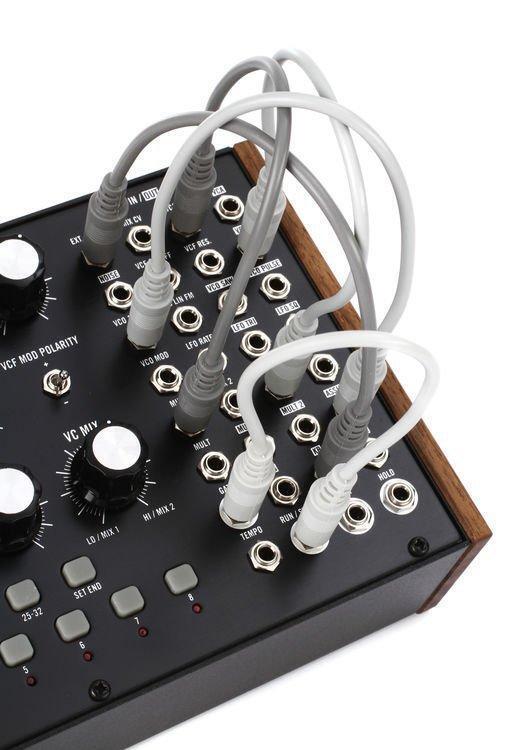
In our industry, it’s common to label a synth “analog” if the entirety of its audio path is purely analog. This means that the oscillators, mixer, filters, and amplifiers are truly analog. Quite often, the synth components in the control path (as opposed to the audio path), such as LFOs, envelopes, and MIDI, are digital; but we still consider that synth as analog because you don’t hear the digital components, only what they do to the analog audio components. We also consider a synth to be analog if it has digital effects that can be fully bypassed, leaving the signal not digitized. If some of the audio patch sections are digital (like a synth with digital oscillators but analog filters), then we call that synth a “hybrid”. And, of course, if a synth has all digital components in its audio path, then it’s considered a digital synth.
So, now that we’ve cleared all of that up… which type of synth is best for you? The four easiest factors to consider are: price, features, polyphony (the total number of notes playing at once), and multitimbrality (the total number of different presets playing at once).
Analog synths tend to be more expensive than digital synths, while digital synths typically have more features, parameters, and sonic options. Digital synths usually have more polyphony than analogs since you have to duplicate much of the audio-path circuitry for every additional note of polyphony. On digital synths, additional notes simply require that its internal processing speed is sped up. This is why a polyphonic digital synth is almost always less expensive than its equally powerful analog equivalent.
So, if a digital synth is typically less expensive, has more features and options, more polyphony, and also weighs less, then why on Earth would someone spend more money on an analog synth? The answer is that, although digital synths keep getting better every year at emulating analog synths, there are definitely situations where an analog synth sounds and responds better to your performance.
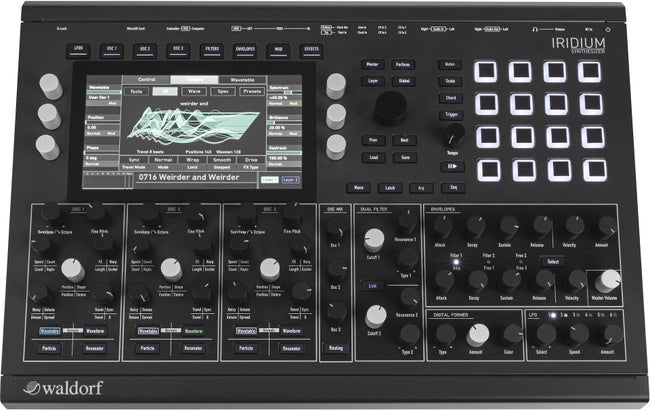
For example, except for very high-end digital synthesizers, extremely high notes are going to be clearer on an analog synth. This is because digital synths need to have a blazingly fast processing speed in order to play high notes with lots of harmonics without aliasing. Aliasing is what happens when the sampling rate of a digital synth is not at least twice as high as the highest frequency it’s trying to produce. Analog synths don’t use sampling, so they’re immune from aliasing.
Analog synths are also better when modulating one component with another component at rates in the audio spectrum (roughly 20Hz to 20kHz). This is again because of aliasing. But don’t let this dissuade you from considering digital synths. It’s very possible that you’ll never need notes or modulation to go to those extremes for your types of musical uses.
As far as features go, some all-analog synths (especially the ones that allow you to hand patch components with cables) don’t have the ability to save presets. This may or may not be important to you depending on whether or not you play live, or it may only be important in recording situations. Most digital synths allow for lots of factory and user presets. Digital synths usually have more LFOs and envelopes than all but the most high-end analog synths, and, as mentioned before, they generally have more polyphony and multitimbral layers.
Here’s a list of some current analog, digital, and hybrid synths along with some of their key features:
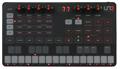
IK Multimedia Uno Synth
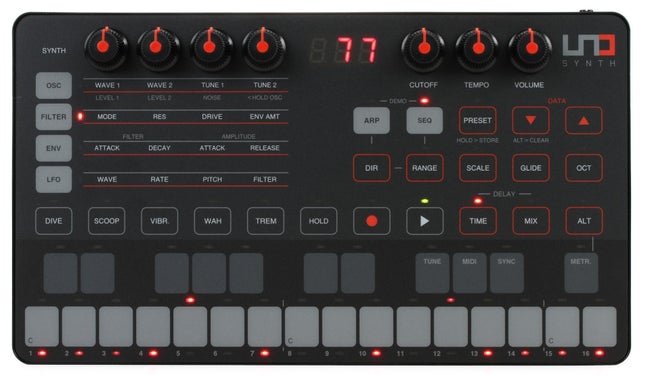
A very affordable analog monophonic synth with 100 presets, arpeggiator, 16-note sequencer, and delay effect that can be run on USB or batteries.
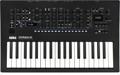
Korg Minilogue XD

A powerful four-voice-polyphonic hybrid synth with both analog and digital oscillators, analog filters, and digital effects.
Moog Matriarch

Moog’s all-analog flagship semi-modular synth that can be monophonic as well as four-voice paraphonic with lots of modular patch points, an arpeggiator, and a 64-note sequencer.
Modal Electronics Craft Synth 2.0

A small, battery-powered monophonic digital synth with lots of oscillator waveshapes, effects, and a sequenced arpeggiator.
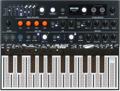
Arturia MicroFreak

A small digital monophonic synth that can also be four-note paraphonic with lots of synthesis types and waveforms.
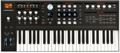
ASM Hydrasynth

A powerful digital synth with eight notes of polyphony, lots of waveforms and synthesis types, polyphonic aftertouch(!), a programmable ribbon, and lots of high-quality digital effects.
Korg Wavestate

An all-digital synth with 64 notes of stereo(!) polyphony that can sequence waveforms to create living, breathing rhythmic sounds.
This is just a small sampling of the available analog, digital, and hybrid synthesizers that Sweetwater carries. We also have many more all-analog, all-digital, and hybrid synthesizers. In this modern revival of synthesizers, you can’t go wrong with any of them once you know what type is right for you and your music. If you have any further questions, please contact your Sweetwater Sales Engineer at (800) 222-4700, and they can help you find just the right synth for you.