Stepping into the world of YouTube content creation for the first time can feel overwhelming at first, especially when faced with the sheer volume of gear available. Which camera should you pick? And what microphone will actually make your voice shine?
To help make sense of it all, Sweetwater turned to longtime YouTubers Casey Cooper (COOP3RDRUMM3R) and Adam Tuminaro (OrlandoDrummer). Both creators have years of experience refining the cameras, lenses, mics, and wireless units used in their productions. Now, they’re sharing their hard-won knowledge to help you navigate production gear so that you can get a jump-start on creating your best content.
- Camera Considerations: Portability vs. Quality
- DSLR & Mirrorless Cameras
- Action Cameras
- Microphone Considerations: Wired vs. Wireless
- Wireless Lav Mics
- Wired & USB Microphones
- Camera-mounted Microphones
Camera Considerations: Portability vs. Quality
For YouTube content, cameras generally fall into two categories: large-body DSLR/mirrorless cameras and smaller action cameras.
DSLR and mirrorless cameras from trusted brands like Canon, Sony, and Panasonic are larger-bodied cameras with interchangeable lenses. They typically offer superior image quality, which is ideal if your content doesn’t require much movement. The catch? “They’re heavy,” Adam cautions. “If you’re creating content that requires you to move around and travel, do you really want to bring a 5-pound or a 10-pound camera rig with you?”
The weight and skill required to operate large-bodied cameras has made smaller, more portable action cams a popular choice for vloggers and creators. Brands like DJI, GoPro, and Apple offer cameras that are perfect for creators on the go. Plus, they’re relatively straightforward to operate. As Adam puts it, “A key thing to consider is whether you actually want to learn the skill of videography.” If you’re not interested in mastering a new skill set, a simpler action camera or a high-quality phone is your best bet. They’re intuitive, easy to use, and have a gentle learning curve.
DSLR & Mirrorless Cameras
If you’re chasing the highest image quality, a DSLR or mirrorless camera is the way to go. Before choosing a body, it’s important to understand the difference between full-frame and cropped-sensor cameras.
A camera with a cropped sensor, like the fan-favorite Panasonic Lumix GH4, will appear slightly “zoomed in” compared to a full-frame camera using a lens of the same 14mm focal length. This is especially important to keep in mind when shooting in tight spaces.
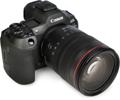
Much more ideal for most home creators is a full-frame mirrorless camera like the Canon EOS R5 Kit, which Adam calls a “beast.” Even with a similar 15mm lens, the R5’s full-frame sensor captures a noticeably wider shot, letting you showcase more of your scene.
Action Cameras
For many creators, the best camera is the one you already have: your smartphone. But if you want a wider lens, a second angle, or a more durable option for on-the-go shooting, an action camera is a perfect addition.
Action cams are known for their very wide field of view, which is a major advantage when you have limited space and need to get everything in the frame. The GoPro HERO13 Black 5.3K60 waterproof action camera is a fantastic choice, offering legendary durability and incredible image quality in any situation. Another hugely popular option is the DJI Osmo Pocket 3 portable camera. Adam calls it “one of my favorite action cameras on the market,” and for good reason: its built-in gimbal provides exceptionally smooth and stable footage, making your shots look far more professional with minimal effort.
Microphone Considerations: Wired vs. Wireless
Just like cameras, microphones for recording vocals on camera can be broken down into a few basic categories. For simplicity, we’ll focus on three types: wireless, wired, and camera-mounted. The choice between them often comes down to the classic trade-off: convenience versus quality. Your specific use case will determine which one is the perfect fit for your content.
Wireless Lav Mics
If you’re creating content on the go, a wireless lavalier is a must. Creators love these handy mics for their easy travel and portability. While they may not provide the absolute highest audio quality in every setting, modern wireless systems can still sound quite full and clean. Adam notes, “If I’m traveling, I’m absolutely using a wireless lav mic.” These systems are quick, easy, and highly convenient for capturing audio in noisy, windy, or run-and-gun locations.
Although many brands offer wireless lav systems, some tried-and-true options come from DJI, RØDE, and TASCAM. A popular option demonstrated in the video is the DJI Mic 2 Dual Wireless Transmission System, which delivers clear audio in a compact, clip-on package.
Wired & USB Microphones
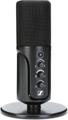
When you have a stationary recording setup and want to capture the sound of your voiceover booth or studio, wired microphones provide the best fidelity. USB microphones such as the Sennheiser Profile USB and Earthworks ICON USB offer a simple plug-and-play solution for wired audio and require just a single USB connection to your laptop or mobile device.
The next tier up includes professional broadcast XLR microphones like the Earthworks ICON Pro and the legendary AKG C414 XLII. To use an XLR microphone, you’ll need an audio interface to connect the mic to your computer. While it’s an extra step, an interface is a “marker of quality.” Adam gladly recommends the Universal Audio Volt 476P USB-C Audio Interface, and he has also used gear from Focusrite for years. Paired with a quality interface, the quality of an XLR mic is hard to beat.
Camera-mounted Microphones
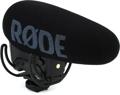
The third category is the camera-mounted shotgun microphone. These mics attach directly to your camera’s hot shoe and point at whatever you’re shooting. This is by far the most convenient option for filming expos and capturing B-roll, but as Adam explains, “It’s not always ideal to use for vocals unless you’re very close to the camera.”
As demonstrated with the Rode VideoMic GO II Camera-mounted Shotgun Microphone, the sound quality improves dramatically the closer you are to the camera. If you’re vlogging or presenting from just a few feet away, a camera-mounted mic can be a simple and effective solution. However, from five feet away, it might not provide optimal audio for your primary narration.
Find Your Perfect Streaming Setup at Sweetwater
As Casey and Adam emphasize, “there’s no one-size-fits-all” when it comes to choosing a mic and camera setup for your content. But by understanding the core differences between these options, you can save time and money on your journey to creating great content.
If you’re unsure which direction to take, reach out to one of Sweetwater’s knowledgeable Sales Engineers at (800) 222-4700. They can help you find the perfect setup to bring your creative vision to life.