Whether your congregation loves to express their hearts with an old hymn, a Tomlin or Gaither tune, or the newest worship song, you want your vocals to sound great. But matching the right mic to the right voice can be daunting. One mic is great for taming a shrill voice. Another adds clarity to help a warmer singer cut through a dense mix. One mic reduces unwanted instrument bleed from a loud stage, and another is a road-worthy workhorse capable of surviving the dings and drops associated with an inexperienced vocalist’s learning curve. There’s no one-size-fits-all solution.
Besides, picking the wrong mic can worsen an already-difficult problem that no EQ or compressor can fix. However, picking the right microphone for a vocalist is one of the fastest ways to change the sound and get it right at the source. This short list of great live vocal mics will help you narrow your search.
Clarify your mic needs with these five considerations:
- How much do you need to boost a vocal for warmth without mud or plosives?
- Do you need to adjust a vocal to cut through the mix without creating harshness or sibilance?
- How much noise rejection do you need to reduce ambient sound and combat feedback?
- Where does the singer need to look while using the mic, and is playing an instrument a factor?
- How experienced is your vocalist when it comes to mic placement, tone and breath control, and mic handling?
Polar Patterns
One significant factor when buying a microphone is considering what sounds you do not want to hear. Instrument bleed, FOH speakers, monitors, nearby singers, HVAC hum, room noise . . . those sonic gremlins are just waiting to kill an otherwise great mix.
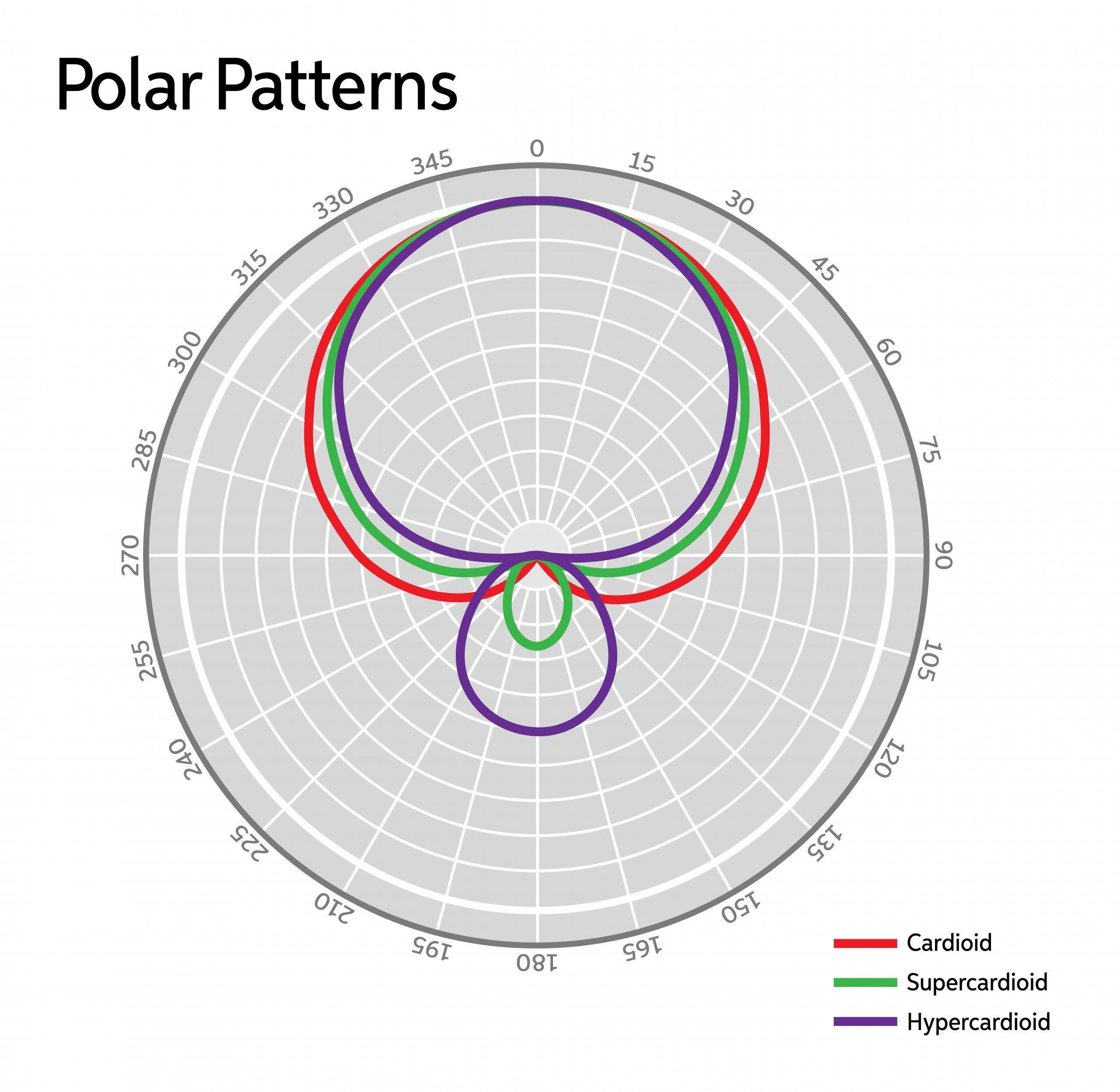
Other than omnidirectional mics, which hear sound from every direction, microphones are designed to pay attention to sound from certain directions and to reject sound from other directions. This is called the mic’s polar pattern. Picking the right one can save a live mix.
Cardioid mics are great for rejecting sound from behind the mic, including floor monitors, loud FOH speakers, or an excited congregation. Cardioids pick up more sound from the sides of the mic than most other mic patterns, which can be helpful for vocalists who do not always sing directly into the front of the mic or who prefer room-noise bleed in their in-ear monitors.
A supercardioid pattern is more directional than a cardioid and picks up less sound from the sides of the mic. It has a cone-shaped rejection area that helps reduce front-of-house-speaker noise. Yet, it also has a rear lobe that may pick up what faces the vocalist, such as a loud floor monitor directly in front of them. Supercardioids are great for emphasizing the singer’s voice and separating it from the surrounding sound.
Hypercardioids are slightly more focused than supercardioids and pass even less side information into the mic. Vocalists need to sing directly into the front of the mic consistently for an even sound. The cone-shaped side rejection is wider than a supercardioid, but the rear-lobe area of sensitivity is larger, which may pick up more sound in front of the vocalist. Reach for a hypercardioid to address significant instrument bleed or stage volume or to accommodate singers who tend to remove one of their IEMs and inadvertently distract the congregation with that annoying, “Intro, two, three, four . . . click, click, click . . .”
Dynamic Microphones
Dynamic mics have been the go-to for live music for decades. Inside the microphone capsule, a thin membrane vibrates in response to changes in sound pressure and moves an attached coil surrounding a small, stationary magnet. The resulting change in the magnetic field generates a tiny electric current that can be amplified by a transformer into a mic-level signal.
Dynamic microphones have important strengths. Because they are less sensitive than condensers, especially regarding high frequencies, they tend to be more tonally forgiving and less susceptible to picking up unwanted room noise or feedback. By the same token, they don’t capture as much sonic detail as condensers, so they can sound muddy. The issue is compounded when a vocalist “eats the mic” and sings so close to the capsule that bass frequencies build up into a woofy issue called “proximity effect.” Still, they focus on a narrower section of what the human ear can hear rather than the entire 20Hz–20kHz range, and they handle significant sound pressure levels. That’s great for live sound, especially with the dense instrumental mixes and expressive congregational participation in today’s worship music. Their simple mechanics help make them durable and cost-effective. Their low output reduces handling noise, which is especially helpful for less-experienced vocalists. Singers with thinner voices can add depth and warmth to their voice by carefully controlling the distance to the mic capsule. Dynamic mic capsules are heavier and more rugged than their brighter, lighter condenser cousins. Additionally, dynamics have good noise rejection from sound sources that face the singer, especially room speakers, floor monitors, and enthusiastic congregations.
Reach for a dynamic mic to tame an overly bright vocalist or to easily position a background singer behind the lead vocalist. A dynamic mic is helpful if you use a center FOH speaker cluster or position loud floor monitors directly facing the vocalist. Give dynamic mics to singers who are still learning how to properly handle a microphone and control their vocal tone.
Shure SM58
Likely at some point in their career, every singer stares down the barrel of a Shure SM58. Originally designed as a studio microphone (hence the “SM”), this cardioid workhorse — arguably the most common live mic around the world since 1966 — is legendary for its tank-like durability, forgiving nature, lower feedback, midrange bump to tame brighter voices, beefy SPL-handling capability, and hearty proximity effect that can help round out thin vocals for singers who know how to work the mic.
SM58s have been used by Frank Sinatra, Bruce Springsteen, Bono, Roger Daltrey, Led Zeppelin, Paul McCartney, AC/DC, Buddy Guy, Henry Rollins, Megadeth, Patti Smith, the Clash, Run-DMC, Cheap Trick, and just about everyone else.
sE Electronics V7
With a supercardioid pattern to help reject side signal and an aluminum voice coil, the affordable sE Electronics V7 provides crisp, open, and detailed tone for both male and female voices without becoming overly harsh or brittle. The built-in shockmount minimizes handling noise, and its internal windscreen helps negate distracting plosives and breath noise. High-frequency detail helps vocals cut through the mix, and a dip in the frequency response around 6kHz to 7kHz fights sibilance. Plus, the mic screen shape keeps the mic from rolling.
Artists using the sE Electronics V7 onstage include Myles Kennedy, Amy Lee (Evanescence), Billy Gibbons (ZZ Top), Billie Eilish, and FINNEAS.
For a budget-friendly vocal mic that helps background vocalists lay behind the V7 in a mix, consider the sE Electronics V2 Switch supported by a highpass filter or a mic stand to avoid handling noise.
Audix OM5
Crank up an Audix OM5 to help the vocal cut through a dense mix, even when surrounded by other instruments, with its tight, feedback-fighting hypercardioid pattern. Its slight midrange emphasis adds presence without increasing sibilance. The 120Hz bass attenuation reduces boomy mud when singing close to the capsule. Reach for the OM5 dynamic when you need a mid-focused mic to highlight a singer to shine on a noisy stage or in a loud room.
Audix users include Ani DiFranco, Willie Nelson, Alanis Morissette, George Strait, Bonnie Raitt, the Doobie Brothers, and more.
Mojave Audio MA-D
The Mojave Audio MA-D cardioid dynamic mic is certainly turning heads. As it’s the first MA dynamic designed by Technical Grammy Award winner David Royer of Royer Labs — famous for his ribbon mics — you’ll notice a distinctively smooth frequency response and rich musicality that avoids the common dynamic-mic presence peak originally intended to address the issues of poor PA systems in the 1960s. The MA-D has an interesting alchemy of incredibly high, 160dB SPL capability, 600-ohm output impedance, a cardioid polar pattern, and the highest sensitivity and lowest weight of any dynamic mic on this list. Its tight focus on the 60Hz to 10kHz range with an 80Hz roll-off produces plenty of natural-sounding high end to brighten the articulation detail of warm, mid-focused, or nasal voices without becoming overly harsh or sizzily and provides a low end that won’t drop out or turn overly woofy when the vocalist gets within proximity-effect range. It feels deliberate and even.
Mojave Audio is known for their condenser mics, attracting artists such as Stevie Wonder, Dream Theater, Joe Perry, Bruno Mars, Selena Gomez, and Drake and a host of engineers and producers including Justin Ripley (OneRepublic), Michael Ilbert (Coldplay, Taylor Swift), Dave Jerden (Jane’s Addiction, Alice in Chains), Greg Wells (Katy Perry, Adele, Twenty One Pilots), David Bianco (Tom Petty, Mick Jagger), and more.
Telefunken M80
The Telefunken M80 offers the durability of a dynamic with the detail of a condenser. Its supercardioid side rejection and reduced proximity effect allow you to get closer to the mic capsule and bring out low tones without becoming overly boomy. Its ultra-thin capsule membrane provides a detailed response with a slight bump featured in the higher-end frequencies for enhanced clarity and an open top end that warmer voices need to cut through a mix. The flattened side profile helps prevent the mic from rolling around. Telefunken provides a rainbow of color options, including black, red, white, purple, pink, blue, green, turquoise, orange, yellow, cherry wood, oak wood, gold, chrome, and copper.
Telefunken M80 users include Billie Joe Armstrong, Billy Gibbons, Geddy Lee, and Kevin Parker.
Shure NXN8S
The newest microphone on this list is the Shure Nexadyne 8/S. The first thing you’ll notice when picking up this mic is its weight. That’s due in part to its revolutionary, dual-engine, vibration-canceling capsule design. So, instead of spending time isolating a singer’s channel with EQ, compression, and gates, you can immediately hit the stage with a mix-ready vocal signal that’s ultra-clear and free from unwanted sound sources. If you prefer a wider, cardioid polar pattern, then Shure delivers with the Nexadyne 8/C.
Condenser Microphones
Condenser mics are often found in the studio because of their sensitivity. However, technological advances and the incorporation of IEMs and silent stages are allowing condensers in live settings. A condenser’s capsule is lighter than a dynamic mic and contains a thin, conductive diaphragm suspended close to a back plate charged by electrical (phantom) power. Sound vibrates the diaphragm, and the resulting capacitance change creates the output signal.
Condensers typically cover a wide frequency range with cut-through-a-mix clarity that conveys all of a singer’s vocal nuances. Condensers with large diaphragms provide higher sensitivity across the entire frequency spectrum, which can add warmth and depth to nasal or thin voices. Small-diaphragm condensers tend to be snappier, which can enhance upper frequencies for singers with darker voices.
Because of their sensitivity, condensers may pick up bleed from nearby cymbals, signal from a floor monitor placed directly in front of the vocalist, or the sound of an in-ear monitor dangling from an ear. Condensers may not be as forgiving for less experienced singers regarding sibilance, uncontrolled harsh tones, and handling noise, but these can be overcome with experience. Due to their high detail, they may sound harsher through in-ear monitors. Condensers are made of highly sensitive components and may be more vulnerable to damage, but in the hand of the right singer, they can bring life and character to the vocal. Most condensers require phantom power to create the signal; yet, because not all phantom-power sources are created equal, the draw from certain, particularly power-hungry condensers may need more juice than some underpowered sound consoles provide.
Consider a condenser mic for a lead vocalist who you want to highlight in front of the mix. Good candidates include experienced singers who can work the mic to add dynamics and avoid sibilance, plosives, harsh tones, and handling noise.
Earthworks SR117
Known for precise measurement microphones, Earthworks boasts that their game-changing SR117 supercardioid is “the best live vocal mic we’ve ever made.” It’s designed for extremely transparent, “get it right at the source” mixing with a natural and neutral sound that takes EQ coloring well and makes workflow fast and easy. The extremely flat frequency curve avoids the overly bright and lively upper air that creates a pushed or harsh sound common to many condensers. This small-diaphragm mic offers impressive handling, cable, and room noise rejection and takes up to 140dB of sound pressure even without engaging the -20dB pad. Like all Earthworks condensers, the SR117 requires a full 10mA current for phantom power and follows a specific power up/down protocol (which you should be following for any condenser mic). The Earthworks SR117 is definitely raising the eyebrows of mic aficionados and engineers at Sweetwater, and it comes recommended for “just like the source, only louder” sound.
The SR117 has been used by Chris Demonbreun (Keith Urban), Jason Batuyong (America’s Got Talent), and Michael Bader (Ashanti).
Shure Beta 87A
With the rejection qualities of a supercardioid pattern, the Shure Beta 87A vocal mic is known for a generous throw distance, which is great for singers who also play an instrument and occasionally need to back off the mic or for vocalists who tend to be inconsistent with their mic distance. A low-frequency roll-off helps control proximity-effect boom, and the gradual presence build brightens the upper midrange, which is helpful for adding sparkle to warmer voices. Its lightweight frame is easy to hold, and at only 0.48 pounds, it’s the lightest microphone on this list. If a cardioid polar pattern will better meet your specific need, then consider the Beta 87A’s sister, the Beta 87C.
You’ll see the Shure Beta 87A used all over the world by artists including Phil Collins, Thom Yorke, Elvis Costello, David Paich, and many others.
Sennheiser e 965
If you want the clarity of a large-diaphragm condenser mic and the frequency forgiveness of a dynamic, then reach for the feature-laden Sennheiser e 965. Switch between cardioid and supercardioid polar patterns for optimal sound rejection and sensitivity. There’s a switchable 10dB pad to handle singers with strong voices and a switchable highpass filter for addressing unwanted lows, plosives, and handling noise. The e 965 is frequency compensated, so a vocalist can leverage the proximity effect to find just the right level of warmth without losing clarity. And with the largest diaphragm of any condenser mic on this list, you’ll capture a wide range of frequencies from silky highs to warm lows. Sennheiser is so confident in the durability of this handmade flagship condenser that every e 965 comes with a 10-year factory warranty.
The e 965 is used by Lauren Mayberry, Dan Smith, and Petar Grašo.
DPA 2028-B-B01
The DPA 2028-B-B01 supercardioid condenser microphone offers famously even and flat off-axis response for a natural sound — great for dynamic vocalists who are less consistent singing directly into a mic. It captures the transients needed to help cut through the mix. The three-stage shockmount, pop filter, and grille reduce handling noise and plosives, and the mic can take high pressure levels with ease (160dB!) even before kicking on the switchable 20dB pad.
Look for the DPA 2028-B-B01 in the hands of Billie Joe Armstrong and Lewis Capaldi.
Neumann KMS 105
The Neumann KMS 105 supercardioid condenser provides extended, crystal-clear transient detail without sibilance, which is excellent for breathy singers and cool-jazz vocalists, even under the demands of large venues. This smooth operator maintains full frequency response even when engaging the proximity effect, and the attack remains smooth and sweet in harsher ranges for a natural tone with outstanding resolution that’s a joy to hear. The KMS 105’s elastic, three-layer shockmount capsule addresses plosives, handling noise, and sibilance. For loud, feedback-prone stages, check out the cardioid version of this mic with enhanced rejection, the Neumann KMS 104.
KMS 105 users include David Gilmour, Norah Jones, Bryan Adams, Matt Bellamy, and Chris Wolstenholme.
Lewitt MTP W950
Lewitt designed the versatile MTP W950 condenser microphone with the goal of bringing studio quality to the stage. It delivers balanced bass and wide, clear mids for a detailed, natural sound with all the features you’d expect from a high-end flagship microphone plus a few surprises. Its switchable polar pattern provides both cardioid and supercardioid options. The switchable 12dB attenuation pads an already-respectable SPL rating. The switchable 120Hz low-cut filter adds extra room and breath and eliminates handling rumble without sounding overly thin. Additionally, lower ports on the mic basket make the MTP W950 safe to cup your hands around!
Discover for yourself why many pros reach for Lewitt microphones, including Doja Cat, the Rolling Stones, Elle King, Justin Bieber, Adele, Jackson Browne, Dave Mustaine, Albert Castiglia, Yngwie Malmsteen, Jennifer Lopez, Joe Bonamassa, John Fogerty, Alicia Keys, Common Kings, and more.
Making the Best Choice
Some churches prefer to purchase a number of the same general-purpose mics and trust vocalists and sound technicians to adapt to the mic’s properties. Other churches select a variety of mics to accommodate a wider range of vocalists, relying on the sound technician to match vocalists with the best mic choice and ensure that they use it properly. One extreme of the spectrum is safe but rather dull, and the other extreme accentuates all the best and worst features of the vocalist. Where on this spectrum is your sweet spot?
To pick the best vocal mic for your specific uses, talk with your professional Sweetwater Sales Engineer. They’re highly trained to answer your questions and focus your options. Call us today at (800) 222-4700 for personalized recommendations to make your vocals shine.