On the surface, your brass mouthpiece seems relatively simple — a metal cup with a funnel inside. But fractional differences in cup depth and diameter can drastically change how your instrument feels and responds. In this guide, we’ll explore how the size and shape of your mouthpiece cup impact the sound and playability of your instrument.
Cup Depth
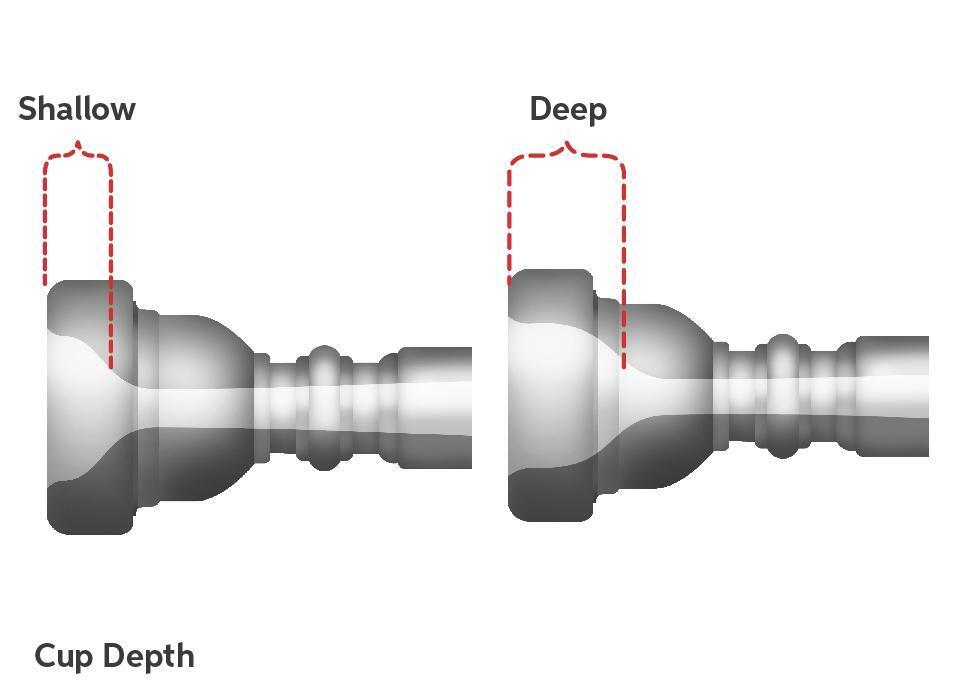
One of the most noticeable differences between mouthpieces is the cup depth. Deeper-cup mouthpieces produce a darker tone and make it easy to play lower-range notes. These traits make them ideal for students as they develop their chops and get used to playing the horn. Deeper cups make it harder for players to reach higher notes.
Conversely, shallower mouthpieces facilitate playing in the upper register. Air travels through a shallow mouthpiece faster, allowing you to reach higher notes. The smaller cup also gives it a brighter tone and improved response. That said, the shallow depth restricts volume. So, you’ll have to put in more effort to play louder dynamics.
Cup Diameter
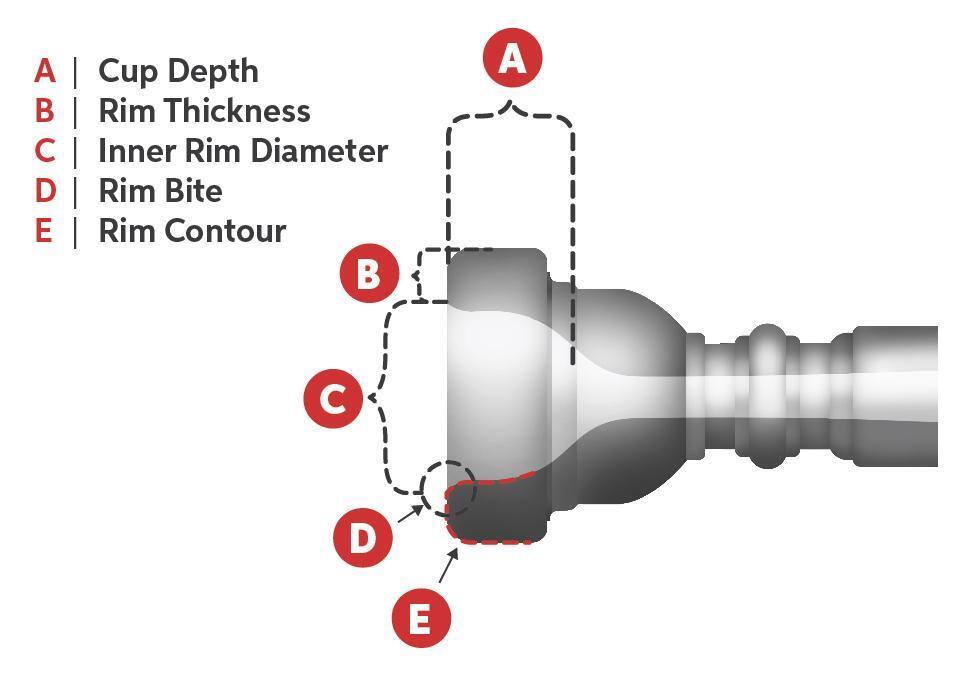
The inner rim diameter (or width) is the other biggest determining factor in sound and playability. It affects how much of your lips fit inside the mouthpiece, how many facial muscles you’ll need to buzz your lips, and how comfortable it feels. The cup diameter is measured from the inside edges. Differences between mouthpieces can be just fractions of a millimeter, but these marginal changes can drastically change how your mouthpiece feels, sounds, and responds.
The wider the diameter, the easier it is to push air through the mouthpiece. Wider rims also provide a darker tone and easier playability for low notes. You sacrifice endurance as the rim gets wider since more of your lips vibrate.
Smaller cup diameters require less tissue to vibrate. As a result, lip endurance increases, and it becomes easier to play high notes. The tradeoff is that the smaller width reduces airflow and volume.
Other Factors
Cup depth, diameter, and shape aren’t the only factors at play when trying mouthpieces. Other variables affect how the mouthpiece feels and responds.
Cup Shape
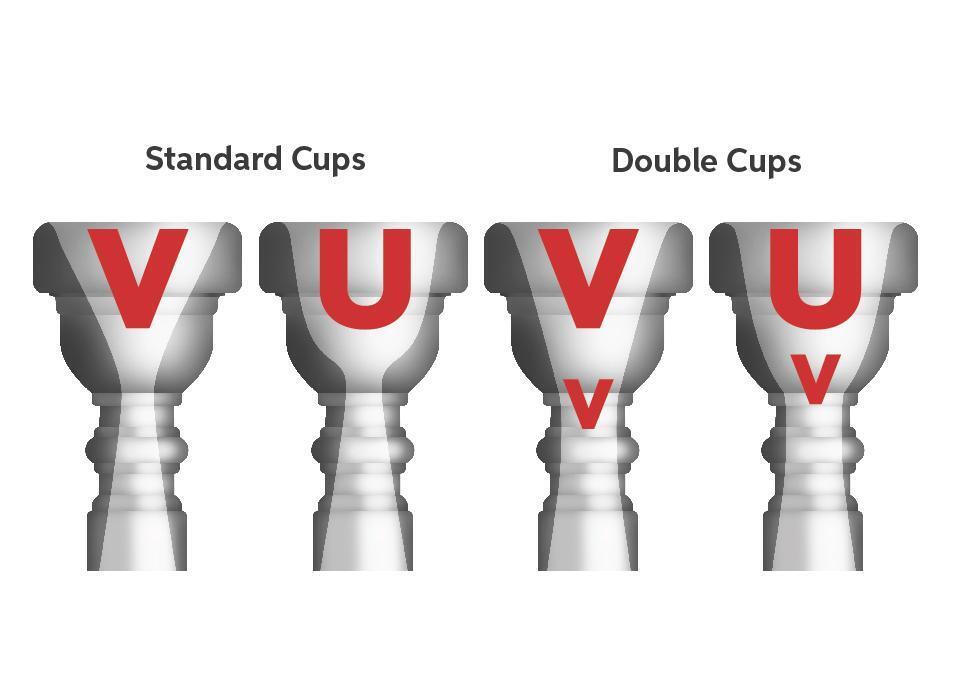
While not as significant as the cup depth itself, the cup shape also subtly affects your sound. The shape varies from mouthpiece to mouthpiece. But, in general, they’re categorized into one of two forms: “U” shape and “V” shape. The differences are rather faint on trumpet and trombone mouthpieces, but they are more pronounced on French horn, cornet, and tuba mouthpieces.
U-shaped mouthpieces are slightly more resistant and require players to push more air into the horn. In return, the U-shaped cup offers a brighter sound and facilitates playing in higher registers. On the other hand, V-shaped cups have a conical taper that allows more air to pass through. This helps produce a darker sound with more volume and requires less air to create a stable tone.
Some mouthpieces (like for French horn) utilize a “double cup” design, giving them a “U” shape followed by a “V” shape. This offers the strengths of both cups and facilitates playing throughout the horn’s entire range.
Rim Bite
The rim bite refers to the inside corner of the rim that drops down into the cup. It partially affects pitch stability, control, and response.
- Asharper rim bite has a steeper curve and offers more pitch accuracy and stability. However, if a rim bite is too steep, then it becomes difficult to slur and transition between notes. Fatigue also sets in faster with sharp rim bites.
- A softer or more rounded rim bite offers higher levels of comfort for players. The caveat is that softer rim bites have a weaker response, and the pitch isn’t as accurate.
Rim Thickness
The contour and thickness of the outer rim are tremendously important to how comfortable the mouthpiece feels. They also slightly affect pitch clarity and control.
A wide rim with a flat surface area provides increased comfort and endurance for the player. The downside is that it restricts lip movement and flexibility. Conversely, a narrow rim with a rounded surface offers increased control over your horn’s pitch at the cost of long-term endurance. That said, the thin surface area can feel rather sharp for some players and can even cause pain if too much pressure is applied.
Choosing the Right Mouthpiece
Everyone has their preferences and will find certain mouthpieces are a better fit than others. A good mouthpiece will offer players the right balance of tone, projection, and response. It might take some trial and error, but choosing the mouthpiece lets you play at your best regardless of cup dimensions.
If you want to take a deeper dive into the world of brass mouthpieces, then check out our Brass Instrument Mouthpiece Buying Guide. Or you can get advice from one of our Sweetwater Sales Engineers at (800) 222-4700. Many of them are brass players and former band directors, and they’re always happy to help!