PA speakers are an invaluable resource for band directors — no matter the size of the program. You can use them for sound reinforcement, highlighting soloists, instructing students on the marching field, and much more. You can transform your performances and ensure the entire audience can hear every single element with the right speakers. Furthermore, a PA system can save your voice during those long summer band-camp sessions! Here’s what a band director should look for when buying PA speakers. You’ll want something that is:
- Easy to transport
- Durable
- Reliable enough to move around the school grounds
- Powerful enough to push high volume levels without distortion
Read on to find the right PA system for your band.
Where Are You Playing?
Before choosing a PA, assess the location where you’ll be playing and the size of the ensemble. If your performance venue doesn’t have a built-in sound system, then you’ll have to bring your own PA for announcements, soloists, and electronic instruments that can’t make sounds on their own. With a PA, you can even play backing tracks or sound effects! A large venue (think of your football stadium) will require a PA with plenty of power and high headroom to cover the audience in distortion-free sound. If you’re hosting a jazz night in the cafeteria, then you won’t need as much power as a marching band in a stadium does. A small, intimate performance space? Then you’ll need a low-profile array. No outlets? Grab a battery-powered unit. Keep the location in mind before buying your new PA system. If you’re unsure of what you need, then contact your Sweetwater Sales Engineer.
Marching Season
“A marching band doesn’t need a PA. It’s plenty loud on its own!”
While that may hold true for your battery, brass, and saxophones, some elements easily get drowned out in performance. Say your marching band has bells, xylophones, and marimbas. Or a flute or woodwind solo. How do you ensure they get their proper amount of volume in relation to the rest of the group? Should you use harder mallets? “Just play louder”? That’s where your marching PA comes in. By miking up the correct elements, you can dial up a balanced sound with ease. Plus, your students won’t have to overplay, making the entire performance that much cleaner. A powered PA system for marching will pair perfectly with melodic percussion, synths, keyboards, and soloists. Once you add one to your existing setup, you’ll significantly enhance your halftime and competitive shows.
Custom-built solutions
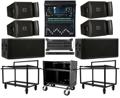
Many modern shows require a sound system that rivals setups used in DCI (Drum Corps International). If your group regularly competes in BOA (Bands of America) or WGI (Winter Guard International), then you’ll need a forward-thinking system that can handle extensive sound reinforcement. Sweetwater offers preconfigured marching-band field PA systems complete with subwoofers, loudspeakers, large-format mixers, and carts. With a system like this, you can control every performance aspect via Wi-Fi in the stands. There are multiple preconfigured systems available to fit groups of all sizes. Additionally, you can work with a Sweetwater Sales Engineer to design a customized PA system to ensure that it fits your group’s specific instrumentation and budgetary need.
Expandable systems
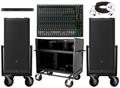
Not all bands need a custom-designed solution to reinforce them on the field. In fact, most marching bands can get by with a mixer, two powerful PA speakers, and a pair of subwoofers. Again, powered speakers will be a massive plus here as you won’t have to keep tabs on an external power amplifier. You don’t have to worry that the size of your PA speakers will detract from your show’s visual appeal. Every speaker will look just right due to the crowd being located far away. As long as the speakers and mixer all fit on your cart or inside your band’s trailer, you’re good to go. Be sure to choose a digital mixer with plenty of I/O. That way, you can take things to the next level in the future by adding new channels, presets, and more. The other benefit of starting with a relatively simple and expandable system is that you can augment your setup with whatever equipment you need in future marching seasons.
Simple setups
Imagine your band doesn’t usually use a PA system. However, you’ll need one if you’re adding James Brown’s “I Got You (I Feel Good),” complete with singer and sax soloist, to your fall program. You’ll need something to amplify your lead vocal and saxophone solo in a case like this. A simple setup with two mics and a midsize PA will do the trick. As long as the PA has an onboard mixer and enough inputs for the mics you run, just about any PA (including battery-powered options) will do. Just crank it up so the vocalist can be heard loud and clear, and you’re good to go. A simple system like this can live on a rolling cart for simple transportation everywhere you play.
Rehearsals
Whether or not your band competes, marching band is far more than Friday-night football games and competitions. Forget about every other application — investing in a rehearsal PA system for band camp and school rehearsals is worth the price of admission alone! Unless you’re a seasoned drill instructor, trying to yell instructions from the band tower will only result in blowing out your voice. With a portable PA system and a headworn microphone, you’ll be able to effectively deliver instruction and run a metronome all without having to strain your voice more than normal. Generally, a PA for a marching rehearsal should be lightweight or wheeled with enough power for the students to hear your instruction and for the percussion to hear the metronome. A single pole-mounted loudspeaker will work wonders for rehearsals.
Jazz Band and Other Ensembles
Jazz band
Bringing your own PA for jazz ensembles will solve many headaches wherever you’re performing — especially when traveling for festivals. Instead of searching for an open input on the auditorium’s mixer, you can just plug your microphones or electrified instruments straight into the PA. Since jazz bands don’t need to amplify to the top row of the football stadium, Sweetwater recommends low-profile column-array PA systems for jazz bands and smaller ensembles. Column arrays feature multiple vertically arranged speakers in a column mounted atop a subwoofer for wide sound dispersion to cover the whole audience. You get everything you need with a single system, including a mixer with connections for microphones, guitars, and keyboards. Column-array PA speakers also work wonders for winter guard groups.
Pep band
Pep band presents just as many challenges for PA systems as it does for the band itself. Gymnasiums provide an open viewing experience for the crowd, but all of those hard, reflective surfaces are an acoustic nightmare. Pep bands that feature soloists or electronic instruments will need to amplify those sources. And, unless you can run cables up to the press box, you’ll need your own PA. You’ll want something portable enough to sit in the stands with you but with enough power to cut cleanly through the crowd noise. Go with a single-speaker setup to minimize troublesome reflections and add an overall sense of cohesion with your group.
Community performances
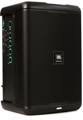
Small ensembles allow students to learn unique music and to perform around the community. Have a brass ensemble or a woodwind choir playing at the outdoor holiday market, senior citizens’ home, or another public setting? We recommend choosing a battery-powered PA system. You can say goodbye to searching for power outlets, long power cords, inconsistent power, and disruptive gas generators. What’s more, a good battery-powered PA offers hours of battery life on a single charge, eliminating the need to recharge between the rehearsal and the performance. You’ll also find it easier to focus on wrangling your students and making sure they’re set up and ready to play. Some battery-powered PAs also come with Bluetooth connectivity for playing backing tracks or intermission music when you’re taking a break.
Don’t Forget the Microphones!
You’ve chosen your PA speakers. Now, you need a great microphone or two to capture the sound you want to amplify. You don’t need to allocate tons of money in your budget to get them either! It’s important to remember that pairing the right microphone with the right instrument will yield far greater results than a one-size-fits-all approach. Industry standards like the Shure SM57 work wonders in live performance applications like jazz. For marching or pep band, consider using shotgun microphones positioned on the sidelines to boost the overall ambience. Be sure to grab a headset microphone for rehearsals and marching band as it will leave your hands free to conduct.
Mics aren’t worth much if you can’t mount them! Having the right microphone mount is just as important as using the right microphone. Jazz bands and sideline soloists will benefit from a traditional mic stand. Your sideline shotgun microphones will require a bit of extra height. Sweetwater recommends using shockmounts for all microphone mounting to prevent the mic from picking up any vibrations in the ground or stage. Whichever microphones and stands you choose, make sure you have good windscreens to go along with them. A windscreen will reduce wind noise, leading to a clear sound in almost any weather condition.
Get a Good Cart
A first-rate PA system is awesome but not if you can’t get it to the performance location. Sure, you can rely on the elbow grease of your students and band parents, but having a cart or two handy is a lifesaver when you’re moving things around on your own. You’ll want something durable enough to withstand a student’s “gentle” touch, bumps, and light collisions with walls and (occasionally) other gear. Besides ease of transportation, a cart allows you to keep all your gear in the same place when not in use. Sweetwater stocks carts for all applications and gear configurations. We recommend using smaller, folding-style carts for moving around the music wing and inside the school. For marching-band season, you’ll want one of our larger carts for transporting and protecting your speakers, mixers, and other delicate equipment. Whichever one you go with, we recommend a cart with foam-filled tires. That way, you don’t have to worry about keeping them inflated. Plus, you’ll likely be rolling that cart over gravel or through parking lots that could cause a traditional, air-filled tire to develop a leak.
Rely on the Experts to Help You
Getting a new PA isn’t just buying a few powered speakers and calling it a day. Throughout the year, you could also need extra microphones, a mixer, cables, mic stands, or a storage cart. That’s where your Sweetwater Sales Engineer comes in. They’ll double-check everything to ensure you have everything needed for your specific instruments, size, and performance venues. Don’t have a Sales Engineer yet? Then give Sweetwater a call at (800) 222-4700! We’ll connect you with one of our gear experts who will walk you through the entire process from assessing your needs to making sure everything works once it arrives at your school. Pick up a new PA system from Sweetwater and get back to what you do best: teaching young musicians, making music, and creating impactful performances.