Glassy, ethereal, mellow, and melodic, the sound of classic wavetable synthesis is as iconic as it gets. When you look at the impressive selection of wavetable synths on the market, from Arturia’s ultra-modern Pigments virtual instrument to the indomitable Waldorf Blofeld keyboard and a slew of Eurorack-format modules, it’s clear that wavetable synthesis has made a huge impact on the electronic-music world. That’s particularly ironic, considering the original wavetable synths were only dominant for a few years in the early ’80s.
It all started in the late 1970s, when German inventor Wolfgang Palm (founder of Palm Products GmbH or PPG) began experimenting with the emergent wavetable technology. His experiments yielded the original wavetable-based synths: the Wavecomputer, Waveterm, and Wave. Arguably, the first commercially successful wavetable synthesizer was the PPG Wave, which debuted in 1981 and cost a handsome $7,000 — the equivalent of around $20,000 today.
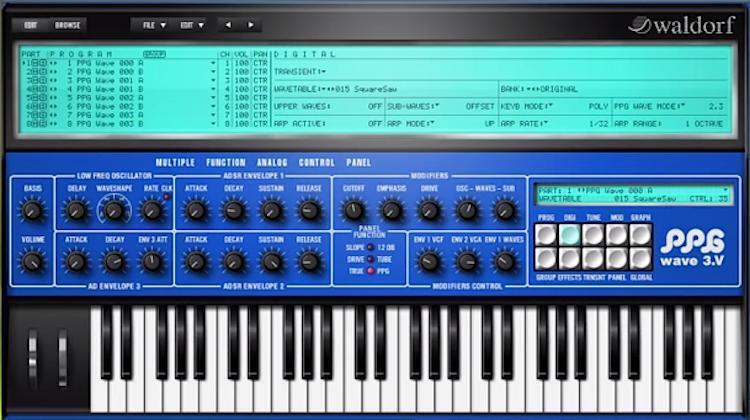
These groundbreaking digital synths were instant favorites for their wide range of tones, which included glassy percussive chimes, gritty leads, and ambient drones. Simply put, no one had ever heard textures like these, and top keyboardists and composers of the day jumped on PPG’s creations. Unfortunately, the staggering price tag and the rise of affordable FM-, S&S-, and PCM-based synths soon displaced the PPG models, and the company went under.
Let’s circle back to the sheer novelty of wavetable synths. To put it into perspective, in 1981, analog synths were still the standard and sampling synthesizers were still fairly primitive. The synth to beat was the Fairlight CMI, an additive digital synthesizer that cost a small fortune. At the same time, the far more affordable E-mu Emulator sampling synth also launched in 1981 but had a far more limited range of sounds. The market was ripe for PPG’s wavetable synths to take hold.
Wavetable synths like the infamous PPG Wave effectively bridged the gap between the analog synths popularized by Moog and Oberheim (among others) throughout the ’70s and the emerging sample-based synths. They provided the user with familiar subtractive sound-shaping tools while offering a much broader range of oscillator sounds. To fully appreciate the novelty of wavetable synths, you need to have a basic understanding of the technology itself.
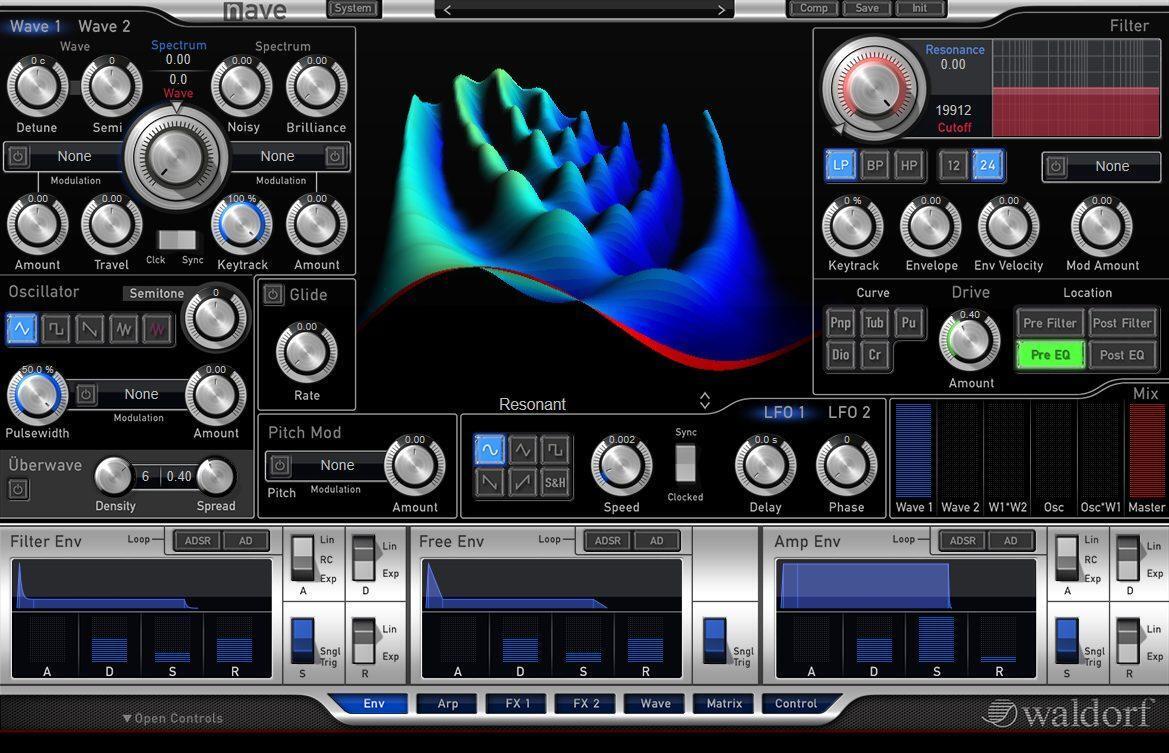
In many ways, most wavetable synths have a lot in common with basic analog synths. The basic components are the same. Sound starts with an oscillator, runs through a filter, gets sent to an amplifier, and goes out. Along the way, modulation sources including linear envelopes and cyclical LFOs shape elements such as the cutoff frequency of the filter and the volume of the amplifier. Together, these components let you craft a wide range of dynamic voices with even the simplest of synths.
Where things start to get significantly different is in the oscillator section. Analog oscillators are relatively simple. They’re all based on some variation of a simple sine wave with varying levels of harmonics added to shape the waveform into triangle, sawtooth, and square/pulse shapes. In complex analog synthesizers, you can combine multiple oscillators or modulate one with another to create more complex sounds, but the basics remain the same.
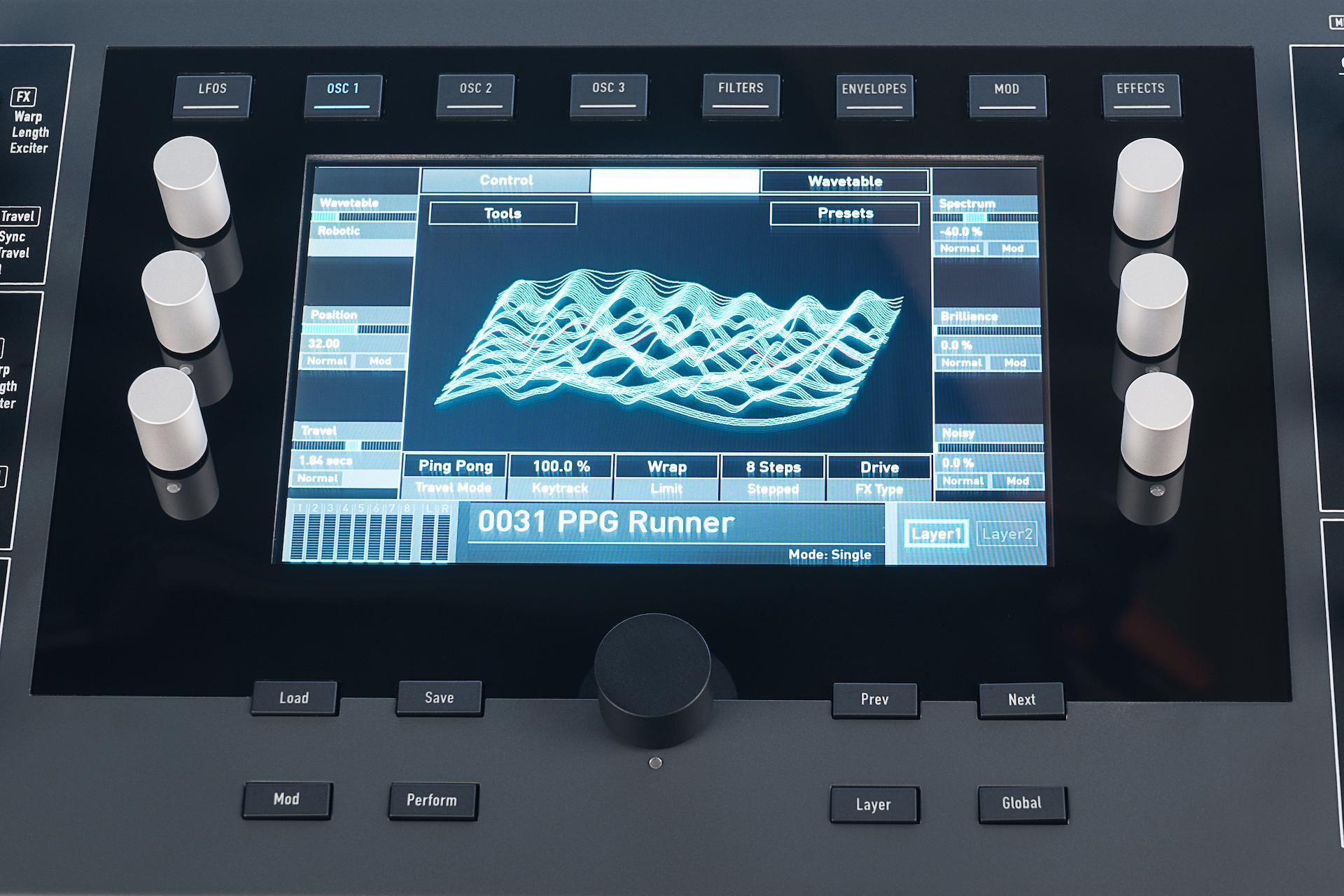
Wavetable synthesizers depart from analog synths by replacing the voltage-based oscillator with wavetables. Wavetables comprise special samples that include a number of discrete waveforms and a lookup table that acts like a track list on a record. Each region on the sample is a complete oscillation (one cycle) of a sound — a complete sample in its own right called a wave — only stuck together with a whole bunch of other sounds into a single, larger sample.
When you select a sound on a wavetable synth, you don’t load up a different sample, you just tell the synth where to start playing from. As long as the wavetable synth simply loops a single wave from any given location on a sample, the effect is indistinguishable from what you’d get by loading discrete samples on a very basic sample-based synthesizer. For example, PPG’s original 1978 Wavecomputer 360 featured 30 separate wavetables, each with 64 waves. Without any other elements of wavetable synthesis in play, this already provided 1,920 distinctly different sounds. But that’s just the beginning.
What makes wavetable synthesis so cool is that, because the waves all live on single samples, the synth can gradually slide the starting point for each cycle, gradually morphing the overtones of the sound from one timbre to another. So, you could theoretically start with a sound based on a single-cycle wave of a trumpet and slowly morph that sound into another wave, like that of a flute. The result wouldn’t be either a trumpet or a flute but some totally original and otherwise indescribable sound. And, ever since the early ’80s, composers and sound designers have recognized exactly how cool these unique voices could be.
So, where does that leave us? As we mentioned before, the sound of early wavetable synthesis never really stopped inspiring artists. Even when PPG went under, Waldorf immediately adopted the core of the Wave into their 1988 Microwave synthesizer module and then into their Wave model in the 1990s. As retro synths have returned to the forefront of electronic music, the sweet, evolving wavetable sound has never been more relevant. Just take a look right here at Sweetwater.com for “wavetable,” and you’ll find dozens of options from virtual instruments to keyboards to modules for your Eurorack rig. If you need some advice on where to start, just give your Sweetwater Sales Engineer a call at (800) 222-4700.