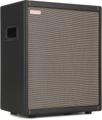
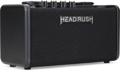
Today’s modeling heads and pedalboards are giving our analog amps and stomps a run for their money — not only for their incredible wealth of sounds but also for their simplicity and “what you hear is what you get” peace of mind when it comes to gigging out and cranking up.
But with all that’s happening under the hood of these devices — amp modeling, effects, and speaker emulation — how do you best tap into your presets for live performance, monitoring, and practice?
Many guitarists are entrusting their modeled tones to full-range, flat-response (FRFR) speakers. These self-contained systems more closely resemble PA speakers than traditional guitar cabinets, with built-in power amplifiers, two-way speaker systems, and some clever tricks to deliver that “amp in a room” response that every guitarist seeks.
FRFRs vs. PA Speakers: What’s the Difference?
On paper, these systems are virtually identical. In fact, most of the FRFRs available at Sweetwater can double as traditional stage wedges or loudspeakers for live sound production. Where FRFRs differ from active PA speakers is in their designs, features, and tonal responses.
- Designs: Many FRFRs aim to re-create the look and form factor of a traditional guitar cabinet. Some of these are even made from birch, a premium tonewood in the guitar cab market.
- Features: A list of ever-growing guitar-centric features, including onboard speaker IRs and full-range/cab-filtered EQ sections on toggle, equips these devices for a multitude of guitar applications.
- Tonal response: Whereas most PA speakers are tailored for loudness and the ability to reproduce all instruments in a band, FRFRs aim to be as neutral as possible, serving as nothing more than a blank canvas for the sounds produced by your modeling device.
Watts Loud Got to Do with It?
“A 2,000-watt guitar amp? Isn’t that, like, 20 times louder than my Marshall head?”
Comparing loudness across FRFRs and tube amps can be a challenge for numerous reasons. For starters, tube amps are generally used well into overdrive territory, in which state the amp is operating above its rated power. Conversely, FRFRs endeavor to deliver as clean and neutral a tone as possible, which means they need way more headroom. Another inconsistency is due to wattage-rating standards in the industry. FRFR speaker A may be rated for peak power — the maximum output it can deliver at a given moment — and FRFR speaker B may be rated for RMS, which is a better real-world measure for amplifier performance over time. Further confounding the matter is that some FRFRs tout a combined wattage rating for their two onboard amps (woofer and tweeter) while others just use the wattage rating of their woofer.
The long and short of it is, you really can never have “too many” watts when it comes to FRFRs. An electric guitar’s transient peaks can reach levels 10 times hotter than its RMS level, and if any of those peaks begin clipping, then your guitar signal can suffer.
Our advice: If you think an FRFR has more watts than you need, then it probably doesn’t. And if you suspect you need more, then you probably do.
To FRFR or Not to FRFR
While some players swear by the extended highs and articulation that only FRFRs can deliver, others still prefer a traditional guitar amp and speaker cabinet. Fortunately, this is still possible using your unpowered modeling device. All you need is a specialized outboard power amp.* You can either go the rackmount route and pick up something such as the ENGL Amplifiers Poweramp 50/50 E840 rackmount power amplifier or, for convenience, invest in something such as the ISP Stealth Ultra-Lite, Seymour Duncan PowerStage 170, or EHX 44 Magnum. Each of these pedal-size power amps delivers an astonishing amount of clean power without coloring your sound. Automatic load detection pairs these amps with your favorite guitar cabs.
*When using a traditional guitar cab, be sure to disable cabinet emulation on your modeling device. This can usually be done at the global level for all patches. Leaving speaker emulation on and running into a guitar speaker will yield unflattering results — typically a hollow, tubby sound sort of like you’re playing in a swimming pool.
Should I Mic My FRFR?
In a word: no. Your modeling device is already mimicking a physical speaker as captured by a microphone. To mic your FRFR would further color the signal, often in unflattering ways. For best results, just hand your sound engineer an XLR cable out of your modeler and monitor through your FRFR. They’ll probably thank you for making their job easier.
Okay, there may be times when miking an FRFR speaker can be advantageous. In a recording environment, for example, capturing that “amp in a room” sound — pushing real air in a real acoustic space — and blending it with your modeling device’s direct signal** can capture that slice of reality that some all-digital recordings sorely miss. But since most FRFRs are two-way speaker systems, this can present a challenge. Here are our recommendations:
- Seek an FRFR with a coaxial driver design such as the Mission Engineering Gemini 2 and the Line 6 Powercab models. These cabs align their HF drivers and woofers, making it possible to close-mic with a single microphone.
- For maximum authenticity, try far-miking your FRFR with a ribbon mic in your live room. Not only will you get the best of both worlds — direct convenience and a real acoustic soundstage — but you’ll minimize time and phase issues, as well.
**Due to latency, be advised that your close-miked and direct signals will often not align properly in your DAW. You may have to drag or nudge the miked track to get it to sum properly.
Which FRFR Is Right for Me?
HeadRush FRFR-112 MKII 2,500-watt 1 x 12-inch Powered Guitar Cabinet
Recommended for: Gigging musicians after maximum headroom
Clocking in with 500 watts more than its MKI predecessor, the HeadRush FRFR-112 MKII is a value-packed FRFR cab aimed squarely at stage-bound guitarists and bassists. This cab’s 2,500-watt peak power rating supplies more than enough headroom to take on any sonic application from touring to weekend gigging to simply jamming in your music room. Your amp modeler will sing with full sonic authenticity, thanks to the FRFR-112 MKII’s powerful 12-inch woofer, high-frequency compression driver, and precision-tuned custom cabinet — all of which are fine-tuned to provide an exceptionally accurate and linear frequency response. Moreover, this cab’s built-in Bluetooth functionality allows it to double as a powerhouse streaming speaker. Finished with versatile dual combo-XLR connectivity, a PA-ready XLR direct output, ground-lift switch, and a lightweight build, the FRFR-112 MKII is a superb option for musicians after maximum clean headroom on a budget.
Mission Engineering Gemini 2 220-watt 2 x 12-inch Powered Cabinet
Recommended for: True stereo fanatics and luxury-minded guitarists
Musicians seeking the most uncompromisingly high-class, full-range, flat-response experience are sure to be thrilled by the premium FRFR firepower of Mission Engineering’s Gemini 2. Comprising dual 12-inch Mission Engineering speakers, two 1-inch high-frequency drivers, and twin 110-watt Class D power amplifiers, this cab’s exquisitely enveloping stereo projection resounds with pure transparency. And for those who wish to forgo transparency in lieu of a more traditional guitar-cab tone, the Gemini 2’s EmPower EQ control gives you the power to blend between the cab’s standard flat response and a curve that captures the rounded highs and pressing mids of a traditional guitar cab. You also get a comprehensive I/O section equipped with stereo combo-XLR jacks and even a high-speed USB connection to feed in backing tracks or to access software effects and modeling. An elegant closed-back Baltic birch cabinet construction seals the deal, ensuring optimal resonance, reduced weight, and road-ready durability.
ISP Technologies Vector FS8 175-watt Full Spectrum Powered Cabinet
Recommended for: Space-conscious stage performers
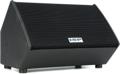
ISP has been leading the charge in digital guitar-processing accessories for years, and the Vector FS8 marks a bold step in that proud tradition. The familiar wedge design makes the FS8 a natural for live monitoring. In fact, its two combo-XLR inputs with independent level control mean you can run your modeler plus a monitor output from the board and save yourself a wedge onstage. ISP’s Dynamic Adaptive Amplifier technology gently coaxes the Vector FS8 into amp-like clipping toward the top of its gain with no trace of harshness. Inside the Vector FS8’s Baltic birch cabinet reside a coaxially configured 8-inch Beyma woofer and 1-inch silk-dome tweeter for a smooth sound that rivals studio monitors in its class. A response switch toggles between full-range and guitar-cab modes to suit a range of playing setups.
Friedman ASC-12 500-watt Active Modeler/Profiler Monitor
Recommended for: Rock purists and output fanatics
Dave Friedman, the name behind the signature sounds of hard-rock heavies Eddie Van Halen and Jerry Cantrell, carries a formidable reputation in this industry. From guitars to amps and pedals, we trust anything Dave puts his name on. The ASC-12 marks Friedman’s entry into the modeling world. This monitor is focused on guitar from the get-go with a smart-looking black Tolex Baltic birch cabinet containing a 12-inch Celestion woofer and 1.75-inch HF driver. The I/O and control set are refreshingly straightforward, a 100Hz low cut being the most complicated control to be found. Not surprisingly, the ASC-12 is easily one of the loudest FRFRs we’ve tested — you could seriously use this cab to fill a venue without a PA.
Line 6 Powercab 112 Plus Active Guitar Speaker
Recommended for: IR users and traditionally bent guitarists
Not too keen on your modeler’s onboard speaker emulation? The Powercab 112 Plus can inject new life into your amp presets. Six switchable speaker emulations fed through a 250-watt 12-inch two-way coaxial speaker system give this FRFR the edge for versatility. But what really sets this system apart is its ability to run third-party IRs. Import your own speaker emulations from Celestion, Redwirez, or OwnHammer (to name a few favorites) and save them to any of 128 user presets for instant inspiration. Sweetwater users love the look of the Powercab 112 Plus, which feels and handles like a regular guitar cab down to the form factor and kickstands.
Fender Tone Master FR-12 & FR-10 Powered Guitar Cabinets
Recommended for: Old-school and new-school Fender fanatics
An old-school guitar cab parked on the stage is a truly timeless sight. While scores of traditionally minded guitarists now incorporate cutting-edge modeling and FRFR technology into their stage rigs, many of these state-of-the-art devices look like they’re state-of-the-art devices — not like vintage tube amps! Luckily, Fender’s Tone Master cabs provide you with all the punch and versatility of a modern FRFR cab while retaining a charming, old-school flair that would look right at home on a smoky 1960s barroom stage. Available with either a full-bodied 12-inch speaker (FR-12) or a focused, punchy 10-inch speaker (FR-10), these cabs both feature 1,000-watt Class D power amplifiers and 1-inch wide-dispersion high-frequency drivers to deliver superior sonics anywhere, anytime. What’s more, the Tone Master-series powered cabs feature a 3-band EQ and a high-cut control to tweak your tone via a smattering of guitar amp-style knobs on the top panel. Complete with a lightweight plywood cab and tilt-back legs, Fender’s Tone Master cabs pack premium FRFR power into a charmingly retro package.
Positive Grid Spark Cab 140-watt 1 x 10-inch Powered Guitar Cabinet
Recommended for: Positive Grid Spark users and musicians after a compact FRFR cab
Positive Grid’s compact Spark-series amplifiers have long been a staple among Sweetwater guitarists for their impeccable tones, effortless portability, and practice-friendly features. And while they’re the perfect amplifiers for jamming around the house or recording direct, the Positive Grid Spark Cab 140-watt 1 x 10-inch powered guitar cabinet allows you to take all your favorite Spark sounds straight onto the stage! Set up with a dedicated 3.5mm stereo input for your Spark amplifier, this cab’s 10-inch woofer, dual high-frequency dome tweeters, and 140-watt Class D power amp form a powerful sonic canvas on which to paint. Furthermore, the Spark Cab is by no means strictly limited to Positive Grid Spark amplifiers — this cab’s dual combo-XLR inputs make it a breeze to connect to modelers of all kinds, and you also get a balanced XLR output to plug directly into a PA.
Laney LFR Active Guitar Cabinets
Recommended for: Rockers after striking, stage-ready sights and sounds
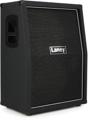
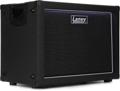
Available in a variety of distinct speaker configurations, Laney’s LFR series of active cabs put stage-conquering FRFR power at your command. These cabinets come equipped with one, two, or four custom Laney 12-inch drivers and a single 1-inch compression driver to supply you with superb high-frequency clarity. Ranging from 400 to 2,500 watts, LFR cabs are ready to tackle everything from arena-ready modeling rigs to humble home practice setups. And for those who prefer to use their FRFR cab as a stage monitor and let the PA do the heavy lifting, the LFR cabs’ XLR DI output comes equipped with switchable cabinet emulations to ensure the utmost sonic authenticity.
HeadRush FRFR Go Portable Desktop Amplifier
Recommended for: Guitarists with desktop setups and couch-bound strummers
Clocking in as one of Sweetwater’s most miniscule FRFR options, the HeadRush FRFR Go is the perfect partner to elevate your practice sessions. A 30-watt power rating and two 3-inch speakers offer an appealing low-volume alternative to headphone practice. Tiny though it may be, the FRFR Go provides a rich, uncolored response to make the most of your favorite amplifier, cab, and effects modeling. Topped with a plethora of practice-friendly features — including a dedicated Bluetooth channel for music streaming, intuitive EQ controls, a stereo 1/8-inch aux input, and rechargeable lithium-ion batteries for on-the-go woodshedding — the HeadRush FRFR Go grants you stunning full-range, flat-response sound wherever your tones may take you.
QSC K12.2 2,000-watt 12-inch Powered Speaker
Recommended for: Anyone
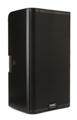
We’re shaking things up a bit with our final recommendation. Yes, FRFRs and active PA speakers are distinct and serve different needs. But can you run your modeling device into a PA wedge? Absolutely! The K12.2 does a great job for this: its two 12-inch speakers and capable 2,000-watt Class D power section put out a ton of guitar-friendly sound, and its wide 75-degree coverage reduces hot spots for stage monitoring and presentation. Not only that, but you can use the K12.2 for virtually any sound reinforcement application. Onboard presets and DSP equip this speaker for everything from vocals and acoustic guitar to full-range music reproduction.
A Full-range Solution
We hope this article has shed light on FRFR cab/speaker options. If you have any questions about the products featured here or any other gear you need, then don’t hesitate to reach out to your expert Sweetwater Sales Engineer at (800) 222-4700.